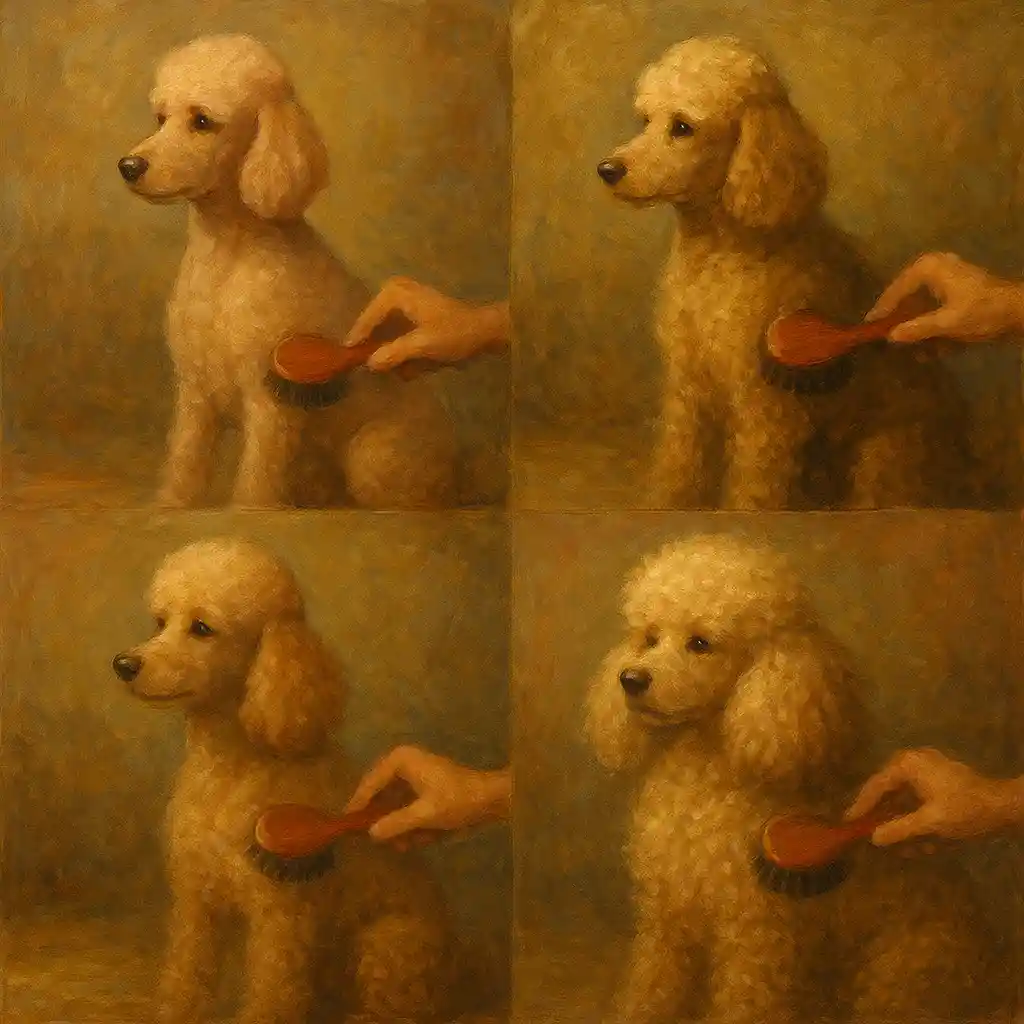
Poodle coat regrowth after clip can feel a little confusing at first. One day your poodle looks neat and short, and then the coat starts to come back in uneven patches, different textures, and tiny tangles. This is normal. The key is to understand the timeline and to brush during growth in a gentle, consistent way. With the right routine, you can help prevent mats, support healthy regrowth, and keep your poodle comfortable.
Poodle coat regrowth after clip is not just about waiting for hair to grow back. It is also about brushing during growth so the coat stays clean, loose, and mat-free.
In this guide, you’ll learn what happens to the poodle coat after a clip, what to expect week by week, why brushing matters so much during regrowth, and how to build an easy grooming routine you can stick with.
Understanding the Poodle Coat (and why poodle coat regrowth after clip looks different)
Poodles have hair that keeps growing, more like human hair than many other dog coats. That is one reason poodle coat regrowth after clip can look “messy” in the middle stage. The hair is growing, but it may not all grow at the same speed, and it can change texture as it comes back.
Common poodle coat types: curly, corded, and wavy
Most poodles have a curly coat, but you may also see corded or wavy coats. Knowing the coat type helps you choose the right tools and brushing style during poodle coat regrowth after clip.
- Curly coat: Tight curls that can mat quickly if not brushed during growth.
- Corded coat: Hair forms cords (like ropes). This needs specialized care and is not the same as standard brushing.
- Wavy coat: Looser waves that may look soft, but can still tangle and mat during regrowth.
The coat growth cycle and what affects regrowth speed
Poodle coat regrowth after clip follows a natural growth cycle. Hair growth has phases (active growth, transition, and rest). Even if you do everything “right,” regrowth speed can still vary.
Common factors that can influence how fast the coat comes back include:
- Age: Older dogs may have slower regrowth.
- Genetics: Some poodles naturally grow coat faster or thicker.
- Diet and overall health: A balanced diet supports healthy skin and coat.
- Grooming habits: Brushing during growth helps reduce tangles and supports a healthier-looking coat.
Poodle coat regrowth after clip timeline: what to expect week by week
The poodle coat regrowth after clip timeline is often discussed in weeks because changes can be easy to notice from one stage to the next. Your poodle may not follow the exact same schedule, but these stages are a helpful guide.
Week 1–2: short, fuzzy coat begins
In the first 1–2 weeks of poodle coat regrowth after clip, the coat usually looks short and fuzzy. It can feel soft or slightly rough depending on your poodle’s coat type and the length of the clip.
What to do during this stage:
- Use a soft, gentle brush to remove loose hair.
- Brush with the direction of hair growth to avoid irritation.
- Keep sessions short and calm so your poodle stays comfortable.
- Watch for any skin irritation, especially if the clip was very short.
Week 3–4: more length, texture may change
During weeks 3–4, poodle coat regrowth after clip becomes more noticeable. Hair length increases, and the coat may start to change texture. Some areas may feel curlier, while others feel straighter or fluffier.
This is also when small tangles can start to form, especially in high-friction areas like:
- Behind the ears
- Under the collar or harness
- Armpits
- Groin area
- Base of the tail
Brushing during growth now becomes more important. If you skip brushing, tiny tangles can turn into mats faster than many owners expect.
Week 5–8: the coat starts to “take shape”
Weeks 5–8 are often the stage where poodle coat regrowth after clip starts to look like a real hairstyle again. The coat fills out, but it can also become harder to manage because there is enough length to tangle, twist, and mat.
Helpful habits during this stage:
- Brush more consistently (many poodles do best with brushing during growth every other day, and sometimes daily).
- Use a slicker brush for gentle detangling.
- Follow with a comb to check you reached down to the skin.
- Pay extra attention to common mat zones.
Week 9–12: coat looks fully regrown and routine feels easier
By weeks 9–12, many poodles have a coat that looks “fully regrown” after a typical clip, even though the hair can keep growing beyond this. At this point, poodle coat regrowth after clip is usually stable enough that a regular grooming routine feels more predictable.
This is a good time to keep brushing during growth as a normal habit, not just something you do “until it grows back.” A steady routine helps the coat stay healthy between grooming appointments.
Why brushing during growth matters for poodle coat regrowth after clip
Brushing during growth is not only about looks. It supports comfort, skin health, and easier grooming later. When poodle coat regrowth after clip is in progress, the coat can mat close to the skin without you noticing right away.
Brushing helps prevent mats and tangles
Poodle hair loves to cling to itself. That is why mats can form quickly, especially when the coat is in the “in-between” regrowth stage. Regular brushing during growth helps separate hairs before they twist into tight knots.
Brushing stimulates the skin and supports healthy regrowth
Gentle brushing can help stimulate blood flow to the skin. It can also remove dead hair and debris. This supports a cleaner, healthier base for poodle coat regrowth after clip.
Brushing helps distribute natural oils
Your poodle’s skin produces natural oils that protect and condition the coat. Brushing during growth helps spread these oils through the hair, which can support a shinier, healthier-looking coat.
Choosing the right brush for poodle coat regrowth after clip
The right tools make poodle coat regrowth after clip much easier. The wrong brush can miss tangles, cause breakage, or irritate the skin. Many owners find that a small set of tools works better than one “all-in-one” brush.
Best grooming tools for poodles
- Slicker brush: Great for removing tangles and early mats during brushing during growth.
- Pin brush: Helpful for light daily grooming, especially on longer areas.
- Metal comb: Essential for checking your work and finding hidden mats close to the skin.
What to consider when selecting a brush
- Coat type: Curly coats often need more slicker + comb work.
- Coat length: As poodle coat regrowth after clip gets longer, you may need more careful section brushing.
- Texture changes: Regrowth can feel different in different spots, so you may adjust your technique.
- Your poodle’s comfort: A brush that scratches the skin can make your dog dislike grooming.
How often to brush during growth for poodle coat regrowth after clip
There is no single perfect schedule for every poodle, but brushing during growth should be frequent enough to stop mats before they start. For many poodles, that means brushing at least every other day during poodle coat regrowth after clip. Some coats need daily brushing, especially if the dog wears a harness often or plays outside a lot.
Daily brushing vs. weekly brushing
- Daily brushing: Helps prevent mats, keeps the coat easy to manage, and makes grooming sessions shorter. The downside is it takes more routine and time.
- Weekly brushing: Better than nothing, but it can allow mats to form and become harder to remove. Weekly brushing often turns into longer, more stressful sessions.
Adjusting brushing frequency by coat length and texture
As poodle coat regrowth after clip moves from fuzzy to fluffy, you may need to brush more often. If you notice tangles forming quickly, increase brushing during growth. If the coat stays smooth and combs easily, you may be able to keep a lighter schedule.
Step-by-step: how to brush during growth (a simple routine that works)
Brushing during growth works best when you have a repeatable system. The goal is not to rush. The goal is to be gentle and thorough, so poodle coat regrowth after clip stays on track without mats.
1) Prepare the coat (detangling spray and quick check)
Before you start, do a quick check with your hands. Feel for lumps of tangled hair. If needed, use a small amount of detangling spray to help the brush glide and to reduce pulling.
If you see a tight knot that is already forming a small mat, do not yank it. Loosen it slowly with your fingers first.
2) Brush in small sections, starting from the bottom
A helpful method is to brush one small area at a time. Start near the ends of the hair and work toward the skin. This reduces pain and reduces breakage.
- Use gentle strokes.
- Hold the hair near the skin if needed to reduce pulling.
- Work from lower areas (legs, belly) up toward the back.
3) Follow with a comb to check for hidden tangles
This step is important during poodle coat regrowth after clip. A slicker brush can make the coat look smooth on top, while small mats remain underneath. Use a metal comb and gently comb down to the skin. If the comb gets stuck, there is still a tangle to work on.
4) Be extra careful with sensitive areas
Some areas mat faster and are also more sensitive. Brushing during growth should always be gentle here:
- Ears: Hair behind and under the ears tangles easily.
- Armpits: Friction from walking and movement makes mats common.
- Tail: The base of the tail can mat from sitting and rubbing.
If your poodle becomes uncomfortable, take a break. Short, calm sessions done often are usually better than one long session.
Common mistakes that slow poodle coat regrowth after clip (and how to avoid them)
Most problems during poodle coat regrowth after clip come from small mistakes that build up over time. The good news is that these are easy to fix once you notice them.
Brushing too aggressively
If you brush too hard, you can irritate the skin and make your poodle dislike grooming. Use a gentle hand. If you see redness, pause and let the skin rest.
Skipping “problem areas”
Many owners brush the back and sides but forget behind the ears, under the legs, and around the collar area. These spots can mat first. Brushing during growth should always include these areas, even if it takes only one extra minute.
Using the wrong brush for the coat
If the brush cannot reach into the coat, it will not prevent mats. For many poodles, a slicker brush plus a metal comb is the most reliable combination during poodle coat regrowth after clip.
Over-bathing during regrowth
Bathing too often can dry out the skin and strip natural oils. If you do bathe your poodle, make sure you brush and fully dry the coat afterward. A damp coat can tangle and mat more easily.
Trimming too soon without a plan
It can be tempting to “fix” uneven regrowth with quick trimming. But if you cut without a plan, you may create more uneven areas. If you are unsure, ask a professional groomer for guidance.
How to handle tangles and mats during poodle coat regrowth after clip
Even with good brushing during growth, tangles can happen. The goal is to catch them early, when they are still small and easy to remove.
How to safely detangle minor knots at home
- Use your fingers first to gently loosen the knot.
- Apply a small amount of detangling spray if needed.
- Hold the hair close to the skin to reduce pulling.
- Work slowly with a comb or slicker brush from the ends toward the skin.
- Reward your poodle with calm praise and a treat to keep grooming positive.
When to seek professional grooming help for stubborn mats
Some mats are too tight or too close to the skin to remove safely at home. Consider professional help if:
- The mat seems painful when you touch it.
- The mat is in a sensitive area (ears, armpits, tail base).
- You cannot get a comb through the coat even after gentle work.
- The skin looks irritated under the mat.
Professional groomers have tools and experience to remove mats more safely. This can protect your poodle’s skin and keep poodle coat regrowth after clip moving forward without setbacks.
Building a grooming routine that supports poodle coat regrowth after clip
The easiest way to manage poodle coat regrowth after clip is to make grooming part of normal life. A simple routine reduces stress for you and your poodle, and it keeps the coat in better shape between grooming appointments.
Create a schedule that fits your lifestyle
Pick a time you can repeat. For example, you might do brushing during growth:
- 5–10 minutes in the morning before work, or
- 10 minutes in the evening while watching TV
Consistency matters more than doing it “perfectly” once in a while.
Make grooming a bonding moment
Many poodles learn to enjoy grooming when it is calm and kind. Use a soft voice, take breaks, and give small rewards. Over time, brushing during growth can become a normal bonding habit instead of a struggle.
Products that can help with brushing during growth
You do not need many products, but a few helpful items can make poodle coat regrowth after clip much easier to manage.
Shampoos and conditioners
Use gentle products that support healthy skin and coat. If you bathe your poodle, conditioner can help the coat feel smoother and reduce tangles. Always rinse well and dry fully.
Detangling sprays and leave-in products
A detangling spray can help reduce pulling and make brushing during growth easier. Use a light amount, then brush in small sections.
Helpful grooming tools
- Slicker brush for routine brushing during growth
- Metal comb for checking the coat down to the skin
- Small scissors only for careful, safe trimming if you know what you are doing (otherwise, ask a groomer)
Monitoring coat and skin health during poodle coat regrowth after clip
While poodle coat regrowth after clip is happening, it is smart to watch both the coat and the skin. Changes can be normal, but some signs mean you should get help.
Signs of irritation or possible allergies
- Redness, rash, or hot spots
- Strong itching or constant scratching
- Flaky, very dry skin
- Hair loss patches that do not look like normal regrowth
If you notice these signs, stop any new grooming product you recently started and monitor your poodle closely.
When to talk to a veterinarian
Consult a veterinarian if coat or skin issues are persistent, if your poodle seems uncomfortable, or if you see bald patches, swelling, or sores. A healthy coat is linked to overall health, so it is always worth checking.
Real-life results: what success looks like with poodle coat regrowth after clip
Many poodle owners find that the biggest “secret” is not a special product. It is steady brushing during growth. When owners brush regularly and check with a comb, the coat regrows with fewer mats, looks more even, and is easier to maintain.
It can also be helpful to take simple photos every few weeks. Seeing the changes can make the poodle coat regrowth after clip timeline feel more real and less frustrating, especially during the awkward middle stage.
Conclusion: enjoy the process (and keep brushing during growth)
Poodle coat regrowth after clip is a journey, and it is normal to see fuzzy stages, texture changes, and small tangles along the way. With patience, the right tools, and consistent brushing during growth, you can help your poodle’s coat come back healthy, comfortable, and beautiful.
If you want an easier routine, make grooming part of your weekly plan and keep it simple. For more help, check out our other grooming guides in the blog and build a coat-care routine that works for you and your poodle.