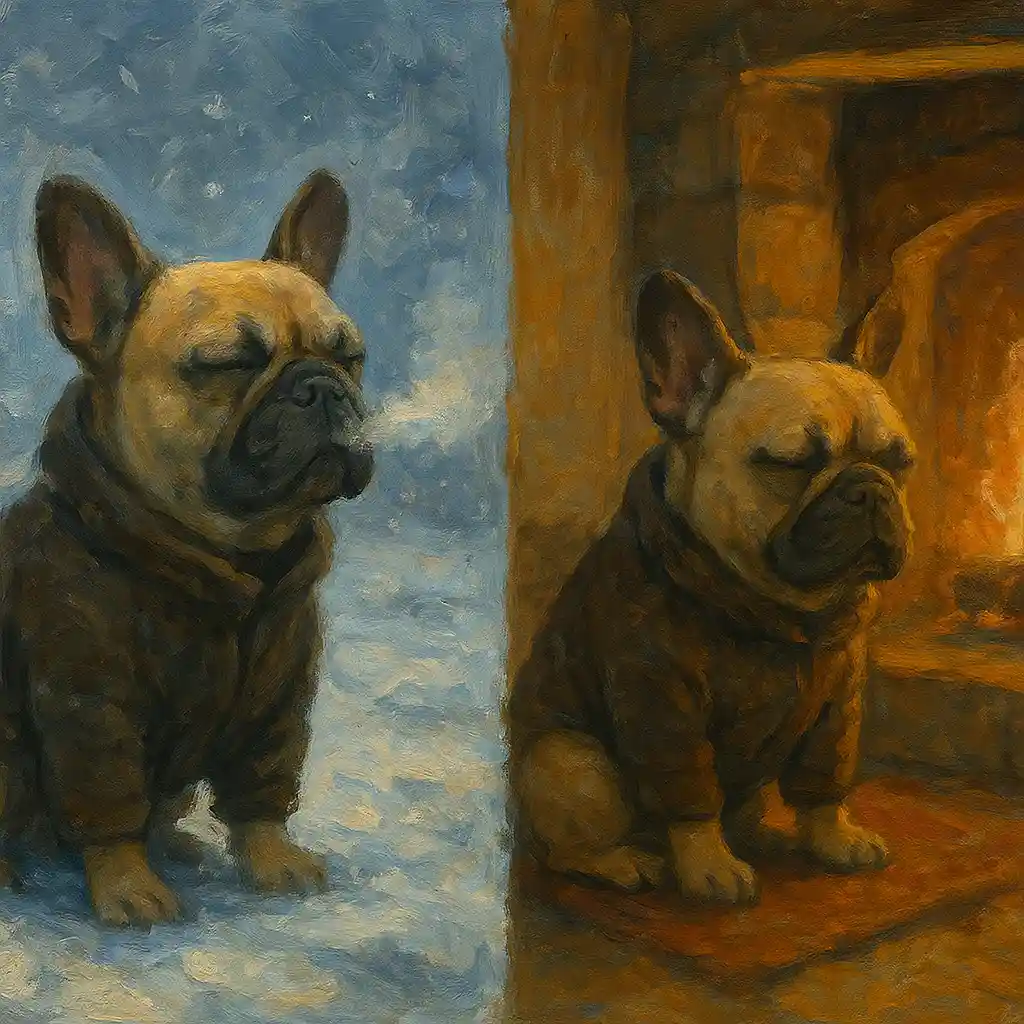
French Bulldog breathing in cold air can become harder in winter, especially for senior dogs. If you have ever taken your Frenchie out on a chilly day and noticed heavier breathing, coughing, or slower walking, you are not alone. Cold air can feel sharp and dry, and many French Bulldogs already work harder to breathe because of their natural body shape. Winter does not have to mean no fun, but it does mean adjusting your routine so your Frenchie stays safe, warm, and comfortable.
In winter, the goal is simple: keep outdoor time shorter and safer, warm up inside quickly, and give your senior Frenchie more rest than usual.
In this guide, you will learn practical ways to support French Bulldog breathing in cold air, including shorter walks, warming up inside, possibly using a coat, paw protection, hydration and nutrition, indoor enrichment, warning signs to watch for, and when to call your vet.
Why French Bulldog Breathing in Cold Air Can Be Harder in Winter
French Bulldogs are known for their short noses and compact faces. This can make breathing less efficient than it is for many other breeds. In winter, cold air can add extra stress. It may feel like it “catches” in the throat or makes breathing feel tighter, especially during activity like walking or playing outside.
Understanding the French Bulldog respiratory system (simple overview)
Frenchies often have smaller airways and can be more sensitive to changes in temperature and air quality. When your dog breathes cold air, the air is also drier than warm indoor air. Dry, cold air can irritate the airways and make breathing feel uncomfortable. For a senior Frenchie, this can be even more noticeable because older dogs may have less energy and may recover more slowly after exercise.
How cold air affects Frenchie breathing during walks
French Bulldog breathing in cold air may change in a few ways during winter:
- Breathing may become louder or more strained during activity.
- Recovery may take longer after a short walk.
- Coughing or throat clearing may happen more often in cold, dry air.
- Energy may drop faster, leading to slower walking or stopping.
This is why winter routines often work best when they are shorter, gentler, and more focused on comfort than distance.
Signs of respiratory distress in French Bulldogs
It is important to know what is normal for your dog and what is not. Watch your Frenchie closely in winter, because French Bulldog breathing in cold air can sometimes hide early signs of trouble. Signs to watch for include:
- Wheezing or unusual whistling sounds
- Coughing that is new or getting worse
- Labored breathing (working hard to breathe, chest moving more than normal)
- Very fast breathing that does not calm down after resting
- Lethargy or refusing to move during a walk
If you see these signs, bring your dog inside to warm up and rest. If symptoms do not improve, contact your vet.
French Bulldog Breathing in Cold Air: Why Shorter Winter Walks Help
Shorter walks are one of the easiest ways to support French Bulldog breathing in cold air. In winter, long walks can lead to overexertion, especially for senior Frenchies. Cold weather can also make muscles and joints feel stiffer, and older dogs may tire faster.
Why shorter walks matter for senior Frenchies
Senior dogs often need exercise, but they need it in a safer form. Shorter walks reduce:
- Time breathing cold air, which can irritate the airways
- Risk of overexertion, especially if your Frenchie gets excited outside
- Exposure to icy surfaces that can hurt paws and affect balance
Many Frenchie parents find that a few short walks can be better than one long walk in winter.
Recommended duration for winter walks
The best duration depends on your dog’s age, fitness, and the weather that day. A helpful winter approach is:
- Shorter, more frequent walks instead of one long outing
- Turn back early if breathing changes or your dog slows down
- Keep potty breaks practical and avoid lingering outside
Pay attention to your Frenchie’s body language. If your dog seems uncomfortable, it is okay to head inside sooner than planned.
How to maximize exercise in a shorter timeframe
You can still make short walks meaningful. Try these gentle strategies:
- Let your Frenchie sniff (sniffing is mental exercise and can tire them without heavy running)
- Choose a calm route with fewer distractions so your dog does not overdo it
- Keep the pace steady and avoid sudden sprints
- Use indoor play to add extra activity later
This balanced plan supports French Bulldog breathing in cold air while still keeping your dog active.
Warming Up Inside After Winter Time Outdoors
After a walk, warming up inside is not just about comfort. It also supports recovery. For senior dogs, cold weather can be tiring. When you come back indoors, your Frenchie may need a calm routine that helps them settle and breathe easily.
Creating a warm and cozy indoor environment
A warm home setup helps your Frenchie relax and recover. Consider:
- Cozy blankets in your dog’s favorite resting spot
- A comfortable bed that keeps them off cold floors
- A sleeping area away from drafts like doors, windows, or vents
If your home tends to be chilly, a heated pet bed can be helpful. The key is gentle warmth and a calm place to rest.
Indoor exercise alternatives for cold days
Some winter days are too cold or too windy for a good walk, especially if French Bulldog breathing in cold air becomes difficult. Indoor activities can keep your Frenchie moving without the harsh weather.
- Puzzle toys to keep the brain busy
- Gentle playtime with a soft toy in short sessions
- Hide-and-seek with treats in one room
- A mini obstacle course using pillows or safe household items
Keep indoor exercise low-impact for senior dogs. Short sessions with breaks are usually best.
Why staying active still matters in winter
Even in winter, movement supports mood, weight control, and joint health. The goal is not intense exercise. The goal is steady, safe activity that does not push your dog too hard. When French Bulldog breathing in cold air is a concern, indoor activity becomes an important part of the winter routine.
French Bulldog Breathing in Cold Air: Should Your Frenchie Wear a Coat?
Many French Bulldogs benefit from a coat in winter, especially seniors. A coat can help keep body temperature more stable during short outdoor trips. It can also make your dog more comfortable, which may reduce stress during walks.
How to choose a winter coat for your Frenchie
When choosing a coat, focus on fit and function. Helpful features include:
- A fit designed for French Bulldogs (their body shape is unique)
- Insulation for warmth during cold days
- Water-resistant or waterproof material for snow or wet weather
- Easy on/off design for dogs who do not like getting dressed
- Reflective elements for darker winter mornings and evenings
Comfort matters most. If the coat rubs, feels tight, or restricts movement, it may not be the right one.
How to dress your Frenchie for winter walks
Keep the process simple and calm:
- Put the coat on inside where your dog is warm and relaxed
- Check the fit around shoulders, chest, and neck
- Remove the coat after the walk so your dog does not overheat indoors
Some dogs need time to get used to wearing a coat. Try short practice sessions inside.
Benefits of a coat for senior French Bulldogs
A coat can support winter comfort in several ways:
- Helps keep muscles warmer, which can feel better for older bodies
- Supports shorter, calmer walks because your dog is less distracted by the cold
- May reduce shivering on cold days
While a coat does not directly “fix” French Bulldog breathing in cold air, it can make winter outings easier and less stressful overall.
Protecting Your Frenchie’s Paws in Winter
Winter sidewalks can be rough. Ice, snow, and salt can irritate paws and make walking painful. If your Frenchie is uncomfortable, they may stop often, lick their paws, or try to rush home. That can also increase breathing stress because the walk becomes less smooth and more stressful.
Common winter hazards for paws
- Cold surfaces that can lead to discomfort
- Ice that can cause slipping
- Salt and de-icing chemicals that can irritate skin
- Ice buildup between paw pads or toes
Tips to protect paws during winter walks
Try these simple steps:
- Use booties to protect from cold, salt, and ice
- Use paw wax if your dog will not tolerate booties
- Wipe paws after walks with a warm cloth to remove salt and debris
- Trim hair between paw pads to reduce ice buildup
- Use pet-safe ice melt on your own property when possible
Signs of paw damage to watch for
Check paws often in winter. Signs of trouble include:
- Cracked pads or bleeding
- Redness or swelling
- Limping or refusing to walk
- Excessive licking of paws after coming inside
If you notice these signs, pause outdoor walks and focus on indoor comfort until the paws heal. If you are unsure, ask your vet.
Hydration and Nutrition for Senior Frenchies in Winter
Hydration and nutrition are easy to overlook in winter. Many dogs drink less when it is cold, but dry indoor air and heating can still lead to dehydration. A well-fed, well-hydrated senior dog is more comfortable and often recovers better after activity.
Why hydration still matters in cold weather
Even if your Frenchie seems less thirsty, they still need regular water. Try:
- Offering fresh water often and refilling bowls regularly
- Placing more than one water bowl in the home
- Adding a little warm water to meals to encourage fluid intake
Hydration supports overall health and can help your dog feel better during winter routines, especially when French Bulldog breathing in cold air is already a challenge.
Adjusting your Frenchie’s diet for colder months
Keep meals balanced and appropriate for your dog’s age and activity level. Winter can change activity patterns, so your Frenchie may need small adjustments. The main goal is to keep nutrition steady and supportive.
Some owners also like to add warming, gentle foods such as cooked vegetables or lean proteins as part of a balanced plan. If you change the diet, do it slowly and carefully.
Signs of dehydration or malnutrition in senior French Bulldogs
Watch for signs that your senior Frenchie may not be getting what they need:
- Dry nose or gums
- Sunken eyes
- Lethargy or low interest in food
- Sudden weight loss
- Excessive panting (especially indoors)
If you notice these signs, increase monitoring and contact your vet if symptoms continue.
French Bulldog Breathing in Cold Air: Creating a Warm Sleeping Area
Sleep is a big part of winter wellness for senior dogs. A warm sleeping area supports rest, recovery, and comfort. Because French Bulldog breathing in cold air can take extra effort, your dog may need more downtime to recharge.
Ideal sleeping conditions for senior French Bulldogs
A good winter sleep setup includes:
- A quiet place where your dog feels safe
- A bed away from drafts and cold floors
- Warmth options like blankets or a heated pet bed (if appropriate)
Many senior Frenchies also prefer a spot close to their people, as long as it is warm and calm.
Choosing the right bedding for warmth and comfort
Look for bedding that supports older joints and keeps warmth in:
- Thicker, insulated beds that lift the body off the floor
- Soft blankets that your dog can nest in
- Easy-to-clean materials for practical daily use
Comfortable bedding can also encourage deeper rest after winter walks.
Monitoring your Frenchie’s temperature while they sleep
Check your dog during the night or during naps, especially in very cold weather. Signs they may be too cold include shivering or curling tightly and seeming unsettled. Signs they may be too warm include excessive panting. Small changes like moving the bed away from a draft or adding a blanket can make a big difference.
Indoor Enrichment Activities for Winter Days
When outdoor time is limited, indoor enrichment helps prevent boredom and keeps your Frenchie’s mind active. This is especially helpful for senior dogs who still need stimulation but may not handle long winter walks well.
Simple stimulating indoor activities for senior French Bulldogs
- Puzzle toys for slow, calm problem-solving
- Gentle tug (if your dog enjoys it and it is safe for them)
- Short training sessions using simple cues and treats
- Sniff games like hiding treats around one room
Keep sessions short and stop before your dog gets tired. This supports a healthy balance when French Bulldog breathing in cold air limits outdoor activity.
Why mental stimulation helps in winter
Mental activity can reduce stress and improve mood. It also helps your Frenchie feel “busy” even when the weather is not friendly. For many dogs, 10 minutes of puzzle play can be as satisfying as a longer walk.
Easy DIY enrichment idea
Try a simple treat game at home: place a few treats in a muffin tin and cover some spaces with tennis balls. Your Frenchie can use their nose to find the treats. Keep it gentle and supervise to ensure the game stays safe.
Signs of Cold-Related Health Issues in Winter
Winter can make some health problems worse, especially in senior dogs. Being alert helps you act early. If French Bulldog breathing in cold air seems worse than usual, take it seriously and adjust your routine right away.
Common winter concerns for French Bulldogs
- Respiratory discomfort from cold, dry air
- Joint stiffness that may make walking harder
- Paw irritation from ice and salt
- Low energy due to cold stress
Recognizing signs of hypothermia or frostbite
In very cold conditions, dogs can be at risk. Watch for signs like shivering, lethargy, or pale gums. Frostbite concerns may show up as very cold skin areas, pain, or color changes on ears, paws, or tail. If you suspect hypothermia or frostbite, warm your dog gently and contact your vet right away.
When to seek veterinary care
Call your vet if you notice:
- Breathing trouble that does not improve after rest indoors
- Repeated coughing or wheezing
- Extreme weakness or collapse
- Signs of significant paw injury
- Ongoing shivering even after warming up
It is always better to ask early than to wait.
Rest and Recovery: The Most Important Winter Habit
Senior Frenchies often need more rest in winter. Cold weather can be tiring, and French Bulldog breathing in cold air can take extra effort during even short walks. Rest helps your dog recover and keeps the winter season calmer and safer.
Why your Frenchie should rest after winter activities
After outdoor time, give your dog a chance to settle. A simple routine can help:
- Come inside and remove coat/booties
- Wipe paws and dry off
- Offer fresh water
- Guide them to a warm bed for a nap
Many senior dogs do best with quiet recovery time after every winter outing.
Signs of fatigue or overexertion in senior French Bulldogs
Watch for:
- Slowing down more than usual
- Stopping often or refusing to continue
- Heavy breathing that takes longer to settle
- Extra sleeping after a walk (some is normal, but monitor changes)
If you see these signs, reduce activity and focus on warmth and rest.
Tips to promote rest and recovery in cold weather
- Keep a consistent routine so your dog knows what to expect
- Offer multiple warm nap spots around the home
- Choose calm indoor activities instead of high-energy games
- Plan walks at warmer times of day when possible
Rest is not laziness for a senior dog. It is part of healthy winter care.
French Bulldog Breathing in Cold Air: A Simple Winter Checklist
If you want a quick way to remember the key habits, use this list as a winter guide:
- Shorter walks to reduce cold air exposure
- Warm up inside right after outdoor time
- Possibly use a coat for comfort and warmth
- Protect paws with booties or paw wax and wipe after walks
- Support hydration and nutrition with fresh water and balanced meals
- Create a warm sleeping area away from drafts
- Do indoor enrichment like puzzle toys and sniff games
- Watch for health issues and contact your vet when needed
- Prioritize rest after winter activities
Conclusion: Keep Winter Gentle, Warm, and Safe for Your Senior Frenchie
French Bulldog breathing in cold air can be a real challenge in winter, especially for senior dogs. With a few simple changes—shorter walks, warming up inside, a possible coat, paw protection, good hydration and nutrition, indoor enrichment, and plenty of rest—you can help your Frenchie stay comfortable and happy all season. If you want more support, check out our other Frenchie care guides on the blog and build a winter routine that fits your dog’s needs.