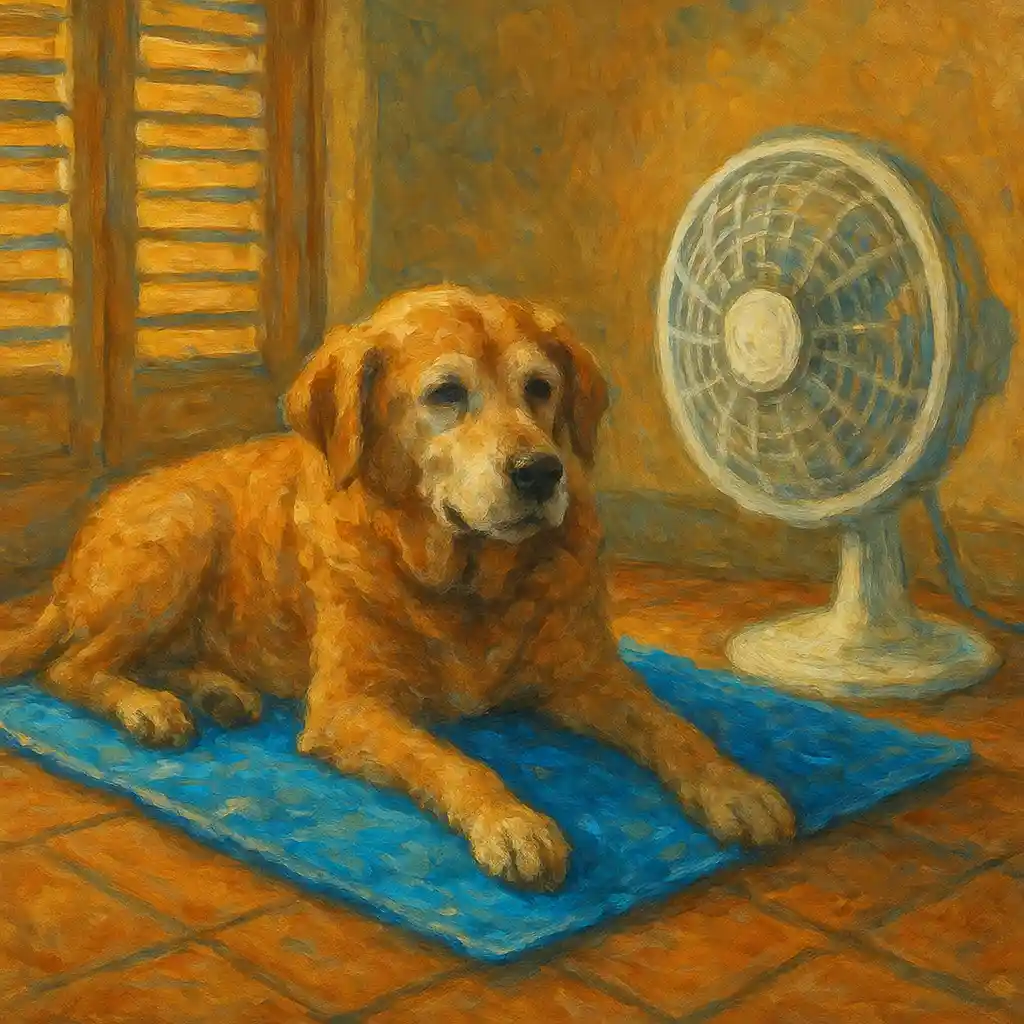
Senior dog in summer days can be hard, especially when you need a cool apartment without AC. You may notice your older dog panting more, moving less, and searching for a cold floor. The good news is that you can make real changes at home with simple tools like shutters, a safe fan, and a cooling mat, plus a few easy daily habits.
A senior dog in summer needs extra support, because aging can make it harder for them to handle heat.
In this guide, you will learn how to create a cool apartment without AC for a senior dog in summer, how to spot heat stress early, and how to use shutters, fans, and cooling mats in a safe way.
Why a Senior Dog in Summer Needs Extra Cooling Support
A senior dog in summer often struggles more than a younger dog. Aging can affect how well a dog regulates body temperature. This means your dog may overheat faster, even inside your home.
How aging affects temperature control
As dogs get older, their bodies may not respond to heat as quickly or as strongly. They may not cool down as easily through panting, and they may get tired sooner. That is why planning a cool apartment without AC is not just about comfort. It is about safety.
Signs of heat stress in senior dogs
Watch your senior dog in summer closely, especially during the hottest hours. Signs of heat stress can include:
- Excessive panting
- Drooling more than usual
- Lethargy or weakness
- Rapid heartbeat
- Vomiting or diarrhea
- Bright red or very pale gums
- Staggering or trouble walking
If you see these signs, move your dog to a cooler place right away, offer small sips of water, and use cool (not ice-cold) water on paws and fur. Contact your veterinarian for guidance.
Why a cool environment matters
Heat can build up in apartments quickly, especially if you have strong sun coming through windows. For a senior dog in summer, a cool apartment without AC can reduce stress on the body, support better sleep, and lower the risk of heat-related illness.
Cool Apartment Without AC Basics: Start With Sun and Airflow
To build a cool apartment without AC, focus on two main goals: block heat from coming in, and move air in a safe way. This is where shutters and a safe fan become very useful for a senior dog in summer.
Create a simple “cool zone” for your dog
Choose one area of your home as the main rest spot. Ideally, it should be away from direct sunlight, have good airflow, and be close to fresh water. This makes it easier for your senior dog in summer to find comfort without walking around too much.
Reduce indoor heat during peak hours
The hottest time is usually midday and afternoon. Plan your day so your apartment stays darker and cooler during these hours. Then, when temperatures drop outside, you can ventilate more.
Use Shutters to Keep a Cool Apartment Without AC
Shutters are one of the most effective tools for a cool apartment without AC. They help block direct sunlight, which is a major source of indoor heat. For a senior dog in summer, this can be a big difference in comfort.
Benefits of shutters for summer cooling
- Less direct sun: reduces heat entering through windows
- More stable indoor temperature: helps your dog rest better
- Privacy and security: an extra bonus while keeping the apartment shaded
Types of shutters and what to consider
Different windows may work better with different shutter styles. The main point is to choose something that blocks sun well and is easy to use every day.
- Plantation shutters: good for larger windows, strong light control
- Vinyl shutters: durable and easy to clean, useful in humid areas
- Aluminum shutters: lightweight and modern, can be a good fit in some homes
How to use shutters effectively during heat
For a cool apartment without AC, timing matters. Try this routine:
- Close shutters during the hottest parts of the day to block sun and reduce indoor heat.
- Keep the coolest room darker so your senior dog in summer has a stable place to rest.
- When outdoor air cools down, open shutters and windows (if safe) to release warm air.
If you do not have shutters, you can use blinds or curtains in a similar way. The key goal is still the same: block the sun before it heats up the room.
Use a Safe Fan for a Senior Dog in Summer (Air Circulation Without Risk)
A safe fan can improve comfort a lot in a cool apartment without AC. Air movement helps your dog feel cooler, even if the temperature does not drop much. But safety is very important, especially with curious pets.
How fans help in a cool apartment without AC
Fans support air circulation and reduce the “stuffy” feeling in a room. For a senior dog in summer, this can make resting and breathing easier. Fans can also work well together with shutters: shutters block heat, and the safe fan moves the cooler air around.
Choosing a fan that is safe for pets
When choosing a safe fan, focus on stability and protection:
- Choose a fan with protective covers (no exposed blades).
- Pick a fan that is stable and hard to tip.
- If possible, use a fan with adjustable speeds so airflow is gentle.
Where to place a safe fan for best cooling
Placement changes the results. For a senior dog in summer, you want comfort without stress.
- Place the safe fan near the area your dog rests, but not blowing directly into their face.
- Keep cords out of reach to prevent chewing or tripping.
- Try different positions and watch your dog’s reaction. Many dogs like a gentle breeze nearby, not a strong wind.
Safe fan rules for senior dogs
- Do not leave a fan where your dog can touch moving parts.
- Do not create a strong draft that makes your dog uncomfortable.
- Check the room often, especially during very hot days.
Cooling Mat Comfort: A Simple Upgrade for a Senior Dog in Summer
A cooling mat is a practical comfort tool for a senior dog in summer. It gives your dog a cool surface to lie on during the hottest hours. In a cool apartment without AC, a cooling mat can become your dog’s favorite place.
Benefits of a cooling mat for older dogs
- Provides a cool resting spot without needing electricity
- Supports comfort during warm afternoons
- Can be helpful for older bodies that get uncomfortable in heat
Types of cooling mats you may see
Cooling mats come in different styles. Some are simple and ready to use, while others need extra steps.
- Gel-filled cooling mats: designed to absorb and release heat
- Pressure-activated gel mats: work without refrigeration or electricity
- Freezer-style mats: need to be cooled in the freezer first
- Water-filled cooling mats: use water movement to support cooling
How to introduce a cooling mat (so your dog actually uses it)
Some dogs love a cooling mat right away. Others need time. To help your senior dog in summer accept it:
- Place the cooling mat in your dog’s favorite resting spot.
- Add a few treats on the mat to build a positive connection.
- Be patient. Let your dog explore it without pressure.
Try to keep the cooling mat in a shaded area. If the mat sits in direct sun, it will not stay cool for long.
DIY Cooling Ideas for a Cool Apartment Without AC
Along with shutters, a safe fan, and a cooling mat, DIY cooling solutions can help a senior dog in summer feel better. These ideas are simple, low-cost, and easy to repeat.
Frozen water bottle “cool buddy”
Freeze a water bottle, wrap it in a towel, and place it near your dog’s bed. Many dogs like to lie next to it. This can support a cool apartment without AC by adding one more cool surface in your dog’s rest zone.
Damp towel cooling
A damp towel can help your dog cool down. You can place it on the floor in a shaded spot. Some dogs will lie on it, while others prefer it nearby. Always watch your dog to make sure they are comfortable.
Homemade frozen treats
Frozen treats can be both cooling and fun. Use dog-friendly ingredients mentioned in your routine, such as:
- Low-sodium chicken or beef broth frozen into ice cubes
- Plain yogurt blended with mashed fruits like bananas or berries, then frozen in molds
These treats can support hydration and help your senior dog in summer cool down from the inside.
DIY cooling bandana or vest for walks
If you still go outside for short walks, a cooling bandana can help. Soak a bandana in water, wring it out, and place it in the freezer for a short time before use. For a cooling vest, you can sew pockets and use ice packs or frozen gel packs. Keep it comfortable and not too heavy.
Hydration Tips for a Senior Dog in Summer
Hydration is one of the most important parts of summer care. Even in a cool apartment without AC, a senior dog in summer can lose water faster through panting.
Simple hydration habits that work
- Keep fresh, clean water available at all times.
- Add ice cubes to keep the water cool.
- Set up multiple water stations around the apartment.
- If your dog drinks less, add a splash of low-sodium broth for taste.
Signs of dehydration to watch for
Dehydration can happen quickly in hot weather. Signs include:
- Dry gums
- Excessive panting
- Lethargy
- Sunken eyes
- Loss of skin elasticity
If you notice these signs, offer water and contact your veterinarian if you are worried.
Creative ways to encourage drinking
- Try a pet water fountain to make water more interesting.
- Soak dry food in water to increase total water intake.
- Offer broth ice cubes as a special summer snack.
Safe Exercise for a Senior Dog in Summer (Even Without AC)
Exercise is still important, but it needs to change in hot weather. A senior dog in summer can overheat fast, even during a short walk.
Pick the right time of day
Choose early morning or late evening walks. These times are cooler and safer. Avoid midday sun.
Check the ground for hot pavement
Hot surfaces can burn paws. Use this simple test: place the back of your hand on the pavement for 5 seconds. If it is too hot for you, it is too hot for your dog.
Signs it is too hot to exercise
- Heavy panting that does not slow down
- Drooling more than usual
- Seeking cool surfaces and refusing to move
- Staggering or weakness
- Vomiting or diarrhea
On very hot days, skip the walk and focus on indoor comfort. A cool apartment without AC, a safe fan, and a cooling mat can support rest better than forced activity.
Grooming Tips That Help a Senior Dog in Summer Stay Cooler
Grooming supports comfort in hot weather. For a senior dog in summer, regular brushing can remove excess fur and reduce matting, which can trap heat. It also helps air move through the coat.
Basic summer grooming routine
- Brush regularly to remove loose fur
- Keep the coat tidy and comfortable
- Check skin and coat during grooming for any changes
Grooming senior dogs with sensitive skin
Some older dogs have more sensitive skin. Gentle care can help:
- Use a mild, hypoallergenic shampoo designed for sensitive skin
- Use lukewarm water, not hot
- Consider a moisturizing conditioner to reduce dryness
- Trim nails carefully to avoid cuts and discomfort
Choose the right grooming tools
- A good quality brush for shedding and mat prevention
- Pet-safe clippers if trimming is needed
- Nail clippers to support safe walking
Grooming is not only about looks. It is part of keeping a senior dog in summer comfortable in a cool apartment without AC.
Set Up a Comfortable Sleeping Area in a Cool Apartment Without AC
Sleep can be difficult during heat. A senior dog in summer may wake up more often and move around to find a cool place. A good sleeping setup makes a big difference.
Choose bedding materials for hot weather
Pick breathable materials like cotton or linen to support airflow. You can also place a cooling mat in or next to the sleeping area for extra comfort.
Position the bed in the coolest part of the apartment
Move your dog’s bed away from direct sunlight and warm windows. A shaded corner with airflow from a safe fan often works well.
Support ventilation in the sleeping area
Ventilation is key for a cool apartment without AC. Use shutters to block sun during the day and, when safe, allow airflow when the outside temperature drops. Keep the sleeping area calm, shaded, and easy to access.
Traveling With a Senior Dog in Summer: Cooling and Safety Rules
Summer trips can be enjoyable, but heat adds risk. If you travel with a senior dog in summer, plan ahead for cooling and hydration.
Keeping your dog cool during car rides
- Use shutters or sun blockers to reduce direct sunlight in the car
- Bring a safe fan (portable if needed) for air movement
- Use a cooling mat to give your dog a comfortable spot
- Bring frozen water bottles wrapped in towels for extra cooling
Precautions for hot weather travel
- Plan travel during cooler parts of the day
- Bring plenty of water and a portable bowl
- Make regular stops for drinking and short breaks
- Watch for signs of heat stress during the trip
Never leave your dog in a parked car
This is one of the most important summer rules. Even with windows slightly open, a parked car can become dangerously hot very fast. A senior dog in summer is at higher risk, so avoid this situation completely.
Monitor Your Senior Dog in Summer: Daily Checks and Vet Support
Even with a cool apartment without AC, it is smart to monitor your dog closely during summer. Small changes in behavior can be early signs of discomfort.
Check for heat-related illness signs
Look for changes like increased panting, drooling, tiredness, and stomach issues. If something feels wrong, act quickly and contact your veterinarian.
Ask your veterinarian for summer care tips
Every dog is different. A veterinarian can help you plan the best summer routine for your senior dog in summer, based on their health needs.
Keep a simple summer record
It can help to write down notes about your dog’s behavior during hot days. Track things like:
- How much they drink
- How often they pant
- Energy levels during morning and evening
- Any signs of heat stress
This can help you spot patterns and react earlier.
Senior Dog in Summer Safety Checklist (Quick and Practical)
Use this checklist to support a cool apartment without AC and safer summer days:
- Close shutters during peak sun hours
- Use a safe fan for gentle air circulation
- Place a cooling mat in a shaded rest area
- Offer fresh water all day (add ice cubes if helpful)
- Use frozen treats or broth ice cubes for extra hydration
- Walk in early morning or late evening only
- Protect paws from hot pavement
- Never leave your dog in a parked car
- Brush regularly and keep grooming gentle
- Watch for heat stress and dehydration signs
Conclusion: A Cool Apartment Without AC Can Still Be Safe for a Senior Dog in Summer
A senior dog in summer can stay comfortable even if you do not have air conditioning. With shutters to block heat, a safe fan to improve airflow, and a cooling mat for rest, you can build a cool apartment without AC that supports your dog’s health. Add hydration, smart exercise timing, and simple DIY cooling ideas, and you will be ready for the hottest days.
If you want more help with daily care, check out our other senior dog guides on the blog and create a simple summer routine you can follow every day.