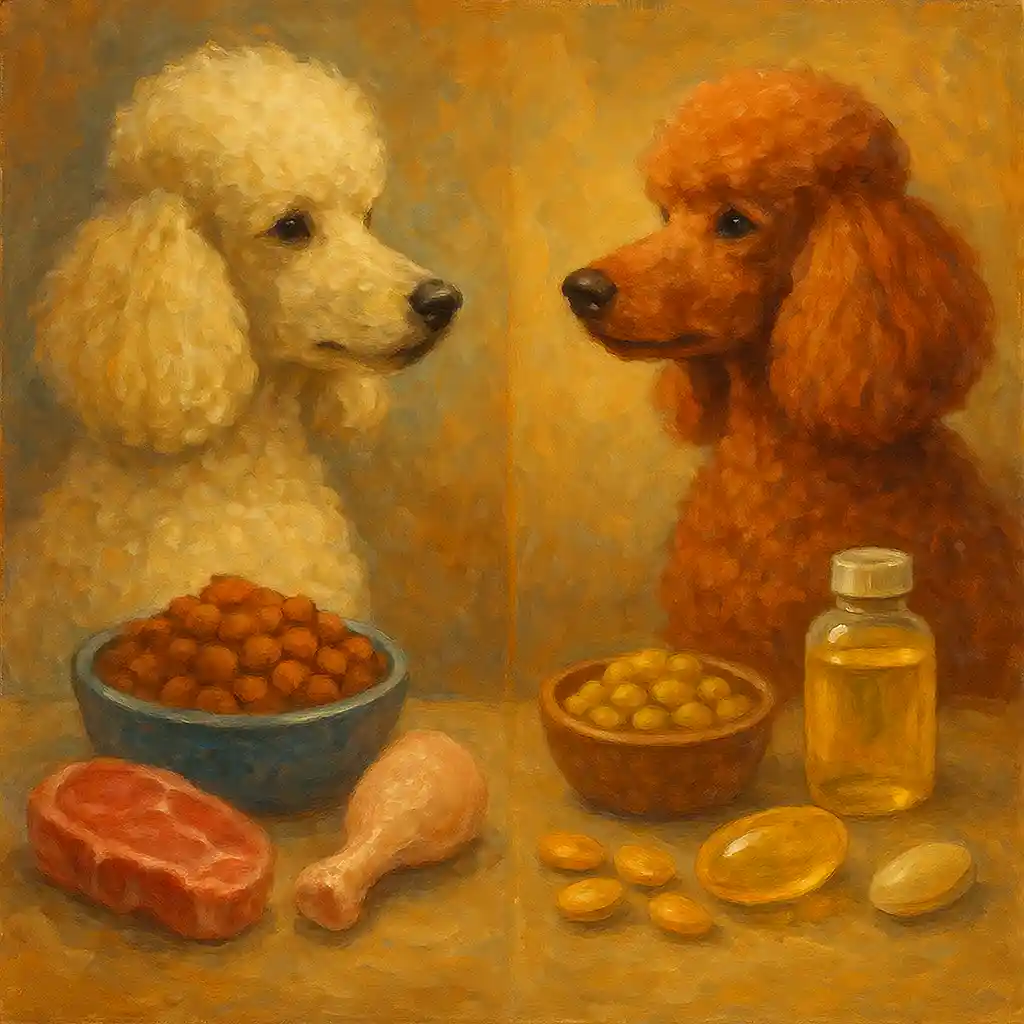
Poodle nutrition for show vs pet is not about “one perfect diet.” It is about matching food choices to your poodle’s real life: their activity level, age, coat goals, and health needs. A show poodle often needs support for muscle tone, steady energy, and coat quality. A pet poodle may need help with weight control, comfort, and long-term health. In both cases, the basics stay the same: good protein, smart supplements when needed, and consistent Omega-3 support for skin and coat.
If you want a poodle with a strong body and a healthy coat, start with the basics: high-quality protein, careful supplement choices, and steady Omega-3 timing.
This guide keeps things simple and practical. You will learn how protein needs can look different for show and pet poodles, what coat supplements can help (and how to use them safely), and how to time Omega-3 so your poodle gets the best results.
Poodle nutrition for show vs pet: what changes and what stays the same
All poodles need a balanced diet with protein, fats, carbohydrates, vitamins, minerals, and fresh water. What changes in poodle nutrition for show vs pet is usually the “focus” of the plan.
Basic nutritional needs of poodles
Poodles are active, smart dogs. They need enough energy, strong muscles, and support for skin and coat. In simple terms, most poodles do best with:
- High-quality protein from sources like chicken, turkey, fish, eggs, or other well-made options
- Healthy fats for energy and coat health
- Omega-3 fatty acids to support skin, coat, and overall comfort
- Vitamins and minerals for daily body function
- Fresh water at all times
If your poodle’s coat looks dull, their energy drops, or their body condition changes, nutrition is one of the first places to check. Small improvements can make a big difference over time.
Show poodles vs pet poodles: different goals, different pressure
Show poodles often have a structured routine: grooming schedules, training, travel, and ring performance. They may need nutrition that supports:
- Muscle tone and recovery
- Steady energy without weight gain
- Coat strength, shine, and skin comfort
Pet poodles may have a calmer routine. Many pet poodles need nutrition that supports:
- Healthy weight and body condition
- Joint comfort (especially for senior poodles)
- Skin and coat health without “overdoing” supplements
In both cases, the best plan is the one that fits your dog’s real needs, not just a label on a bag.
Poodle nutrition for show vs pet: protein needs and why protein matters
Protein is a key part of poodle nutrition for show vs pet because it supports muscle, immune function, and overall body repair. When people talk about “protein for coat,” they are also pointing to the fact that skin and coat health depend on good nutrition, including enough protein and healthy fats.
The role of protein in a poodle’s diet
Protein provides amino acids that help your poodle maintain muscle and support normal body functions. Poodles that are active, training, or competing often need careful protein planning to keep them strong and fit.
When choosing foods, look for a quality protein source such as chicken, turkey, fish, or eggs. These options were also mentioned throughout the draft as common, practical choices.
High-quality protein sources to consider
Whether your poodle is in the show ring or sleeping on the couch, these protein sources are commonly used and easy to understand:
- Chicken
- Turkey
- Lean beef
- Fish (such as salmon or tuna)
- Eggs
- Plain yogurt or cottage cheese (for dogs that tolerate dairy well)
- Legumes (like lentils and chickpeas) and other plant options, when appropriate
Every poodle is unique. If your dog has sensitivities, you may need to adjust protein sources with your veterinarian.
Poodle nutrition for show vs pet: protein needs for show poodles
Show poodles are often compared to athletes. They need nutrition that supports performance, muscle tone, and overall appearance. In poodle nutrition for show vs pet, show dogs typically need more attention to protein quality and consistency.
Why show poodles often need stronger protein support
Show poodles may have:
- More training and activity
- More grooming demands, where coat condition matters every day
- More pressure to stay lean and strong at the same time
Because of this, many owners choose diets with strong, high-quality protein as a foundation.
Recommended protein sources for show poodles
The draft highlighted several practical protein options that many show owners use:
- Lean meats like chicken, turkey, and lean beef
- Fish like salmon and tuna (also supports Omega-3 intake)
- Eggs as a complete protein source
- Dairy like plain yogurt or cottage cheese for added protein and digestive support, when tolerated
If you use a commercial dog food, choosing a product made for active dogs can help, but it still needs to match your specific poodle.
Protein intake guidelines for show poodles (practical approach)
The draft emphasized balance: protein matters, but too much can lead to unwanted weight gain. A simple, helpful habit is to check that a quality protein source is listed early in the ingredient list and that your poodle stays in good body condition.
Because show schedules vary, the best plan is personalized. A veterinarian can help you set targets based on:
- Age and size
- Training load and travel
- Body condition and muscle tone
- Coat and skin needs
Poodle nutrition for show vs pet: protein needs for pet poodles
Pet poodles need excellent nutrition too, but the goal is usually long-term health, stable weight, and comfort. In poodle nutrition for show vs pet, pet poodles often do best with a steady, balanced diet and careful portion control.
Understanding protein requirements for pet poodles
The draft noted a common guideline: many adult poodles do well with around 25–30% protein in their diet. Puppies and seniors may need adjustments, depending on growth, activity, and health.
If your pet poodle seems low on energy or their coat becomes dull, protein quality (and overall diet quality) is worth reviewing with your veterinarian.
Suitable protein sources for pet poodles
Pet poodles can use the same strong protein options as show poodles. The difference is usually portion size and calories. Common choices include:
- Chicken, turkey, lean beef
- Fish like salmon or tuna
- Eggs
- Plant-based options like lentils, chickpeas, and quinoa when appropriate
Variety can help some dogs, but changes should be made slowly to protect digestion.
Protein intake guidelines for pet poodles (keep it simple)
A useful approach is to aim for a consistent diet that keeps your poodle at a healthy weight and supports good energy. If your poodle is less active, they may need fewer calories even if the protein percentage looks fine on paper.
Talk with your vet if you are unsure. A small adjustment now can help prevent long-term problems later.
Coat supplements for poodles: what they do and when they help
Coat supplements are popular because poodles are known for their coat. For show poodles, coat quality is part of performance. For pet poodles, a healthy coat often means healthy skin and better comfort.
Benefits of coat supplements for poodles
The draft highlighted several reasons owners use coat supplements:
- Support a shiny coat and healthy skin
- Help with dryness and general coat condition
- Support coat strength and growth, especially when paired with good protein
It is important to remember that supplements work best when the main diet is already solid. Supplements cannot “fix” a poor base diet.
Types of coat supplements mentioned in the draft
These are common options discussed:
- Fish oil (Omega-3 support)
- Biotin (often used for coat support, especially in show dogs)
- Coconut oil (sometimes used for skin moisture and comfort)
- Flaxseed oil (a plant-based option often used for coat and skin support)
- Vitamin E and Vitamin A (noted in the draft as part of coat-related nutrition, including through natural sources)
Because every poodle is different, it may take time to see what helps your specific dog. Introduce only one change at a time so you can track results.
Coat supplement dosage: follow labels and vet advice
The draft included specific examples for Omega-3 and biotin dosing. It also stressed the importance of consulting a veterinarian before starting supplements.
For reference from the draft content:
- For small to medium poodles, a daily dose of 1,000–2,000 mg of Omega-3 fatty acids was mentioned as a typical range.
- Biotin was mentioned at 5–10 mg per day.
Important: do not treat these numbers as a universal rule for every poodle. Use them as a discussion point with your veterinarian, and always follow product instructions.
More supplements do not automatically mean a better coat. The safest plan is the smallest plan that works.
Poodle nutrition for show vs pet: Omega-3 timing for best results
Omega-3 fatty acids are a key part of poodle nutrition for show vs pet because they support skin and coat health, and they may help with comfort as poodles age. Many owners notice coat changes first, but Omega-3 support is about more than looks.
Why Omega-3 fatty acids matter for poodles
The draft highlighted several reasons Omega-3 is important:
- Supports healthy skin and a shiny coat
- Supports brain and cognitive function
- May help reduce inflammation and support comfort, especially for senior poodles
Show and pet poodles can both benefit from Omega-3 when used consistently and safely.
Best food sources of Omega-3 for poodles
The draft listed several Omega-3 sources that owners often use:
- Fatty fish like salmon, mackerel, and sardines
- Flaxseeds and chia seeds
- Fish oil supplements made for dogs
If you add fish to meals, make sure it is prepared safely for dogs and fits your poodle’s overall calorie needs.
Omega-3 timing: when to give it
The draft was clear on timing: Omega-3 supplements are best given with meals to support absorption. If your poodle has a sensitive stomach, the draft suggested splitting the dose between morning and evening meals.
- Best timing: with food
- For sensitive stomachs: split into two smaller servings
- Most important habit: be consistent
Consistency matters more than the exact hour of the day. Pick a routine you can keep.
Balancing protein, coat supplements, and Omega-3 in one plan
It is easy to get excited and add too many things at once. A better approach is to build a simple plan and adjust slowly. This is where poodle nutrition for show vs pet becomes practical: you choose what supports your poodle’s real goals.
A simple way to build your poodle’s nutrition plan
- Start with the base diet. Choose a food with a quality protein source and balanced nutrition.
- Check body condition. Your poodle should look fit, not too thin, not overweight.
- Add Omega-3 with meals. Keep timing consistent.
- Only then consider coat supplements. Add one supplement at a time and track changes.
If your poodle is a show dog, you may focus more on coat quality and muscle tone. If your poodle is a pet, you may focus more on weight control and joint comfort. Both can still use the same basic steps.
Why a veterinarian matters for tailored advice
The draft repeatedly recommended working with a veterinarian. That is especially important when:
- Your poodle is a puppy, senior, or has health conditions
- You want to add multiple supplements
- You see signs of allergies, digestive upset, or skin problems
- You are preparing a show poodle for competition season
A vet can help you avoid common mistakes, like feeding too many calories while trying to increase protein, or stacking supplements in a way that is not needed.
Monitor health and adjust as needed
Your poodle will tell you a lot through daily signs. The draft suggested watching:
- Weight and body condition
- Coat shine and skin comfort
- Energy levels
- Stool quality and digestion
A helpful tip from the draft is to keep a simple journal. Write down food changes, supplements, timing, and any visible results. This makes it easier to see what is working.
Real-life examples: what “better poodle nutrition” can look like
The draft included success stories that show how steady nutrition habits can support coat and overall health.
Story: a show coat improved with a better nutrition plan
In the draft, Bella the standard poodle had a coat that looked dull. After a veterinarian recommended a tailored plan, Bella’s owner increased high-quality protein and added helpful supplements. Omega-3 fatty acids were also added, and the coat improved in health and luster. The key point was not a “magic product,” but a plan that supported Bella’s full needs.
Story: a pet poodle felt better with targeted Omega-3 support
The draft also shared a story about a pet poodle who struggled with skin allergies. After adding Omega-3 fatty acids, the dog’s skin improved and the poodle seemed more comfortable. This supports the idea that Omega-3 can be a useful tool in poodle nutrition for show vs pet, even when the goal is simply a happier pet at home.
Choosing the right food: labels, lifestyle, and expert help
Nutrition choices can feel confusing, especially when marketing is loud. The best results usually come from simple checks and steady habits.
How to read and understand pet food labels
The draft suggested focusing on a few key label points:
- Protein content and protein source: look for a quality protein (like chicken, beef, or fish) listed early
- Omega-3 sources: ingredients like fish oil or flaxseed can support skin and coat
- Added supplements: some foods include joint support ingredients like glucosamine and chondroitin
Also consider avoiding fillers that do not support your specific goals, especially if your poodle has sensitivities.
Match food to age, activity level, and health conditions
The draft emphasized three practical factors:
- Age: senior poodles may need fewer calories and more comfort support
- Activity level: active dogs may need more protein and energy; less active dogs need careful calorie control
- Health conditions: allergies, joint issues, and digestion problems may require diet changes
This is a major reason poodle nutrition for show vs pet is not one-size-fits-all. Two poodles can eat the same brand and still need different portions or supplement choices.
Ask breeders and poodle experts (and still confirm with your vet)
The draft recommended speaking with breeders or poodle experts for practical, breed-focused tips. This can be helpful for show routines and coat care. Still, your veterinarian should guide final decisions, especially if your poodle has medical needs.
Safety precautions when adjusting your poodle’s diet
Diet changes should be safe and slow. Many problems happen when owners change too much, too fast.
Make transitions gradual
The draft recommended a gradual transition over 7–10 days when switching foods. This helps prevent digestive upset. You can slowly increase the new food while reducing the old one.
Monitor for allergies and sensitivities
The draft suggested watching for signs like:
- Itching or redness
- Ear infections
- Digestive issues
- Skin problems
If you notice these signs, talk to your veterinarian and consider tracking meals in a food diary.
Avoid over-supplementation
The draft warned against giving too many supplements or exceeding recommended dosages. Stick to label instructions and vet guidance. If you are using multiple products, make sure you are not doubling up on the same ingredient.
A practical idea from the draft is to create a schedule or chart to track what you give and when. This reduces mistakes and helps you stay consistent.
DIY poodle treat recipes for nutritional boosts (simple ideas)
Homemade treats can be a fun way to add nutrition, but they should not replace a balanced diet. Treats are best used as small “extras” that support your bigger plan for poodle nutrition for show vs pet.
Homemade treats using protein-rich ingredients
The draft suggested using protein-rich ingredients like lean meats, eggs, Greek yogurt, and legumes. Keep portions small and avoid adding ingredients your poodle does not tolerate.
DIY coat-support treat idea from the draft
The draft shared a simple concept: mix cooked salmon with sweet potato and a sprinkle of flaxseed, then bake into bite-sized treats. This idea supports protein intake and Omega-3 support in a treat form.
Omega-3 rich treat idea from the draft
Another option mentioned was using canned salmon (boneless and skinless), mixed with cooked quinoa and a dash of parsley, then baked until crisp. This is a simple way to include Omega-3 foods in a controlled, treat-sized portion.
As always, introduce new treats slowly and watch digestion and skin response.
Conclusion: build a simple, steady plan that fits your poodle
Poodle nutrition for show vs pet comes down to the same core idea: feed the dog in front of you. Start with high-quality protein, add Omega-3 with meals for consistent support, and use coat supplements carefully and only when they truly help. Make changes slowly, watch your poodle’s coat, energy, and digestion, and work with your veterinarian for a plan that fits your poodle’s age, lifestyle, and goals.
If you want more help building a routine, check out our other poodle care articles in the blog and create a simple weekly plan for meals, supplements, and coat check-ins.