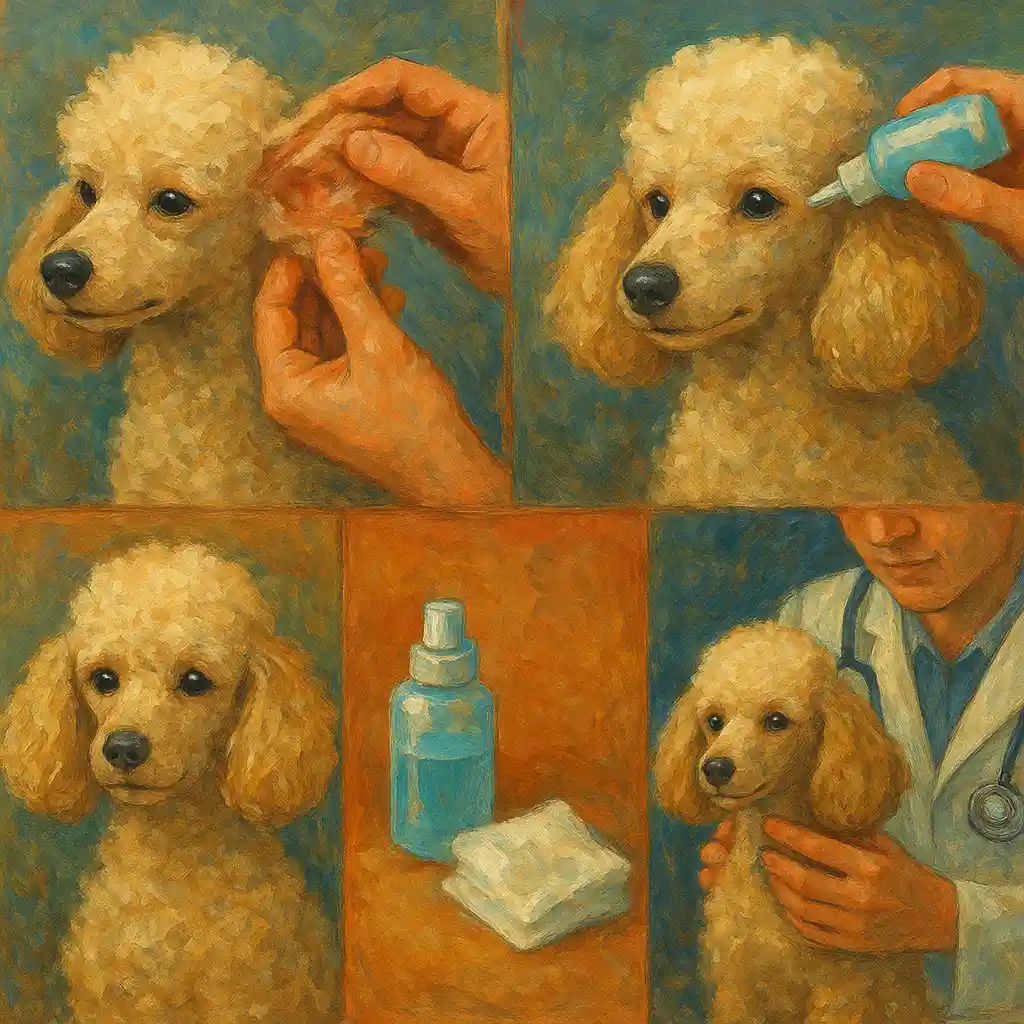
Poodle ear infections are common, and they can be painful for your dog and stressful for you. If you’ve seen your poodle shaking their head, scratching their ears, or acting uncomfortable, you know how quickly a small problem can feel urgent. The good news is that most poodle ear infections can be reduced with simple weekly care: regular checks, gentle cleaning, keeping ears dry, and getting help early when something looks wrong.
Regular ear care is one of the easiest ways to prevent poodle ear infections before they turn into a bigger problem.
In this guide, you’ll learn why poodles are prone to ear issues, what symptoms to watch for, five weekly care steps, how to choose a safe cleaning solution, and the signs that mean you should call your vet right away.
Understanding poodle ear infections (and why poodles get them so often)
Poodle ear infections happen when the ear canal becomes irritated and then bacteria, yeast, or other problems take advantage of that irritated environment. Poodles can be more sensitive because their ears can trap moisture and debris, especially when there is hair growth in and around the ear area.
Common causes of poodle ear infections
Many cases of poodle ear infections start with one of these issues:
- Moisture buildup after bathing or swimming (moisture can stay trapped in the ear canal).
- Wax and debris buildup that irritates the ear and blocks airflow.
- Ear mites, bacteria, or yeast (your vet can confirm what’s going on).
- Too much hair around or inside the ear, which can reduce ventilation and trap dirt.
Prevention matters because once the ear is inflamed, it can become a cycle: irritation leads to more scratching, scratching leads to more inflammation, and the infection can become harder to clear.
Symptoms to watch out for
Knowing the early signs helps you act before poodle ear infections become severe. Watch for:
- Excessive scratching or rubbing of the ears
- Head shaking (especially frequent or sudden)
- Redness or swelling in or around the ear canal
- Foul odor from the ears
- Discharge, crust, or heavy wax buildup
- Sensitivity or pain when you touch the ears
If your poodle is suddenly protective of their head, avoids being touched, or cries out, take it seriously. Ear pain can be intense.
Risks of untreated poodle ear infections
It’s tempting to “wait and see,” but untreated poodle ear infections can cause bigger problems. The draft you provided highlights serious risks like:
- Hearing loss
- Balance problems
- Facial nerve paralysis
That’s why weekly prevention and quick action matter. If something looks off, it’s always safer to check with your veterinarian.
5 weekly care steps to prevent poodle ear infections
Consistency is your best friend here. These five weekly habits are designed to lower the risk of poodle ear infections without overdoing it or irritating the ear.
Step 1: Weekly ear inspections to catch poodle ear infections early
A weekly ear check takes only a few minutes and can help you spot early signs of poodle ear infections. Choose a calm time, use gentle handling, and keep the experience positive.
How to properly inspect a poodle’s ears
- Pick a quiet, comfortable place where your poodle feels safe.
- Gently lift the ear flap and look inside.
- Use a small flashlight if you need help seeing clearly.
- Look and smell: notice redness, swelling, discharge, crust, or a strong odor.
- Do not use cotton swabs inside the ear canal.
Keep treats nearby. A small reward can make ear checks easier over time.
Healthy ear vs. infected ear: what’s the difference?
These simple comparisons can help you decide if you’re seeing normal ear conditions or possible poodle ear infections:
- Healthy ear: pale pink inside, clean, no strong odor, no swelling, and your poodle does not scratch or shake their head a lot.
- Possible infection: foul odor, redness, swelling, discharge/crust, and your poodle seems uncomfortable (scratching, head shaking, or pulling away).
Step 2: Gentle cleaning to reduce poodle ear infections
Gentle cleaning helps remove dirt and wax before it becomes a problem. The goal is to support healthy ears, not to scrub deeply.
Recommended cleaning frequency
For most dogs, a simple weekly routine is a good starting point. Many owners clean their poodle’s ears once a week, especially if their dog is prone to poodle ear infections. If your vet recommends a different schedule based on your dog’s history, follow that plan.
Safe cleaning techniques and tools
- Use a veterinarian-approved ear cleaning solution.
- Use a soft cloth or cotton ball to wipe the outer ear area.
- Never insert cotton swabs or anything sharp into the ear canal.
- Wipe gently—if your poodle reacts like it hurts, stop and contact your vet.
Cleaning should not be a struggle. If your poodle is very sensitive, it may mean the ear is already inflamed and needs professional care.
Step 3: Drying the ears to prevent moisture-related poodle ear infections
Moisture is one of the biggest triggers for poodle ear infections. Even if you clean well, leaving the ears damp can create a warm environment where problems grow.
Why keeping the ears dry matters
After baths or swimming, water can stay trapped. That trapped moisture can support bacteria and yeast, which may lead to poodle ear infections. Dry ears are healthier ears.
Tips for drying poodle ears effectively
- Gently wipe the inside of the ear flap and the outer ear area with a clean, dry cloth or cotton ball.
- Let your poodle shake their head—this helps naturally remove moisture.
- If your vet recommends it, use a pet-safe ear drying solution to help evaporate remaining moisture.
- If you use a hairdryer, keep it on a low, cool setting and at a safe distance. Stop if your dog seems stressed.
Make drying a habit every time your poodle gets wet. It’s a small step that can make a big difference.
Step 4: Ear hair plucking (and when it helps with poodle ear infections)
Poodles often have hair growth in and around the ears. In some dogs, this hair can trap moisture and debris and reduce airflow. That can contribute to poodle ear infections.
Better airflow can mean fewer ear problems, especially for poodles with heavy hair growth around the ear area.
Why hair plucking may be necessary for poodles
- Prevents trapped moisture by improving ventilation.
- Reduces debris buildup that can get caught in hair.
- Makes gentle cleaning easier because you can see and wipe the outer ear area better.
Not every poodle needs ear hair plucking, and some dogs have sensitive ears. If you are unsure, ask your groomer or vet what is best for your specific dog.
How to safely pluck ear hair
- Start with a calm dog and a well-lit area.
- Consider cleaning the outer ear area first with a vet-approved solution.
- Use your fingers or specialized pet grooming tools designed for ear hair (avoid sharp tools).
- Go slowly and stop if your poodle seems uncomfortable.
- If your dog resists strongly, consider a professional groomer or ask your vet for guidance.
For some dogs, plucking can irritate the ear if done too aggressively. If you notice redness or soreness afterward, pause and get professional advice.
Step 5: Regular vet check-ups to manage recurring poodle ear infections
Home care is important, but it can’t replace professional exams. Regular check-ups help catch poodle ear infections early and help your vet spot issues you might not see at home.
Why professional ear examinations matter
- Your vet can check deeper into the ear canal safely.
- They can identify signs of infection, ear mites, or inflammation that may not be obvious.
- They can guide you on the best cleaning routine for your poodle’s specific needs.
How often should your poodle see the vet for ear health?
A common recommendation is at least once a year for routine exams. If your poodle has a history of poodle ear infections or chronic ear problems, your vet may suggest more frequent visits.
Choosing a cleaning solution for poodle ear infections (what to use and what to avoid)
The right product supports healthy ears. The wrong product can irritate the skin and make poodle ear infections more likely. Always choose products made for dogs, and when possible, use what your veterinarian recommends.
Why a vet-approved solution matters for poodle ear infections
- Dog-safe formulas are designed for sensitive ear tissue.
- They can help break down wax and debris without harsh scrubbing.
- Using a trusted product lowers the risk of irritation that can lead to poodle ear infections.
Avoid using human ear products unless your vet specifically tells you to. Dogs are not the same as people, and “stronger” is not better when it comes to ears.
Ingredients to look for in a safe, gentle ear cleaning solution
The draft lists several ingredients that owners often look for in gentle products. If you’re choosing a solution, you may see ingredients like:
- Witch hazel (often used as a gentle astringent)
- Aloe vera (commonly used to soothe)
- Tea tree oil (often mentioned for antibacterial/antifungal properties)
- Apple cider vinegar (often used to support pH balance)
- Chamomile (commonly used for soothing)
Important: even “natural” ingredients can irritate some dogs. If your poodle has sensitive skin or a history of poodle ear infections, your vet’s recommendation should be your first choice.
DIY cleaning solution ideas (use only with vet guidance)
Some owners prefer simple home mixes. If your vet says it’s appropriate for your dog, the draft includes these DIY options:
- Water + apple cider vinegar (equal parts)
- Hydrogen peroxide + water (1:1 ratio)
- Witch hazel + aloe vera gel
Because ears are sensitive, and because poodle ear infections can worsen if the wrong thing is used, it’s smart to check with your vet before using any DIY solution—especially if your poodle already has redness, pain, discharge, or a strong smell.
When poodle ear infections need a vet immediately (don’t wait)
Weekly care helps prevent trouble, but sometimes you need medical help right away. If you see any of the signs below, contact your veterinarian as soon as possible.
Severe pain or clear discomfort
If your poodle cries, yelps, or won’t let you touch their head, that can mean serious inflammation. Severe pain is not a “normal” part of poodle ear infections and needs professional evaluation.
Foul odor or discharge from the ears
A strong smell or discharge often suggests infection. If you notice this, don’t keep cleaning repeatedly at home. Too much cleaning can irritate the ear more. Call your vet to discuss the next step for poodle ear infections.
Persistent head shaking or scratching
Occasional scratching can happen, but frequent head shaking or constant scratching is a warning sign. It can also lead to more swelling and damage.
Redness, swelling, or inflammation in the ear canal
If you see clear redness or swelling, treat it as urgent. Your poodle may need medication, and your vet can confirm what’s causing the inflammation behind the poodle ear infections.
Loss of balance or coordination
Balance issues are a serious red flag. If your poodle seems wobbly, disoriented, or unsteady, get veterinary help promptly. Ear problems can affect balance, and this symptom should never be ignored.
Safety tips for cleaning to prevent poodle ear infections (without causing injury)
Ear care should be gentle and safe. The goal is comfort and prevention, not deep cleaning.
Avoiding injury during cleaning
- Do not use cotton swabs inside the ear canal.
- Do not force the process if your poodle is struggling or seems in pain.
- Stop if you see bleeding, sudden swelling, or strong pain, and call your vet.
Using the right tools and techniques
- Choose a vet-approved ear cleaning solution.
- Use a soft cloth or cotton ball for the outer ear area.
- Keep sessions short and calm so your poodle learns to tolerate them.
Keeping your poodle comfortable during ear cleaning
- Pick a calm time of day and a quiet space.
- Speak gently and move slowly.
- Offer treats and praise during and after the routine.
- If your poodle is anxious, do smaller steps (inspect today, clean tomorrow) to reduce stress.
Comfort matters because a relaxed dog is easier to care for, and you’re more likely to keep up the weekly routine that helps prevent poodle ear infections.
Real-life example: How proper care helped Max avoid serious poodle ear infections
Max the Poodle is a fluffy, lovable companion. His owner, Sarah, noticed he was scratching his ears a lot and shaking his head. She took him to the vet, and they found a severe ear infection that could have led to hearing loss if it was left untreated.
What helped Max most was that Sarah was already doing basic prevention. Because she paid attention to his ear habits and did regular care (cleaning and keeping the ears dry), she noticed the change early and got help quickly. Max received treatment, recovered, and avoided more serious outcomes.
The best time to act on poodle ear infections is when you first notice something “not normal” for your dog.
Case study: A senior owner managing chronic poodle ear infections
Sarah (a senior) also shared what it’s like to manage a poodle who is prone to chronic ear infections. Over time, she learned that consistency matters more than doing “perfect” grooming. Her routine focused on:
- Regular ear cleaning with a damp cloth or a specialized ear cleaning solution
- Not going too deep into the ear canal
- Keeping ears dry after baths or swimming
- Watching for behavior changes like head shaking and scratching
If you’re a senior caring for a poodle, simple routines can be easier to maintain than complicated ones. The goal is steady prevention, quick notice of changes, and vet help when needed. That combination can make chronic poodle ear infections easier to manage.
FAQs about poodle ear infections
Can poodle ear infections be prevented entirely?
You can’t always prevent poodle ear infections entirely, but you can often reduce how often they happen and how severe they become. Weekly checks, gentle cleaning, keeping ears dry, and trimming or managing ear hair are practical steps that help many poodles.
Are there home remedies for mild poodle ear infections?
Some owners try home care like gentle cleaning and warm compresses for comfort, and the draft mentions natural options like diluted apple cider vinegar or coconut oil. However, because poodle ear infections can be caused by different issues (bacteria, yeast, mites, irritation), it’s safest to consult your vet—especially if symptoms last, worsen, or include pain, odor, swelling, or discharge.
How can diet affect poodle ear health?
Diet can play a role in overall health, including ear health. The draft notes that some foods may increase inflammation, and some poodles may have food allergies that show up as itching and ear irritation. A balanced diet that supports the immune system, good hydration, and nutrients like omega-3 fatty acids may support healthy skin and ears. If you suspect food is linked to your dog’s recurring poodle ear infections, discuss it with your vet.
Conclusion: Make weekly ear care your best defense against poodle ear infections
Poodle ear infections can be painful, but weekly prevention can make a real difference. Inspect the ears, clean gently, dry thoroughly after water, manage ear hair safely, and keep up with vet check-ups—especially if your poodle has a history of ear trouble.
If you want an easy way to stay consistent, create a simple weekly grooming checklist and keep it with your supplies. Then make ear care part of your normal routine. For more help, check our other grooming and wellness guides in the blog and build a routine that keeps your poodle comfortable year-round.