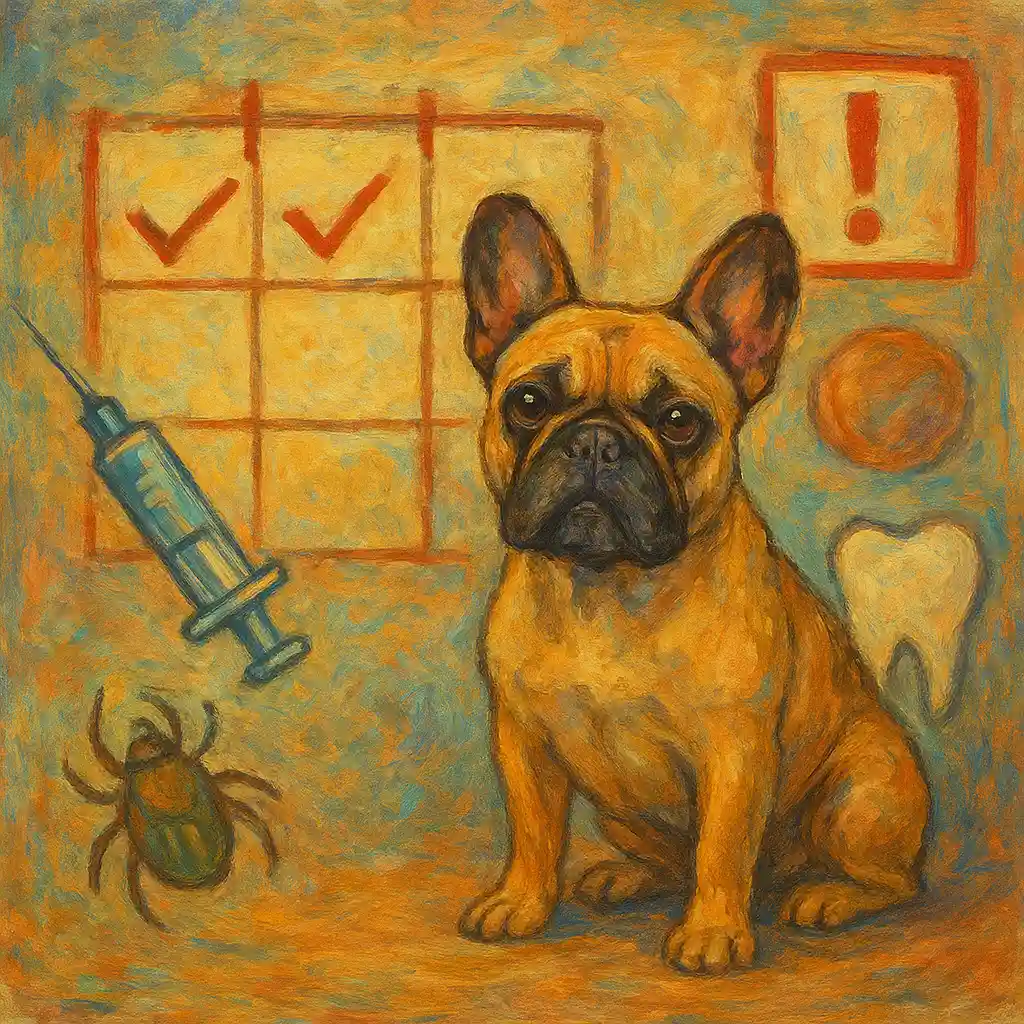
A senior Frenchie annual care calendar is one of the simplest ways to protect your older French Bulldog’s health. When your Frenchie becomes a senior, it gets harder to remember every vaccine, checkup, parasite treatment, and dental task—especially when life is busy. A clear yearly plan helps you stay calm, stay consistent, and catch problems early.
When you plan your senior Frenchie’s care in advance, you reduce missed appointments and increase the chance of early detection.
This post shows you how to build a practical senior Frenchie annual care calendar with two fixed dates for vaccinations and checkups, plus parasite protection, dental care, and easy reminder systems. The goal is simple: help your senior Frenchie stay comfortable, healthy, and happy all year.
Why a senior Frenchie annual care calendar matters
Senior French Bulldogs often need more support than younger dogs. Their immune system may not be as strong, and age-related issues can appear slowly. Regular preventive care can make a big difference, but only if it happens on time.
A senior Frenchie annual care calendar helps you:
- Keep vaccinations and boosters on schedule, based on your veterinarian’s advice.
- Plan regular checkups so your vet can spot changes early.
- Protect against parasites like fleas, ticks, intestinal worms, and heartworm.
- Stay consistent with dental care (at home and professionally).
- Reduce stress because you don’t have to remember everything at once.
You probably know the feeling: you suddenly realize a treatment is overdue, or you can’t remember when the last vet visit happened. A calendar turns “I hope I remember” into “I know what’s next.”
Set 2 fixed dates in your senior Frenchie annual care calendar (the easiest system)
If you only do one thing, do this: choose two fixed dates each year for your Frenchie’s main veterinary care. Fixed dates are powerful because they become a habit. You can plan around them, and you are less likely to forget.
How to choose the two fixed dates
- Pick months that are easy to remember (for example, your birthday month and the half-birthday month).
- Space them about 6 months apart.
- Choose calmer seasons if your Frenchie struggles with heat or cold.
These two fixed dates become the “anchors” of your senior Frenchie annual care calendar. Everything else (parasites, dental care, reminders) can be built around them.
What to include on each fixed date
On each fixed date, aim for a wellness checkup. Your vet may also recommend vaccines, boosters, or other preventive steps based on your Frenchie’s health, lifestyle, and risk factors.
Use your fixed-date visits to:
- Review vaccination status (core vaccines and any lifestyle vaccines).
- Discuss parasite prevention (flea/tick, deworming, heartworm prevention medication).
- Talk about dental health and whether a professional dental cleaning is needed.
- Ask about age-related concerns like arthritis, cognitive dysfunction, or weight management.
Vaccinations and checkups in a senior Frenchie annual care calendar
Vaccinations and checkups are a key part of any senior Frenchie annual care calendar. Core vaccinations protect against serious diseases, and regular exams help your vet notice changes that you might not see at home.
Why reminders for annual vet visits are so important
Annual (or twice-yearly) vet visits are not just for “shots.” They are a chance to check your Frenchie’s overall health, talk about behavior changes, and spot problems early. Seniors can hide pain or discomfort, so routine checkups matter.
When you schedule these visits as part of your senior Frenchie annual care calendar, you create a routine that supports your dog’s health year after year.
Core vaccinations for Frenchies: why they matter
Core vaccinations help protect your Frenchie from diseases that can be severe or life-threatening. Staying up to date is a proactive step, especially for senior dogs who may have weaker immune systems.
Your veterinarian will guide you, but common vaccines discussed for senior dogs include:
- Rabies
- Distemper
- Parvovirus
- Adenovirus
- Bordetella (kennel cough) depending on lifestyle
Always consult your veterinarian to decide what your senior Frenchie needs based on age, health status, and risk factors.
Recommended vaccination schedule for senior dogs (general planning)
In your senior Frenchie annual care calendar, plan to review vaccines at least once a year during your fixed-date visit. Your vet may recommend boosters to maintain immunity.
Also consider lifestyle and location. Some dogs may need additional protection depending on where they live and what they do.
Distemper, Parvovirus, and Adenovirus
Distemper, parvovirus, and adenovirus are serious diseases. Vaccination helps protect your Frenchie. In your senior Frenchie annual care calendar, track when these vaccines or boosters are due and schedule them around your fixed-date vet visits whenever possible.
Rabies
Rabies is a serious viral disease that can be transmitted through the bite of an infected animal. Protecting your Frenchie against rabies is an important part of preventive care. Add rabies vaccination due dates to your senior Frenchie annual care calendar and set reminders well ahead of time so you can book an appointment.
Bordetella (kennel cough)
Bordetella is a contagious respiratory disease often called kennel cough. Senior dogs can be more vulnerable because their immune systems may be weaker. If your Frenchie spends time around other dogs (boarding, grooming, dog-friendly events, or frequent vet waiting rooms), your vet may recommend Bordetella vaccination. Put it into your senior Frenchie annual care calendar if it applies to your lifestyle.
Schedule regular checkups for early detection
A senior Frenchie can develop health issues slowly. Regular checkups help catch problems earlier, when they may be easier to manage. Your senior Frenchie annual care calendar is not only about vaccines—it is also about giving your vet a regular chance to examine your dog’s body, movement, teeth, and overall condition.
Early detection can change everything for a senior dog.
Parasite protection in a senior Frenchie annual care calendar
Parasite protection should be a year-round part of your senior Frenchie annual care calendar. Parasites can cause discomfort and can also lead to serious health problems. The right prevention plan depends on your location, your Frenchie’s lifestyle, and your veterinarian’s guidance.
Common parasites affecting French Bulldogs
Senior Frenchies may be more sensitive to parasites. Watch for scratching, skin irritation, changes in energy, or digestive issues, and talk to your vet if anything seems off.
- Fleas and ticks
- Intestinal worms
- Heartworm
Fleas and ticks
Fleas and ticks can cause irritation and may transmit diseases. Prevention is easier than dealing with an infestation. Add a monthly reminder to your senior Frenchie annual care calendar so you don’t miss treatments.
Intestinal worms
Intestinal worms can cause discomfort and may lead to weight loss or other health issues if not treated. Include regular deworming in your senior Frenchie annual care calendar based on your vet’s recommendations. If you notice vomiting, a bloated belly, weight changes, or low energy, contact your veterinarian.
Heartworm
Heartworm is a serious and potentially fatal disease transmitted by mosquitoes. Prevention is essential. In your senior Frenchie annual care calendar, schedule heartworm prevention medication and any vet-recommended testing or follow-ups.
Preventive measures to protect your Frenchie from parasites
Parasite prevention works best when it is consistent. Build these habits into your senior Frenchie annual care calendar:
- Schedule regular vet checkups to review parasite risk and products.
- Use vet-recommended flea and tick preventatives year-round (or as advised).
- Follow a deworming plan recommended by your vet.
- Give heartworm prevention medication consistently.
- Keep your Frenchie’s environment clean and support good hygiene.
- Groom regularly and check for ticks, especially after outdoor time.
Monthly flea and tick treatments
Monthly flea and tick treatments are easy to forget, which is why they belong in your senior Frenchie annual care calendar. Set a recurring reminder on the same day each month. If your schedule changes often, choose something consistent (like the first day of the month or the day you pay a bill).
Regular deworming
Deworming should follow your veterinarian’s advice. Add the dates to your senior Frenchie annual care calendar and write down the product used and the dose date. That way, you can answer questions clearly during vet visits.
Heartworm prevention medication
Heartworm prevention medication should be given exactly as prescribed. In your senior Frenchie annual care calendar, track:
- The product name (as recommended by your vet)
- The dosing schedule (often monthly)
- Any notes about side effects to report
If you ever notice unusual symptoms after medication, contact your veterinarian promptly.
Dental care in a senior Frenchie annual care calendar
Dental health is often overlooked, but it matters a lot for senior dogs. Add dental care to your senior Frenchie annual care calendar so it becomes a normal part of life, not an emergency later.
Why dental hygiene supports overall health
Dental problems can cause pain and can affect a dog’s quality of life. Good dental care helps your Frenchie stay comfortable and enjoy eating and playing. Regular care can also help prevent infections and other complications.
Signs of dental problems in Frenchies
Watch for these common signs and mention them during checkups:
- Bad breath that does not go away
- Difficulty eating, dropping food, or chewing on one side
- Pawing at the mouth or avoiding touch around the face
- Excessive drooling compared to normal
If you notice these signs, do not wait for the next scheduled date—contact your vet.
Dental care tips for senior dogs
In your senior Frenchie annual care calendar, include both at-home dental care and professional care. Small actions done regularly can help a lot.
Brushing your Frenchie’s teeth regularly
Brushing helps reduce plaque buildup and supports healthier gums. Use dog-friendly toothpaste and a soft toothbrush. If your Frenchie is new to brushing, start slowly and keep it positive. Aim for consistency—many owners find that 2–3 times per week is a realistic goal.
Providing dental chews and toys
Dental chews and toys can help reduce tartar and keep your Frenchie busy. Choose products suited for senior dogs and supervise chewing to reduce choking risk. Add a note in your senior Frenchie annual care calendar about which products work well for your dog.
Professional dental cleanings
Professional dental cleanings can help remove tartar and address gum disease. Ask your veterinarian how often your senior Frenchie may need a professional cleaning. Add a reminder in your senior Frenchie annual care calendar to discuss dental health during your fixed-date checkups.
Reminder systems that make a senior Frenchie annual care calendar easy
A calendar only works if you use it. The best reminder system is the one you will actually follow. For many people, simple phone reminders are enough. For others, a printed calendar on the fridge works better.
Use technology for reminders
Try one or more of these options:
- Phone calendar alerts for vet visits, vaccines, and dental appointments
- Recurring monthly reminders for flea/tick and heartworm prevention medication
- Pet care apps that store records and send notifications
- Voice assistant reminders (for example, daily or monthly prompts)
Set reminders a little early, not only on the due date. That gives you time to order medication or book an appointment.
Create your vaccination and checkup calendar (simple method)
To build your senior Frenchie annual care calendar, start with these categories:
- Two fixed vet visit dates (your main anchors)
- Vaccination review (planned during one or both visits)
- Monthly parasite prevention (recurring reminders)
- Deworming schedule (as advised by your vet)
- Dental care plan (home brushing routine + professional discussion)
Keep notes after each vet visit: what was done, what was recommended, and what should happen next. This makes the next year easier.
Stay organized and proactive
Prevention is easier than treatment. When you use a senior Frenchie annual care calendar, you are choosing to be proactive. That often means fewer surprises, fewer rushed decisions, and more time enjoying your dog’s company.
Real-life example: regular checkups helped Max the senior Frenchie
Max is a senior Frenchie whose story shows why routine care matters. His owner, Sarah, noticed he was lethargic and not his usual playful self. She took him in for his annual checkup, and the vet discovered a hidden health issue that could have become life-threatening if it had been missed.
Because the problem was found early during a routine visit, Max received treatment and returned to his happy, energetic self. This is exactly what a senior Frenchie annual care calendar supports: regular checkups that increase the chance of early detection.
Max’s story is a reminder that “routine” visits can lead to life-changing early care.
Tips for stress-free vet visits with senior Frenchies
Some Frenchies feel nervous at the vet. Seniors may also feel more sensitive to new places, strange smells, or long waits. A senior Frenchie annual care calendar helps because you can plan ahead and avoid last-minute rushing, which often adds stress.
Help your Frenchie feel comfortable with the vet’s office
- Stop by for short “happy visits” when possible (quick hello, a treat, then leave).
- Practice gentle handling at home (touch paws, ears, and mouth calmly).
- Stay calm yourself—your Frenchie can feel your mood.
Use positive reinforcement
Bring high-value treats and reward calm behavior. Praise your Frenchie for small wins like stepping on the scale or sitting quietly. Over time, positive reinforcement can make vet visits easier.
Bring comfort items
Pack a small “vet visit kit” as part of your routine:
- A favorite blanket or toy
- Treats
- Water and a portable bowl
- Poop bags
These small items can help your senior Frenchie feel safer and more relaxed.
Age-related health concerns to track in a senior Frenchie annual care calendar
A senior Frenchie annual care calendar is also a place to track changes you notice at home. Senior dogs can change slowly, so notes are helpful. If you write down small changes, you can describe them clearly to your vet.
Common health issues in aging Frenchies
Senior Frenchies may face issues such as arthritis, cognitive dysfunction, and weight management challenges. These concerns are common in older dogs and should be discussed during regular checkups.
Arthritis
Arthritis can cause stiffness, pain, and reduced mobility. Add notes to your senior Frenchie annual care calendar if you see changes like slower walking, trouble with stairs, or difficulty getting comfortable. Your vet can guide you on management options, and maintaining a healthy weight can also help reduce joint strain.
Cognitive dysfunction
Cognitive dysfunction can look like confusion, changes in sleep patterns, disorientation, or less interaction with family members. If you notice these signs, record them in your senior Frenchie annual care calendar and bring the notes to your vet visit.
Weight management
Weight changes can affect joints, energy, and overall comfort. Track your Frenchie’s weight and body condition and discuss it during checkups. In your senior Frenchie annual care calendar, add reminders to weigh your dog regularly and review portion sizes if needed.
Practical ways to manage age-related concerns
- Keep your two fixed vet visit dates and discuss any new symptoms.
- Maintain a healthy weight with measured meals and appropriate treats.
- Support comfort at home with a cozy bed and easy access to water.
- Adjust exercise to match your Frenchie’s energy and mobility.
Nutrition and supplements for senior Frenchies
Nutrition supports every part of your Frenchie’s life, especially in the senior years. Use your senior Frenchie annual care calendar to note diet changes, weight trends, and supplement discussions with your vet.
Why a balanced diet matters for senior dogs
Senior dogs may need different calorie levels and nutrient support. A balanced diet can help support muscle mass, digestion, and overall health. If your Frenchie’s appetite changes or weight shifts, write it down and discuss it at your next checkup.
Recommended dietary adjustments for aging Frenchies
- Ask your vet about a senior dog food formula designed for older dogs.
- Monitor portion sizes to help prevent weight gain.
- Offer smaller, more frequent meals if digestion is sensitive.
- Choose high-quality protein sources to support muscle maintenance.
Supplement options to discuss with your veterinarian
Some owners consider supplements to support senior health. Always consult your veterinarian before starting anything new. Options often discussed include:
- Joint supplements for mobility support
- Omega-3 fatty acids for skin, coat, and general support
- Probiotics for digestive support
- Multivitamins if your vet feels they are needed
Add supplement start dates and any observed changes to your senior Frenchie annual care calendar so you can track what helps.
Exercise and mental stimulation for senior Frenchies
Senior Frenchies still need movement and mental activity, but it should match their age and health. Add gentle activity goals to your senior Frenchie annual care calendar so you keep a steady routine.
Tailor exercise to your Frenchie’s age and health
Short walks, gentle play, and safe indoor movement can help maintain strength and comfort. If your Frenchie has arthritis or tires easily, adjust the length and intensity. Talk to your vet if you are unsure what is safe.
Mental stimulation ideas
- Puzzle toys that encourage problem-solving
- Hide-and-seek games with treats
- Simple training refreshers (easy commands, short sessions)
- Short sniff walks in new places (if your Frenchie enjoys it)
Mental stimulation can help keep your senior Frenchie engaged and reduce boredom.
Create a comfortable home setup for your senior Frenchie
A senior Frenchie annual care calendar is not only about vet care. It also supports daily comfort. Older Frenchies may need a few home adjustments to feel safe and relaxed.
Provide a cozy and safe space
- A supportive bed that is easy to get in and out of
- Water access without needing to climb stairs
- A quiet resting area away from loud noise
Adjust as needs change
Your Frenchie’s needs may change over time. Keep notes in your senior Frenchie annual care calendar about what helps—like new bedding, different walking times, or changes in feeding routine.
Putting it all together: a simple senior Frenchie annual care calendar template
Use this as a starting point and adjust with your veterinarian:
- Fixed Date 1 (Vet Visit): wellness exam, vaccine review, parasite plan review, dental check discussion, senior health concerns (arthritis, cognition, weight).
- Fixed Date 2 (Vet Visit): wellness exam, follow-up on any changes, vaccine/booster needs, dental plan review.
- Monthly: flea/tick prevention and heartworm prevention medication reminders.
- As advised by your vet: deworming schedule.
- Weekly: tooth brushing goals and quick at-home checks (breath, gums, appetite).
The best senior Frenchie annual care calendar is the one that fits your real life and your Frenchie’s real needs.
Conclusion
Your senior Frenchie depends on you, and good planning makes that job easier. A senior Frenchie annual care calendar with two fixed vet dates, consistent parasite protection, steady dental care, and reliable reminders can help your Frenchie stay healthier and more comfortable all year.
If you want, open your calendar today and add your two fixed dates first—then build the rest around them. For more help, check out our other Frenchie care guides on the blog and create your own printable routine you can keep on the fridge.