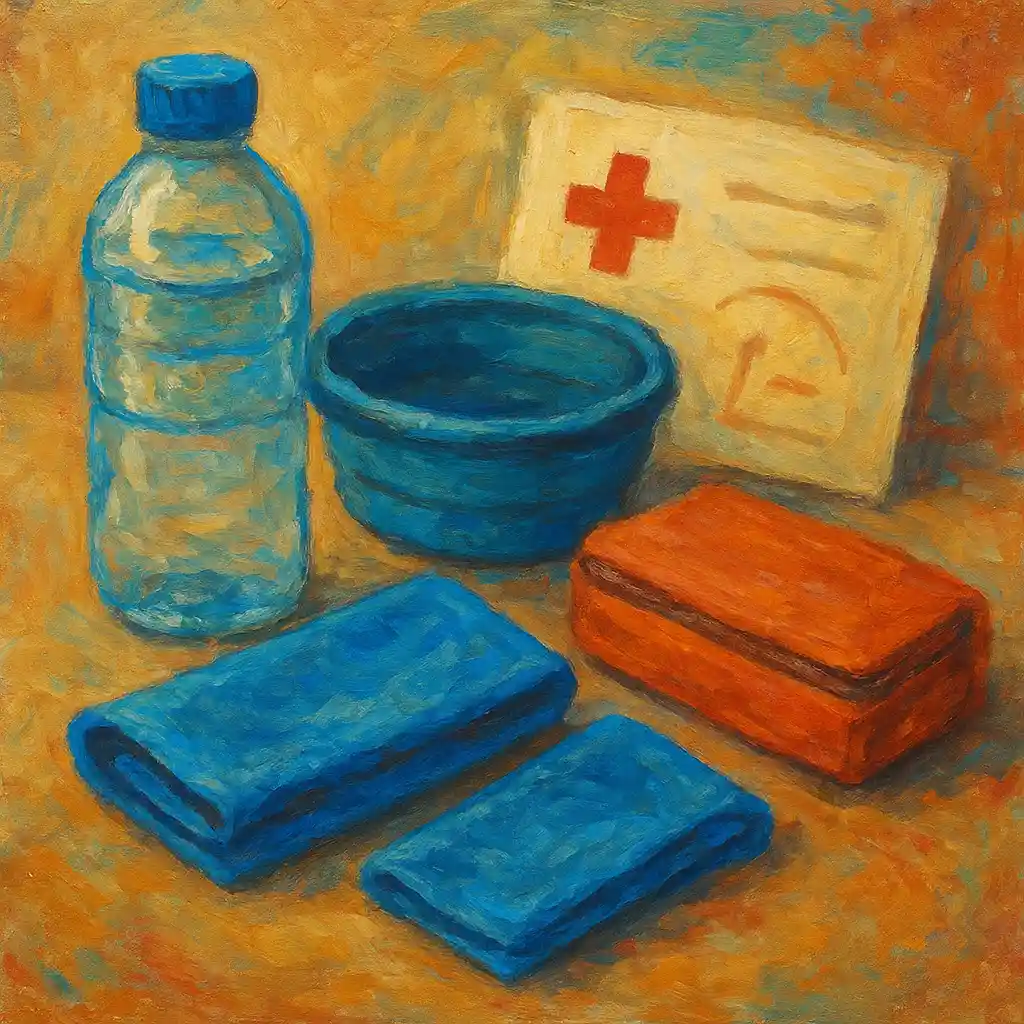
Hot days can turn into a heat emergency fast—especially when you are out walking with your dog and the sun feels stronger than expected. A cool-down kit for dogs helps you act quickly with simple items that can lower risk and reduce stress. This post shows you how to build a practical pack with the basics: water, a foldable bowl, a cool towel, your clinic address, and a clear transport plan. It is designed with seniors in mind: easy to carry, easy to use, and focused on real-life situations.
When heat rises, minutes matter. A ready-to-grab cool-down kit for dogs can help you respond calmly and protect your dog’s health.
Why a cool-down kit for dogs matters during a heat emergency
Imagine a normal summer walk. You and your dog start out fine, but the air gets heavy, the sidewalk feels hot, and your dog begins to pant more than usual. Many seniors have been in this situation: you may be far from home, there may be limited shade, and you may not have water or a way to cool your dog quickly.
A cool-down kit for dogs is a small emergency pack you keep ready for warm weather. It supports two goals:
- Prevention: keeping your dog hydrated and cooler so problems are less likely to start.
- Fast response: helping you take action if you notice signs of heat stress.
This is not about buying fancy gear. It is about having the right basics in one place so you do not have to think too hard when you are worried.
Understanding heat emergencies in dogs (and why dogs overheat faster than people)
Dogs are more likely to suffer from heat-related illness than humans for a few simple reasons. People can sweat to cool down. Dogs mainly cool down by panting, which is less effective in very hot or humid conditions. Dogs also have fur that can trap heat, and their normal body temperature is higher than ours.
Some dogs may struggle even more in hot weather. For example, dogs with short muzzles can have a harder time breathing and cooling down. Older dogs may also have less ability to handle heat, especially if they already have health issues.
Common signs of heat exhaustion and heatstroke in dogs
Knowing the signs helps you act early. Watch closely for changes in your dog’s behavior, especially on hot days.
- Excessive panting and drooling
- Rapid heartbeat
- Weakness or lethargy
- Vomiting or diarrhea
- Bright red gums or tongue
- Dizziness or disorientation
- Collapsing or seizures
If you see these signs, treat it seriously. Move to a cooler place, offer small amounts of water, and start cooling your dog. If you suspect a serious heat emergency, contact a veterinarian immediately.
Proactive steps that reduce heat risk
A cool-down kit for dogs works best when you also use smart habits. These simple steps can reduce risk:
- Walk during cooler times, like early morning or late evening.
- Take breaks in shade.
- Avoid hot pavement that can burn paws.
- Always bring water.
- Never leave your dog in a parked car, even for a short time.
Cool-down kit for dogs essentials: the 5 must-have items
Many lists add lots of extras, but the most important thing is that your kit is simple and usable. If it is too big or complicated, you may stop carrying it. The items below match the core idea of this heat emergency pack.
1) Water: the most important part of any cool-down kit for dogs
Hydration is key in hot weather. Dogs can become dehydrated quickly, especially during walks or outdoor activities. In a heat emergency, water is also part of your first response plan.
How much water should you carry?
Carry enough water for your dog and for yourself. It is better to bring more than you think you need, especially if you may be out longer than planned. If your dog is older, plan for more frequent water breaks.
Tips for carrying water easily
- Use a bottle that is easy to open with one hand.
- Consider freezing a water bottle the night before so it stays cooler longer.
- Take small breaks and offer water often instead of waiting until your dog looks thirsty.
- If you want an extra hydration boost for yourself, you can carry electrolyte packets for your own water.
Also watch for signs of dehydration like dry gums, heavy panting, or low energy. If you are unsure, offer a small drink and rest in shade.
2) Foldable bowl: fast, clean hydration anywhere
A foldable bowl is one of the easiest upgrades you can make for a cool-down kit for dogs. It is lightweight, compact, and helps you give water safely without needing a public bowl or letting your dog drink from unsafe puddles.
Benefits of a foldable bowl
- Easy to carry: fits in a pocket, bag, or small pouch.
- Quick to use: unfold, pour water, let your dog drink.
- Helps prevent dehydration: you are more likely to offer water when it is simple.
- Easy to clean: rinse and pack again.
Features to look for in a good foldable bowl
- Compact design that folds down small.
- Durable material like silicone or strong nylon that is easy to clean.
- Leak-resistant build so it does not drip inside your bag.
- Right capacity for your dog without being bulky.
- Easy handling that does not require strong grip or complex parts.
If you walk with a cane, use a walker, or simply prefer fewer items in your hands, a foldable bowl makes hydration easier and safer.
3) Cool towel: quick cooling support in your cool-down kit for dogs
A cool towel is a simple tool that can help regulate body temperature. It is also useful for seniors, because it can cool you down too. You wet it with cool water, wring it out, and apply it gently.
How a cool towel can help your dog
Dogs cool down through panting, but in strong heat they may need extra help. A cool towel can provide relief and help lower body temperature when used correctly.
Common areas where a cool towel may help include the belly, armpits, and paws. Use gentle contact and watch your dog’s comfort.
How to use a cool towel effectively
- Wet the towel with cool water. You can add a few ice cubes to the water if available.
- Wring out extra water so it is damp, not dripping.
- Place it gently on your dog’s body (or around the neck area if your dog tolerates it).
- Re-wet the towel as needed to keep it cool.
- Monitor your dog closely and remove the towel if your dog seems uncomfortable.
Some people also wrap a cool towel around a frozen water bottle to make a simple cooling pack. The main goal is steady cooling without shocking your dog with extreme cold.
4) Clinic address: the “no-search” part of a cool-down kit for dogs
In a heat emergency, it is hard to think clearly. That is why your clinic address matters. When your dog is in trouble, you do not want to search online, scroll through contacts, or try to remember which clinic is open.
What to include for clinic information
- Your regular veterinarian’s name and phone number
- The clinic’s full address (not just the name)
- A nearby emergency animal clinic address and phone number
- Any important notes you may need quickly (for example: “parking in back” or “use side entrance”)
Keep this information in your kit as a printed card. You can also save it in your phone, but a paper backup is helpful if your phone battery is low or you feel too stressed to search.
How to find a reliable clinic nearby
- Ask friends, family, neighbors, or other pet owners for recommendations.
- Check online reviews to learn about others’ experiences.
- Visit the clinic once when it is not an emergency to see if it feels clean, calm, and organized.
- Ask about services, including emergency care and hours.
- Choose a location that is easy to reach quickly.
Preparation is not panic. Having clinic details ready is a calm, practical step that can save time when your dog needs help.
5) Transport plan: a cool-down kit for dogs is stronger with a clear “how we get help” plan
During a heat emergency, you may need to leave quickly. A transport plan means you already know how you will get your dog to a cooler place or to veterinary care. This is especially important for seniors who may not drive, may not feel safe driving in stress, or may need help lifting a dog.
Why a transport plan matters
- Faster action: you are not deciding under pressure.
- Less stress: you know who to call and where to go.
- Better safety: your dog is less likely to be delayed when time matters.
Ideas for a transport plan tailored to senior needs
- Assess your needs: Can you carry your dog if needed? Do you use mobility aids? Do you need help with stairs?
- List your options: Your car, a family member, a neighbor, a senior shuttle program, ride-share services, or a volunteer driver program.
- Plan ahead: Know which option is fastest during the day and at night.
- Keep key contacts handy: Put phone numbers on the same card as your clinic address.
- Stay organized: Use a calendar or simple note to track vet appointments and transport arrangements.
- Safety first: Choose trusted providers and always use seatbelts or safe pet restraints if you have them.
- Stay connected: Tell a family member or caregiver your plan so they can support you.
- Stay flexible: Have a backup option if the first one is not available.
Also include a clear rule in your plan: never leave your dog in a hot car. Even a short stop can become dangerous quickly.
How to assemble a cool-down kit for dogs (simple, step-by-step)
Putting your kit together should take less than an hour. The goal is a pack you can grab quickly before a walk, a car ride, or any outdoor activity.
Step 1: Choose your container
Pick a small bag or pouch that is light and easy to carry. A clear container can help you see what is inside. Some people prefer a dedicated bag that stays packed all summer.
Step 2: Add the core items
- Water (bottle or bottles)
- Foldable bowl
- Cool towel
- Clinic address card (regular vet + emergency clinic)
- Transport plan card (who to call, what to do)
Step 3: Consider helpful extras (only if they fit your routine)
The draft included several optional items that can be useful if you will truly carry them. If you want to expand your cool-down kit for dogs, consider:
- Cooling mat or cooling vest
- Portable fan or misting bottle
- Dog-friendly sunscreen
- Paw balm for hot pavement
- Small first aid supplies (bandages, antiseptic wipes)
- Treats or snacks to support energy during breaks
- Frozen treats or ice cubes (when practical)
- Portable shade like an umbrella or small canopy (for longer outings)
Only add what you will use. A small, reliable kit is better than a large kit you leave at home.
Step 4: Store it where you can reach it fast
Convenience is everything. Store your cool-down kit for dogs:
- Near the leash and harness
- By the front door
- In a hallway closet you use daily
- In a ready-to-go tote for outdoor trips
If your home has multiple floors, you can keep a smaller version upstairs and the full kit near the door.
How to use a cool-down kit for dogs during walks and outdoor time
The best time to use your kit is before your dog is in trouble. Small actions early can prevent bigger problems later.
Monitor your dog’s behavior and signs of distress
You know your dog’s normal habits. Pay attention to changes like:
- Sudden low energy or stopping often
- Heavy panting that does not slow down after rest
- Drooling more than usual
- Confusion, wobbling, or refusing to move
If you notice concerning signs, move to shade, offer water, and start cooling your dog with the cool towel. If symptoms are serious or getting worse, use your clinic address and transport plan right away.
Proactive cooling strategies using your kit
- Offer water often using the foldable bowl—small drinks are fine.
- Take shade breaks even if your dog seems okay.
- Use the cool towel during rest breaks to keep body temperature lower.
- Reduce activity and choose shorter routes on very hot days.
Cool-down kit for dogs in real life: examples of being prepared
Real situations show why preparation matters. Seniors have shared stories of quick actions that helped their dogs recover faster during hot weather.
- One senior noticed early overheating signs during a walk and used a kit with water, a portable bowl, and cooling items. After a short rest in shade and careful cooling, the dog improved and they returned home safely.
- Another senior kept a spray bottle and cooling tools ready for backyard play. When the dog got too hot, quick cooling helped the dog settle and rest comfortably.
The common point is not the brand of products. It is the habit of carrying a cool-down kit for dogs and using it early.
Safety precautions and best practices for hot weather
A kit is helpful, but daily safety habits are just as important. Heat emergencies are easier to prevent than to treat.
Never leave your dog unattended in hot weather
Dogs can overheat quickly. This is especially true in cars, where temperatures can rise fast. Even a short stop can be dangerous. If you cannot bring your dog with you, it is safer to leave your dog at home in a cooler space.
Summer walking tips for seniors with dogs
- Walk early morning or late evening.
- Test pavement with your hand. If it is too hot for you, it is too hot for paws.
- Bring water every time, even for short walks.
- Take frequent breaks in shade.
- Keep routes simple so you can return home quickly if needed.
- Watch for heavy panting, drooling, weakness, or confusion.
Everyday ways to use a cool-down kit for dogs (not just emergencies)
The best cool-down kit for dogs is one you actually use. Think of it as part of your normal routine during warm months.
How to integrate the kit into daily life
- Check the weather forecast each morning before planning outings.
- Grab the kit the same way you grab your keys and phone.
- Offer water during every walk, not only when your dog looks thirsty.
- Use the cool towel after outdoor time if your dog seems warm.
- Create a simple “cool-down zone” at home with a cool spot to rest and easy water access.
Adapting your cool-down kit for dogs for different activities
- Hiking: Bring extra water and snacks, and plan more rest stops.
- Beach day: Add dog-friendly sunscreen and use the cool towel after swimming or sun exposure.
- Camping: Consider a foldable mat or bed and a portable fan for hot nights.
- Outdoor events: Bring calming treats or a familiar toy, plus water for frequent breaks.
Keep the core items the same, and adjust only what you truly need for the day.
Additional tools that support your cool-down kit for dogs
Staying informed helps you decide when to shorten a walk or stay inside. Weather apps can provide heat alerts and help you plan safer times for outdoor activity. Many seniors find it helpful to check temperature, humidity, and heat warnings before leaving home.
If you want to learn more about pet hot-weather safety, the draft referenced these reputable sources:
- American Kennel Club: Hot weather safety tips for dogs
- ASPCA: Hot weather safety tips
Conclusion: a small cool-down kit for dogs can make a big difference
A heat emergency can happen quickly, but a simple plan can help you respond with confidence. By preparing a cool-down kit for dogs with water, a foldable bowl, a cool towel, your clinic address, and a clear transport plan, you protect your dog and make hot-weather outings safer and calmer.
If you have not already, take a few minutes today to assemble your kit and store it by the door near the leash—then review your clinic address and transport plan so you are ready when it matters. For more helpful pet-safety guides, browse our other posts in the pet care section.