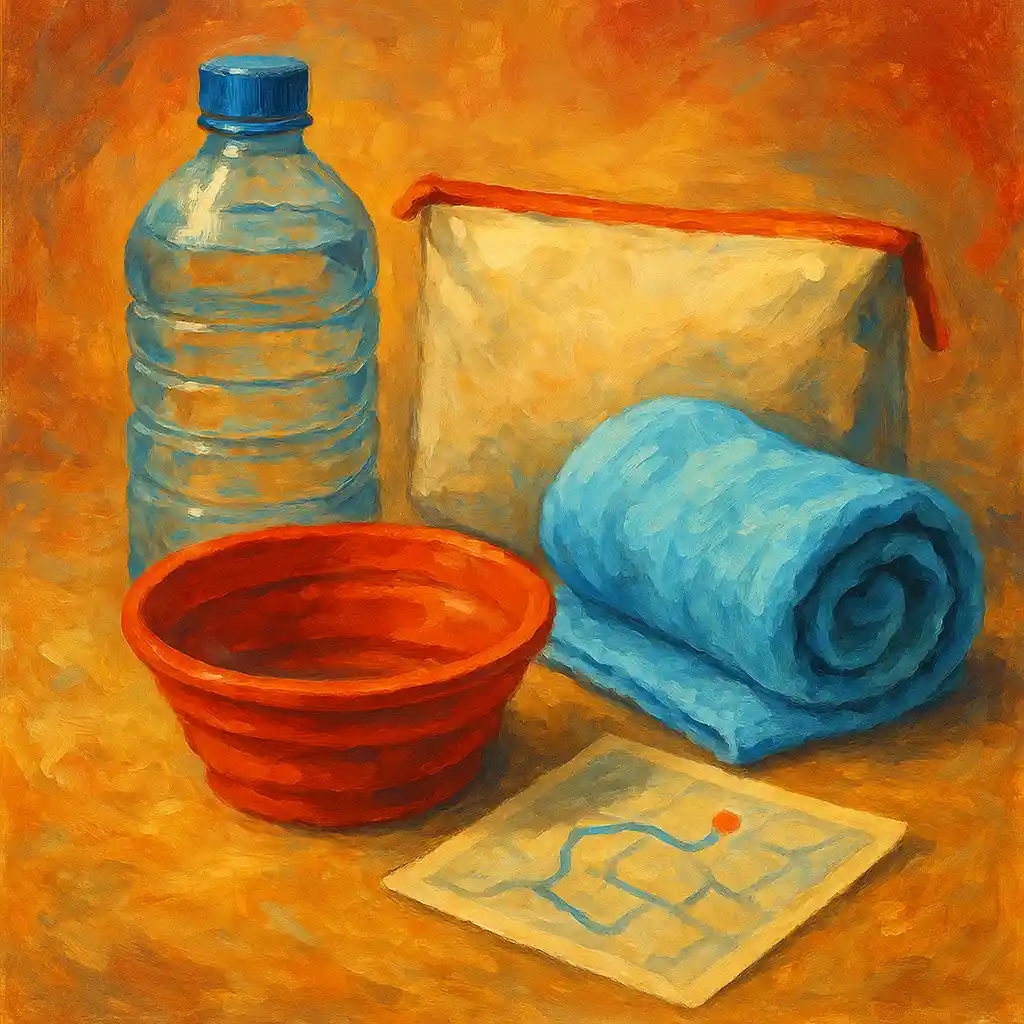
A cool-down kit for dogs can turn a scary hot-weather moment into a calm, clear plan. If you are a senior pet owner, you may already know how fast a summer walk can change: the sun feels stronger, the sidewalk gets hotter, and your dog starts panting more than usual. When heat builds up quickly, having the right items in one small pack helps you act fast and protect your dog.
A cool-down kit for dogs is not about fancy gear. It is about having simple tools ready so you can cool your dog, contact help, and get to a clinic without delay.
In this guide, you will learn what to pack, why each item matters, and how to organize your kit so it is easy to grab for walks, errands, travel, or power outages. The focus is on seniors and senior dogs, but the same pack helps any dog in hot weather.
Why a cool-down kit for dogs matters in a heat emergency
Heat emergencies can happen quickly. A dog can go from “a little warm” to “in trouble” in a short time, especially in summer humidity, direct sun, or during exercise. A cool-down kit for dogs gives you a ready routine: offer water, cool the body safely, and start your transport plan if symptoms do not improve.
For seniors, preparation is even more important. In a stressful moment, it is harder to remember numbers, search for a clinic, or run back home for supplies. A packed kit reduces stress and saves time.
Understanding heat emergencies: why dogs overheat faster than humans
Dogs are more likely to get heat-related illness than humans because they cool down differently. People sweat through skin. Dogs mainly cool down through panting, and panting is not always enough when the weather is very hot.
Other reasons dogs can struggle in heat include:
- Higher normal body temperature than humans.
- Fur coats that can trap heat.
- Some breeds have breathing limits, especially short-muzzled breeds like pugs and bulldogs, which can make hot weather harder.
Because dogs can overheat quickly, the goal is simple: prevent heat stress when possible, and respond fast when it happens. A cool-down kit for dogs supports both goals.
Signs of heat exhaustion and heatstroke: what to watch for
Knowing the signs helps you act early. Heat exhaustion can become heatstroke if it continues. Watch your dog closely in hot weather, especially on walks, in cars, and during outdoor events.
Common signs of heat exhaustion and heatstroke in dogs
- Excessive panting and drooling
- Rapid heartbeat and breathing
- Weakness or lethargy
- Vomiting or diarrhea
- Bright red gums or tongue
- Dizziness or disorientation
- Collapsing or seizures
Why quick action matters
Heatstroke can escalate rapidly. If a dog’s body temperature stays too high, it can lead to severe illness. That is why the best time to act is as soon as you notice the first signs.
In a heat emergency, minutes matter. Move to shade, offer water, start cooling, and be ready to contact a vet or emergency clinic.
This is also why your cool-down kit for dogs should be packed ahead of time, not built during the emergency.
Cool-down kit for dogs essentials: the 5 must-have items
Many items can help in hot weather, but this post focuses on the core pack that covers the most important needs: hydration, cooling, and fast access to care. These five items are the heart of a cool-down kit for dogs:
- Water
- Foldable bowl
- Cool towel
- Clinic address
- Transport plan
Below, you will find clear reasons and practical tips for each one.
Cool-down kit for dogs item #1: Water
Water is the first line of defense in hot weather. Hydration supports normal body function and helps your dog cool down through panting. In a heat emergency, offering water can help, and it also supports your dog while you move to shade or prepare to leave.
Why hydration is critical in hot weather
- Dogs rely on panting, and panting uses moisture.
- Dehydration can develop quickly during heat and exercise.
- Water supports recovery while you cool the body from the outside.
Tips for carrying enough water for you and your dog
- Carry extra water, not just “a little.” Bring water for both you and your dog.
- Use a portable bottle that is easy to open with one hand.
- Freeze a bottle the night before for a colder drink later (as it melts).
- Take regular water breaks, especially on hot days.
If you often take longer walks, consider a comfortable way to carry water, such as a small backpack or hydration pack. The key is consistency: if water is hard to carry, it is easier to leave it behind.
Cool-down kit for dogs item #2: Foldable bowl
A foldable bowl makes it easy for your dog to drink anywhere. In a heat emergency, a dog may not drink well from a bottle cap or from your hands. A bowl gives a familiar shape and helps many dogs drink faster.
Benefits of a portable bowl for on-the-go hydration
- Convenient during walks, errands, and travel.
- Supports hydration before your dog becomes overheated.
- Simple to use when you feel stressed or rushed.
- Compact and easy to store in a small bag.
Features to look for in a good foldable bowl
- Compact design that folds down small.
- Durable, leak-resistant material for frequent use.
- Easy to clean after walks.
- Enough capacity for your dog’s size.
- Lightweight so it does not make your kit heavy.
Many people clip the bowl to a leash, belt loop, or bag strap so it is always within reach. That small habit makes your cool-down kit for dogs much easier to use.
Cool-down kit for dogs item #3: Cool towel
A cool towel is one of the simplest and most useful tools in a heat emergency. It can help lower body temperature and provide fast relief while you move to shade, offer water, and decide if you need veterinary help.
How a cool towel can help lower a dog’s body temperature
A towel soaked in cool water (not ice-cold) can help your dog release heat. You can drape it over the body or let your dog lie on it. It can also help you cool down, which matters because you need to stay steady and safe to help your dog.
How to use a cool towel effectively
- Soak the towel in cool water.
- Wring it out so it is damp but not dripping.
- Place it on your dog (over the back) or let your dog lie on it.
- Focus on areas with less fur if your dog allows it, such as the belly and underarms.
- Re-wet as needed when the towel warms up.
- Watch your dog’s comfort. Remove it if your dog seems upset or starts shivering.
Pairing the towel with shade and water is often more helpful than using only one method. That is why it belongs in every cool-down kit for dogs.
Cool-down kit for dogs item #4: Clinic address (and how to store it)
When you are worried, it is easy to forget details. In a heat emergency, you do not want to waste time searching online for an address, trying to remember the clinic name, or guessing the fastest route. Keep the clinic address ready in your kit.
Why knowing the nearest veterinary clinic location matters
- Saves time when you need help quickly.
- Reduces stress because you already know where to go.
- Supports clear decisions, especially if you are in an unfamiliar area.
Practical ways to keep clinic information ready
- Write it on a card and place it in a zip pocket of your kit.
- Include the phone number for your regular vet and the nearest emergency animal hospital.
- Add directions notes if needed (for example, “use side entrance after hours”).
- Keep a second copy in your wallet or phone case.
Tips for finding emergency veterinary services in unfamiliar areas
- Research before you travel and save clinic details on your phone.
- Ask local pet owners or pet-friendly businesses for recommendations.
- Use online maps to confirm hours and location.
- Keep your dog’s basic health info available, such as vaccination history and current medications.
Even if you never need it, having the clinic address in your cool-down kit for dogs gives real peace of mind.
Cool-down kit for dogs item #5: Transport plan
A transport plan is the part many people forget. Cooling and hydration are important, but you also need to know what you will do if your dog does not improve quickly. A transport plan means you already decided how you will get to help.
How to prepare a transportation strategy for a heat emergency
- Know your options: your car, a friend or neighbor, a pet-friendly taxi service, or public transportation (if allowed).
- Plan your route to the nearest clinic or emergency hospital.
- Identify cool locations nearby (air-conditioned buildings, shaded areas, pet-friendly cooling centers) where you can stop briefly while arranging transport.
- Keep your phone charged when you go out in hot weather.
Drive or call for help? Factors to consider
- Your physical condition: if you feel dizzy, weak, or unwell, calling for assistance may be safer than driving.
- Severity of the situation: if your dog collapses, has seizures, or seems disoriented, seek professional help urgently.
- Where you are: if you are far from home, it may be faster to go to the nearest clinic rather than return home.
- Your confidence: if you feel too stressed to drive safely, call someone you trust.
A transport plan is part of the cool-down kit for dogs. It is not an “extra.” It is what turns supplies into real action.
How to assemble and organize your cool-down kit for dogs
Your kit should be light enough to carry and simple enough to use under stress. A small backpack, tote, or cooler bag works well. The goal is to keep items together so you do not search in different places.
Simple packing checklist
- Water (for you and your dog)
- Foldable bowl
- Cool towel (in a sealed bag)
- Clinic address card (with phone numbers)
- Transport plan notes (short, clear steps)
Practical tips for organizing the kit
- Use small pouches so items do not mix together.
- Place the most-used items on top (bowl and towel).
- Label pockets if it helps you find things faster.
- Keep the kit in one spot at home so it is easy to grab.
How to keep the kit accessible during walks or outings
- Use a lightweight backpack for hands-free carrying.
- Clip the foldable bowl to the outside of the bag or leash.
- Carry the towel in a zip bag so it stays clean and ready.
- Keep the clinic card in an outer pocket for quick access.
If you walk your dog often, consider keeping a second mini version in the car (when safe and appropriate) so you are covered in more than one place.
Real-life scenarios: how a cool-down kit for dogs helps in the moment
Heat emergencies feel stressful because they are sudden. Thinking through simple scenarios now can help you stay calm later. Below are common moments where a cool-down kit for dogs can make a real difference.
Scenario 1: Mid-walk panting and weakness
You are walking, and your dog starts panting heavily and slowing down. You move to shade, offer water in the foldable bowl, and use the cool towel to reduce body heat. You watch for improvement. If your dog still looks weak, you follow your transport plan and contact the clinic using the address card.
Scenario 2: Heatwave day, dog is uncomfortable indoors
Even indoors, some dogs struggle during heatwaves. You use the cool towel to provide relief and offer water. If your dog shows serious signs (vomiting, disorientation, collapse), you do not wait. You use your transport plan and head to the clinic.
Scenario 3: Travel or unfamiliar neighborhood
When you are not near home, it is harder to know where to go. Your kit’s clinic address card and saved emergency contacts help you act without searching online. You can cool your dog while you arrange transport.
Why being prepared leads to better outcomes
- Peace of mind: you know what to do first.
- Faster response: you do not waste time looking for supplies.
- More confidence: you can focus on your dog, not on guessing.
- Better safety: you are less likely to panic or make rushed choices.
Safety precautions and best practices in hot weather
A cool-down kit for dogs is powerful, but prevention is still the best tool. Small routine changes can lower the chance of a heat emergency.
Monitor your dog’s behavior and well-being
- Watch for heavy panting, drooling, and slowing down.
- Offer water breaks more often than usual.
- Make sure your dog can rest in shade.
Adjust walking routines and exercise intensity during heatwaves
- Walk early morning or late evening when it is cooler.
- Shorten walks on very hot days.
- Slow the pace and avoid intense play.
- Choose shaded routes and take breaks.
How to recognize when it is too hot to walk outside
- Check the pavement: if you cannot hold the back of your hand on it for more than 5 seconds, it is too hot for paws.
- Watch for distress: panting, drooling, and lethargy can be early warning signs.
- Plan for shade: if there is no shade on your route, consider an indoor activity instead.
These habits work well with your cool-down kit for dogs, because they reduce risk while keeping you ready for surprises.
Additional items to consider for a cool-down kit for dogs (optional upgrades)
The core kit is water, foldable bowl, cool towel, clinic address, and a transport plan. If you want to expand your cool-down kit for dogs, consider these helpful add-ons mentioned in the draft. Choose what fits your lifestyle and your dog’s needs.
Portable fan or misting bottle
A small fan or misting bottle can provide quick relief on very hot days. It is especially useful when you are waiting for transport or walking through areas with limited shade.
Dog-friendly sunscreen
Some dogs are prone to sunburn, especially those with light-colored fur, thin coats, or exposed skin. Dog-friendly sunscreen can help protect sensitive areas like the nose, ears, and belly. Use a product made for dogs, because human sunscreen may contain ingredients that are not safe for pets.
Emergency contact list
Along with the clinic address, keep a short emergency contact list that includes:
- Your regular vet
- Nearest emergency animal hospital
- Animal control
- Pet-friendly shelters (useful during extreme heat events)
Keep it printed in your kit. A phone can lose battery or signal, so paper backup is smart.
Other helpful items from the draft (use as needed)
- Umbrella or sun hat to create shade during a break.
- Dog booties to protect paws from hot pavement.
- Basic first aid kit for minor issues (separate from heat care, but still useful).
These items are not required for the core pack, but they can strengthen your cool-down kit for dogs if you have space.
Training and preparation: practice using your cool-down kit for dogs
In an emergency, it helps to already know where everything is and how it works. A short practice at home can make a real difference.
Educate yourself on heat risks
Understanding heat risks helps you notice problems early. Learn your dog’s normal behavior on walks, and pay attention to changes in panting, energy, and interest in moving forward.
Practice scenarios (simple and safe)
- Practice offering water from the foldable bowl so your dog feels comfortable using it.
- Practice wetting and wringing the towel quickly, so you can do it without stress.
- Review your clinic address card and make sure it is correct.
- Walk through your transport plan: who you would call, where you would go, and how you would get there.
This kind of preparation is not meant to scare you. It is meant to make the response feel familiar if you ever need it.
Long-term heat safety strategies for seniors and dogs
Heat safety is not only a summer topic. Warm days can happen in spring and fall too, and indoor heat can become a problem during power outages. Keeping a cool-down kit for dogs ready all year helps you stay prepared.
Year-round awareness matters
- Keep water habits consistent.
- Watch for warm, humid days even outside of summer.
- Remember: never leave a dog in a parked car, even with windows cracked.
Help your dog acclimate gradually and safely
- Increase outdoor time slowly as weather warms up.
- Provide shade and rest breaks.
- Avoid peak heat hours for exercise.
- Watch for heat stress signs and respond early.
These long-term habits pair naturally with your cool-down kit for dogs, because prevention and readiness work best together.
Community support: resources and help during extreme heat
Extreme heat can be hard to manage alone. If you are a senior, it can help to build a small support network for pet care during heatwaves.
Connect with neighbors or friends
Consider asking a trusted neighbor, friend, or family member for mutual support. For example, you can help each other with:
- Shorter dog walks at cooler times
- Water refills or quick check-ins
- Transportation help if someone cannot drive
This kind of support can be especially helpful if you ever need to follow your transport plan quickly.
Local help and information
Many communities have animal shelters, humane organizations, and local pet groups that share heat safety tips and resources. If you are unsure where to start, your local animal shelter is often a good place to ask about programs for seniors with pets during extreme weather.
Conclusion: stay calm, stay ready, and build your cool-down kit for dogs today
Hot weather can be dangerous for dogs, but preparation makes a big difference. A cool-down kit for dogs with water, a foldable bowl, a cool towel, your clinic address, and a clear transport plan gives you the tools to respond quickly and confidently.
If you have not done it yet, set aside 15 minutes this week to pack your kit and place it near your leash or front door. When you are ready, explore more pet safety tips in our site’s senior dog care guides to keep your best friend comfortable all year.