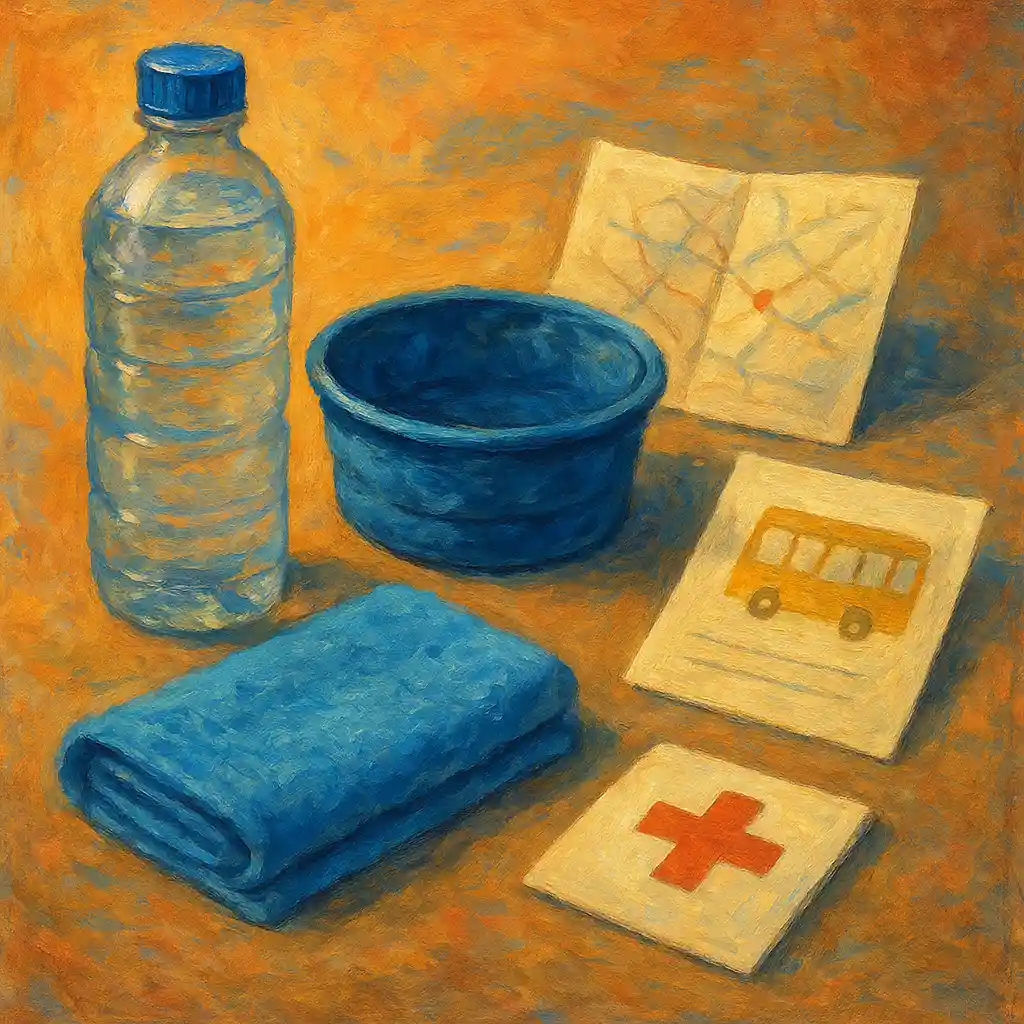
Hot days can turn into a heat emergency fast—especially when you are a senior out walking with a dog. A simple cool-down kit for dogs helps you act quickly if your dog starts to overheat. With a few lightweight items—water, a foldable bowl, a cool towel, your clinic address, and a clear transport plan—you can protect your dog and feel more confident when temperatures rise.
Imagine this: you head out for a calm walk on a sunny day. At first, everything feels normal. Then the pavement seems hotter than expected. Your dog starts panting harder, slowing down, and looking for shade. You feel the heat too, and you realize you both need to cool down quickly. In moments like that, a cool-down kit for dogs is not just “nice to have.” It can help you prevent heat exhaustion and respond faster if things get serious.
Key idea: A cool-down kit for dogs is about speed and simplicity—having the right items ready so you can cool your dog, hydrate, and reach help without panic.
Why a Cool-Down Kit for Dogs Matters in Heat Emergencies
Dogs can overheat more easily than people. They cannot cool down the same way we do, and heat problems can become dangerous quickly. Seniors may also find it harder to manage emergencies in extreme heat, especially when you are away from home. A cool-down kit for dogs gives you a basic safety system: hydration, quick cooling, and a plan to reach veterinary care.
Being prepared also reduces stress. When you already know what to do, you can focus on helping your dog instead of searching for supplies or trying to remember where the nearest clinic is.
Why seniors should be extra cautious in hot weather
Hot weather can affect both you and your dog. Seniors may feel the heat more strongly, get tired faster, or become dehydrated without noticing right away. When you are caring for a dog at the same time, it helps to keep things simple and planned.
- Senior dogs may be more sensitive to heat because of age-related health issues.
- Older dogs may not cool down as efficiently through panting.
- Dehydration can happen faster in heat, especially during walks.
- Hot pavement can burn paws and make walking painful.
Understanding Heat Emergencies: Heat Exhaustion and Heatstroke in Dogs
Before you pack a cool-down kit for dogs, it helps to understand what you are trying to prevent. Heat exhaustion and heatstroke are not the same, and both require quick attention.
Risks of heatstroke in dogs (especially senior dogs)
Heatstroke is a serious condition. Dogs can struggle to regulate body temperature in extreme heat, and older dogs may be at higher risk. Heatstroke can begin with simple signs—heavy panting, weakness—and then become much worse if the dog cannot cool down.
To lower risk, many pet parents choose cooler times of day for walks, provide shade, and carry water. A cool-down kit for dogs supports these habits by making hydration and cooling easier anywhere you go.
Signs of heat exhaustion in dogs
Dogs cannot tell us, “I’m overheating.” So it is important to notice changes early. Watch for these signs during warm weather outings:
- Excessive panting
- Drooling
- Lethargy or weakness
- Rapid heartbeat
- Dark red gums
- Vomiting
- Diarrhea
- Collapsing
If you see these signs, stop the activity, move to shade, offer water, and begin cooling steps. If symptoms are serious or do not improve quickly, contact a veterinarian right away. This is also why your cool-down kit for dogs should include your clinic address and a transport plan.
Cool-Down Kit for Dogs: The 5 Essentials to Pack
You may see long lists online with many products. But during a real heat emergency, you want a kit that is simple, light, and easy to use. This post focuses on the core items from the draft: water, a foldable bowl, a cool towel, your clinic address, and a transport plan. These five items can fit in a small bag and cover the most important needs.
1) Water: the most important part of a cool-down kit for dogs
Water is the first line of defense against dehydration. It supports normal cooling and helps your dog recover during breaks. It also helps you, because seniors can become dehydrated in heat without noticing quickly.
Why hydration matters for both you and your dog
Dehydration can lead to serious health problems for people and dogs. For dogs, dehydration increases the risk of overheating and heatstroke. For seniors, dehydration can cause tiredness, dizziness, and weakness—making it harder to safely care for your dog in the moment.
When you pack a cool-down kit for dogs, treat water as a shared supply: enough for your dog and enough for you.
Tips for carrying an adequate amount of water
- Carry extra water bottles so you are not relying on finding a fountain.
- Use a portable water bottle that is easy to hold and open.
- Pack a lightweight collapsible bowl so your dog can drink comfortably.
- Take regular water breaks during walks, especially on warm days.
Many people also like to keep part of their water cold by chilling it before leaving home. Cool water can feel more refreshing during a heat emergency, but do not force your dog to drink quickly—offer small amounts and let them pace themselves.
2) Foldable bowl: easy water access anywhere
A foldable bowl is one of the simplest tools in a cool-down kit for dogs. It is lightweight, small, and easy to use. Instead of trying to pour water into your dog’s mouth or letting them drink from unsafe puddles, you can offer clean water right away.
Benefits of a portable bowl
- Fast hydration during walks, car rides, and park visits
- Better control of how much your dog drinks
- Less mess than using your hands or a random container
- Peace of mind when you are far from home
Features to look for in a foldable bowl
- Made from durable, food-grade material
- Collapsible and lightweight for easy carrying
- Easy to clean after outings
- A design that feels stable on the ground
- Optional clip or strap so you can attach it to a bag or leash
Even if you only walk short distances, a foldable bowl is useful. Heat emergencies do not always happen far from home—they can happen on your own street.
3) Cool towel: quick cooling support
A cool towel is a practical, low-cost item that can bring fast relief. During a heat emergency, you can wet the towel and place it on your dog to help reduce body temperature. You can also use it for yourself, which matters because your safety affects your ability to help your dog.
How a cool towel can help regulate body temperature
When you wet a towel with cool water and place it on the body, it can support cooling through evaporation. Many pet parents use a cool towel on areas like the back, belly, or paws. The goal is to help your dog feel more comfortable while you move to shade, offer water, and decide if veterinary care is needed.
A cool-down kit for dogs works best when the items are easy to use under stress. A towel is simple: wet, wring, apply, repeat.
Ways to keep the towel cool during outings
- Soak the towel in cool water before you leave home.
- Keep it in a sealed bag so it stays damp and clean.
- If you carry an insulated bag, store the towel inside when possible.
- Use a light-colored towel that absorbs less heat in direct sun.
Remember: cooling is helpful, but it is not the whole plan. If your dog is showing serious symptoms (like vomiting, collapse, or extreme weakness), start cooling steps and contact a vet immediately.
4) Clinic address: your “no-thinking” emergency info
In a stressful moment, it is easy to forget details. That is why your cool-down kit for dogs should include the address of your veterinary clinic and information for emergency veterinary services. Knowing where to go can save precious time.
Why knowing the nearest clinic’s address matters
If your dog’s condition worsens quickly, you may not have time to search online or ask neighbors. Having the clinic address written down (and saved on your phone) helps you act faster. It also helps if someone else needs to assist you, like a neighbor, family member, or ride service.
Tips for finding emergency veterinary services in unfamiliar areas
- Before traveling, research nearby veterinary clinics and emergency services.
- Save addresses and phone numbers in your phone and keep a written copy in your kit.
- If you are staying somewhere new, ask locals or other pet owners for recommendations.
- Use GPS or a mapping app, but do not rely on it as your only plan.
Even if you rarely travel, it helps to know the closest option to your home and the closest option to your usual walking route.
5) Transport plan: how you will get help fast
A transport plan is often overlooked, but it is a key part of a cool-down kit for dogs. If your dog cannot walk well, or if you need to get to a clinic quickly, you should already know what you will do.
Creating a simple transportation strategy
A transport plan does not need to be complicated. It just needs to be clear. Think through the steps now, when you are calm, so you do not have to figure it out in the heat.
- Decide who you can call for help (family, friend, neighbor).
- Know the fastest route to your clinic or emergency service.
- Keep your phone charged before long outings.
- If your dog is small, consider how you would carry them safely if needed.
Pet-friendly transportation options for seniors
- Public transportation (some systems allow small pets in carriers)
- Ride-sharing services that allow pets
- Pet-friendly taxi services in your area
- Help from a friend or family member who can drive you
Whatever option you choose, the main point is to avoid last-minute confusion. A transport plan makes your cool-down kit for dogs complete.
Practical Heat Safety Tips to Use with Your Cool-Down Kit for Dogs
Your kit is most effective when you combine it with smart daily habits. Heat safety is about prevention first, then quick action if your dog shows signs of stress.
Choose the right time for outdoor activities
Try to plan walks during cooler parts of the day. Early morning and late evening are often more comfortable. Midday heat can be intense, and it can raise the risk of overheating for both you and your dog.
- Check the weather forecast before you go out.
- Shorten walks on very hot days.
- Take more breaks, especially for senior dogs.
Recognize signs of heat stress in both dogs and seniors
Heat can affect you too. If you feel dizzy, weak, or confused, it may be a sign you need water, shade, and rest. Your dog depends on you—so your well-being is part of your dog’s safety plan.
When you carry a cool-down kit for dogs, you are also supporting your own safety because you are packing water and tools to cool down.
Find shaded areas for breaks during walks
Shade can make a big difference. During a warm outing, plan your route so you have options to stop out of direct sun.
- Look for trees, covered picnic areas, and shaded park spots.
- Use building awnings or overhangs for short breaks if needed.
- Pause more often if your dog is panting heavily.
Avoid hot pavement to prevent paw burns
Hot pavement can burn paws and make a heat situation worse. If the ground feels too hot for you, it is likely too hot for your dog.
- Choose grassy areas or shaded paths when possible.
- Walk during cooler times of day.
- Stop if your dog is lifting paws, limping, or refusing to move.
Use sunscreen for dogs with sensitive skin
Some dogs can get sunburned, especially those with lighter fur or exposed skin. Dog-friendly sunscreen can help protect sensitive areas. If you use sunscreen, choose one made for dogs and do a small patch test first to check for irritation.
This is not a required item for the five-part cool-down kit for dogs, but it can be a helpful extra for some pets during sunny seasons.
Real-Life Situations: When a Cool-Down Kit for Dogs Makes a Difference
Heat problems often start in ordinary moments: a walk that went longer than planned, a sunny park stop, or a day that suddenly became hotter than expected. Seniors often say the hardest part is how quickly the situation can change.
In a critical moment, being prepared helps you respond faster:
- You can offer water right away instead of searching for a fountain.
- You can use a foldable bowl so your dog drinks safely and comfortably.
- You can apply a cool towel during a break in the shade.
- You already have the clinic address ready if you need professional help.
- You can follow your transport plan instead of trying to decide what to do while stressed.
Preparedness is not fear. A cool-down kit for dogs is a calm, practical way to protect your dog during hot weather.
Everyday Use: Make Your Cool-Down Kit for Dogs Part of Your Routine
A kit only helps if you actually bring it. The best approach is to build a simple habit: grab the kit the same way you grab your keys, leash, or phone.
How to incorporate the kit into daily life
- Keep your cool-down kit for dogs near the door so it is easy to remember.
- Restock water before each walk or car trip.
- After each outing, dry and clean the towel and bowl so they are ready next time.
- Review the clinic address and transport plan once in a while so they stay familiar.
Make the kit accessible at home and on-the-go
Many seniors find it helpful to keep a small version of the kit in more than one place.
- One kit near the front door for walks
- One kit in the car (if you drive or ride often)
- A small pouch version that fits in a bag or walker basket
This way, you are less likely to forget it—and you are covered even if plans change.
Veterinarian Safety Advice: Prevent Heat-Related Illness with a Cool-Down Kit for Dogs
Veterinarians often stress prevention: avoid the hottest hours, provide water, and watch for early signs of overheating. A cool-down kit for dogs supports these basics and helps you respond quickly if your dog shows symptoms.
Expert-style prevention habits to follow
- Provide fresh water often, especially during warm weather.
- Limit exercise during peak heat hours; choose cooler times instead.
- Provide shade and rest breaks.
- Never leave your dog in a parked car.
- Watch for warning signs like heavy panting, drooling, weakness, vomiting, diarrhea, or collapse.
Guidelines for senior pet owners
If you are a senior caring for a dog, the goal is not to do everything perfectly. The goal is to make safety easier. A cool-down kit for dogs helps because it reduces the number of decisions you must make in a stressful moment.
Keep your outings simple on very hot days. Choose shaded routes, bring water, and do not be afraid to turn back early if your dog seems uncomfortable.
Printable Checklist: Pack Your Cool-Down Kit for Dogs
Use this checklist to assemble your pack. You can copy it into a note, print it, or keep it on your phone.
- Water (enough for you and your dog)
- Foldable bowl (clean and dry)
- Cool towel (plus a small bag to store it)
- Clinic address (your regular vet + emergency option)
- Transport plan (who to call, how to get there, backup option)
If you want to add optional extras from your daily routine, you can also consider items mentioned in the draft like a small first aid kit, shade support (hat or umbrella), paw protection, or dog-safe sunscreen. Keep your main focus on the five essentials so the kit stays easy to carry.
Common Concerns Seniors Have About Heat Emergencies (Simple Answers)
“How do I know if my dog is overheating?”
Look for changes like heavy panting, drooling, weakness, or your dog refusing to continue walking. If your dog seems confused, vomits, has diarrhea, or collapses, treat it as urgent and contact a veterinarian.
“What should I do first?”
Stop activity, move to shade, offer water, and use your cool towel to start cooling. Then decide if you need to head to the clinic. Having the clinic address and transport plan in your cool-down kit for dogs makes this step much easier.
“What if I am in an unfamiliar place?”
This is where planning helps. Before trips, save emergency vet options in your phone and keep written notes in your kit. If you need help, ask a local business or nearby pet owner while you begin cooling and hydration steps.
Conclusion: Stay Ready, Stay Calm, and Keep Your Dog Safe
Hot weather can be unpredictable, but your response does not have to be. A cool-down kit for dogs with water, a foldable bowl, a cool towel, your clinic address, and a transport plan can help you prevent heat problems and react faster during a heat emergency. Keep it simple, keep it accessible, and refresh it regularly so it is always ready.
If you found this helpful, take a moment today to assemble your kit and place it by the door—then explore our other pet safety guides on the site to help you and your dog enjoy summer with more confidence.