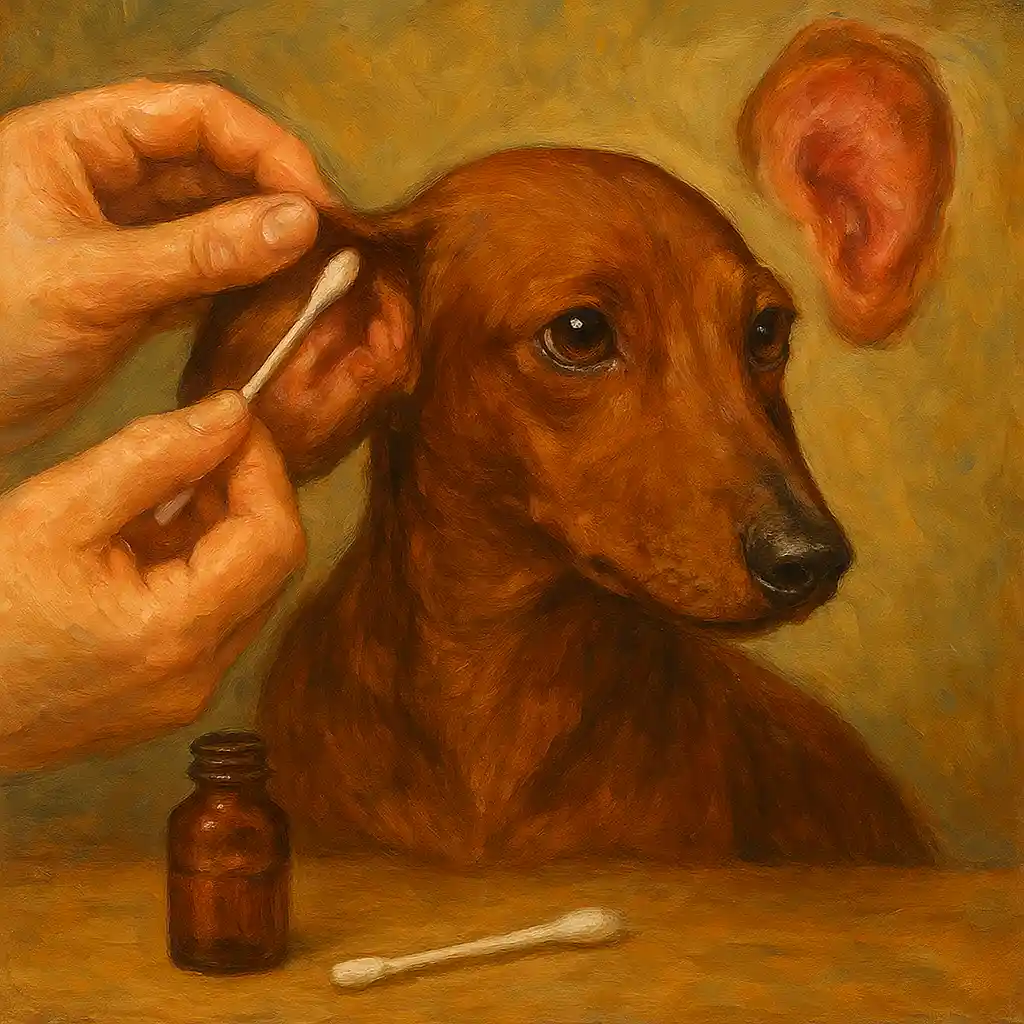
Knowing how to safely clean Dachshund ears can make a big difference in your dog’s comfort and health. Dachshunds have long, floppy ears that can trap moisture and dirt, so ear care is not just a “nice extra”—it is part of good basic grooming. You probably know the feeling: you’re enjoying time with your dog, and suddenly they start scratching at their ears, shaking their head, or acting uncomfortable. This guide explains what is allowed, what is not allowed, and the warning signs of inflammation so you can act early and avoid bigger problems.
Prevention is key: regular checks and gentle cleaning help you spot ear problems early, before your Dachshund is in pain.
Why You Should Safely Clean Dachshund Ears (Not Ignore Them)
Dachshunds can be more likely to have ear trouble because their ear flaps reduce airflow. Less airflow can create a warm, moist space where debris and moisture stay longer than they should. If ears are not checked and kept clean, your dog may develop wax buildup, irritation, or infections.
Regular ear care helps your Dachshund in several ways:
- Prevents discomfort from itchiness, wax buildup, or trapped debris.
- Reduces the risk of infections by keeping ears cleaner and drier.
- Helps you notice changes early, like redness, odor, or discharge.
- Builds trust if you handle ears gently as part of normal grooming.
Neglecting ear care can lead to ongoing itching, head shaking, and pain. If inflammation becomes an infection, your Dachshund may need veterinary treatment. A simple weekly look can help you avoid that.
Understanding Dachshund Ear Anatomy (So You Can Safely Clean Dachshund Ears)
To safely clean Dachshund ears, it helps to understand what makes them special. Dachshunds are known for their long, floppy ears. Those ear flaps look cute, but they can trap moisture and debris more easily than upright ears.
Unique features of Dachshund ears
- Long ear flaps can limit airflow, which can increase warmth and moisture.
- Moisture can get trapped after baths or swimming, creating a risky environment for irritation.
- Debris can collect more easily, especially if your dog spends time outside.
How ear structure affects cleaning methods
Because the ear canal is delicate, cleaning should focus on what you can see and reach safely. The goal is to clean the outer ear and the inner flap area gently, without pushing anything deeper. This is why many ear problems start when owners use the wrong tools or go too far into the ear canal.
The safest approach: clean what you can see, and let your vet handle deeper problems.
How Often to Safely Clean Dachshund Ears
For most Dachshunds, a good routine is to check the ears weekly. Cleaning is often done about once a week as well, depending on your dog’s needs. Some dogs may need less frequent cleaning, and some may need more—especially if they get dirty often or have more wax buildup.
It is helpful to think in two steps:
- Weekly ear check: a quick look and smell test to spot early changes.
- Cleaning when needed: gentle cleaning using a vet-approved solution and safe technique.
Avoid over-cleaning. Cleaning too often can irritate the ear and disturb the natural balance inside the ear. If you are unsure what schedule is best for your dog, ask your veterinarian during a regular check-up.
Supplies You Need to Safely Clean Dachshund Ears
Before you start, gather everything you need so the process stays calm and quick. A prepared setup also helps your Dachshund feel more relaxed.
- Vet-approved ear cleaning solution made for dogs
- Cotton balls or cotton pads (soft and gentle)
- A soft cloth for wiping the outer ear
- Treats to reward calm behavior
- A towel in case your dog shakes their head
Choose an ear cleaner that is gentle and made for dogs. The draft also notes to avoid harsh products like alcohol, hydrogen peroxide, and strong homemade mixtures. When in doubt, stick with what your vet recommends.
Step-by-Step: How to Safely Clean Dachshund Ears at Home
This routine is designed to be gentle, simple, and safe. It focuses on cleaning the parts of the ear you can reach without risk.
1) Choose a calm time and place
Pick a quiet moment when your Dachshund is relaxed. Sit on the floor or a stable surface. Keep your voice calm and your movements slow.
2) Inspect the ears before cleaning
Gently lift the ear flap and look inside. A healthy ear is usually pale pink, smooth, and not swollen. You should not see heavy discharge. Also notice the smell—healthy ears should not have a strong, foul odor.
If you see obvious redness, swelling, discharge, or your dog acts painful, stop and contact your vet.
3) Clean the outer ear first
Use a soft damp cloth or a cotton pad to wipe the outer ear and the visible inner flap. This removes surface dirt and wax without going into the ear canal.
4) Use a vet-approved ear cleaning solution correctly
Follow the product instructions. A common method is to apply the solution to a cotton ball or pad and wipe the visible parts of the ear. Some products are designed to be placed into the ear (following label directions), then you gently massage the base of the ear to loosen debris.
If you use a solution that goes into the ear, keep it gentle and controlled, and always follow the directions on the bottle.
5) Massage gently (if the cleaner instructions say to)
Gently massage the base of the ear for a short time. This can help loosen dirt and wax. Many dogs will naturally shake their head afterward, which can help bring loosened debris outward.
6) Wipe away loosened debris
Use a fresh cotton ball or pad to wipe away anything you can see. Do not keep digging. The goal is to clean safely, not to make the ear “perfect” in one session.
7) Dry the ear thoroughly
Moisture can lead to problems, so drying matters. Gently dry the ear flap and outer area with a clean cloth or cotton pad. Also remember to dry ears after baths or swimming.
8) Reward your Dachshund
Praise your dog and give a treat. This makes future ear cleaning easier and less stressful.
Try this simple habit: after cleaning, gently lift the ear flap for a few seconds to let air circulate and help the ear stay dry.
What’s Allowed When You Safely Clean Dachshund Ears
When you safely clean Dachshund ears, you are working with a sensitive area. Small, careful steps are best.
- Allowed: wiping the outer ear and inner flap with a soft cloth or cotton pad
- Allowed: using a vet-approved ear cleaning solution made for dogs
- Allowed: gentle massage at the base of the ear (when product instructions recommend it)
- Allowed: drying the ears after baths, grooming, or swimming
- Allowed: weekly checks for redness, odor, wax buildup, or discharge
Also, if your Dachshund has long hair around the ears, keeping that area tidy can help airflow. The draft mentions trimming excess hair around the ear area to reduce moisture and debris buildup.
What’s Not Allowed: What to Avoid When You Safely Clean Dachshund Ears
Some ear-cleaning habits are common, but they can be risky. Avoid these mistakes to protect your Dachshund’s ears.
Do not use cotton swabs (Q-tips) inside the ear canal
Cotton swabs can push wax and debris deeper, and they can also injure the ear canal. This is one of the most important “don’ts” in ear care.
Do not insert sharp objects or go deep into the ear
Even if you think you see wax, going deep can cause damage. If something seems stuck or deep, it is safer to let a veterinarian handle it.
Do not use harsh products
Avoid alcohol and hydrogen peroxide, as they can be too harsh and cause irritation. The draft also warns against strong homemade solutions like vinegar, which may be too irritating for sensitive ears.
Do not over-clean
Cleaning too often can irritate the ear and disrupt the normal balance of oils and bacteria. Stick to a steady routine, and clean more only if your vet advises it.
Do not ignore moisture
Leaving ears wet after bathing or swimming can increase the risk of problems. Drying is part of cleaning.
If you are unsure about a product or technique, choose the safest option: stop and ask your veterinarian.
Signs of Healthy Ears (So You Know Your Routine Works)
When you safely clean Dachshund ears and maintain a good routine, you should see and feel signs of normal, healthy ears.
Visual signs of healthy Dachshund ears
- Pale pink skin inside the ear (not bright red)
- Smooth skin without swelling or irritation
- Minimal wax (some wax can be normal)
- No discharge and no wet, sticky buildup
Smell and comfort signs
- No strong, foul odor
- No pain when you touch the ear gently
- Minimal head shaking or scratching
Some dogs shake their head once or twice after cleaning, especially if a cleaner was used. That can be normal. What you want to avoid is constant shaking, constant scratching, or signs of pain.
Warning Signs of Ear Inflammation in Dachshunds
Even with good care, problems can happen. The key is to notice early warning signs of inflammation, so you can get help before it becomes worse.
Red flags to watch for
- Redness in the ear canal or on the inner ear flap
- Swelling or thickened skin
- Foul odor coming from the ear
- Discharge or unusual wax buildup
- Frequent head shaking
- Excessive scratching or rubbing ears on furniture or the floor
- Sensitivity when you touch the ear
- Head tilt or your dog holding their head oddly
- Irritability or acting uncomfortable
If you notice these signs, do not try to solve everything with more cleaning. Too much cleaning can make irritation worse. It is better to pause and ask your vet what to do next.
When to Seek Veterinary Assistance
Home care is helpful, but some situations need professional support. Contact your veterinarian if you notice:
- Persistent redness, swelling, or pain
- Strong odor that does not improve
- Discharge (especially if it keeps coming back)
- Repeated ear problems or frequent infections
- Foreign objects you cannot remove safely
Regular veterinary check-ups are also important. Your vet can examine your Dachshund’s ears during routine visits and give advice based on your dog’s history and needs.
Common Ear Issues in Dachshunds (And How Cleaning Fits In)
Learning to safely clean Dachshund ears is part of prevention, but it is also important to understand common issues that may still happen.
Ear infections: causes and symptoms
The draft notes several possible causes of ear infections, including moisture buildup, trapped debris, allergies, and ear mites. Symptoms can include odor, redness, discharge, and constant scratching or head shaking.
If you suspect an infection, it is best to see your vet. Cleaning alone may not fix an infection and can sometimes make a painful ear feel worse.
Allergies and ear health
Allergies can affect the ears. They may cause inflammation, redness, and more wax buildup. If your Dachshund often has itchy skin along with ear irritation, allergies could be part of the picture. A veterinarian can help you understand what is going on and how to manage it.
Other ear-related problems
Dachshunds may also get irritation from trapped debris (like small outdoor particles). Regular weekly checks help you catch these problems early. If you see something in the ear and you cannot remove it safely, do not force it—get professional help.
Preventive Habits That Support Ear Health
A good routine is not only about cleaning. Prevention includes small habits that reduce moisture, dirt, and irritation over time.
Weekly ear checks as a normal grooming step
Once a week, gently lift each ear flap and look inside. Check for redness, swelling, discharge, or unusual wax. Also notice your dog’s reaction—pain or sensitivity is important information.
Dry ears after water activities
After baths or swimming, gently dry your Dachshund’s ears. Moisture is a common trigger for ear problems, so this step matters as much as cleaning.
Keep the ear area tidy
If your Dachshund has excess hair around the ears, keeping it trimmed can help reduce trapped moisture and debris. Be careful when trimming—cutting too close can irritate the skin.
Dietary considerations mentioned in the draft
The draft includes dietary ideas that may support overall health, including ear health: omega-3 fatty acids, probiotics, low-glycemic foods, and limiting grains for dogs that may be sensitive. If you plan to change your Dachshund’s diet, it is safest to talk to your veterinarian first, especially if your dog already has ongoing ear issues.
Professional Ear Care for Dachshunds
Sometimes the best way to safely clean Dachshund ears is to let a professional help—especially if your dog has repeated problems or if you see warning signs.
Why regular vet check-ups matter
Veterinary check-ups can catch ear issues early. Your vet can look deeper into the ear safely, check for infection, and recommend the right treatment if needed. This can save your Dachshund from ongoing discomfort and can prevent small problems from turning into bigger ones.
Professional cleaning: what it can help with
Professional ear care can be helpful when there is stubborn buildup, irritation, or when your Dachshund does not tolerate home cleaning. It also gives you a chance to ask questions and confirm that your home routine is safe.
Real-Life Situations: Why Small Signs Matter
Many Dachshund owners notice ear problems in everyday moments: a dog who suddenly shakes their head more often, scratches one ear repeatedly, or seems annoyed when you touch the ear area. These small signs are important. When owners respond early—by checking the ears, cleaning gently if appropriate, and contacting the vet when needed—dogs often avoid more serious discomfort.
On the other hand, it can be challenging when a Dachshund dislikes ear handling. This is why it helps to keep the routine calm, gentle, and quick, and to reward your dog afterward. Over time, many dogs accept ear checks as a normal part of life.
Small steps win: a quick weekly check plus gentle cleaning is easier than dealing with a painful ear problem later.
Quick Checklist: Safely Clean Dachshund Ears the Right Way
- Check ears weekly for redness, swelling, odor, discharge, and pain.
- Use only a vet-approved ear cleaning solution made for dogs.
- Wipe the outer ear and visible inner flap with cotton pads or a soft cloth.
- Never use cotton swabs (Q-tips) inside the ear canal.
- Dry ears after baths or swimming to prevent moisture buildup.
- Watch for warning signs and contact your vet if symptoms persist.
Conclusion
Learning how to safely clean Dachshund ears is one of the simplest ways to protect your dog’s comfort and health. Keep it gentle, avoid risky tools and harsh products, and pay attention to warning signs like redness, swelling, odor, discharge, and constant scratching. If something feels “off,” trust your instincts and contact your veterinarian. For more helpful grooming and wellness tips, visit our other Dachshund care guides and make ear checks part of your weekly routine.