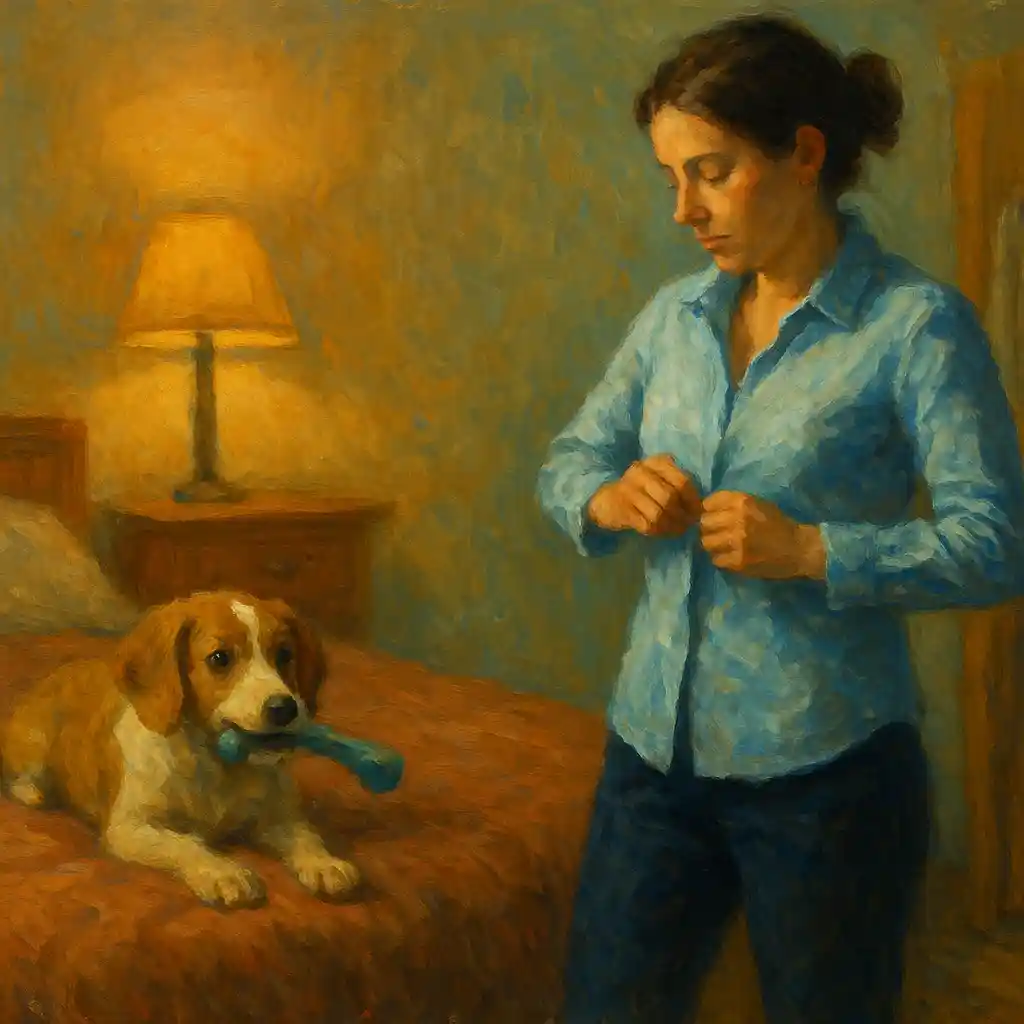
If your dog panics when you get dressed, mornings can feel stressful before the day even starts. Many people—especially seniors who value a steady routine—deal with this exact problem. Your dog may pace, whine, tremble, pant, or try to follow you closely the moment you reach for clothes, shoes, or keys. It can be upsetting to watch, and it can also make it hard for you to get ready safely and calmly.
The good news is that you can often reduce this panic with a simple, kind plan: change the setup, place your dog in a comfortable zone, give a chew item, dress quietly, and then do gradual training. This post walks you through that full approach step by step, with clear ideas you can use right away.
When a dog panics when you get dressed, the goal is not to “push through” the panic. The goal is to change the routine so your dog feels safe, busy, and slowly learns that dressing is not scary.
Why a Dog Panics When You Get Dressed
To help your dog, it helps to understand what may be happening. When your dog panics when you get dressed, it is usually not “bad behavior.” It is often fear, stress, or a strong habit built over time.
Common signs of panic or anxiety
Different dogs show panic in different ways. Watch for signs like:
- Trembling or shaking
- Heavy panting when the room is not hot
- Pacing back and forth
- Whining, barking, or “talking” more than usual
- Trying to escape the room or run to the door
- Clinging to you or getting under your feet
- Hiding behind furniture or in another room
These signs matter because they tell you your dog is overwhelmed. If your dog panics when you get dressed, your dog is not choosing calm in that moment—they may not be able to.
Possible reasons dressing time triggers panic
Dressing can include many small triggers that your dog connects to something stressful. Some possible reasons include:
- Past negative experiences connected to leaving the house, being alone, or a rushed routine.
- Noise and fast movements (drawers opening, hangers, shoes hitting the floor, quick steps).
- Predictable “leaving cues” like putting on shoes, grabbing a bag, or picking up keys.
- Discomfort with certain items if you are dressing your dog (some dogs dislike tight clothing, certain fabrics, or feeling restricted).
- Age-related changes that make your dog more sensitive to sound, touch, or changes in routine.
How ongoing stress affects your dog’s well-being
When your dog panics when you get dressed day after day, it can affect their overall comfort. Stress can make your dog feel less secure at home, and it can also make your routine harder. A stressed dog may have trouble settling, may chew the wrong items, or may stay “on alert” even after you finish dressing.
That is why it helps to act early and gently. Small changes can protect your dog’s well-being and also protect your peace.
Create a Safe Zone When Your Dog Panics When You Get Dressed
If your dog panics when you get dressed, a safe zone is one of the most helpful changes you can make. This is a specific place where your dog can relax while you get ready. It is not a punishment area. It is a comfort area.
Choose a simple, predictable location
Pick a spot that is quiet and familiar. Many people choose:
- A corner of the bedroom
- A spot in the hallway outside the bedroom
- A calm area in the living room
- A crate (only if your dog already feels safe in it)
Try to choose a location where your dog can still feel part of the home, but not be under your feet while you dress. This is especially important for seniors, because a worried dog can accidentally cause a trip or fall.
Set up the zone with comfort and basics
Make the zone inviting. Add:
- Comfortable bedding (a dog bed, blanket, or both)
- Favorite toys that are safe and calming
- Water nearby, especially if your dog pants when anxious
The message you want to send is: “This is your safe place. Good things happen here.”
Use baby gates or a crate for clear boundaries
Clear boundaries help many dogs settle faster. If your dog panics when you get dressed and tries to follow you closely, consider using:
- A baby gate to block off the dressing area
- A crate with the door open at first (if your dog likes the crate)
- A closed door only if it does not increase panic (some dogs do worse behind a closed door)
The best choice depends on your dog. The goal is calm separation, not isolation that increases fear.
Use Chew Items to Help When a Dog Panics When You Get Dressed
A chew item is a simple tool that can make a big difference. When your dog panics when you get dressed, chewing gives your dog something safe to do with their mouth and mind. It can help redirect nervous energy into a calming activity.
Pick chew items that are safe and appropriate
Choose chew items that fit your dog’s size, chewing style, and safety needs. Options mentioned in the draft include:
- Durable chew toys
- Bones (only if safe and appropriate for your dog)
- Puzzle toys
- A Kong-style toy filled with treats
If you are unsure what is safe for your dog, consider checking with your veterinarian. Always supervise new chew items until you know how your dog uses them.
Offer the chew item before you start dressing
Timing matters. If your dog panics when you get dressed, don’t wait until your dog is already upset. Instead:
- Guide your dog to their safe zone.
- Give the chew item right away.
- Let your dog start chewing before you touch clothes, shoes, or keys.
This helps your dog begin the routine in a calmer state.
Redirect attention gently, not forcefully
If your dog leaves the chew item and comes to you, stay calm. Avoid scolding. Quietly guide your dog back to the zone and help them re-engage with the chew. Over time, many dogs learn: “When dressing starts, I go to my spot and chew.”
Dress Quietly and Calmly If Your Dog Panics When You Get Dressed
Dogs notice your body language and energy. If your dog panics when you get dressed, a rushed, noisy routine can make the fear stronger. A calmer routine can lower the intensity of the trigger.
Prepare your clothes ahead of time
A simple way to reduce noise and fast movement is to prepare the night before:
- Lay out clothes, socks, and shoes
- Place needed items in one easy spot
- Choose soft fabrics that do not make loud sounds
This can reduce drawer opening, hanger noise, and searching around the room.
Move slowly and keep your voice soft
If your dog panics when you get dressed, try to:
- Avoid sudden movements
- Avoid loud talking or sharp tones
- Walk carefully, especially if your dog tends to circle your legs
Some dogs improve just from this change, because the routine becomes less intense.
Use positive reinforcement to support relaxation
Positive reinforcement means you reward the behavior you want to see more often. When your dog is in the safe zone and staying calm, offer:
- A small treat
- Gentle praise
- Calm affection (only if your dog enjoys touch when nervous)
The key is to reward calm, not to reward panic. If your dog is barking or scrambling, wait for a small calm moment (even one second of quiet) and then reward that calmer state.
Gradual Desensitization Training for a Dog Who Panics When You Get Dressed
The setup change (zone + chew + calm dressing) can bring quick relief, but training helps create long-term change. If your dog panics when you get dressed, gradual desensitization training can teach your dog that dressing cues are safe.
What desensitization means (in simple terms)
Desensitization means you expose your dog to a trigger in very small, manageable steps. You start with the easiest version of the trigger and build up slowly. You pair the trigger with something positive, like treats or praise, so your dog forms a new association.
This approach works best when you go slowly enough that your dog can stay calm most of the time.
Step 1: Identify the exact triggers
Dressing time is not one trigger—it is many. Watch your dog and note what starts the panic. Common triggers include:
- Putting on socks
- Putting on shoes
- Picking up keys
- Putting on a coat
- Picking up a bag or purse
- Moving toward the door
Knowing the triggers helps you train in a clear, organized way.
Step 2: Start with the smallest version of the trigger
If your dog panics when you get dressed, do not start with the full routine. Start small. For example:
- Pick up your keys for one second, then put them down.
- Put on one shoe, then sit down and relax.
- Touch your coat, then give your dog a treat.
These tiny steps help your dog learn without feeling overwhelmed.
Step 3: Pair each step with something positive
Each time you do a small trigger, pair it with something your dog loves:
- Treats
- Praise
- A chew item in the safe zone
This is how you build a new emotional response. The goal is that dressing cues predict calm, safe outcomes.
Step 4: Increase difficulty slowly and consistently
As your dog improves, increase the challenge in small ways:
- Hold the keys a little longer
- Put on both shoes
- Put on your coat and then take it off
- Walk to the door and then return
If your dog panics again, it usually means the step was too big. Go back to an easier step for a while.
Step 5: Practice short “alone time” in a gentle way
The draft mentions gradually exposing dogs to short periods of alone time. If your dog panics when you get dressed because they fear you leaving, gentle practice can help:
- Step out of the room for a moment, then return
- Gradually increase the time, one small step at a time
- Keep arrivals and departures calm and low-key
This can build confidence, especially when combined with a safe zone and chew items.
Positive Reinforcement Plans When Your Dog Panics When You Get Dressed
Positive reinforcement is not just “giving treats.” It is a clear system that helps your dog understand what behavior works. If your dog panics when you get dressed, a reward plan can guide your dog toward calm habits.
Reward calm behavior during dressing
Look for calm moments, such as:
- Your dog stays on their bed
- Your dog chews the toy instead of pacing
- Your dog is quiet for a few seconds
- Your dog watches you without rushing toward you
Reward those moments right away. This teaches your dog what you like and helps calm behavior grow.
Use treats, praise, and affection in a balanced way
Some dogs prefer food, some prefer calm words, and some like gentle touch. Use what works best for your dog. Keep it simple and consistent.
If your dog becomes more excited with too much talking or petting, use quieter praise and smaller movements. The goal is relaxation, not extra energy.
Create a simple reward system you can repeat daily
Try a routine like this:
- Dog goes to the safe zone → reward.
- Dog starts chewing → reward.
- You put on one clothing item while dog stays calm → reward.
- You finish dressing and dog stays settled → reward.
Over time, your dog learns that calm behavior during dressing brings good outcomes.
Safety Precautions If Your Dog Panics When You Get Dressed
When your dog panics when you get dressed, safety matters for both of you. A panicked dog can dart, jump, or circle your legs, and that can be risky—especially if you are carrying items or balancing while putting on shoes.
Keep your dog out from under your feet
The safe zone is not only for your dog’s comfort. It also protects you. Use a baby gate or a clear boundary if needed, so you can dress without stepping over your dog.
Avoid forceful or confrontational methods
When a dog is scared, force often makes fear worse. Avoid dragging your dog, yelling, or physically pushing through the routine. Instead, guide your dog calmly to the safe zone and use rewards and chew items to support calm behavior.
Monitor stress and adjust the plan
Some days will be easier than others. If your dog seems more sensitive, reduce the difficulty:
- Use a higher-value chew item
- Slow down your movements
- Do fewer training steps that day
- Give your dog more space
Progress is not always a straight line. Consistency over time matters most.
When to Seek Professional Help for a Dog Who Panics When You Get Dressed
Many dogs improve with home changes and training, but some dogs need extra support. If your dog panics when you get dressed and the panic is intense or getting worse, professional help is a smart next step.
Consult a veterinarian or animal behaviorist
A veterinarian or qualified animal behaviorist can help you understand what is driving the panic and can guide a plan that fits your dog and your home. This is especially helpful for severe anxiety cases.
Check for underlying medical issues
The draft notes that medical issues can contribute to panic. A vet can help rule out concerns such as:
- Thyroid imbalances
- Pain
- Neurological issues
- Age-related cognitive decline
- Sensory impairments
Addressing health issues can make training much easier and kinder for your dog.
Consider medication or therapy for extreme anxiety
For extreme anxiety, a veterinarian may discuss medication. Therapy options, including structured behavior training and desensitization work, can also help address root causes. If medication is used, patience and consistency with the plan are important, and your dog’s progress should be monitored with professional guidance.
Everyday Routine Tips for When Your Dog Panics When You Get Dressed
Small daily habits can support the bigger plan. If your dog panics when you get dressed, these practical steps can make mornings smoother.
Keep the dressing routine consistent
Dogs often feel safer when life is predictable. Try to keep the same general order each morning:
- Dog goes to the safe zone
- Chew item appears
- You dress calmly
- You do one short training step (if your dog is ready)
Consistency helps your dog know what to expect.
Use playtime and exercise to lower overall anxiety
The draft highlights that playtime and exercise can reduce anxiety levels. A dog with healthy outlets often settles more easily. If possible, include gentle activity in your day that fits your dog’s age and health.
Maintain a positive, supportive environment
When your dog panics when you get dressed, it can be frustrating. But a calm, supportive approach helps your dog learn faster. Your dog is not trying to make your morning hard—they are trying to cope with stress the best way they know how.
Patience and consistency are not “extra.” They are the foundation of change for an anxious dog.
Real-Life Hope: Progress Is Possible
If you feel stuck, you are not alone. Many seniors and other dog owners have worked through the same challenge: a dog that panics when you get dressed, making mornings tense and emotional.
What often makes the biggest difference is not one perfect trick. It is a steady combination of:
- A safe zone that truly feels safe
- A chew item that keeps your dog busy and calm
- A quieter, slower dressing routine
- Gradual desensitization training with rewards
Over time, small improvements add up. A dog who once panicked at the first sign of shoes may learn to settle on their bed and chew calmly while you get ready.
Recap: The Simple Morning Plan
If your dog panics when you get dressed, here is the full plan in one place:
- Change the setup: Create a safe zone with bedding, toys, and water.
- Dog in zone: Use a baby gate or clear boundary if needed.
- Chew item: Offer a safe chew or puzzle toy before dressing starts.
- Dress quietly: Move slowly, reduce noise, and keep your voice calm.
- Then training: Use gradual desensitization and reward calm behavior in small steps.
This approach supports both your dog’s emotions and your daily routine.
Conclusion
When your dog panics when you get dressed, it can feel draining and heartbreaking, but it is a problem you can work on with simple changes and steady training. Start with the safe zone and chew item, keep your movements calm, and build progress through gradual desensitization. Over time, mornings can become quieter, safer, and more peaceful for both you and your dog.
If you’d like, explore more training guides on the site to build a calm daily routine step by step.