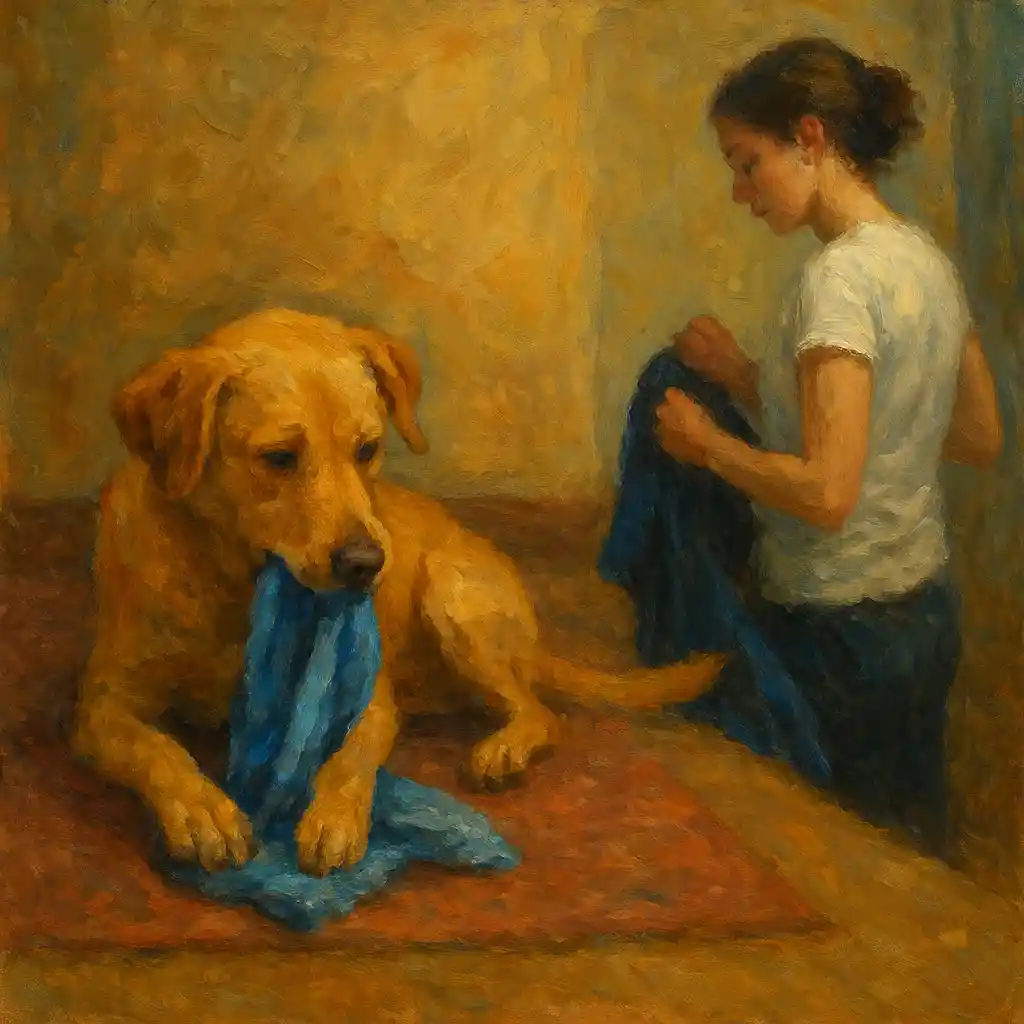
If your dog panics when you get dressed, mornings can feel stressful for everyone. You might be trying to put on socks or grab a jacket, and suddenly your dog is pacing, whining, barking, or even chewing things. This is a common problem, and it can be upsetting to watch. The good news is that you can often help by changing the setup, creating a safe zone, adding a chew item for distraction, dressing quietly, and then using simple training over time.
When a dog panics when you get dressed, the goal is not to “push through.” The goal is to make dressing feel safe, predictable, and boring.
This post walks you through a clear plan that keeps your dog’s well-being and your peace of mind at the center. You will learn how to set up the environment, what to do in the moment, how to build a routine, and how to track progress with patience.
Why a Dog Panics When You Get Dressed
To help a dog, it helps to understand what the panic might mean. When a dog panics when you get dressed, they are often reacting to what dressing predicts. For many dogs, dressing is not just clothing. It is a strong “leaving cue.” Dogs learn patterns fast: shoes, coat, bag, keys, and then you are gone.
Separation anxiety and leaving cues
One common reason a dog panics when you get dressed is separation anxiety. Your dog may connect your dressing routine with being left alone. Even if you are only leaving for a short time, the signs can start the moment you begin to get ready.
Fear of abandonment
Some dogs show a strong fear response when they think they are about to be left. This can look like clingy behavior, blocking the door, trying to follow you closely, or becoming upset as soon as you change clothes.
Previous negative experiences
Sometimes the panic comes from past experiences. If your dog has had a scary time when left alone (for example, a loud noise, an accident, or a stressful event), they may now worry every time your routine suggests you are leaving.
Common Signs: How to Tell When Your Dog Is Panicking
Not every dog shows panic in the same way. Some dogs become loud. Others go very still. If your dog panics when you get dressed, you may notice one or more of these signs during your dressing routine.
Pacing
Pacing is a common sign of stress. Your dog may walk back and forth, circle the room, or move from door to door as you get ready.
Whining or barking
Some dogs vocalize when they feel worried. You might hear whining, barking, or a high-pitched sound that starts as soon as you pick up your clothes or put on shoes.
Destructive behavior
Stress can come out as chewing, scratching, or tearing items. If your dog chews furniture, shoes, or door frames, it may be their way of coping with anxiety.
Other stress signals to watch
- Following you very closely (shadowing)
- Trembling or shaking
- Heavy panting when the room is not hot
- Drooling
- Trying to hide
If you are seeing intense panic, or if your dog might hurt themselves, it is important to put safety first and consider professional support (more on that later).
Create a Safe Zone When Your Dog Panics When You Get Dressed
A safe zone is a specific area where your dog can relax during your dressing routine. When a dog panics when you get dressed, a safe zone helps in two ways: it lowers stress and it gives your dog a clear “job” (resting and chewing) while you do your job (getting ready).
Pick one specific area
Choose a quiet, comfortable spot. This can be:
- a corner of the bedroom
- a cozy area in the living room
- a crate (only if your dog already feels safe in it)
- a bed placed behind a baby gate
The key is that it stays consistent. If the safe zone moves every day, it is harder for your dog to feel secure.
Equip the safe zone with comfort items
Make the zone inviting and familiar. Add:
- comfortable bedding (bed, blanket, or mat)
- favorite toys that are calm, not overly exciting
- treats used only for this routine if possible
Many dogs also like familiar smells. An old t-shirt that smells like you can be comforting, especially if your dog is worried about you leaving.
Gradually acclimate your dog to the safe zone
Do not expect your dog to love the safe zone on day one. Start small:
- Let your dog explore the area when nothing stressful is happening.
- Drop a few treats there so the zone feels rewarding.
- Practice short “settle” moments in the zone when you are calm and staying home.
Over time, the safe zone becomes a predictable place where good things happen.
Use a Chew Item for Distraction When Your Dog Panics When You Get Dressed
Chewing is a natural calming activity for many dogs. When a dog panics when you get dressed, giving a chew item can help redirect their focus and reduce anxious energy. It also gives your dog something consistent to do while you dress.
Choose appropriate chew toys or treats
Select chew items that match your dog’s size and chewing style. The draft mentioned a Kong filled with treats, which is a popular option because it can keep a dog busy longer than a basic treat.
Other options can include durable rubber toys, safe chew items, or puzzle feeders. The main goal is to offer something your dog enjoys and can focus on.
Rotate chew items to prevent boredom
If you use the same chew every single morning, it may lose its power. Try rotating a few options so the safe zone stays interesting. This can be a simple routine like “Toy A on Monday, Toy B on Tuesday,” and so on.
Safety and durability matter
Always check chew items for wear and tear. If pieces can break off, remove the item. When your dog panics when you get dressed, they may chew harder than normal, so supervision and safe choices are important.
Dress Quietly and Calmly to Reduce Panic
Dogs notice your body language and energy. If you rush, sigh, or move quickly, your dog may feel that something big is happening. When a dog panics when you get dressed, one of the simplest changes is to slow everything down.
Why your calm demeanor matters
Staying calm helps your dog feel that there is no emergency. Even if you are running late, try to keep your movements steady and your voice neutral.
Avoid sudden movements and loud noises
Small things can trigger a worried dog:
- shaking out jeans quickly
- dropping shoes on the floor
- slamming drawers
- fast steps across the room
Try to prepare the night before when you can. For example, place your clothes in one spot so you are not searching and opening drawers quickly in the morning.
Use positive reinforcement during calm moments
If your dog stays in the safe zone and remains calm while you put on a shirt or shoes, quietly reward that. This can be a small treat, calm praise, or simply placing an extra chew item in the zone.
Reward the calm behavior you want to see, even if it only lasts a few seconds at first.
Training Plan: What to Do After You Change the Setup
Changing the environment helps right away, but training helps long-term. If your dog panics when you get dressed, training should focus on building a new association: “When my person gets dressed, I am safe, and good things happen.”
Gradual desensitization to the dressing routine
Desensitization means exposing your dog to small pieces of the trigger at a level they can handle. For example:
- Pick up your socks, then put them down, then give a treat.
- Put on your shoes, then sit on the couch for a minute (do not leave).
- Put on your jacket, then walk to the kitchen instead of the door.
This helps break the pattern that “dressing always means leaving.” Go slowly. If your dog gets very stressed, you are moving too fast.
Reward-based training to reinforce calm behavior
Reward-based training is simple: calm behavior earns good things. You can reward:
- choosing to go to the safe zone
- lying down
- chewing calmly
- staying quiet while you dress
Over time, your dog learns what works. Instead of pacing or barking, they learn that calm behavior brings rewards.
Keep sessions short and repeat often
Short practice sessions can be easier than one long session. You can do a few “fake dressing” moments during the day when you are not actually leaving. This helps your dog learn faster without the pressure of a real departure.
Build a Routine to Help a Dog Who Panics When You Get Dressed
Routine creates predictability, and predictability reduces anxiety for many dogs. When a dog panics when you get dressed, a steady morning routine can help your dog know what will happen next.
Establish a consistent dressing routine
Try to keep the steps in the same order. For example:
- Dog goes to safe zone
- Chew item is given
- You dress quietly
- Calm reward for calm behavior
When the routine is predictable, your dog can relax into it instead of worrying about surprises.
Add playtime or exercise before dressing (when possible)
Some dogs do better after a short walk or a quick play session. If your dog has extra energy, they may be more likely to pace or whine. A little movement can help them settle.
Keep it realistic. Even a short, calm activity can help. The goal is not to create a wild, excited dog right before you leave, but to take the edge off.
Maintain a predictable schedule
Many dogs feel safer when meals, walks, and rest times happen around the same time each day. If your schedule changes often, try to keep at least the “safe zone + chew + calm dressing” part consistent.
Monitor Progress and Adjust Your Plan
Progress is not always a straight line. If your dog panics when you get dressed, you may see improvement for a few days, then a harder day. That is normal. The key is to track what is happening and adjust gently.
Keep track of behavior during dressing sessions
You can do this in a simple way. After each morning, make a quick note:
- Did your dog go to the safe zone?
- Did they chew the item?
- Did they pace, whine, bark, or chew things?
- How long did it take them to settle?
Small notes help you see patterns you might miss day to day.
Adjust the setup based on your dog’s response
If your dog is not settling, consider simple changes:
- Move the safe zone to a quieter spot
- Try a higher-value chew item
- Start dressing more slowly
- Break the routine into smaller steps
Adjust one thing at a time when possible, so you can tell what helped.
Celebrate small victories and stay patient
If your dog stayed calm for 10 seconds longer than yesterday, that is progress. If they chose the safe zone without being asked, that is progress. If your dog panics when you get dressed, it often takes time to build confidence.
Patience is not “doing nothing.” Patience is doing the right small steps again and again.
Safety Precautions When Your Dog Panics When You Get Dressed
Safety should always come first. Anxiety can lead to accidents, especially if your dog tries to bolt, jumps on you, or chews unsafe items. When a dog panics when you get dressed, take a few steps to reduce risk.
Keep the dressing area safe
Remove hazards near the safe zone and your dressing space. This can include sharp objects, small items that can be swallowed, or things your dog might chew.
Avoid loose clothing or accessories that can cause problems
Loose strings, dangling accessories, and items that swing can sometimes trigger excitement or fear. They can also become a hazard if your dog grabs them. Simple, fitted clothing can reduce these issues during training.
Supervise to prevent injuries
Especially in the early stages, keep an eye on your dog. If they are chewing too hard, trying to escape, or getting more stressed, pause and make the routine easier. If you use gates or a crate, make sure your dog is safe and not trying to break out.
When to Get Professional Help
Sometimes, home changes are not enough. If your dog panics when you get dressed and the panic is intense, long-lasting, or getting worse, it may be time to get support.
Talk to a veterinarian or animal behavior professional
A veterinarian or animal behaviorist can help assess what is happening and suggest a plan that fits your dog’s needs. They can also guide you on training techniques and, when needed, other support options.
Seeking help is not a failure. It is a responsible step to protect your dog’s well-being.
Extra Tips for Senior Dog Owners
Senior dogs can also struggle with anxiety, and they may need a gentler approach. If your dog panics when you get dressed and your dog is older, keep comfort and physical needs in mind.
Consider your senior dog’s comfort
Older dogs may have stiffness or pain, and stress can make it worse. Make the safe zone extra comfortable, with supportive bedding and easy access (no slippery floors if possible).
Keep training gentle and realistic
Short, calm sessions are often best. Use positive reinforcement and avoid pushing your dog too fast. Senior dogs can still learn, but they may need more time and more rest.
Stay focused on patience and understanding
Senior dogs may have changes in hearing, vision, or overall confidence. A calm routine, a safe zone, and predictable steps can help them feel secure.
Real-Life Style Examples: What Success Can Look Like
Many dog owners see improvement when they combine the setup change with calm practice. For example, some people notice that once their dog has a cozy safe zone and a special chew item, the dog starts choosing that spot on their own. Others see that dressing quietly reduces pacing and whining. With reward-based training, dogs often learn that calm behavior works better than panic.
Success does not always mean “perfect.” Sometimes success is simply that your dog recovers faster, or that the panic is smaller than before. Over time, those small changes can add up to a calmer morning.
Conclusion
If your dog panics when you get dressed, you can make mornings calmer with a clear plan: create a safe zone, provide a chew item, dress quietly, and then use positive reinforcement and gradual training. Monitor progress, adjust as needed, and stay patient. With consistency and a supportive approach, many dogs learn that your dressing routine is safe and predictable.
If you want to keep building a calmer home routine, check out our other training and enrichment guides on the site and choose one small habit to start this week.