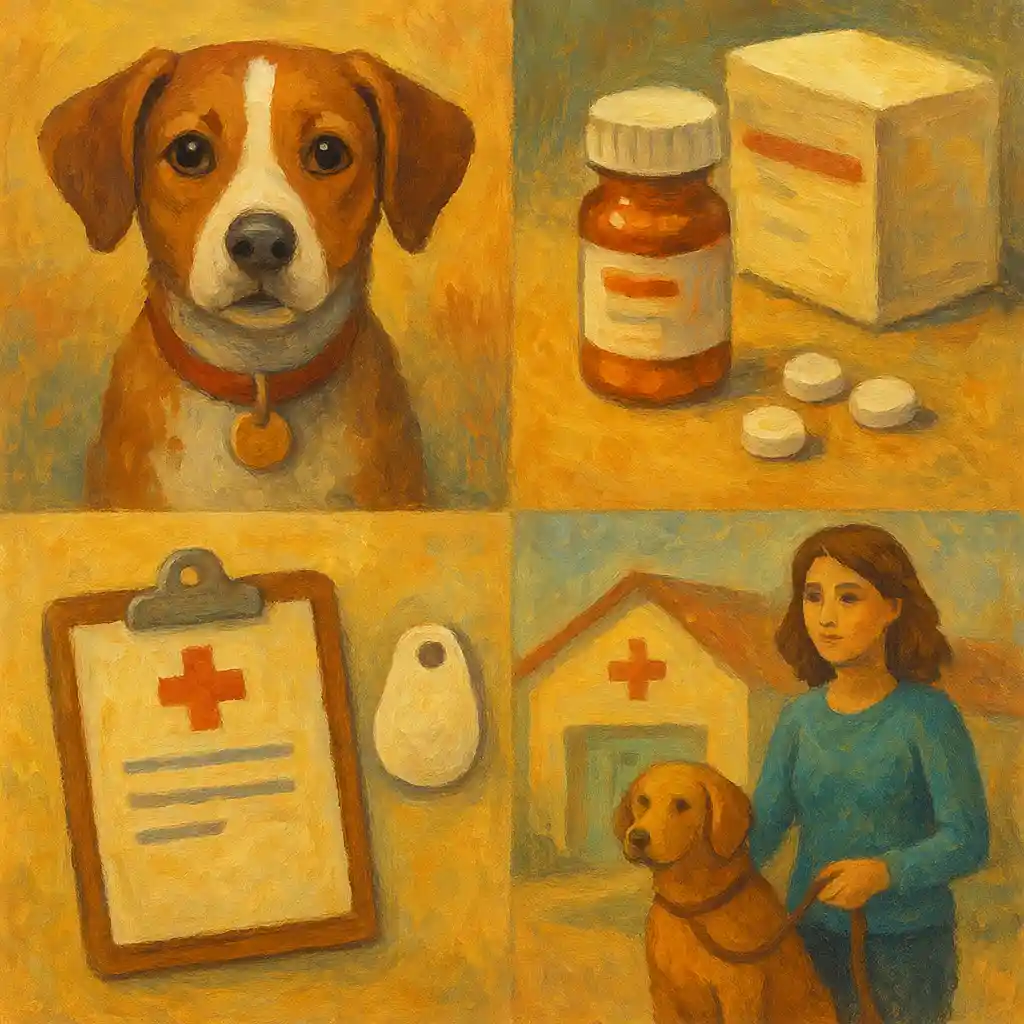
You probably know the feeling: your dog looks “off,” you need to move fast, and suddenly you can’t find the vaccination record, the medication list, or even the vet’s number. A dog emergency folder fixes that problem. It puts your dog’s most important health and care details in one place—both digital and paper—so you can act quickly when every minute matters.
A dog emergency folder is a simple tool that can save time, reduce stress, and help your dog get the right care faster.
This guide walks you through what a dog emergency folder is, what to include (vaccination photo, meds, allergies, clinic info, sitter info), how to organize it, and how to keep it updated—especially helpful for senior dogs who may have ongoing health needs.
What a Dog Emergency Folder Is (and Why You Need One)
A dog emergency folder is a single, organized place where you store the details someone needs to help your dog in a crisis. It is useful for:
- Rushing to your regular vet or an emergency vet clinic
- Leaving your dog with a pet sitter, family member, or neighbor
- Traveling with your dog
- Any moment you are stressed and your memory is not at its best
The purpose is simple: quick access. When your dog is sick or injured, you don’t want to search through emails, old paperwork, or scattered notes. With a dog emergency folder, the key information is ready.
Dog Emergency Folder: Digital vs. Paper (Use Both)
Many people choose one format, but the best plan is to use both. A digital folder is fast and easy to share. A paper folder works even when your phone is dead or you have no internet.
Digital dog emergency folder: pros and cons
- Pros: easy to access on your phone, quick to share, simple to update
- Cons: battery can die, files can be deleted, access may be blocked if you forget passwords
Paper dog emergency folder: pros and cons
- Pros: no technology needed, easy to grab and go, helpful for caregivers who prefer paper
- Cons: can get wet or lost, harder to update, may not be with you when you are away
The goal is not perfection. The goal is a reliable backup. If one version fails, the other still helps.
What to Include in a Dog Emergency Folder (Complete Checklist)
A strong dog emergency folder covers medical facts, daily care needs, and the people involved in your dog’s care. Below is a practical checklist you can follow.
1) Vaccination records (and a clear vaccination photo)
Vaccination records matter because vets, boarding facilities, groomers, and emergency clinics often ask for proof. In a stressful moment, it helps to have it ready.
Include:
- A photo of the vaccination record on your phone (quickest option)
- Any official vaccination paperwork you have
- Dates given and next due dates (if listed)
Organization tip: Put vaccination records at the front of the paper folder and at the top of your digital folder. They are often the first thing someone asks for.
2) Medications list (dosages, frequency, instructions)
If your dog takes medications, a clear list can prevent mistakes. In an emergency, it helps the vet understand what your dog is already taking.
Your medication page should include:
- Medication name
- Dosage (how much)
- Frequency (how often)
- Special instructions (with food, at a certain time, do not combine with something)
- Space to note when the last dose was given
Try this: Keep one simple “current meds” page that you update right away when anything changes. This is often more useful than a long history during a crisis.
3) Allergies (food, environmental, medication)
Allergy information is easy to forget until it suddenly matters. Your dog emergency folder should clearly list any known allergies so a vet or caregiver can avoid triggers.
Include:
- Food allergies (specific ingredients if you know them)
- Environmental allergies (if you know the triggers)
- Medication allergies (important for treatment decisions)
Clarity tip: Write allergies in plain language and make them easy to spot. In the paper folder, consider bold text. In the digital folder, consider putting “ALLERGIES” in the file name.
4) Vet clinic details (regular vet)
Your dog emergency folder should include your regular vet’s details so you can call quickly, share records, or confirm history.
- Clinic name
- Address
- Phone number
- After-hours contact details (if available)
5) Emergency vet clinic details (nearest 24-hour option)
In a true emergency, you may not have time to search online. Put the emergency vet clinic information in your dog emergency folder now.
- Emergency clinic name
- Address/location
- Phone number
Try this: Add simple directions or notes like “closest 24-hour clinic” so you don’t second-guess yourself under stress.
6) Trusted pet sitter (or caregiver) information
If you ever travel, work long hours, or have health needs of your own, a trusted sitter matters. Your dog emergency folder should include sitter information so the right person can step in fast.
- Sitter’s name
- Phone number
- Availability (best times to reach them, backup contact if needed)
This section is also helpful if a family member needs to coordinate care while you are busy at the vet or dealing with an emergency at home.
7) A recent photo of your dog
A current photo helps with identification and is useful if your dog gets separated during an emergency. Add a clear photo that shows your dog’s face and body.
Keep:
- One photo in the paper folder
- The same photo in your digital dog emergency folder
How to Create a Digital Dog Emergency Folder (Step-by-Step)
A digital dog emergency folder should be easy to open in seconds. The goal is speed and clarity.
Step 1: Choose where to store it
Pick a place you already use and trust. Common options include your phone storage, your computer, or a secure cloud folder. The most important thing is that you can access it quickly.
Step 2: Scan or photograph key documents
Take clear photos or scans of:
- Vaccination records (make sure the text is readable)
- Medication list (or a typed page you keep updated)
- Any allergy notes
Tip: If you are taking a vaccination photo, check it in good light and confirm you can read names and dates.
Step 3: Create simple, clear file names
Good file names help you find things fast. For example:
- “Dog Vaccinations”
- “Dog Medications”
- “Dog Allergies”
- “Vet Clinic Contact”
- “Emergency Vet Contact”
- “Pet Sitter Contact”
Step 4: Make sure it’s accessible in an emergency
To make your digital dog emergency folder truly useful:
- Keep it somewhere you can open without digging through many apps
- Consider saving key images (like the vaccination photo) in a “favorites” area on your phone
- Make sure at least one trusted person knows it exists and how to find it
Recommended Apps and Software for a Digital Dog Emergency Folder
Some pet owners use pet-information apps to store records and reminders. The draft mentioned options like PetDesk or Petable for storing vaccination records, medications, allergies, and contacts. If you already use an app like this, it can work well as part of your digital dog emergency folder.
Even if you use an app, it is still smart to keep a backup in a basic digital folder and a paper folder. Apps are helpful, but emergencies are not the time to troubleshoot logins or settings.
How to Organize a Paper Dog Emergency Folder at Home
A paper dog emergency folder is your no-tech backup. It should be easy to grab and easy for someone else to understand.
Choose a durable folder or binder
Pick something sturdy. A water-resistant folder or a binder with plastic sleeves can help protect papers from spills and wear. If possible, choose a folder that stands out so you can spot it quickly.
Print and organize documents systematically
Use simple sections. You can use dividers or just group papers in this order:
- Quick info page (one-page summary)
- Vaccination records
- Medications list
- Allergies
- Vet clinic contact
- Emergency vet clinic contact
- Pet sitter contact
- Recent photo
Try this: Put a one-page summary at the front. In a crisis, people may only have time to read one page.
Keep the folder easy to access
Choose one consistent location at home, such as:
- A drawer near the front door
- A shelf near your dog’s supplies
- A clearly labeled spot that family members can find
Tell the people in your home where it is. A dog emergency folder only helps if someone can find it fast.
Maintaining Your Dog Emergency Folder: Updates That Matter
A dog emergency folder is not “set it and forget it.” It works best when it stays current.
Set reminders for vaccination renewals and medication refills
Life gets busy. Use reminders so important dates do not slip by. You can:
- Set calendar alerts for vaccination renewals
- Set reminders to check medication supply and refill timing
- Use a pet care app if you prefer everything in one place
Update vet and pet sitter contact information
Phone numbers and clinic hours can change. Every few months, confirm:
- Your vet’s current phone number and address
- After-hours contact details (if available)
- Your emergency vet clinic information
- Your trusted pet sitter’s best contact number and availability
Review and revise allergy information
Allergies can change, and sometimes you learn new triggers over time. Update the allergy section whenever you notice a new reaction or receive new guidance from your vet.
When you update your dog emergency folder, you are making future emergencies easier to handle.
Real-Life Moments When a Dog Emergency Folder Helps Most
It is easy to think you will remember everything. But stress changes how we think. A dog emergency folder supports you when you are tired, scared, or rushed.
Scenario: Late-night emergency vet visit
Your dog gets sick at night. You rush to the emergency vet clinic. They ask about medications and allergies. Instead of guessing, you hand over your dog emergency folder or open the digital version on your phone.
Scenario: A pet sitter needs to act fast
You are away. Your sitter notices a problem and needs vet contact details, vaccination records, and medication instructions. With a dog emergency folder, they can respond with confidence and share accurate information.
Scenario: Travel problems away from home
When you travel, you may not know local clinics. A dog emergency folder that includes travel-specific vet contacts helps you avoid delays.
The draft mentioned testimonials, but did not include specific quotes or names. Even without formal testimonials, the value is clear: being prepared reduces confusion and saves time when your dog needs help.
Safety Precautions: Sharing Your Dog Emergency Folder Information
Your dog emergency folder includes private details like phone numbers, addresses, and possibly medical notes. It is smart to share carefully.
Protect sensitive information in the digital folder
- Use password protection on your phone
- Consider storing the folder in a secure location you trust
- Only share access with people who truly need it
Make sure trusted people can access the paper folder
If you are ever unable to speak for your dog, someone else may need to step in. Make sure trusted individuals know:
- Where the paper folder is located
- What it contains
- How to use it in an emergency
Discuss the folder contents with family members or caregivers
Do a quick review together. It does not need to be complicated. Just make sure they understand:
- Your dog’s medications and allergies
- Which vet to call first
- Which emergency vet clinic to use after hours
- How to contact the pet sitter (or who the backup caregiver is)
Dog Emergency Folder for Travel: What to Add for Trips
Travel is fun, but it adds risk because you are away from your normal routine. A travel-ready dog emergency folder should include the basics plus a few trip-specific items.
Add nearby vet clinics at your destination
Before you leave, look up and record:
- A vet clinic near where you are staying
- An emergency vet clinic near where you are staying
- Addresses and phone numbers
Pack essential medications and a copy of the folder
Bring:
- Your dog’s medications (enough for the trip, plus a little extra if possible)
- A paper copy of the key pages (meds, allergies, vet contacts)
- Digital access on your phone (including the vaccination photo)
Try this: Keep one copy of the travel pages in your bag and one in the car, so you can reach it quickly.
Integrate a Dog Emergency Folder Into Your Daily Routine
A dog emergency folder works best when it becomes part of normal life, not a task you only think about during a crisis.
Make a habit of checking it regularly
Choose one day each month (or every few months) to:
- Review medications and dosages
- Confirm vet and emergency vet contact details
- Check that the vaccination photo is still clear and current
- Update pet sitter availability
Practice a simple “grab and go” drill
This does not need to be scary. Once in a while, practice:
- Finding the paper folder quickly
- Opening the digital folder quickly
- Locating the medication list and allergy page in under 30 seconds
In a real emergency, this small practice can reduce panic and help you focus on your dog.
Extra Resources to Support Your Dog Emergency Folder Plan
To make your dog emergency folder even more useful, consider adding a few helpful items and habits mentioned in the draft.
Printable emergency contact cards (simple and helpful)
You can create a small card (print it yourself) that includes:
- Your dog’s name, age, breed, and identifying marks
- Your name and phone number
- Your vet clinic contact details
- Emergency vet clinic contact details
- Medication and allergy highlights (short version)
Keep one card in your wallet, one in the paper folder, and one with your dog’s travel supplies.
Consider a pet first aid course
The draft recommends pet first aid courses that teach practical skills like CPR, wound care, and choking help. If you choose a course, look for one that fits your needs and helps you feel confident handling common emergencies.
Conclusion: Build Your Dog Emergency Folder for Peace of Mind
A dog emergency folder is one of the easiest ways to prepare for the unexpected—especially with a senior dog who may have medications, allergies, or more frequent vet visits. Create both a digital and paper version, keep a clear vaccination photo, list meds and allergies, and add vet clinic, emergency clinic, and trusted sitter details. Then keep it updated.
If you want a simple next step, create your one-page summary today and place it at the front of your dog emergency folder—then add the rest over the week. For more help, check out our other pet safety and senior dog care posts in the blog.