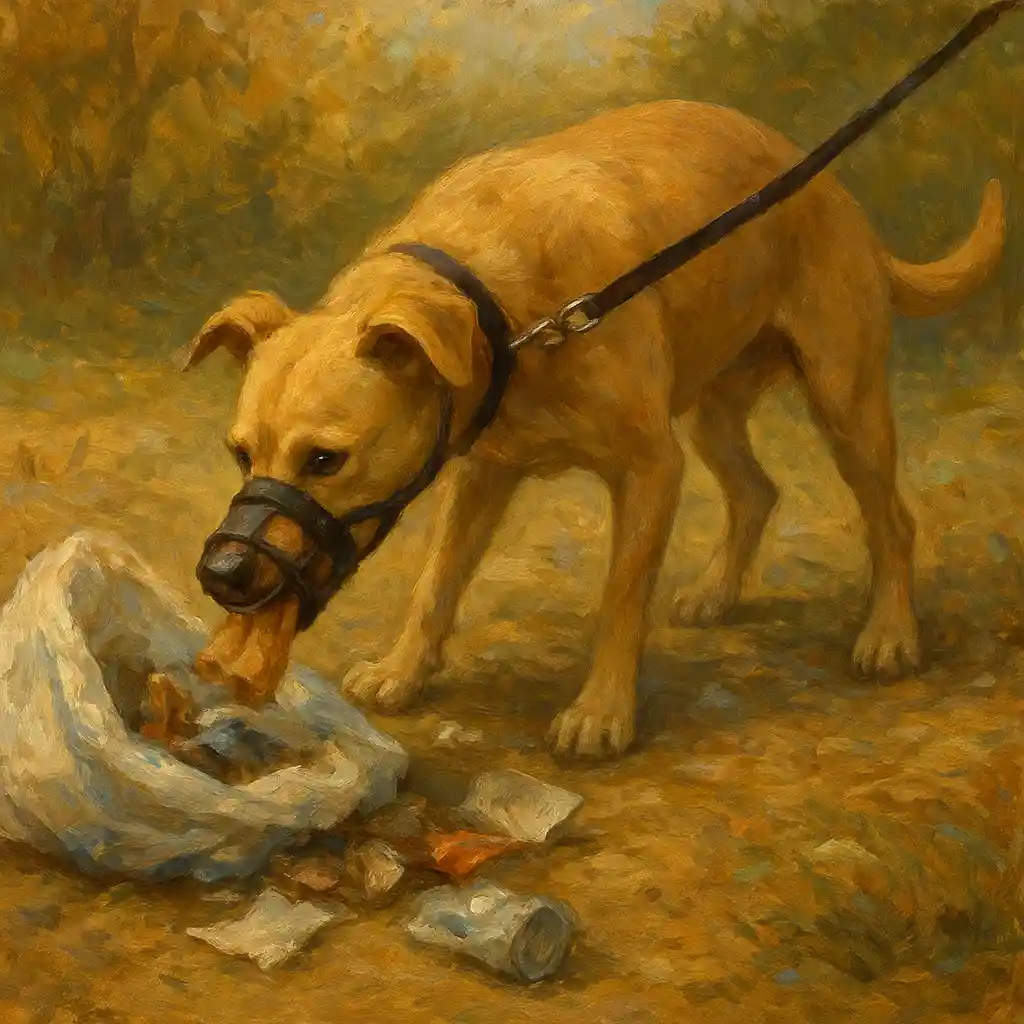
If your dog eats trash outside, it can turn a calm walk into a scary moment. This risk is even higher for senior dogs, who may move slower, see less clearly, or react later than they used to. The good news is that you can do a lot to prevent trouble before it happens. With a short leash, “Leave It” training, a muzzle when needed, and an emergency plan with the right phone numbers, you can lower the risk of poison bait and other dangerous items.
When your dog eats trash outside, seconds matter. Prevention is always easier than dealing with an emergency.
This guide is written for senior dog owners and anyone walking an older dog. It focuses on practical, realistic steps you can start using right away during daily walks.
Why “Dog Eats Trash Outside” Is a Serious Safety Problem
Many dogs explore the world with their nose and mouth. When a dog eats trash outside, the danger is not only “gross.” Trash can hide sharp objects, spoiled food, or unknown substances. In some places, there is also the risk of poison bait left on purpose or by accident.
Outdoor hazards can include:
- Poison baits (unknown food items that may contain toxins)
- Trash and leftovers (bones, wrappers, moldy food)
- Household chemicals that may be spilled or dumped outside
- Rodenticides or pesticides in yards, parks, or near buildings
Why senior dogs are more vulnerable
Senior dogs can be more at risk if they find something harmful. They may have slower reflexes, reduced vision or hearing, and sometimes weaker organs. If poisoning happens, it can lead to serious symptoms such as vomiting, diarrhea, seizures, and even organ failure. That is why anti-poison bait management is not “overreacting.” It is smart planning.
Anti-Poison Bait Management Starts with Awareness on Every Walk
Anti-poison bait management is a set of habits that help you prevent your dog from eating unknown items. If your dog eats trash outside often, these habits matter even more. The goal is to reduce access, improve training, and be ready if something goes wrong.
Think about risk levels:
- Low risk: quiet streets, clean sidewalks, familiar areas with little trash
- Medium risk: parks, picnic areas, near public bins, after events
- High risk: places with lots of litter, known bait incidents, areas with rodents and poison use
When you know the risk level, it is easier to choose the right tools: short leash, training focus, or a muzzle.
Short Leash Management When Your Dog Eats Trash Outside
A short leash is one of the simplest tools for anti-poison bait management. If your dog eats trash outside, a longer leash often gives them just enough space to grab something before you can react.
Benefits of using a short leash
- Better control when your dog suddenly pulls toward trash
- Faster response if you need to block access or step between your dog and the item
- Less chance your dog reaches bushes, bins, or food scraps
Choosing the right leash length and material for a senior dog
For many senior dogs, a comfortable, easy-to-hold leash helps both safety and mobility. Consider these points:
- Length: choose a shorter length for city walks or high-risk areas, so your dog stays near you.
- Grip: pick a leash that feels secure in your hand and is not slippery.
- Comfort: senior dog walks should be calm and steady. A leash that is easy to manage reduces sudden jerks.
Short leash management does not mean you never give freedom. You can still allow safe sniffing in clean areas. The key is to shorten up when you approach bins, corners, tall grass, or any place where poison bait or trash could hide.
“Leave It” Training: The Best Skill for Dog Eats Trash Outside Situations
If your dog eats trash outside, “Leave It” is one of the most important commands you can teach. It can stop your dog from picking up unknown food or objects. For senior dogs, training may take more patience, but it is still possible and very useful.
“Leave It” is not only obedience. It is a safety command that can prevent poisoning.
Why “Leave It” is especially important for senior dogs
Senior dogs may not recover as easily from poisoning or stomach problems. They may also have health conditions that make toxin exposure more dangerous. “Leave It” gives you a clear way to interrupt risky behavior without pulling hard on the leash.
Step-by-step “Leave It” training (simple and effective)
Use calm practice sessions. Keep it positive and short.
- Start indoors: Hold a treat in your closed fist. Say “Leave It.”
- Wait for the pause: When your dog stops trying to get it, reward with a different treat from your other hand.
- Repeat: Practice until your dog quickly backs off when they hear “Leave It.”
- Increase difficulty: Practice with the treat on the floor (covered by your hand or foot if needed).
- Add real-life distractions: Practice in the yard, then on quiet walks, then in busier places.
Consistency matters. If your dog eats trash outside, practice “Leave It” on walks in a safe way. When you see a harmless object, use it as a training moment. Reward your dog for choosing you instead of the item.
Helpful tips if your senior dog learns slowly
- Keep sessions shorter and more frequent.
- Use high-value rewards your dog truly likes.
- Train when your dog is not overly hungry or overly excited.
- Stay patient. Senior dogs can still learn, but they may need more repetition.
Muzzle Use for Dog Eats Trash Outside Risk Areas
For some dogs, training and leash control are not enough, especially in high-risk areas. If your dog eats trash outside quickly and you cannot reliably stop it, a muzzle can add a strong layer of safety. This is not about punishment. It is about preventing a dangerous mistake.
When to consider a muzzle
- Your dog has a history of scavenging and swallowing items fast.
- You walk in places where poison bait has been found or suspected.
- Your dog is strong and can reach items even on a short leash.
- Your dog ignores “Leave It” when the temptation is high.
Types of muzzles and what they are used for
There are different muzzle styles. The right choice depends on comfort and safety needs. Common types include:
- Basket muzzles: often used for longer wear because they allow panting and drinking more easily.
- Soft muzzles: can be useful for short situations, but may be less comfortable for longer walks.
- Grooming muzzles: usually for very short use and specific situations.
If you are unsure which type fits your dog best, talk to your veterinarian. Comfort and correct fit are important, especially for senior dogs.
How to introduce a muzzle gradually
A muzzle should not be a sudden surprise. Introduce it in a calm, positive way:
- Let your dog sniff the muzzle and reward calm behavior.
- Touch the muzzle gently to your dog’s face for a second, then reward.
- Put it on for a very short time, reward, then remove it.
- Slowly increase the wearing time during pleasant activities, like a calm walk.
The goal is for your dog to feel safe and relaxed. With time, the muzzle becomes just another piece of walking gear, like a harness or leash.
Emergency Preparedness for Dog Eats Trash Outside Incidents
Even with great anti-poison bait management, accidents can happen. If your dog eats trash outside and you suspect poison bait or another toxin, having a plan helps you act quickly and stay calm.
Why an emergency plan matters
In a poisoning situation, time is critical. When you already know what to do, you do not lose precious minutes searching for numbers or wondering where to go.
Your emergency plan should include:
- Your regular veterinarian’s phone number
- A veterinary emergency clinic number (after-hours)
- A veterinary emergency hotline number if available in your area
Build a simple first aid kit for poisoning concerns
A dog first aid kit can support you while you contact professionals. The draft mentioned key items that are often discussed for poisoning emergencies:
- Hydrogen peroxide (only to induce vomiting under vet guidance)
- Activated charcoal (used to absorb toxins under professional direction)
- Bandages, gauze, antiseptic wipes for other emergencies
- Your vet’s contact information written on a card
Do not guess when it comes to poisoning. Always contact a professional for instructions, especially before trying to induce vomiting.
What to do while waiting for professional help
If you think your dog may have eaten poison bait or a toxic substance:
- Prevent more eating: move your dog away from the area right away.
- Keep your dog calm: stress can make symptoms worse.
- Call your veterinarian or emergency number: follow their instructions carefully.
- Share clear details: what your dog ate (if known), when it happened, and any symptoms.
Identifying Poisonous Substances: What Might Be in Trash or on the Ground
When a dog eats trash outside, you often do not know what was swallowed. That is what makes it dangerous. Learning common toxins helps you react faster and also helps you prevent exposure.
Common household items and outdoor substances toxic to dogs
The draft listed several common toxic items. Keep these in mind:
- Chocolate (contains theobromine, which can be deadly to dogs)
- Grapes and raisins (can cause kidney failure in dogs)
- Xylitol (found in sugar-free gum and candy; can lead to low blood sugar and liver failure)
- Onions and garlic (can cause damage to red blood cells in dogs)
- Antifreeze (sweet taste but extremely toxic)
Trash outside can contain these items, especially near picnic areas, parking lots, and public bins.
Signs and symptoms of poisoning to watch for
Symptoms can vary depending on the toxin, but the draft highlighted several important warning signs. Contact a professional if you notice:
- Vomiting
- Diarrhea
- Excessive drooling
- Lethargy
- Tremors
- Seizures
- Difficulty breathing
If your senior dog shows any of these signs after a walk, treat it as urgent. Senior dogs can decline faster, so do not “wait and see” if you suspect poisoning.
Contacting the Emergency Number: Save Time When Dog Eats Trash Outside
If your dog eats trash outside and you suspect poison bait, calling the right emergency number quickly can make a big difference. In a stressful moment, it is easy to forget details or lose time searching online.
Keep emergency contacts easy to reach
Use simple systems that work for you:
- Save your vet and emergency clinic in your phone favorites.
- Keep a paper list on the fridge or near the leash.
- Store numbers in your walking bag, too.
What information to share on the call
When you call, be ready to explain:
- Your dog’s age and approximate weight
- What your dog ate (or what you think it was)
- How long ago it happened
- Any symptoms you see right now
Clear information helps the professional guide you faster.
Home Safety Measures That Support Anti-Poison Bait Management
Anti-poison bait management is not only for walks. Home safety reduces the overall risk of poisoning and helps your dog stay healthier. If your dog eats trash outside, it may also mean they like to scavenge at home, so extra steps are worth it.
Senior dog-proofing tips to prevent access to toxic substances
- Store cleaning products and chemicals in secure cabinets or high shelves.
- Keep medications out of reach, including purses and bedside tables.
- Close trash bins tightly and do not leave food scraps accessible.
- Use baby gates to block off risky areas if needed.
Proper storage and disposal of household chemicals
Many poisoning incidents happen because items are left open, spilled, or thrown away in an easy-to-reach bin. Make it a habit to:
- Dispose of chemicals safely and keep them sealed.
- Do not leave antifreeze, cleaners, or garden products where a dog can reach them.
- Keep your yard clear of possible hazards, including rodenticides and pesticides.
Safer Outdoor Activities When Your Dog Eats Trash Outside Often
If your dog eats trash outside, you may feel nervous about parks or busy areas. You do not have to stop outdoor time completely. Instead, choose activities and locations that reduce risk while still giving your senior dog fresh air and gentle movement.
Low-risk outdoor activity ideas for senior dogs
- Quiet neighborhood walks during less busy hours
- Short sniff walks in cleaner areas with fewer food scraps
- Calm backyard time with supervision
- Gentle play in a controlled space instead of crowded parks
Create a dog-friendly outdoor space at home
A safe home outdoor area can be a great option for senior dogs. Keep it simple:
- Regularly check the yard for trash, spilled chemicals, or unknown items.
- Remove toxic plants if your dog likes to chew greenery.
- Store garden products securely and clean up after any yard work.
This helps your dog enjoy outdoor time with fewer surprises.
Monitoring Senior Dog Health After Walks
When a dog eats trash outside, the risk does not always end when you get home. Some symptoms take time to appear. A quick check after walks can help you notice problems early.
Regular check-ups and screenings
Routine veterinary check-ups matter for senior dogs. These visits can help detect underlying issues and may also help your vet advise you on what to do if poisoning is suspected. If your dog has a history of scavenging, tell your veterinarian so they understand your daily risk level.
Talk to your vet about diet and supplements
The draft also noted the value of consulting a veterinarian about an age-appropriate diet and supplements. Senior dogs may benefit from nutrition that supports their changing needs. Your vet can guide you based on your dog’s health and lifestyle.
Real-Life Lessons: What These Scares Teach Us
Many owners have faced frightening moments when a dog grabbed something toxic on a walk. The key lesson is simple: you cannot rely on luck. If your dog eats trash outside, you need layers of protection.
Lessons that come up again and again:
- Control first: a short leash reduces surprise grabs.
- Training matters: “Leave It” can stop a bad choice.
- Extra tools are okay: a muzzle can prevent a crisis in high-risk areas.
- Preparedness saves time: having an emergency number ready reduces panic.
The goal is not perfect walks. The goal is safer walks, especially for senior dogs.
Conclusion: A Simple Plan for Dog Eats Trash Outside Prevention
If your dog eats trash outside, you are not alone—and you are not powerless. Use a short leash for better control, practice “Leave It” often, consider a muzzle when risk is high, and keep your emergency number and vet contact ready. Add home safety measures to reduce everyday exposure to toxins. With these steps, you can enjoy outdoor time with more peace of mind and help your senior dog stay safe in their golden years.
Next step: Create your “walk safety checklist” today (short leash, treats for “Leave It,” and emergency contacts) and keep it by your door so it becomes part of every walk.