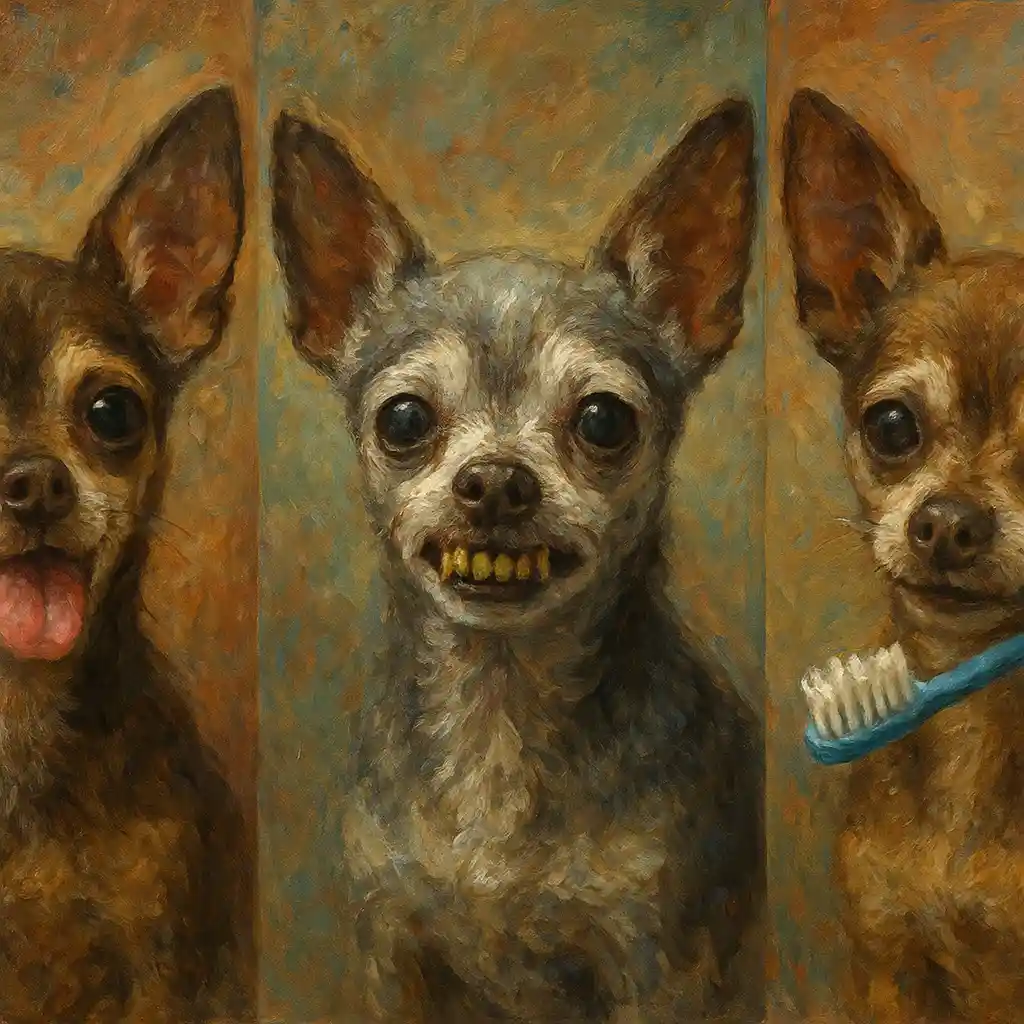
Senior Chihuahua mouth signs can be easy to miss at first, but they matter a lot. If your dog’s breath is getting worse, if you see tartar on the teeth, or if brushing feels harder than before, your Chihuahua may be telling you something. As Chihuahuas age, dental problems can affect comfort, eating, mood, and overall health. The good news is that with simple daily habits and regular vet support, you can protect your senior dog’s mouth and help them feel better.
A healthy mouth supports a healthier, happier senior Chihuahua.
In this guide, we will cover the most common senior Chihuahua mouth signs, why they happen, what you can do at home, and when it is time to see your veterinarian.
Why Senior Chihuahua Mouth Signs Matter
Chihuahuas are small dogs, but dental problems can become big problems—especially in the senior years. Senior Chihuahua mouth signs like bad breath, tartar buildup, drooling, or eating changes often point to discomfort in the mouth. When a dog has mouth pain, they may chew less, play less, and act more tired or grumpy.
It can also be hard for owners because many senior dogs try to hide pain. That is why it helps to watch for small changes. If your Chihuahua’s kisses suddenly smell bad or they stop chewing their favorite toy, those are important clues.
Common senior changes that affect the mouth
- More plaque and tartar over time
- Gums that become more sensitive
- Teeth that loosen or break more easily
- More risk of gum disease and tooth decay
The link between oral health and overall health
Oral health is not only about teeth. When the mouth is unhealthy, bacteria can grow and cause infection and inflammation. This can lower your dog’s comfort and quality of life. That is why noticing senior Chihuahua mouth signs early is so important.
Senior Chihuahua Mouth Signs to Watch For (Breath, Tartar, Eating Changes)
Senior Chihuahua mouth signs often show up in daily life. You may notice changes during cuddles, meal times, or when your dog is resting. The earlier you spot a problem, the easier it is to manage.
Bad breath (halitosis)
Bad breath is one of the most common senior Chihuahua mouth signs. You probably know the feeling when your dog comes close for a cuddle, and the smell makes you pull back. While “dog breath” can be normal, strong or worsening odor can be a sign of dental disease, tartar buildup, or gum problems.
Tartar buildup you can see
Tartar often looks like yellow or brown buildup on the teeth, especially near the gum line. In small breeds like Chihuahuas, tartar can build up quickly and may lead to gum disease. If you see tartar, it is a clear senior Chihuahua mouth sign that your dog needs extra dental support.
Changes in eating habits
Dental pain can change how your Chihuahua eats. Watch for these senior Chihuahua mouth signs during meals:
- Reluctance to eat hard kibble
- Dropping food while eating
- Chewing only on one side
- Eating more slowly than before
- Avoiding favorite chews or toys
Drooling excessively
Some dogs drool more when they are older, but sudden or heavy drooling can be a senior Chihuahua mouth sign of pain, infection, or irritation. If drooling is new, stronger than usual, or comes with bad breath or eating problems, a vet check is a smart next step.
Pawing at the mouth or face
Pawing at the mouth, rubbing the face, or pulling away when you touch the head can be signs of mouth discomfort. These behaviors may appear along with tartar, bad breath, or swollen gums.
Senior Chihuahua Mouth Signs: What Bad Breath Can Mean
Bad breath in a senior Chihuahua is not just unpleasant. It is often one of the first senior Chihuahua mouth signs that something is wrong. Understanding possible causes helps you decide what to do next.
Dental disease
Dental disease is a common reason for bad breath. Plaque turns into tartar, and tartar irritates the gums. Over time, this can lead to gum disease, tooth decay, and infection. This is why brushing and vet check-ups matter so much for senior dogs.
Diet and food stuck in the mouth
Diet can affect breath. Some foods may leave more residue on teeth, and food can get stuck around tartar. If your Chihuahua has dental pain, they may also chew less, which can leave more food in the mouth.
Other health conditions
Bad breath can also be linked to health conditions beyond the mouth. Because of this, it is important not to guess. If the smell is strong, sudden, or comes with other senior Chihuahua mouth signs, your vet should evaluate it.
Tips to manage bad breath at home
- Brush teeth regularly using dog-safe toothpaste.
- Use dental chews or toys designed to support oral hygiene.
- Offer fresh water and keep bowls clean.
- Consider dental water additives as part of a routine.
- Schedule regular dental check-ups so problems are found early.
Senior Chihuahua Mouth Signs: Tartar Buildup Risks and Prevention
Tartar is more than a cosmetic issue. In senior dogs, tartar buildup is one of the most important senior Chihuahua mouth signs because it often leads to gum disease and pain. The longer tartar stays on the teeth, the harder it becomes to remove without professional help.
Risks of untreated tartar buildup
If tartar is not treated, it can cause problems that affect daily life. Your Chihuahua may feel pain while eating or may avoid chewing. Infections can also develop, which can harm comfort and health.
If you can see tartar, your Chihuahua’s mouth needs support—at home and often at the vet.
How to prevent tartar buildup in a senior Chihuahua
- Brushing to remove plaque before it becomes tartar
- Dental chews and toys to support cleaner teeth between brushings
- Regular vet dental exams to monitor changes over time
- Professional dental cleanings when recommended
Professional dental cleanings
Sometimes brushing and chews are not enough, especially when tartar is thick. Professional dental cleanings can remove stubborn tartar and allow the vet to check for hidden problems. If your vet recommends a cleaning, it is usually because it will improve comfort and prevent bigger issues later.
How to Brush a Senior Chihuahua’s Teeth (Safely and Effectively)
Brushing is one of the best tools you have at home. When done gently and regularly, it helps reduce plaque, slow tartar buildup, and improve breath. For many dogs, brushing also becomes easier over time when it stays calm and positive.
Why brushing matters for senior Chihuahuas
Senior Chihuahua mouth signs often come from plaque and tartar that built up over many years. Brushing helps you take control of what you can at home. It can also help you notice changes early, like bleeding gums or a broken tooth.
Step-by-step: brushing your Chihuahua’s teeth
- Start slow. Let your Chihuahua sniff the toothbrush and toothpaste first.
- Use dog-friendly toothpaste. Human toothpaste can be harmful if swallowed.
- Choose the right tool. A small dog toothbrush or finger brush is often easier for a Chihuahua.
- Brush gently. Use small circular motions, especially near the gum line.
- Focus on the outer surfaces. That is where plaque and tartar often build up the most.
- Keep it short. Even 30–60 seconds is helpful, especially at the start.
- Reward your dog. Praise, calm voice, and a small reward can help.
Getting your senior Chihuahua comfortable with brushing
Many senior dogs need extra patience. If your dog has mouth pain, brushing may feel scary. Go slowly, and do not force the process. If brushing causes yelping, snapping, or strong avoidance, stop and talk to your vet. Pain should be checked, not pushed through.
Brushing techniques for small breeds
- Use a soft-bristled brush to protect sensitive gums.
- Angle the brush toward the gum line where plaque collects.
- Pay extra attention to front teeth, which can be a problem area for small dogs.
- Keep sessions consistent: 2–3 times a week is a realistic goal for many owners, and more is even better if your dog accepts it.
Dental Care Products That Help with Senior Chihuahua Mouth Signs
Brushing is important, but you do not have to do everything with a toothbrush alone. Several dental care products can support your routine and help manage senior Chihuahua mouth signs like bad breath and tartar.
Toothbrushes for Chihuahuas
Choose a small brush designed for dogs. The size matters because a Chihuahua’s mouth is small, and a large brush can be uncomfortable. Soft bristles are best for senior gums.
Dog toothpaste
Always use toothpaste made for dogs. Dog toothpaste is designed to be safe if swallowed and often comes in flavors that make brushing easier.
Dental wipes
If your Chihuahua refuses a toothbrush, dental wipes can be a helpful option. They can remove some plaque and freshen breath. They may not replace brushing fully, but they can still support oral hygiene.
Water additives
Water additives are easy to use: you add them to your dog’s water bowl. They can help freshen breath and support a cleaner mouth as part of a routine. They are especially helpful for senior dogs who do not accept brushing every day.
Dental chews and dental toys
Dental chews and toys can help reduce plaque and tartar and also give your Chihuahua something fun to do. Always choose the right size for a small breed, and supervise chewing to help prevent choking or tooth damage.
How to choose the best products for your Chihuahua
- Pick products made for small breeds and senior dogs when possible.
- If your Chihuahua has weak teeth or pain, choose softer chews and ask your vet for guidance.
- Use products as a support, not as the only solution, especially if tartar is already heavy.
Diet and Nutrition Support for Senior Chihuahua Mouth Signs
Diet can support oral health, but it cannot remove heavy tartar by itself. Still, smart food choices can help reduce plaque, support chewing, and keep your dog comfortable—especially if senior Chihuahua mouth signs are already showing.
How diet impacts oral health
Food affects how much residue stays on teeth and how often your dog chews. If your Chihuahua avoids chewing because of pain, plaque may build up faster. This is why diet, dental care, and vet check-ups work best together.
Foods that may help dental health
- Dental chews designed to reduce plaque and tartar
- Crunchy fruits and vegetables like carrots or apple slices (in safe, small pieces)
- Lean meats as part of a balanced diet
- Pumpkin for digestion support as part of a balanced plan
- Fresh water available at all times
Foods to avoid for better oral health
- Sugary treats that can support tooth decay
- Very hard bones that may crack teeth
- Sticky foods that can cling to teeth and increase plaque
- Citrus fruits because acidity may be harsh on the mouth
Hydration matters
Water helps wash away food particles and supports overall health. Senior dogs can be more sensitive to dehydration, and a dry mouth may worsen odor. Keep fresh water available and clean the bowl often. If your Chihuahua is picky about drinking, multiple bowls in the house or adding wet food can help.
Home Care for Senior Chihuahua Mouth Signs: Simple Remedies and Safety
Home care can help manage senior Chihuahua mouth signs, especially when you use safe, gentle methods. Home care works best for prevention and daily support, not as a replacement for veterinary care when there is pain or infection.
Helpful at-home habits
- Brushing with dog toothpaste
- Dental chews and toys for gentle cleaning support
- Dental wipes if brushing is not possible
- Water additives for breath and bacteria support
Natural options mentioned by owners
Some owners add small amounts of coconut oil to food because it has antibacterial properties. Others use gentle herbal rinses like chamomile or calendula to soothe gums. If you want to try these options, do it carefully and involve your vet, especially with a senior dog.
Safety precautions for home remedies
- Talk to your veterinarian first before starting any new home remedy.
- Avoid essential oils unless your vet approves them, as some can be toxic to dogs.
- Start small and watch for any reaction or stomach upset.
- Monitor closely after trying something new.
- Store products safely so your Chihuahua cannot eat them by accident.
Regular Vet Check-Ups for Senior Chihuahua Mouth Signs
Home care is important, but veterinary care is still essential—especially for seniors. Regular check-ups help catch problems early, before they become painful and harder to treat. If you are seeing senior Chihuahua mouth signs like bad breath, tartar, or eating changes, a dental exam is a smart step.
How often should a senior Chihuahua get dental check-ups?
Your veterinarian can recommend the best schedule for your dog. In general, senior dogs benefit from regular monitoring because dental changes can happen quickly. If your Chihuahua already has tartar or gum problems, your vet may want to see them more often.
What to expect during a dental examination
- A close check of teeth and gums for plaque, tartar, swelling, or bleeding
- An evaluation of loose, damaged, or painful teeth
- Discussion of home care steps like brushing and dental chews
- Possible recommendation for a professional cleaning
- Dental X-rays if the vet needs to check tooth roots and deeper issues
Why early treatment matters
When dental issues are treated early, your Chihuahua is more likely to stay comfortable. Early care can prevent serious pain and help your dog keep eating normally. If you notice senior Chihuahua mouth signs, do not wait until your dog stops eating or becomes very uncomfortable.
Behavior Changes Caused by Senior Chihuahua Mouth Signs
Dental problems do not only affect the mouth. They can affect behavior too. If your Chihuahua is in pain, they may act different at home. These changes can be easy to misunderstand, so it helps to connect behavior with senior Chihuahua mouth signs.
Signs of discomfort or pain
- More irritability or less patience
- Pulling away when touched near the face
- Pawing at the mouth
- Less interest in toys, chews, or play
- Hiding or sleeping more
How dental issues can affect mood
You probably know the feeling when pain makes you tired and short-tempered. Dogs can react in similar ways. A Chihuahua with a sore mouth may avoid being held, may not want to eat, or may even growl when the mouth is touched.
When to seek professional help
If behavior changes come with senior Chihuahua mouth signs like bad breath, tartar, drooling, or eating problems, it is time to call your vet. Pain should always be taken seriously, especially in an older dog.
Making Dental Care Easier for Senior Chihuahua Mouth Signs
Dental care can feel challenging, especially if your Chihuahua did not learn tooth brushing when they were younger. The key is to keep it simple, calm, and consistent.
Patience and consistency
Small steps add up. A short brushing session a few times a week is better than trying to do too much at once and causing stress. If your Chihuahua is sensitive, go slowly and keep the routine predictable.
Positive reinforcement
Reward cooperation. Praise your Chihuahua, offer a small treat, or give a favorite cuddle after brushing. This helps your dog connect dental care with good experiences.
Create a realistic routine
- Pick a regular time (for example, after the evening walk).
- Keep supplies in one place so it is easy to start.
- Use brushing plus one extra tool (like dental chews or wipes).
- Track senior Chihuahua mouth signs so you notice changes early.
Conclusion: Supporting Your Chihuahua’s Smile in the Senior Years
Senior Chihuahua mouth signs like bad breath, tartar buildup, and changes in eating habits are common, but they should not be ignored. With regular brushing, helpful dental products, smart diet choices, and routine vet check-ups, you can protect your Chihuahua’s comfort and health. If you have noticed any senior Chihuahua mouth signs recently, make a simple plan today—start with a gentle mouth check and one small dental care habit, and then build from there. For more help, explore our other senior Chihuahua care guides in the blog and create a routine that keeps your little companion feeling their best.