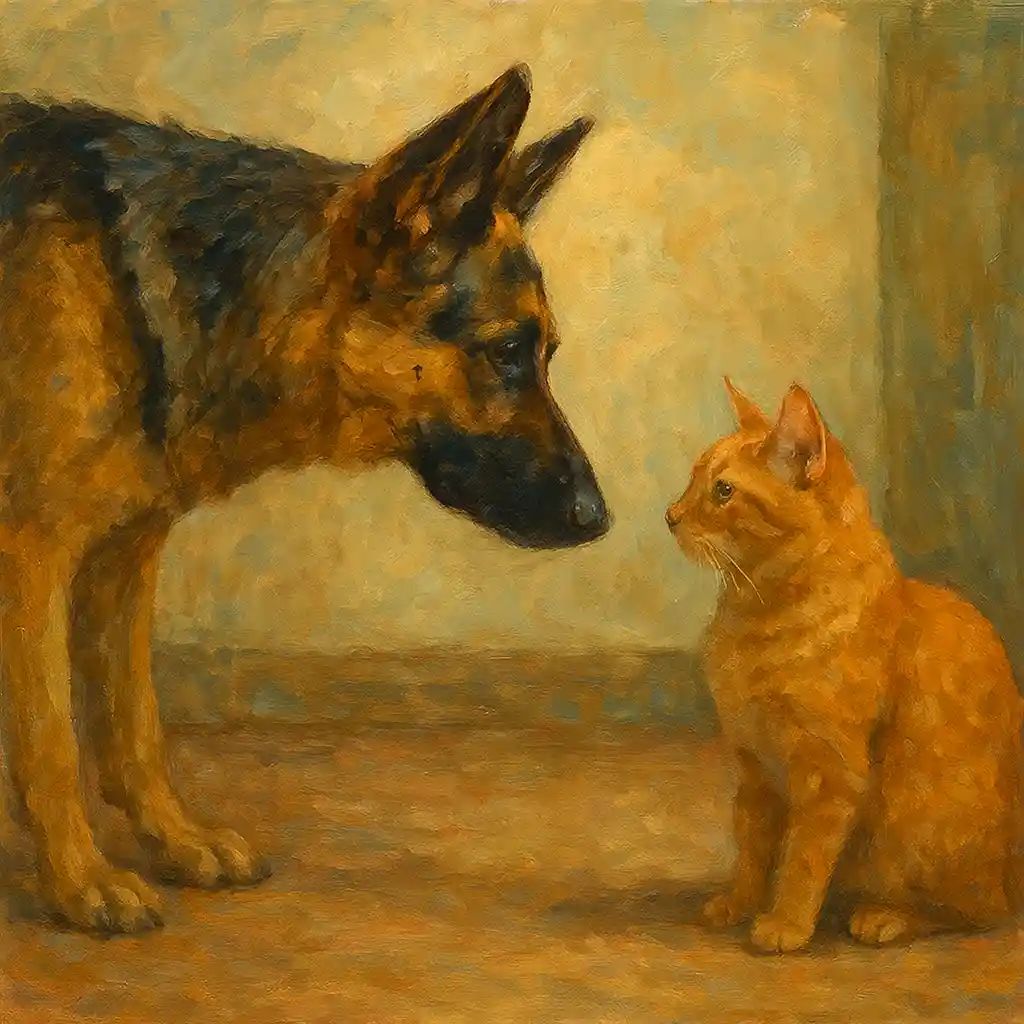
Introducing a German Shepherd Dog (GSD) to a cat can feel stressful at first. German Shepherds are smart, strong, and often very curious. Cats are sensitive, quick, and easily overwhelmed. When these two animals meet in the wrong way, problems can start fast. When they meet in the right way, they can live together peacefully—and sometimes even become friends.
When introducing your GSD to your cat, patience is key as both pets adjust to each other’s presence.
It’s important to consider the unique behaviors of both animals during the process of introducing your GSD to your cat.
The goal is not to “force friendship.” The real goal is safety, calm behavior, and a home where both animals can relax.
Preparing for introducing your GSD to your cat can lead to a smoother transition.
Why “Introducing Your GSD to Your Cat” Needs a Plan
A slow, structured plan makes a big difference for three reasons:
- It lowers stress. Sudden meetings can cause fear in cats and excitement in dogs. Fear and excitement can quickly turn into chasing, hissing, barking, or swatting.
- It builds positive connections. Your dog and cat learn that good things happen when the other animal is nearby.
- It prevents accidents. Even a “friendly” German Shepherd can injure a cat by accident when jumping or playing too roughly.
Many pets do not “work it out” on their own. A plan gives them a safe path.
Establishing a controlled environment is crucial for introducing your GSD to your cat effectively.
Understanding the dynamics at play when introducing your GSD to your cat will help prevent issues.
Understanding Natural Behavior: GSDs vs. Cats
Common German Shepherd traits that matter here
German Shepherd Dogs are often:
- Alert and watchful
- Fast learners
- Strong and athletic
- Protective
- Driven to chase moving things (this can be a prey drive, herding instinct, or excitement)
A GSD may stare at a cat, follow the cat, or try to run after the cat. This does not always mean aggression, but it can still be dangerous if it becomes a chase.
Common cat traits that matter here
Cats are often:
- Territory-focused
- Sensitive to noise and movement
- Quick to escape
- Defensive when scared
- Comforted by routine
A cat that feels trapped may hiss, swat, or bolt. A cat that bolts can trigger a dog’s chase instinct.
This is why Introducing Your GSD to Your Cat must be slow and controlled: both animals have natural instincts that can clash.
Step Zero: Assess Both Pets Before You Start
Before the formal introduction, take a realistic look at both pets.
Temperament checkpoints
- A calm, trainable GSD usually adapts faster than a highly excitable dog.
- A confident cat usually adapts faster than a very fearful cat.
Health and comfort
Pain or illness can make animals react more strongly. Common examples:
- A cat with arthritis may swat more easily.
- A dog with stress or poor sleep may be more reactive.
Follow these steps carefully when introducing your GSD to your cat for a successful relationship.
Social history
Always monitor interactions while introducing your GSD to your cat to ensure safety.
- A dog that grew up around cats often does better.
- A cat that has seen dogs before usually adapts faster.
If one pet is extremely fearful or aggressive, professional help from a qualified trainer or behaviorist is a smart step. It is not a failure. It is good safety planning.
Prepare Your Home for Success (Before Any Meetings)
Good home setup prevents many problems during Introducing Your GSD to Your Cat.
1) Create safe spaces (non-negotiable)
Your cat needs a space the dog cannot enter. Examples:
- A bedroom with a solid door
- A laundry room with a baby gate plus a “cat door” opening
- A cat-only zone with tall gates
Put these resources inside the cat’s safe space:
- Litter box
- Water
- Food (at least during the early phase)
- Hiding place (box, covered bed)
- Vertical space (cat tree or shelves)
Your dog also benefits from a calm space:
- Crate (if crate-trained)
- Bed in a quiet corner
- Chew items or food puzzles
2) Use barriers the right way
Helpful tools include:
- Baby gates (preferably tall, sturdy ones)
- Exercise pens
- Screen doors (only if strong and secure)
- Leashes
- Harness for the dog (often more control than a collar)
- Treat pouch (faster rewards)
Barriers allow safe exposure without physical contact. This is a major part of a calm introduction.
3) Remove common trigger points
During the first weeks, reduce conflict risks:
- Pick up food bowls after meals
- Put away high-value toys when they are together
- Keep hallways clear so the cat can escape without getting cornered
- Block “dead ends” where the cat could feel trapped
The 7-Step Introduction Plan (Safe, Structured, and Clear)
This is the heart of Introducing Your GSD to Your Cat. Move forward only when both pets are calm at the current step. Some homes finish this plan in days, many need weeks, and some need longer. Slow is fine. Slow is safe.
Step 1: Scent Swapping (No Contact Yet)
Scent is a “first meeting” for animals.
What to do:
- Swap blankets or bedding between the dog and cat.
- Rub a soft cloth on the dog’s chest/neck area, then place it near the cat’s resting space.
- Rub a cloth gently on the cat (if the cat allows it), then let the dog sniff it.
Goal:
- Both pets smell the other and stay calm.
Good signs:
- Sniffing and moving on
- Relaxed body
- Normal eating and sleeping
If either pet reacts strongly (growling, intense staring, hiding for hours), continue scent work longer before moving on.
Step 2: Feeding on Opposite Sides of a Closed Door
Food builds positive emotions. This step links “other animal nearby” with “good things happen.”
What to do:
- Place the dog’s bowl on one side of a closed door.
- Place the cat’s bowl on the other side.
- Start at a distance where both animals eat comfortably, then slowly move bowls closer over several sessions.
Goal:
- Calm eating while smelling the other pet through the door.
Safety note:
- If your dog becomes too excited, do not push closer. Increase distance and go slower.
Step 3: Visual Introduction With a Barrier (No Touching)
Now they can see each other safely.
What to do:
- Use a baby gate or sturdy barrier.
- Keep the dog on leash at first.
- Allow short looks, then reward the dog for calm behavior.
- Keep sessions brief and positive.
Teach a simple behavior:
- Reward your dog for looking at the cat and then looking back at you. This builds self-control.
Goal:
- Calm viewing with relaxed body language.
Avoid:
- Long staring sessions. Staring can increase tension.
Step 4: Controlled Face-to-Face Meeting (Leashes, Calm Setup)
This is the first close meeting with full control.
What to do:
- Dog on leash and ideally wearing a harness.
- Choose a quiet room with escape routes for the cat.
- Keep the cat free (never leash a cat for this).
- Keep the meeting short. End it before either pet gets stressed.
Reward:
- Calm dog behavior: soft body, loose tail, responding to your voice.
- Calm cat behavior: sitting, slow movements, choosing to observe rather than flee.
Goal:
- A neutral, calm moment together.
If the dog lunges or the cat panics, return to Step 3 for more time.
Step 5: Supervised Time Together With Less Control (But Still Managed)
This step increases freedom carefully.
What to do:
- Keep the dog dragging a leash (you hold it when needed).
- Continue rewards for calm behavior.
- Use barriers to give the cat a safe exit.
Keep sessions short and structured:
- 5–15 minutes is often enough at first.
Goal:
- Calm coexistence in the same room.
Important:
- Do not allow chasing “just once.” One chase can set training back significantly.
Step 6: Supervised Free-Roaming Together (Short, Real-Life Moments)
Now daily life begins, but supervision stays.
What to do:
- Allow both pets to move around the room/house together while you watch closely.
- Keep your dog’s energy low before sessions with exercise or training.
- Use distraction tools if needed: chew items, lick mats, stuffed food toys.
Goal:
- Both pets share space with normal household movement.
A helpful routine:
- Dog has a chew on a bed
- Cat moves freely and can pass through without being followed
Step 7: Monitor Progress and Fix Problems Early
This step never fully ends. Even after success, keep observing.
What to monitor:
- Does the dog start staring more again?
- Does the cat start hiding or skipping meals?
- Does excitement increase at certain times (evenings, visitors, feeding time)?
If something changes, reduce freedom temporarily and return to an earlier step for a few days.
Goal:
- A stable home where both pets feel safe.
Management Tools That Make Life Easier
Even when the introduction is going well, management tools prevent setbacks.
Separate feeding areas
Feed in different zones to prevent guarding and stress. Pick up bowls afterward if needed.
Vertical space for the cat
Vertical escape reduces fear immediately. Useful items:
- Tall cat tree
- Wall shelves
- Window perch
- Closet shelf access (if safe)
A cat that can get up high often becomes calmer faster.
Daily exercise for the GSD
A tired dog is usually a calmer dog. Useful activities:
- Long walks
- Sniff walks (slow pace, lots of sniffing)
- Training sessions (sit, down, place, recall)
- Puzzle feeders and scent games
Mental exercise can be as important as physical exercise for German Shepherds.
Interactive distractions
When both pets are in the same space:
- Give the dog a lick mat or stuffed Kong
- Give the cat a wand toy session earlier (not right in front of the dog at first)
- Use treats to reward calm behavior
Signs the Introduction Is Working
During Introducing Your GSD to Your Cat, progress often looks “boring.” Boring is good.
Positive signs in the dog:
- Loose body, soft face
- Ears neutral (not pinned forward)
- Able to respond to your voice
- Sniffs and then disengages
- Chooses to lie down near you
Positive signs in the cat:
- Normal eating and litter box use
- Curious watching from a safe place
- Slow blinking, grooming, relaxed sitting
- Choosing to move through the room without panic
Best sign of all:
- Both pets can share space while focusing on their own activities.
When Separation Is Needed (And Why It Is Not a Failure)
Some situations require clear separation for safety or stress control.
Separate immediately if:
- The dog chases the cat
- The dog tries to pin the cat
- The dog becomes stiff, stares intensely, or ignores you
- The cat cannot access food, litter, or resting spots
- The cat is hiding constantly or showing ongoing stress
- There is growling, snapping, or repeated swatting
Separation can be temporary (hours or days) while you return to earlier steps. In some cases, long-term separation zones are the safest choice. A peaceful home with boundaries is better than a home with constant fear.
If you feel stuck, professional support can be a smart next step:
- Certified positive reinforcement trainer
- Veterinary behaviorist (especially for high prey drive or serious fear)
Safety Rules for Living Together
These rules keep everyone safer, especially early on.
- No unsupervised time together at first. “Just for a minute” is where many accidents happen.
- Avoid punishment-based training. Yelling or harsh corrections can increase stress and make the dog associate the cat with negative events. Reward calm choices instead.
- Protect the cat’s escape routes. A cat should never feel trapped in a corner.
- Keep claws and nails maintained. Trim dog nails and maintain cat claw health (normal scratching outlets help).
- Give both pets daily individual attention. Separate bonding time reduces jealousy and stress.
Common Mistakes to Avoid During the Introduction
Mistakes happen easily, especially with good intentions. These are the most common ones to avoid:
1) Rushing the timeline
A fast introduction often creates fear or chasing. Slow progress is still progress.
2) Allowing staring to become a habit
Staring can be the start of chasing. Interrupt calmly and reward disengagement.
3) Forcing closeness
Do not carry the cat up to the dog “so they can sniff.” Let the cat control distance.
4) Leaving toys or food as conflict triggers
Remove high-value items when both pets are together until trust is strong.
5) Inconsistent rules
If chasing is allowed sometimes, it becomes harder to stop later. Consistency builds clarity.
Long-Term Strategies for a Peaceful Coexistence
After the introduction, long-term peace comes from routine and simple habits.
Regular training sessions for the dog
Useful cues:
- Leave it
- Come
- Place (go to bed and relax)
- Look at me
- Down-stay
Short daily practice improves self-control around the cat.
Scheduled calm time
A predictable routine helps both pets:
- Dog rests with a chew on a bed
- Cat explores and uses vertical spaces
- Calm praise and occasional treats for peaceful behavior
Watch for changes
Behavior can change due to:
- Teen dog phase (more energy)
- Moving house
- Visitors
- Illness or pain
- A cat becoming older and slower (more vulnerable)
When change appears, reduce freedom and rebuild calm exposure.
A Real-Life Style Example (What Success Often Looks Like)
A common success story looks simple:
- Week 1: Cat stays in a safe room. Dog learns the cat’s scent and practices calm behavior at the door.
- Week 2: Both eat calmly on opposite sides of the door. Then they see each other through a gate for short sessions.
- Week 3: Leashed meetings begin. Dog is rewarded for looking away from the cat and relaxing. Cat watches from a cat tree.
- Week 4–6: Supervised time together increases. The dog learns to settle. The cat starts walking through the room without running.
The “big win” is not cuddling. The big win is that both pets feel safe enough to live normal life in the same home.
Final Thoughts: A Calm Home Is the Best Goal
Introducing Your GSD to Your Cat is not a one-day event. It is a process of building trust through safety, distance, and positive experiences. The 7-step plan works because it respects how dogs and cats naturally think and react.
With barriers, supervision, and daily calm practice, many German Shepherds learn excellent cat manners. Many cats also learn that the dog is not a threat. Some become friends, some stay polite roommates, and some need long-term boundaries. All of these outcomes can still be successful if the home is safe and stress stays low.
A steady, patient approach creates the best chance for peaceful living—and protects the relationship you have with both of your pets.
The introduction process is vital for a harmonious life when introducing your GSD to your cat.
Managing anxiety is essential when introducing your GSD to your cat.
The goal of introducing your GSD to your cat is to foster a peaceful coexistence.
Using positive reinforcement can help during the process of introducing your GSD to your cat.