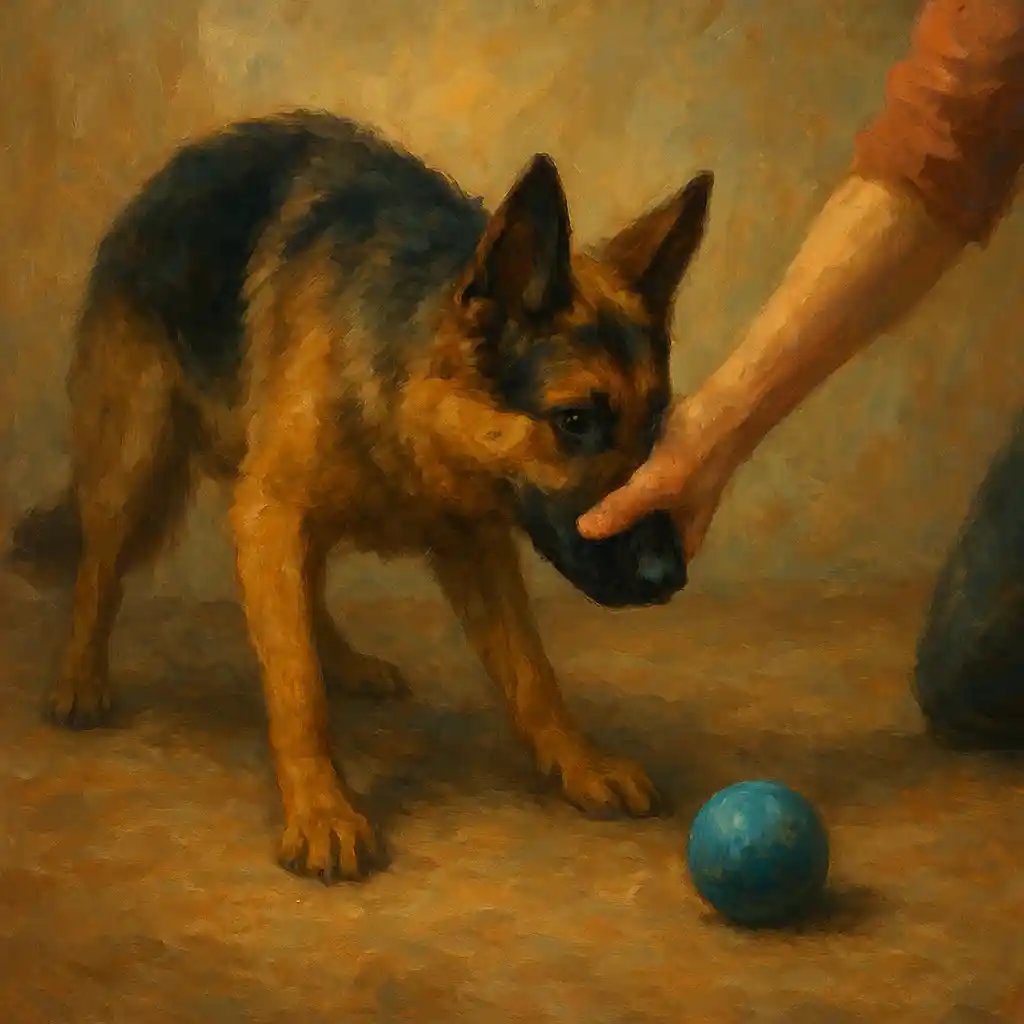
Resource guarding can turn normal daily moments into tense ones. A German Shepherd might stiffen over a food bowl, freeze around a chew, lower their head over a toy, or growl when someone comes close. This behavior can feel scary, but it is also common—and it is changeable with the right plan.
This blog post is a practical guide to Overcome Resource Guarding in GSDs using safe management and kind training. The goal is not to “win” against your dog. The goal is to help your German Shepherd feel safe, learn better habits, and trust people around their valued items. To Overcome Resource Guarding in GSDs, it is essential to understand their behavior and provide support.
Important note (safety first): If your dog has already bitten, or if you feel unsafe, do not practice training alone. Use management steps right away and contact a qualified behavior professional.
What Resource Guarding Looks Like in German Shepherds
Resource guarding means a dog tries to keep control of something they value. The “resource” can be:
- Food bowl, treats, chews, bones
- Toys, balls, tug toys
- Stolen items (socks, tissues)
- A resting place (couch, bed, doorway)
- A person (sometimes seen as “my person”)
Guarding behavior can be mild or serious. Common signs include:
- Freezing or going still when someone approaches
- Eating faster when a person comes closer
- Hovering over an item, head low, shoulders tense
- Whale eye (showing the white of the eye)
- Growling, snarling, snapping
- Lunging or biting (highest risk)
Many German Shepherds are sensitive, loyal, and alert. These traits are great, but they can also make guarding stronger if the dog feels unsure or pressured.
Why GSDs Guard Resources (Root Causes That Matter)
To Overcome Resource Guarding in GSDs, it helps to understand why it happens. Resource guarding is often driven by emotion, not “bad attitude.”
Common causes include:
1) Instinct and survival habits
Dogs are wired to protect important things. In nature, losing food can mean danger.
2) Fear of losing the item
Many dogs guard because they believe the item will be taken. This fear grows if people often grab things from their mouth or remove bowls suddenly.
3) Past scarcity or competition
Rescue dogs or dogs from crowded homes may have learned that they must protect food or toys to keep them.
4) Stress and lack of predictability
A dog that feels stressed can guard more. Big life changes, new pets, new home routines, or busy environments can all add pressure.
5) Accidental training by humans
If a dog growls and the person backs away, the dog learns: “Growling works.” This does not make the dog “dominant.” It means the dog found a strategy that creates distance.
Why You Should Not Ignore Resource Guarding
Untreated guarding can become worse over time. The risks include:
- Escalation from freezing to growling to snapping
- Bites, especially if someone tries to take an item by force
- Stress for the dog, who feels they must protect resources
- Tension in the home, especially with kids, visitors, or other pets
- Reduced quality of life, because people avoid the dog or limit activities
The good news: steady training and smart management can reduce guarding and increase trust.
The Big Rule: Avoid Confrontation and Punishment
If a German Shepherd growls over a resource, that growl is communication. Punishing it can be dangerous.
What punishment can do
- It may stop the growl, but the fear remains.
- The dog may skip the warning next time.
- Bites can happen “without warning” because warnings were punished away.
To Overcome Resource Guarding in GSDs, aim for calm, safe training that changes how your dog feels, not just how they act.
Understanding the signs of resource guarding is crucial. If you notice your GSD displaying these behaviors, take steps to Overcome Resource Guarding in GSDs before it becomes a bigger issue.
Step 1: Set Up a Safe Environment (Management Comes First)
Management prevents accidents while training is in progress. It also lowers stress for everyone.
Simple management that helps immediately
- Feed the dog in a quiet area, away from foot traffic.
- Use baby gates to separate the dog during meals or chew time.
- Use a crate as a calm, positive space (never as punishment).
- Pick up high-value items (bones, special toys) when supervision is not possible.
- Give chews only when the dog is separated from children or other pets.
- Teach family members: no reaching into the bowl, no teasing, no sudden grabbing.
Special note for homes with children
Children move fast, make noise, and do not read dog body language well. If a dog guards, strong management is not optional. Separation during food/chews is the safest choice.
Step 2: Learn to Read Your GSD’s Stress Signals
Training works best when your dog is under their stress limit. Watch for early signals:
- Lip licking, yawning, turning head away
- Tense face, closed mouth, stiff posture
- Ears pinned back or very forward and fixed
- Tail held very high and stiff, or tucked
- Hard stare, freezing over the item
When these signs show up, it means the situation is too intense. Increase distance and return to an easier step.
In summary, the journey to Overcome Resource Guarding in GSDs can be rewarding, leading to a stronger bond and a safer environment for both you and your dog.
Step 3: The Trade Game (A Core Skill to Overcome Resource Guarding in GSDs)
The Trade Game teaches a powerful message: Humans approaching does not mean loss. Humans approaching means better things happen.
This game builds trust and prevents conflict. It also protects you from risky “take it away” moments.
What you need
- High-value treats (small pieces of cooked chicken, cheese, freeze-dried liver)
- A calm tone and slow movements
- Items with different value (start low)
Trade Game: Step-by-step
- Start with a low-value item Give your dog a toy they like, but not their favorite.
- Approach from the side, not head-on Stop at a comfortable distance.
- Toss a high-value treat near your dog Do not reach for the item yet. Let the dog eat the treat.
- Repeat until your dog looks relaxed when you approach Relaxed means soft body, normal breathing, no freezing.
- Add the cue word Say “Trade” (or “Swap”) and toss the treat.
- Only when safe: pick up the item while the dog eats Keep it calm and slow. No quick grabs.
- Give the item back This is important. Returning the item builds trust fast.
- End after a few repetitions Short sessions are better than long ones.
How to progress
- Move from low-value toys to medium-value toys.
- Later, practice with chews (only with strong safety steps and distance).
- Always keep the trade worth it. The treat must be better than the item.
Implementing strategies to Overcome Resource Guarding in GSDs can significantly improve the relationship between your dog and family members. Consistent training is key to success in Overcome Resource Guarding in GSDs.
Common mistakes to avoid
- Trading only to take things away and not returning them This teaches the dog that “trade” means loss.
- Moving too fast to high-value items This increases guarding.
- Reaching into the dog’s mouth This is unsafe and can create fear.
Step 4: Distance Work (Trust Building Without Pressure)
Distance work helps when a dog guards food or chews strongly. The idea is simple: Start far enough away that your dog stays calm. Then slowly reduce distance over time.
Distance work for food bowls (safe method)
- Feed your GSD in a calm place.
- Stand far away (several steps back).
- Toss a high-value treat toward the bowl.
- Leave or stay still after tossing.
- Repeat across meals.
Over time, your dog learns: “A person near my bowl makes extra food appear.”
Progress slowly
- Move one step closer only when your dog stays relaxed for several sessions.
- If your dog stiffens, growls, or speeds up eating, you went too fast. Increase distance again.
This method is one of the safest ways to Overcome Resource Guarding in GSDs around meals because it avoids direct conflict.
Step 5: Positive Reinforcement Training That Supports Guarding Work
Positive reinforcement means rewarding behaviors you want more often. It does not mean “never say no.” It means you teach your dog clear, safe alternatives and reward success.
Helpful skills to train
1) “Drop it” (release an item)
- Offer a toy.
- Present a treat near the nose.
- When the dog drops the toy, say “Drop it,” then give the treat.
- Give the toy back after a moment.
2) “Leave it” (ignore an item)
- Hold a treat in a closed fist.
- Wait until the dog stops trying to get it.
- Mark and reward with a different treat from the other hand.
- Build up slowly, then practice with objects on the floor.
3) “Go to mat” (move away and settle)
- Teach your dog to go to a bed/mat.
- Reward calm lying down.
- Use it during busy moments to lower stress.
These cues reduce the number of situations where guarding can happen.
Step 6: Make Daily Life Easier (Routine and Clear Rules)
Dogs guard more when life feels unpredictable. A steady routine supports behavior change.
Helpful habits:
- Feed at consistent times.
- Give chews only in a safe, controlled place.
- Avoid chaotic grabbing games.
- Use calm transitions (before meals, ask for a sit, then place the bowl down).
- Provide enough exercise and mental work (sniff walks, training games, puzzle feeders).
A tired and satisfied German Shepherd is often less tense and less likely to guard.
What To Do During a Resource Guarding Moment (Real-Time Safety Plan)
Even with training, moments can happen. A safe plan prevents escalation.
If your GSD is guarding an item:
- Stop moving toward the dog.
- Turn sideways and create space.
- Avoid eye contact and avoid reaching.
- Use a calm “trade” with a high-value treat toss.
- If needed, distract by tossing treats away from the item so the dog moves.
What not to do:
- Do not yell.
- Do not physically punish.
- Do not corner the dog.
- Do not try to pry open the mouth.
- Do not “alpha roll” or use dominance tactics.
Safety and calm choices are key steps to Overcome Resource Guarding in GSDs without setbacks.
Special Situations: Multiple Pets in the Home
Resource guarding becomes more complex with other dogs or cats.
Safe steps:
- Feed pets separately behind doors or gates.
- Pick up bowls after meals.
- Do not allow pets to hover near each other’s food.
- Give high-value chews only when separated.
- Supervise toy play, or limit toys that create conflict.
If guarding happens between dogs, professional guidance is strongly recommended. Dog-to-dog fights are dangerous and can escalate quickly.
When to Get Professional Help
Some cases need expert support. This is normal and responsible.
Seek help if:
- Your dog has bitten or tried to bite.
- Guarding is intense (hard staring, lunging, blocking).
- Guarding happens with many items or many locations.
- You feel nervous handling daily routines.
- Progress is not happening after steady work.
Look for:
- A certified force-free trainer or behavior consultant
- Experience with aggression and resource guarding
- A plan focused on safety, management, and behavior change
A good professional will help you create a training plan that fits your dog, your home, and your goals.
Measuring Progress (What Success Looks Like)
To Overcome Resource Guarding in GSDs, progress is often gradual. Success usually looks like:
- Your dog stays loose-bodied when you approach
- Your dog pauses eating to look at you happily
- Your dog moves away from the item when you toss treats
- Your dog trades items more easily
- Guarding becomes less frequent and less intense
Small wins matter. Many dogs improve in layers: first less tension, then fewer growls, then relaxed sharing behaviors.
Consistency and Patience: The Real Secret
German Shepherds are smart and sensitive. They learn fast, but they also remember fear. Consistency builds safety.
Best practices:
- Train in short sessions (1–5 minutes).
- Repeat easy wins often.
- Keep treats high value when working near guarded items.
- Do not test your dog by pushing limits.
- Make sure all family members follow the same rules.
In resource guarding work, slow progress is still progress. Calm repetition changes habits.
Recommended Rewards (High Value, Easy to Use)
Good rewards help your training succeed.
Food rewards:
- Cooked chicken (tiny pieces)
- Cheese (small bits, not too much)
- Freeze-dried liver
- Hot dog slices (tiny, occasional)
- Soft training treats with strong smell
Non-food rewards (some dogs love these):
- A favorite toy (used carefully if toys trigger guarding)
- Praise and calm petting (only if your dog enjoys it)
- Sniff time outside (for dogs who love smells)
Use what your dog truly values. That is what makes training powerful.
A Simple 2-Week Starter Plan (Safe and Practical)
This plan supports early success and lowers risk. Adjust speed based on your dog.
Days 1–3: Management and calm routines
- Separate during meals and chews.
- Remove risky items when unsupervised.
- Begin “go to mat” training.
Days 4–7: Start Trade Game (low-value only)
- 1–2 short sessions daily.
- Trade, reward, return item.
- Stop while your dog is still relaxed.
Days 8–14: Add distance work near food
- Toss treats toward the bowl from a safe distance.
- Keep the dog comfortable.
- Continue Trade Game and “drop it” training.
After two weeks, many dogs show softer body language and less tension. Continue for long-term change.
Final Thoughts: A Safer, Stronger Bond Is Possible
Resource guarding is not a sign that your German Shepherd is “bad.” It is usually a sign that your dog feels worried about losing something important. With safe management, positive training, and steady routines, it is realistic to Overcome Resource Guarding in GSDs and create a calmer home.
Focus on these pillars:
- Safety first (gates, separation, smart routines)
- Trust-building training (Trade Game and distance work)
- Positive reinforcement (reward calm behavior and cooperation)
- Consistency and patience (slow progress that lasts)
- Professional help when needed (especially after bites)
A well-supported German Shepherd can learn that people coming close is good news, not a threat. That change protects your family, lowers your dog’s stress, and builds the kind of relationship German Shepherds thrive in: clear, respectful, and loyal.
Moreover, many owners find success in using positive reinforcement techniques to Overcome Resource Guarding in GSDs, which encourages trust and cooperation.
Ultimately, learning to Overcome Resource Guarding in GSDs will enhance your understanding of your canine companion.