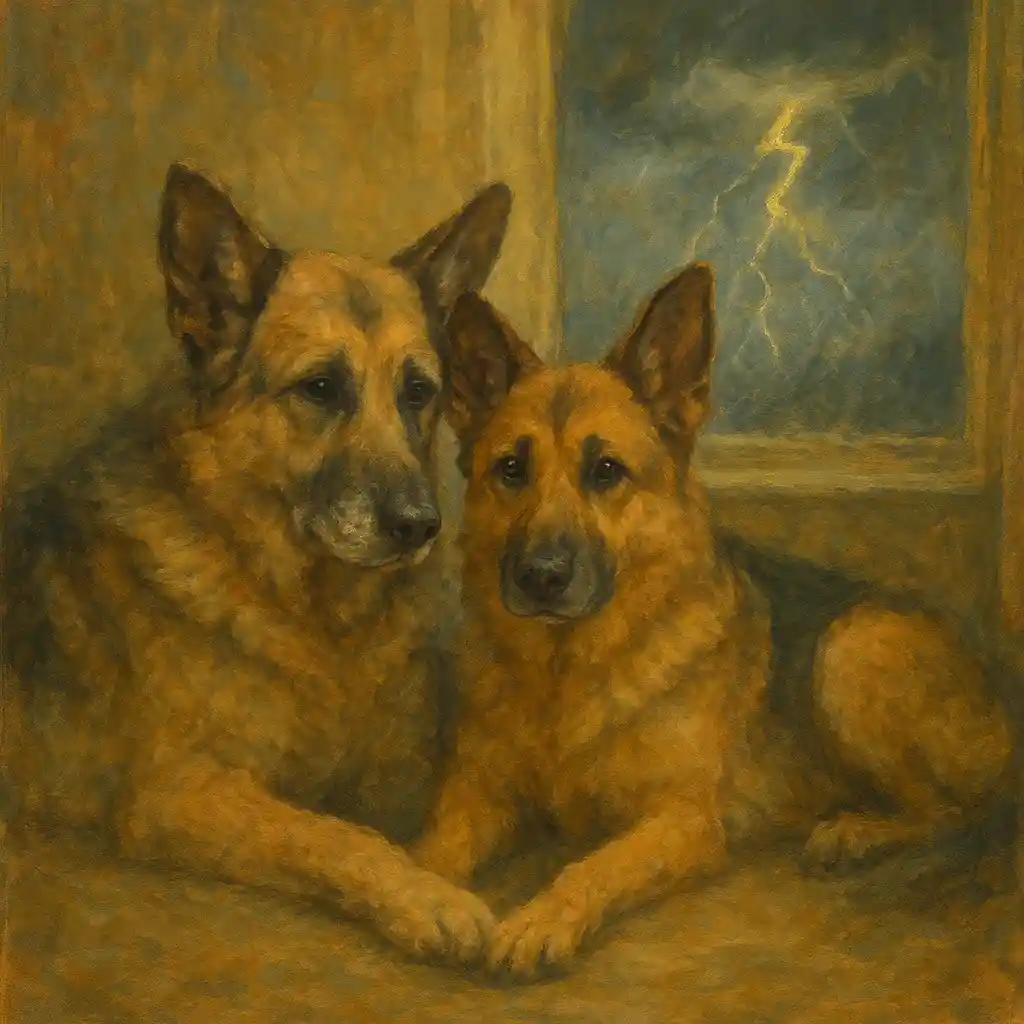
Thunderstorms can be hard for many dogs, and they can be even harder for senior German Shepherds. Older dogs often feel less secure. Their hearing, vision, and body comfort can change with age. A loud storm can feel sudden, confusing, and unsafe. When a senior German Shepherd shakes, pants, hides, or tries to escape during thunder, it is not stubborn behavior. It is fear.
The good news is that German Shepherds Overcome Thunder Fear with the right support. Progress is possible at any age. The best results usually come from a calm plan that builds safety, trust, and new habits. This blog gives a practical, one-shot guide that you can follow step by step. It focuses on three proven tools.
- Desensitization using thunder audio at low volume, then slowly increasing it
- Counter-conditioning by pairing thunder sounds with good things like treats and play
- Safe zones that help your dog feel protected during real storms
This approach is gentle, clear, and realistic for senior dogs. It also helps you avoid common mistakes that can slow progress.
Understanding Thunder Fear in Senior German Shepherds
German Shepherds are smart, sensitive, and alert. These traits are wonderful in daily life, but they can also make storms feel intense. Thunder is loud, deep, and unpredictable. It can shake windows and change air pressure. Some dogs also react to flashes of lightning or rain hitting the roof.
Senior dogs may have extra reasons to struggle.
- Body pain or stiffness can make fear feel worse
- Lower hearing or vision can increase confusion
- Memory and aging changes can reduce coping skills
- Past experiences can build a stronger fear response over time
Fear can also spread. A dog that first fears thunder may later fear wind, heavy rain, or even the smell of a storm. This is why early, gentle training helps.
Common Signs of Thunder Fear
A senior German Shepherd may show fear in many ways. Some signs are quiet. Others are intense.
Common signs include:
- Shaking or trembling
- Panting and drooling
- Pacing and restlessness
- Whining, barking, or howling
- Hiding in a bathroom, closet, or under furniture
- Following you closely and not settling
- Scratching doors, trying to escape, or digging
- Refusing food
- Needing to urinate more often
If you see escape behavior, take it seriously. Panicked dogs can hurt themselves by slipping, falling, or breaking nails and teeth while trying to get out.
The Core Goal: Feeling Safe, Not Just Being Quiet
Many owners focus on stopping noise like barking or whining. That is understandable, but the deeper goal is different. The real goal is helping your dog feel safe inside.
When German Shepherds Overcome Thunder Fear, you usually see these changes.
- They recover faster after a loud sound
- They can eat during mild storm sounds
- They choose to rest, even if thunder is present
- They look to you calmly instead of panicking
This is emotional change, not just behavior control.
Tool 1: Desensitization With Thunder Audio Files
Desensitization means slow, controlled exposure to a scary sound. You start with a level that does not scare your dog. Over time, your dog learns that the sound is not dangerous.
Why audio training helps
Real storms are hard to control. They arrive suddenly, and thunder volume changes fast. Audio files let you control volume and timing. This makes training safer and more successful.
What audio to use
Use recordings with realistic thunder. Many options exist on music platforms and dog training apps. Choose tracks that are clean and not distorted. Some dogs react strongly to sharp, high-volume clips, so avoid extreme recordings at first.
Helpful tips for audio choice:
- Start with simple thunder, not a full storm with sirens and heavy wind
- Pick longer tracks with gentle rumbles
- Avoid sudden loud cracks in early sessions
The golden rule of desensitization
Your dog must stay under the fear line. If your dog looks worried, freezes, tries to leave, or stops taking treats, the sound is too strong.
A simple step-by-step desensitization plan
Step 1. Set up a calm training time Choose a time when your dog is relaxed. Avoid training when your dog is already stressed, tired from pain, or hungry in a sharp way.
Step 2. Start at very low volume Play thunder so softly that your dog notices it only a little, or not at all. This is normal. You are building safety first.
Step 3. Keep sessions short Start with 3 to 7 minutes. End the session while your dog is still calm.
Step 4. Repeat often Aim for 4 to 6 sessions per week. Daily short sessions work very well.
Step 5. Increase slowly Increase volume in small steps. Stay at each level for several sessions before moving up.
Step 6. Add gentle realism later When your dog is doing well, you can train in different rooms, with mild background noise, or at different times of day.
This process teaches the nervous system that thunder does not predict danger.
Tool 2: Counter-Conditioning That Changes Feelings
Counter-conditioning means pairing a scary sound with something good. Over time, the dog starts to expect good things when the sound appears. This is one of the most powerful ways to change fear.
What to pair with thunder
Use rewards that truly matter to your dog. Many senior German Shepherds love food, but some prefer toys, scent games, or gentle massage.
Good reward options:
- Soft, tasty treats that are easy to chew
- A stuffed food toy, if your dog enjoys it
- A short sniff game with hidden treats
- Calm play with a favorite toy
- Slow petting on the chest or shoulders, if your dog likes touch
For senior dogs, comfort matters. Avoid wild play that stresses joints. Choose low-impact fun.
How to do counter-conditioning correctly
Timing is important. The good thing happens during the sound, not after the fear grows.
A simple pattern that works:
- Thunder audio starts at low volume
- Treats appear right away, one after another
- Audio stops
- Treats stop
This makes a clear message. Thunder predicts rewards. No thunder means no special rewards.
A calm treat routine
Use small treats and steady rhythm. For example, give one treat every two to three seconds for 20 to 40 seconds, then pause, then repeat.
If your dog is too stressed to eat, lower the volume. Eating is a strong sign that your dog feels safe enough to learn.
Tool 3: Creating a Safe Zone That Your Dog Trusts
A safe zone is a place where your dog can relax during storms. Many dogs choose bathrooms or closets because they are quiet and enclosed. You can improve this natural choice.
What makes a safe zone effective
A good safe zone is not a punishment spot. It is a comfort space. Your dog should be free to enter and leave.
A strong safe zone includes:
- A quiet, enclosed room or corner
- A comfortable bed with support for older joints
- Familiar blankets that smell like home
- Water nearby
- Soft lighting
- Reduced outside noise
Sound support that helps
Thunder fear gets worse when sounds feel sharp and close. You can soften the noise.
- White noise machine
- Fan or air purifier
- Calm music at low volume
- TV sound that stays steady
These tools do not remove thunder, but they reduce contrast. This can lower panic.
Helpful comfort items
Some dogs relax with gentle pressure.
- Anxiety wraps can help some dogs
- A heavy blanket can help some dogs if it is safe and breathable
- A covered crate can work if your dog already likes the crate
Never force crate use during storms if the crate is not already a happy place.
Teaching Your Senior German Shepherd to Use the Safe Zone
A safe zone works best when it is trained before storms. The goal is voluntary use.
Safe zone training plan
1. Make the safe zone rewarding Feed special treats there. Give chew items there. Offer calm praise there.
2. Practice short rest moments Encourage your dog to lie down for a few seconds, then reward. Slowly build longer calm time.
3. Add mild thunder audio later When your dog already likes the space, play very low thunder audio while your dog enjoys treats or a chew.
This combines all three tools. Desensitization and counter-conditioning happen inside a trusted safe place.
Putting It All Together: A Weekly Training Schedule
Consistency beats intensity. A calm routine builds faster results than rare long sessions.
Example weekly plan for senior dogs:
- Monday: 5 minutes thunder audio at very low volume plus treats
- Tuesday: Safe zone practice with a chew, no audio
- Wednesday: 7 minutes thunder audio plus treats, same volume as Monday
- Thursday: Gentle sniff game in the safe zone
- Friday: Thunder audio plus treats, volume increases slightly if your dog stayed relaxed all week
- Saturday: Rest day or short safe zone cuddle time
- Sunday: Thunder audio plus treats, repeat successful level
Adjust based on your dog’s body and mood. Senior dogs often do best with shorter sessions.
Real Storm Strategy: What To Do During Thunder
Training happens outside storms, but storms still happen during the process. During a real storm, the main job is to reduce fear and prevent panic.
During thunder, focus on safety and comfort
- Guide your dog to the safe zone if they choose it
- Turn on white noise or calm music
- Close curtains to reduce flashes
- Offer high-value treats if your dog can eat
- Stay calm and steady in your movement and voice
- Allow closeness if your dog seeks you
If your dog wants to hide, allow it as long as it is safe. Blocking hiding can increase panic.
What to avoid during storms
- No scolding or punishment
- No forcing your dog to face the sound
- No dragging your dog out of a hiding place
- No loud “cheering up” that adds extra energy
Fear is not fixed by pressure. It is changed by safety and repeated positive experiences.
Common Mistakes That Slow Progress
Many loving owners make errors that are easy to understand. Avoiding these mistakes helps German Shepherds Overcome Thunder Fear faster.
Mistake 1: Raising volume too quickly
This is the most common issue. If you move too fast, the fear returns stronger. If your dog shows stress, lower the level and stay there longer.
Mistake 2: Training only when storms happen
Storms are too intense for learning at first. Audio training builds skill when your dog is calm.
Mistake 3: Using comfort in a confusing way
Comfort is not the enemy. Calm support is helpful. The key is how you do it. Soft voice, slow breathing, and steady presence help. Panicked soothing with high emotion can add energy.
Mistake 4: Unclear reward timing
Rewards must connect to the sound. Treats appear when thunder appears. Treats stop when thunder stops.
Mistake 5: Ignoring pain and health issues
Senior dogs can have arthritis, dental pain, or hearing loss. These can increase stress. A comfort plan works better when health needs are managed.
When Professional Help Is Needed
Some dogs have mild fear. Others have panic. Panic can include self-injury, destructive escape attempts, or extreme distress that does not improve with gentle training alone.
If your senior German Shepherd shows severe signs, professional help matters.
- Talk to your veterinarian about medical support options
- Ask for a referral to a certified dog behavior professional
- Use training and safety tools together with medical care when needed
Medication is not failure. For some dogs, it lowers panic enough to allow learning. Training then becomes more effective.
Extra Support Tools That Can Help
These tools do not replace training, but they can support it.
- Blackout curtains for lightning flashes
- Non-slip mats in the safe zone for senior joints
- Orthopedic bedding for comfort
- ID tags and secure doors during storms in case of escape attempts
- Exercise earlier in the day to support better rest, within safe limits for seniors
Better comfort often leads to better learning.
Signs of Progress to Celebrate
Progress in fear work is often quiet. Small changes matter.
Positive signs include:
- Your dog eats treats during low thunder audio
- Your dog chooses the safe zone before you suggest it
- Shaking stops faster after thunder
- Pacing turns into resting
- Your dog checks in with you and then settles
Some weeks will feel slow. That is normal. Fear work is not a straight line, especially in senior dogs. Keep the plan steady and kind.
Example Plan in One View
Use this as a simple checklist you can save.
Daily home setup
- Safe zone ready with bed, blanket, water
- White noise or calm music available
- Treat jar stocked with soft, high-value rewards
Training sessions, 3 to 7 minutes
- Thunder audio at very low volume
- Treats during audio
- Stop before stress appears
- Repeat several times per week
Real storm response
- Calm environment, curtains closed
- Noise masking on
- Safe zone access open
- Gentle support, no pressure
Final Thoughts: A Kind Path Forward
German Shepherds Overcome Thunder Fear when they feel protected and when they learn new patterns through repetition. Senior dogs can still learn, and they can still build confidence. The process works best when it is gentle and steady, with clear steps and realistic expectations.
Desensitization teaches your dog that thunder can exist at a safe level. Counter-conditioning teaches your dog that thunder predicts good things. A safe zone gives your dog control and comfort in the moment. Together, these three tools create a complete plan that supports both body and mind.
With time, many senior German Shepherds move from panic to coping, and from coping to calm. The storm may stay loud, but your dog’s inner world can become quieter. That is the real win, and it is worth the effort.