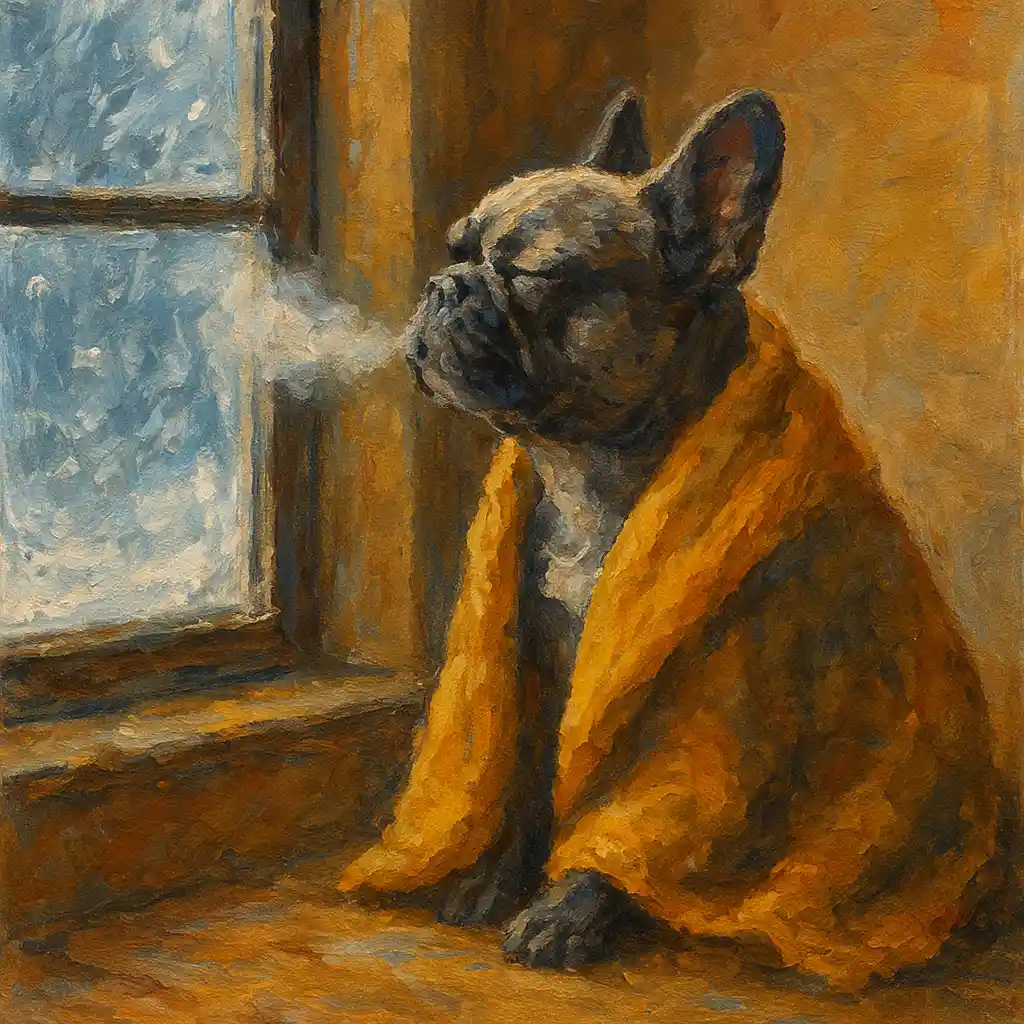
Frenchie breathing in cold air can change fast in winter—especially for a senior French Bulldog. One day your dog seems fine, and the next day you notice heavier breathing, wheezing, or your Frenchie needing to stop more often on walks. Cold air can feel harsh on the airway, and French Bulldogs already have a unique breathing system that can make winter harder.
If your senior Frenchie seems to struggle more in winter, treat it as useful information—not something to “push through.” Small changes like shorter walks, warming up indoors, and extra rest can make a big difference.
This guide brings together simple, practical winter care steps: what to watch for, how to plan safer walks, how and when to use a coat, indoor activity ideas, rest and recovery tips, grooming and diet reminders, and when to call your veterinarian. The goal is not to scare you—it’s to help your senior Frenchie stay comfortable, calm, and safe all winter.
Why Frenchie breathing in cold air can be harder in winter
French Bulldogs have a respiratory system that is different from many other breeds. Their shorter nose and tighter airway structure can make breathing less efficient, even in normal weather. When winter arrives, Frenchie breathing in cold air may become more noticeable because cold air can feel dry and sharp, and your dog may need to work harder to move air in and out.
A quick overview of the French Bulldog respiratory system
Frenchies are known for their “flat-faced” look. That cute face often comes with airways that are naturally smaller and more crowded. This can make them more sensitive to changes in temperature, activity level, and stress. For a senior Frenchie, normal aging can also reduce stamina and recovery speed after exercise.
Why cold weather can increase breathing stress for Frenchies
In winter, your Frenchie may face several challenges at once:
- Cold air exposure during walks, especially if the wind is strong.
- Sudden temperature changes (warm house to cold outdoors).
- More effort during activity if your dog is walking on snow, ice, or slippery ground.
- Slower recovery after exercise, especially in senior dogs.
This is why planning around Frenchie breathing in cold air is not overprotective—it is smart, supportive care.
Signs of respiratory distress to watch for during Frenchie breathing in cold air
It helps to know what “normal Frenchie breathing” looks like for your dog, so you can notice changes early. Winter can bring mild discomfort, but it can also reveal bigger problems. If you see any of the signs below, take them seriously—especially during or after outdoor time.
Labored breathing
Labored breathing may look like your Frenchie is working hard just to breathe: stronger chest movement, a tense body, or difficulty calming down after a short walk. If Frenchie breathing in cold air becomes labored, it’s a sign to reduce exposure and activity.
Wheezing or whistling sounds
Wheezing or a whistling sound can mean your dog’s airway is irritated or struggling. In winter, cold air can make this more noticeable. If you hear these sounds, end the walk and get your Frenchie warm and calm.
Excessive coughing
Coughing can happen for many reasons, but in winter it may show up after outdoor exposure. If your Frenchie coughs a lot during walks or after coming inside, keep track of when it happens and how long it lasts.
Bluish gums or tongue
Bluish gums or tongue can be a serious warning sign. If you ever see this, treat it as an emergency sign of poor oxygen and seek veterinary help right away.
Trust your instincts. If your senior Frenchie seems “off” during winter walks—slower, noisier breathing, or needing to stop often—adjust your plan immediately and talk to your vet if it keeps happening.
Frenchie breathing in cold air: safer winter walking tips for senior dogs
Many senior Frenchies still enjoy winter walks. The key is to change your routine so your dog gets fresh air without getting overexposed to cold air or overworked. When you plan for Frenchie breathing in cold air, you are planning for comfort and safety.
Choose shorter walks to reduce cold air exposure
Shorter walks are one of the simplest and most effective changes. Instead of one long walk, consider a few short trips outside. This lowers the time your Frenchie spends breathing cold air and can prevent overexertion.
- Keep walks short and calm, especially on very cold days.
- Take breaks if your Frenchie slows down or looks uncomfortable.
- Choose safer surfaces when possible (avoid slippery ice).
Warm up your Frenchie inside before heading out
Going from warm indoor air to cold outdoor air can be a shock to the body. A gentle indoor warm-up helps your senior dog transition more smoothly.
- Let your Frenchie move around indoors first (gentle play, slow walking).
- Make sure your dog is not lying in a cold draft before leaving.
- Keep the mood calm—stress can also affect breathing.
Consider a coat to support warmth and comfort
A coat can help some Frenchies stay warmer and more comfortable outdoors. For many dogs, warmth supports better overall comfort, which can also support calmer breathing. If your Frenchie is sensitive in winter, a coat may be worth trying—especially for short outdoor trips.
Monitor your Frenchie closely during the walk
Winter walks should be “observation time.” Watch your Frenchie’s pace, breathing sounds, and body language. If Frenchie breathing in cold air changes during the walk, end the walk early and head inside.
Common “time to go inside” signals include:
- Breathing becomes louder, faster, or strained.
- Your Frenchie stops often and seems unable to recover quickly.
- Wheezing, coughing, or visible discomfort.
- Your dog seems anxious, cold, or unwilling to continue.
Choosing the right coat to help Frenchie breathing in cold air during winter walks
A winter coat is not just about style. For some senior Frenchies, staying warmer can make outdoor time easier and less stressful. If you decide to use a coat, choose one that supports movement and does not restrict the chest, neck, or shoulders.
What to look for in a winter coat
- Warm, protective material that helps block cold wind.
- Comfortable fit that is snug but not tight.
- Coverage that protects the chest and belly area, which can be sensitive to cold.
- Easy fastenings so dressing is quick and low-stress.
- Reflective elements for visibility on dark winter days.
Types of coats that can work well for French Bulldogs
Different dogs prefer different coat styles. The best choice is one your Frenchie can wear calmly and move in easily. Coats that provide warmth and some protection from wind and damp conditions are often helpful in winter.
How to ensure the coat fits properly
A poor fit can cause rubbing, limit movement, or even increase stress. A good fit should allow your dog to walk, sit, and breathe comfortably.
- Check that the coat does not press on the throat or chest.
- Make sure your Frenchie can move the front legs freely.
- Watch your dog for signs of irritation or discomfort after wearing it.
- Keep the first few coat sessions short so your Frenchie can get used to it.
If your Frenchie seems more stressed or uncomfortable in a coat, it may not be the right style or fit. Comfort always comes first—especially when you are managing Frenchie breathing in cold air.
Indoor activities that reduce Frenchie breathing in cold air while keeping your dog active
When it is very cold outside, indoor activities can help your senior Frenchie stay active without breathing cold air for long periods. This is a great option for older dogs who still need movement but recover more slowly.
Interactive toys and puzzles
Puzzle toys and food games can keep your Frenchie busy and mentally active. Mental activity can be just as tiring as physical exercise, which is helpful during winter when outdoor time is limited.
- Try simple puzzles that do not frustrate your dog.
- Use part of your Frenchie’s daily food portion for indoor games.
- Keep sessions short and positive.
Indoor agility-style exercises (gentle and safe)
You can create a gentle indoor “course” using safe household items. The goal is light movement, not intense training.
- Slow walking around furniture in a simple pattern.
- Stepping over low, safe obstacles (only if your dog is comfortable).
- Short “find it” games with treats hidden in easy spots.
Short training sessions for mental stimulation
Training is a calm way to keep your dog engaged. For seniors, keep it gentle and reward-based.
- Practice basic cues your Frenchie already knows.
- Teach one small new skill at a time.
- Stop before your dog gets tired or bored.
Create a cozy resting spot
Winter comfort is not only about exercise—it is also about rest. A warm, calm resting area helps your Frenchie recover after any activity.
- Choose a quiet place away from drafts.
- Use warm blankets and a supportive bed.
- Keep water nearby so your dog can drink easily.
Why rest after outdoor time matters for Frenchie breathing in cold air
Rest is a key part of winter care. Even a short cold-weather walk can be more tiring than you expect, especially for a senior dog. After your Frenchie spends time outside, give them a calm chance to recover.
Let your Frenchie rest and recover after cold air exposure
When you come back inside, avoid starting another activity right away. Let your dog settle down in a warm spot. This is especially important if Frenchie breathing in cold air tends to be heavier or noisier during winter.
Provide a warm, comfortable sleeping area
A warm sleeping area supports recovery. Many senior Frenchies do best with a stable routine: walk, warm-up, rest, and calm indoor time.
Monitor breathing after activity
Don’t stop observing once the walk is over. Watch your Frenchie for a while after coming inside.
- Does breathing return to normal quickly?
- Do wheezing or coughing sounds continue?
- Is your dog calm, or still struggling to settle?
If breathing problems continue after rest, it is a good reason to contact your veterinarian for advice.
Diet and hydration tips to support Frenchie breathing in cold air during winter
Winter routines can change activity levels. Some dogs move less because walks are shorter, while others burn more energy because they feel cold outside. This is why diet and hydration matter during winter.
Keep your Frenchie hydrated
It is easy to forget hydration in winter. Make sure fresh water is always available. Hydration supports overall health and helps your dog recover after activity.
Adjust food portions based on activity
If your Frenchie is walking less in winter, they may need slightly different portions. If your dog is still active and spending energy outside, they may need steady nutrition to support that routine. If you are unsure, your veterinarian can help you choose the right approach for your senior Frenchie.
Consider “warming” foods in a safe, simple way
Some owners like to include warming foods during winter. The most important point is to keep your Frenchie’s diet balanced and consistent. If you plan to adjust meals, do it slowly and carefully, and watch how your dog responds.
Winter grooming tips that support comfort and Frenchie breathing in cold air routines
Grooming is not only about appearance. In winter, grooming supports comfort and can help you notice problems early (like dry skin, irritation, or sore paw pads). A comfortable dog is often a calmer dog—and calm behavior can support steadier breathing.
Regular brushing to maintain coat health
Brushing helps keep the coat in good condition and removes loose hair. It is also a good time to check for dry skin or irritation that can happen in winter.
Protect paw pads from cold surfaces
Cold ground, ice, and winter surfaces can be rough on paws. Check your Frenchie’s paw pads after walks and keep them clean and dry. This can also make your dog more willing to walk calmly, which helps when managing Frenchie breathing in cold air.
Bathing and drying in winter months
Bath time in winter needs extra care. Use comfortably warm water (not hot) and a gentle shampoo. After bathing, dry your Frenchie thoroughly so they do not get chilled. Pay attention to areas that hold moisture, like skin folds, paws, and ears.
Create a winter emergency kit for Frenchie breathing in cold air and bad-weather days
Winter weather can change quickly. A simple emergency kit helps you feel prepared and can reduce stress if something unexpected happens. This is especially helpful for senior dogs who may not handle cold exposure as well.
Helpful items to include
- Warm blankets
- Extra food
- Fresh water (and a portable bowl if needed)
- Paw balm
- Basic first aid kit
How to respond to cold weather problems
If your Frenchie seems uncomfortable outdoors, bring them inside right away. Warm them up gently and let them rest. If you see breathing distress signs—especially bluish gums or tongue—seek veterinary help immediately.
When to consult a veterinarian about Frenchie breathing in cold air
Many winter breathing changes are mild and improve with simple routine changes. But some signs should always be discussed with a professional, especially for a senior Frenchie.
When to seek professional advice for respiratory issues
Contact your veterinarian if you notice:
- Labored breathing that happens often
- Wheezing that keeps coming back
- Excessive coughing during or after walks
- Any sign of bluish gums or tongue
- Your Frenchie struggles to recover after short activity
Why regular winter check-ups matter
Regular check-ups can help catch issues early. If winter seems to make breathing harder for your Frenchie, your vet can help you decide how to adjust exercise, routines, and overall care safely.
Real-life results: how small changes can improve Frenchie breathing in cold air
Many Frenchie owners find that winter gets easier when they focus on simple steps instead of trying to keep the same routine all year. Owners often report improvements after switching to shorter walks, warming up indoors first, and using a coat when needed. These changes can mean fewer breathing struggles, calmer walks, and a happier senior dog.
Before-and-after scenarios to keep in mind
- Before: Long winter walk, Frenchie stops often, breathing gets loud and stressed.
After: Shorter walk, indoor warm-up first, calm pace, rest afterward. - Before: No coat, dog seems uncomfortable quickly and wants to go home.
After: Properly fitted coat, quick outdoor break, warm rest area inside. - Before: Outdoor exercise only, fewer walks due to cold days, boredom indoors.
After: Indoor puzzles and training sessions, steady activity without long cold exposure.
The best plan is always the one that matches your dog’s needs. Your senior Frenchie may need more rest, more warmth, and fewer minutes outside—while still enjoying a normal, happy routine.
Conclusion: keep winter simple and safe for Frenchie breathing in cold air
Frenchie breathing in cold air is a real winter concern, especially for senior French Bulldogs. The good news is that you can often improve comfort with simple steps: choose shorter walks, warm up inside first, consider a properly fitted coat, focus on indoor activities during harsh weather, and make rest after outdoor time a priority. Keep watching for signs like labored breathing, wheezing, coughing, or bluish gums, and stay consistent with vet check-ups if anything seems off.
If you’d like, explore our other Frenchie care articles on the site and build a winter routine that fits your dog’s age and breathing needs.