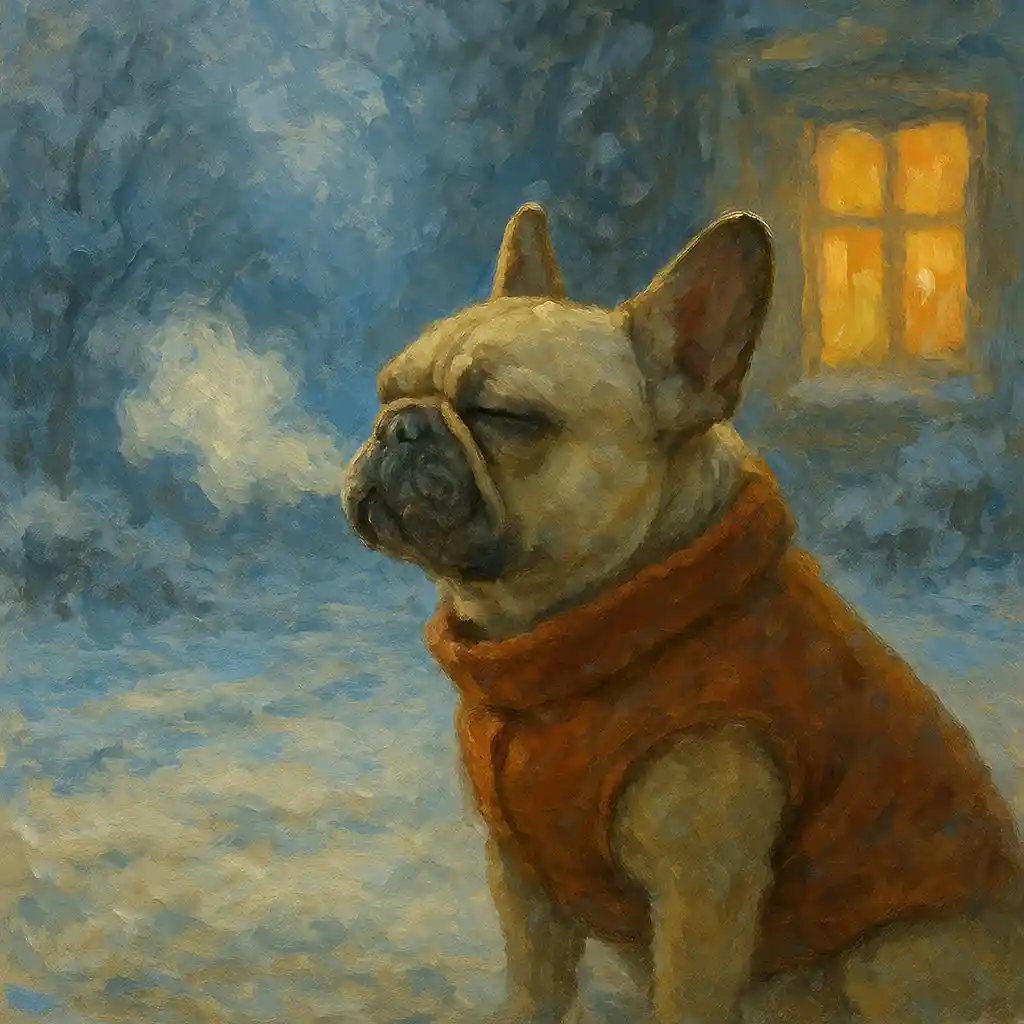
Cold air and Frenchie breathing can be a tricky mix in winter—especially for senior French Bulldogs. Many owners notice it first on a simple cold-weather walk: your Frenchie seems fine at the door, then a few minutes outside they sound louder, breathe faster, or act like they want to turn back. Because French Bulldogs are a brachycephalic breed (with a short nose and shorter airways), cold air can make breathing feel harder than it does for other dogs. The good news is that with a few smart changes—shorter walks, a warm-up inside, possible coat use, paw protection, and extra rest after—you can help your senior Frenchie stay comfortable and safe all winter.
If cold air and Frenchie breathing don’t mix well for your dog, the best plan is simple: reduce outdoor strain and increase warmth and recovery time.
Why cold air and Frenchie breathing can be harder in winter
French Bulldogs are brachycephalic. That means their airways are naturally smaller and shaped differently than dogs with longer noses. Many Frenchies already work harder to move air in and out, even in normal weather. In winter, cold air can add another challenge.
Brachycephalic breathing basics (Frenchies in simple terms)
Frenchies have a short muzzle and compact airways. This can make breathing noisier and less efficient, especially during activity. For senior Frenchies, this can be even more noticeable because older dogs may have less stamina and may recover more slowly after exercise.
How cold air can affect breathing during winter walks
Cold air and Frenchie breathing issues often show up during outdoor activity. Cold temperatures can make your Frenchie feel uncomfortable faster, and that discomfort can lead to stress. Stress and excitement can also increase breathing rate, which can make the cycle worse.
That’s why winter routines should focus on reducing strain, keeping your Frenchie warm, and giving them time to recover after being outside.
Cold air and Frenchie breathing: why shorter walks are safer
Shorter walks are one of the most helpful changes you can make in winter. Cold air and Frenchie breathing challenges often increase when a dog is outside too long, gets too excited, or tries to keep up the same pace they had in warmer months.
How shorter walks prevent overexertion
In winter, your senior Frenchie may get tired faster. When they are tired, their breathing can become heavier and recovery can take longer. Shorter walks help by:
- Reducing the time your Frenchie is exposed to cold air
- Lowering the chance they become overexcited or overworked
- Making it easier to notice small changes in breathing before they become big problems
How to find the right winter walk length for a senior Frenchie
There isn’t one perfect number that fits every dog. Instead, use your Frenchie’s behavior as your guide. In winter, aim for walks that end while your dog still seems comfortable—not after they are already struggling.
Helpful signs that your walk should be shorter include:
- They slow down earlier than usual
- They stop and look back toward home
- They seem reluctant to keep going
- Breathing becomes much louder or faster than normal for them
Many owners find it works better to do more frequent, shorter walks instead of one long walk. This approach supports cold air and Frenchie breathing needs while still giving your dog fresh air and a change of scenery.
Warm up inside before and after walks to support cold air and Frenchie breathing
One of the easiest ways to help with cold air and Frenchie breathing is to warm up inside before you go out—and to help your dog settle down after you come back in. Think of it like a gentle warm-up and cool-down routine.
Why warming up before a winter walk matters
Going from a warm home into cold air can feel like a shock. A short indoor warm-up helps your senior Frenchie get moving gently before facing the cold.
Simple warm-up ideas include:
- A few minutes of slow walking around the house
- Gentle play with a favorite toy (keep it calm, not wild)
- Light stretching through normal movement (no forced stretching)
Why rest after walks is part of winter breathing care
After a winter walk, your senior Frenchie may need extra recovery time. Cold air and Frenchie breathing can leave them more tired than you expect, even after a short outing.
When you return home:
- Let them rest in a warm spot
- Offer water (small amounts at first if they are breathing hard)
- Keep the home calm so their breathing can return to normal
In winter, “rest after” is not laziness—it’s smart recovery for a senior Frenchie.
Using a coat in winter: when cold air and Frenchie breathing needs extra support
A coat can be a helpful tool for some Frenchies in winter. Not every dog needs one, but many senior Frenchies benefit from extra warmth. A coat can reduce how quickly your dog gets chilled, which may also reduce stress and discomfort during walks.
Benefits of a winter coat for a senior Frenchie
A well-fitted coat can:
- Help keep body warmth during short outdoor trips
- Make your Frenchie more willing to go outside
- Support comfort so cold air and Frenchie breathing feel less stressful
How to choose the right coat (fit and material)
Choose a coat that fits well and allows easy movement. It should not be too tight around the neck or chest, and it should not restrict the shoulders. For material, look for something warm but breathable. If your winter weather is wet, a water-resistant layer can help on snowy or rainy days.
Also consider your Frenchie’s skin comfort. Soft linings can help avoid irritation, especially for seniors.
Coat safety reminder
A coat should support comfort, not create new problems. If your Frenchie seems uncomfortable, refuses to move, or the coat rubs their skin, adjust the size or style. The goal is to make winter walks easier, not harder.
Protecting paws in winter: a must for senior Frenchies
Winter surfaces can be rough on paws. Cold sidewalks, icy patches, and common winter chemicals can irritate paw pads. Protecting paws is part of full winter care, especially when cold air and Frenchie breathing already make walks more demanding.
How to protect paws from cold surfaces and chemicals
Practical paw protection tips include:
- Check the ground temperature with your hand; if it feels too cold for you, it may be too cold for your dog’s paws
- Avoid icy spots and heavily salted areas when possible
- Wipe paws with a warm cloth after walks to remove salt or chemicals
- Trim hair between paw pads to help prevent ice balls from forming
Simple DIY paw balm idea (as mentioned in the draft)
A simple DIY paw balm can help moisturize and protect paw pads during winter. The draft suggests using natural ingredients like coconut oil and shea butter to create a protective barrier. Apply a small amount before walks and wipe paws clean after you return home.
If your Frenchie licks their paws a lot after balm use, apply less and monitor closely.
Hydration and nutrition during winter walks (yes, it still matters)
It’s easy to forget water in winter, but hydration still matters. Cold air and Frenchie breathing can be more tiring, and your dog may need water breaks even if they don’t seem thirsty.
Hydration tips for cold-weather outings
- Bring a portable water bowl on longer outings
- Offer small water breaks during rest moments
- Encourage drinking after the walk once breathing has calmed
Nutrition and energy for senior Frenchies in winter
Winter walks can take more energy, even when they are shorter. Consider bringing a few small, easy-to-digest treats for a quick reward and a small energy boost. Keep it simple and avoid overfeeding right before a walk.
Signs of cold stress: what to watch for during cold air and Frenchie breathing challenges
Senior Frenchies may not always show obvious signs right away. Watching closely helps you catch problems early and head home before your dog becomes too cold or too stressed.
Common signs your Frenchie may be too cold
- Shivering
- Lethargy or slowing down
- Reluctance to continue walking
- Lifting paws off the ground
- Seeking warm spots as soon as they get inside
What to do immediately if your Frenchie seems too cold
If you notice signs of cold stress, take action right away:
- Bring your Frenchie indoors to a warm area
- Wrap them in a blanket or offer a warm resting spot
- Check paws for ice buildup or irritation
- Offer food or water if they are calm and interested
If your Frenchie continues to seem uncomfortable or their breathing does not settle, contact your veterinarian for advice.
Create a warm and cozy home setup for winter recovery
Winter care isn’t only about walks. A warm home environment supports recovery, comfort, and daily movement—especially for a senior dog. Cold air and Frenchie breathing can be managed better when your Frenchie has cozy places to rest and gentle ways to stay active indoors.
Cozy bedding and warm resting spots
Provide a soft bed, blankets, and a warm corner where your Frenchie can relax after outdoor time. Many senior Frenchies love a consistent “rest station” where they feel safe and comfortable.
Make sure the resting spot is away from drafts. If your home has cooler floors, add an extra blanket or mat under the bed to help keep warmth in.
Keep indoor comfort balanced
Warmth is helpful, but keep the environment comfortable and stable. A calm, cozy home routine can reduce stress, and less stress often means calmer breathing.
Indoor exercise ideas for senior Frenchies when winter weather is harsh
Some winter days are too cold, too icy, or too windy for a safe walk. On those days, indoor activity becomes even more important. Gentle movement supports joints, mood, and overall health—without pushing cold air and Frenchie breathing too far.
Low-impact indoor exercises
Keep activities short and gentle. Good options include:
- Slow hallway fetch (short distances)
- Gentle tug-of-war (avoid intense pulling)
- Walking laps around the home at an easy pace
Stop the activity before your Frenchie becomes overexcited or too tired. Seniors do best with several short sessions.
Mental stimulation with interactive toys and games
Mental work can be just as tiring as physical exercise, in a good way. Consider:
- Puzzle toys that dispense treats
- Hide-and-seek with treats or a favorite toy
- Rotating toys to keep things interesting
These activities help your Frenchie stay engaged when outdoor time is limited, and they can reduce boredom during long winter weeks.
Winter grooming tips that support comfort and coat health
Winter air can be dry, and indoor heating can also dry out skin. Grooming helps keep your Frenchie comfortable and allows you to spot issues early, like paw irritation or skin dryness.
How to adjust grooming in winter
- Check skin and coat regularly for dryness
- Keep wipes or a warm cloth handy to clean paws after walks
- Maintain nail trims to support safe walking on slippery surfaces
Regular grooming is also a good time to check your Frenchie’s overall condition—especially for seniors who may not bounce back as quickly in winter.
Winter walk safety: visibility, icy surfaces, and pacing
Winter brings extra safety concerns. Even if cold air and Frenchie breathing are your main focus, walking conditions matter too—especially for senior dogs that may be less steady on slippery ground.
Avoid icy surfaces when possible
Icy sidewalks and paths can cause slips and injuries. Choose routes with better traction, walk more slowly, and avoid areas that look shiny or frozen.
Visibility matters in winter
Winter days can be darker. Make sure you and your dog are easy to see. This can be as simple as choosing well-lit routes and staying alert to traffic and bicycles.
Keep the pace calm and steady
A steady pace helps your Frenchie avoid sudden bursts of energy that can make breathing harder. Calm walking supports cold air and Frenchie breathing better than fast, exciting outings.
When to consult your veterinarian about cold air and Frenchie breathing
Regular vet check-ups are important all year, and winter is not the time to skip them—especially for senior Frenchies. If you notice changes in breathing, energy, or recovery time, your veterinarian can help you decide what adjustments are best.
When to seek professional advice
Contact your vet if you notice:
- Your Frenchie struggles more than usual to breathe on winter walks
- They recover much more slowly after short activity
- They show repeated signs of cold stress
- Anything about their winter behavior feels unusual or concerning
Keep up with check-ups and vaccinations
The draft highlights the importance of regular check-ups and vaccinations during the colder months. Staying consistent with your senior Frenchie’s veterinary care helps you catch problems early and plan a safer winter routine.
Winter routine recap: the simple plan for senior Frenchies
Cold air and Frenchie breathing challenges don’t have to stop you from enjoying winter. The goal is to adjust the routine so your senior Frenchie stays comfortable and safe.
- Choose shorter walks to prevent overexertion
- Warm up inside before going outdoors
- Consider a well-fitted coat for extra warmth
- Protect paws with wiping, trimming, and a simple DIY paw balm
- Support hydration and nutrition during and after outings
- Watch for cold stress signs and act quickly
- Prioritize rest after walks so breathing and energy can recover
- Use indoor exercise and mental games on harsh weather days
- Keep up with regular vet check-ups through the season
Conclusion
Winter can be cozy and enjoyable with a senior Frenchie when you plan around cold air and Frenchie breathing needs. Keep walks shorter, warm up inside, consider a coat, protect paws, and build in extra rest after outdoor time. If anything about your Frenchie’s breathing or winter comfort seems off, check in with your veterinarian. For more seasonal care tips, explore our other senior Frenchie guides in the blog and build a winter routine that fits your dog’s pace.