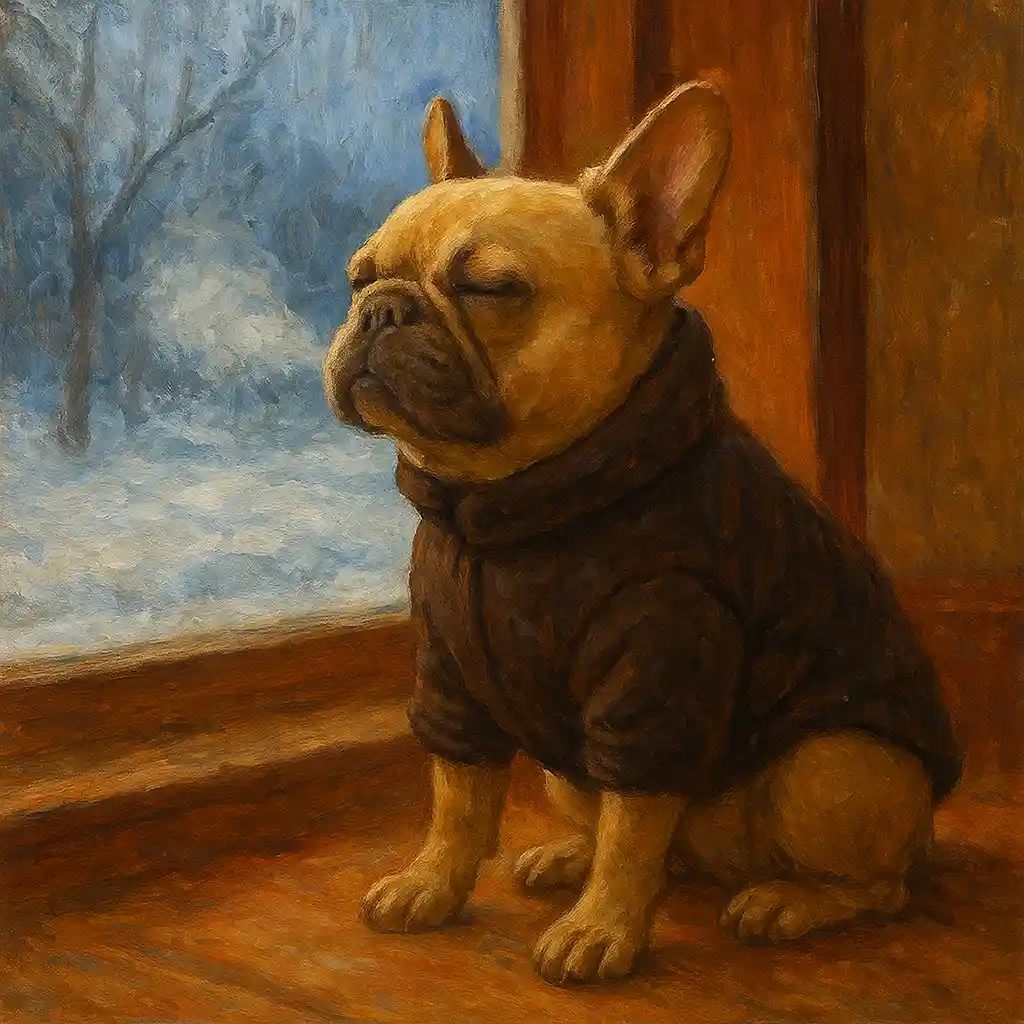
Winter can be beautiful, but it can also be tough on older dogs—especially when it comes to cold air and Frenchie breathing. If you have a senior French Bulldog, you may notice they get tired faster, move slower, or seem uncomfortable when they breathe in cold air. The good news is that you can make winter much easier with a few simple changes: shorter walks, a warm-up routine inside, possibly using a coat, and extra rest after activity. Most importantly, you’ll want to keep a close eye on their breathing during winter outings.
If your senior Frenchie struggles to breathe in cold air, it’s a sign to slow down, shorten the walk, and warm up inside.
This guide keeps things practical and calm. You don’t need to do everything perfectly. You just need to notice what your dog is telling you and adjust your routine so winter stays safe and comfortable.
Why Cold Air and Frenchie Breathing Can Be a Challenge in Winter
Many French Bulldogs have a brachycephalic (short-nosed) head shape. That means their airways can be shorter and narrower than other breeds. Because of this, breathing can already take more effort—especially for senior Frenchies. Add cold winter air, and the situation can feel even harder for them.
You probably know the feeling when you breathe in very cold air and it feels sharp or uncomfortable. For a senior French Bulldog, cold air and Frenchie breathing issues can show up faster, even during a short walk. This is why winter care is not just about warmth—it’s also about breathing comfort and not overdoing activity.
A quick look at the French Bulldog respiratory system
French Bulldogs are known for their adorable faces, but their body structure can make breathing more sensitive. With shorter, narrower airways, they may be more likely to:
- Breathe louder than other dogs
- Pant more quickly during activity
- Need more breaks during walks
- Struggle more when air is cold, dry, or windy
In seniors, these challenges can become more noticeable. That’s why winter routines often need to change as your Frenchie ages.
How cold air affects Frenchie breathing, especially in seniors
Cold air and Frenchie breathing can be a tricky mix because winter air can feel harsh on the throat and lungs. A senior dog may also have less stamina and may recover more slowly after exertion. Even if your Frenchie loved long walks when they were younger, winter is a good time to switch to a gentler plan.
During winter outings, your senior Frenchie may:
- Start panting faster than usual
- Slow down or stop walking
- Seem stressed or uncomfortable
- Need to go home sooner than expected
This does not mean they can’t go outside. It simply means they may need shorter walks, more warmth, and more rest.
Signs of respiratory distress to watch for
It’s important to know what “normal” breathing looks like for your dog. Then you can spot changes quickly. Watch for:
- Wheezing or unusual sounds when breathing
- Coughing during or after a walk
- Excessive panting for the level of activity
- Labored breathing (working hard to inhale or exhale)
- Bluish gums or tongue (a serious warning sign)
If your Frenchie seems like they can’t catch their breath, don’t push through the walk. Bring them inside, warm them up, and let them rest. If symptoms are strong or do not settle, contact your vet.
Shorter Walks: The Best First Step for Cold Air and Frenchie Breathing
For many senior French Bulldogs, the simplest winter upgrade is also the most effective: shorter walks. Long winter walks can lead to cold stress, tired muscles, and breathing trouble. Shorter outings help reduce exposure to cold air and lower the chance your dog will overexert themselves.
Think of winter walks as “quick comfort breaks” instead of long adventures. Your Frenchie can still sniff, explore, and enjoy fresh air—just in smaller doses.
Why shorter walks matter for senior Frenchies
Senior dogs often have less energy and may have stiff joints, especially in cold weather. Shorter walks can help by:
- Reducing time spent in cold temperatures
- Lowering physical strain on joints and muscles
- Making it easier to monitor cold air and Frenchie breathing changes
- Preventing the “lagging behind” moment that many owners notice in winter
How to decide the right walk length
There is no single perfect number of minutes. The “right” walk length depends on your dog’s comfort. Use your Frenchie’s behavior as your guide.
Try these practical checks during a winter walk:
- If your Frenchie starts slowing down, it may be time to turn back.
- If breathing becomes loud, fast, or strained, end the walk early.
- If your dog shivers, lifts paws often, or seems uncomfortable, shorten the outing next time.
A helpful approach is to do more frequent, shorter walks instead of one long walk. This keeps your senior Frenchie active without pushing their breathing or stamina too far.
Alternatives to outdoor walks for exercise
Some winter days are simply too cold, too windy, or too icy. On those days, indoor movement can be a safer option—especially if cold air and Frenchie breathing is a known issue for your dog.
Simple indoor exercise ideas include:
- Gentle indoor fetch with a soft toy
- Short play sessions in a hallway
- Light tug games (keep it gentle for seniors)
- Easy training practice (sit, stay, touch) for mental and physical activity
Indoor exercise is not “less than” outdoor walks. In winter, it can be the smarter choice for a senior Frenchie.
Warm Up Inside Before and After Walks (Helps Cold Air and Frenchie Breathing)
Warming up inside is one of the best ways to support a senior Frenchie in winter. It helps your dog transition more smoothly between warm indoor air and cold outdoor air. It also supports comfort in muscles and joints and can reduce stress on breathing.
For many dogs, the hardest moment is the sudden change: warm home → cold outdoors → warm home again. A simple warm-up and warm-down routine can make a big difference.
A simple pre-walk warm-up routine
You don’t need a complicated plan. Before heading outside, spend a few minutes helping your senior Frenchie “wake up” their body.
- Let them walk around the home for a minute or two
- Do a short, calm play session (nothing intense)
- Encourage gentle movement before clipping on the leash
This is also a good moment to check your dog’s energy level. If they already seem tired or stiff, it may be a “short walk only” day.
Warm-up inside after the walk
When you come back in, focus on comfort. After winter exposure, many senior dogs need help warming up again. This matters for the whole body, but it also supports cold air and Frenchie breathing recovery—your Frenchie may need a little time for breathing to return to normal.
Helpful ways to warm up inside:
- Offer a soft blanket in a draft-free spot
- Provide a warm bed or heated pet bed (if you use one)
- Let them rest quietly instead of starting another activity right away
After a winter walk, the goal is not more activity—it’s recovery.
Indoor exercise ideas for cold winter days
Keeping your senior Frenchie active in winter supports overall health. The key is choosing activities that fit their age and breathing comfort.
- Hide-and-seek treats: hide a few treats around one room and let your Frenchie sniff them out
- Puzzle toys: great for mental stimulation when walks are shorter
- Mini obstacle path: use pillows or cushions for slow stepping (keep it easy and safe)
- Indoor fetch: short tosses, short sessions, plenty of breaks
During indoor play, still watch breathing. If your Frenchie starts panting heavily, pause and let them rest.
Possibly Use a Coat: Extra Warmth for Cold Air and Frenchie Breathing Comfort
Not every French Bulldog needs a coat, but many seniors benefit from one in winter. Frenchies have short coats and can get cold quickly, especially during brisk walks. A coat can help keep the body warmer, which may make the whole experience more comfortable.
While a coat does not “fix” breathing, it can support winter comfort so your dog is less stressed during outdoor time. For some dogs, less stress and better warmth can indirectly support easier breathing.
Benefits of a coat for senior Frenchies
- Helps retain body heat during short winter walks
- Provides comfort on windy days
- May reduce shivering and stiffness
- Can make your Frenchie more willing to go outside
How to choose the right coat for your Frenchie
French Bulldogs have a unique body shape, so fit matters. Look for a coat that:
- Is designed to fit a Frenchie’s chest and shoulders comfortably
- Feels warm but not too bulky
- Is easy to put on and take off (helpful for senior dogs)
- Allows free movement without rubbing
- Has a collar or neck coverage for extra warmth
If your Frenchie seems uncomfortable in a coat, try a different style or size. Comfort always comes first.
Tips for comfort and safety when using a coat
- Check that the coat is not too tight around the neck or chest
- Make sure your dog can move normally and breathe easily
- Remove the coat indoors so your Frenchie doesn’t overheat
- Keep coats dry; if your dog gets wet, change into a dry coat or go inside
Using a coat is a simple step, but it can make winter walks feel much easier—especially for a senior dog who already finds cold air and Frenchie breathing more challenging.
Protecting Paws in Cold Weather (So Walks Stay Short and Safe)
Winter care is not only about warmth and breathing. Paw protection is also important. Cold sidewalks, snow, and icy surfaces can be uncomfortable, and some dogs will start lifting their paws when it gets too cold.
If your Frenchie’s paws hurt, they may stop walking, get stressed, and start breathing harder. That’s another reason paw care supports the bigger goal: calm, safe winter outings.
Why paw care matters for senior Frenchies
Senior dogs may have thinner paw pads or less tolerance for cold. They may also have balance issues on ice. Keeping paws protected helps prevent slips, discomfort, and sudden stress during walks.
Simple ways to protect paws
- Dog booties: create a barrier from cold ground and ice
- Paw wax: can help protect paws and reduce ice buildup between toes
- Shorter routes: less time on cold surfaces (also supports cold air and Frenchie breathing)
After the walk, wipe paws clean and dry. This helps remove ice, salt, or chemicals and keeps paw skin healthier.
How to recognize paw injury or frostbite
Check paws regularly in winter. Watch for:
- Cracks, redness, swelling, or bleeding
- Limping or refusing to walk
- Excessive licking or chewing at paws
- Pale, gray, or bluish skin on paws that feels cold to the touch
If you suspect frostbite, gently warm the paws using a warm (not hot) towel and contact your vet for guidance.
Rest After Walks: A Key Part of Cold Air and Frenchie Breathing Recovery
Senior French Bulldogs often need more recovery time than younger dogs. In winter, this matters even more. After a walk—especially in cold air—your Frenchie may need time for breathing to settle and energy to return.
It can be tempting to keep your dog moving if they seem excited, but winter care for seniors is about balance. Activity is good, but recovery is just as important.
Why rest and recovery matter after outdoor activity
- Helps your dog warm up safely
- Supports muscle recovery and joint comfort
- Gives breathing time to return to normal after cold exposure
- Helps prevent overexertion in senior dogs
Create a cozy rest area at home
A warm, calm resting place helps your Frenchie recover after winter outings. Try setting up:
- A soft bed away from drafts
- A warm blanket they can burrow into
- A quiet corner where they won’t be disturbed
This is especially helpful if your dog tends to get tired quickly or if cold air and Frenchie breathing makes winter walks more tiring for them.
Signs your Frenchie may need extra rest or medical attention
Some tiredness after a walk is normal. But watch for signs that your senior Frenchie may need more rest—or a vet check.
- Breathing that stays heavy long after coming inside
- Wheezing or coughing that is new or getting worse
- Extreme fatigue after a short walk
- Limping, stiffness, or trouble standing up after activity
If something feels “off,” trust your instincts and contact your vet. It’s always better to ask early than wait.
Monitoring Breathing During Winter Activities
When it comes to cold air and Frenchie breathing, monitoring is one of the most helpful habits you can build. You don’t need special tools. You just need to watch your dog and learn their signals.
During winter walks, aim for a calm pace. Stop for short breaks. And pay attention to how your Frenchie breathes during activity and after you return home.
How to monitor breathing during winter walks
- Watch for breathing that becomes fast or noisy too quickly
- Notice if your Frenchie needs frequent stops to recover
- Check if they seem anxious or stressed (stress can worsen breathing)
- After the walk, observe how long it takes for breathing to settle
If breathing changes, shorten the walk next time. Winter exercise should feel gentle and manageable, not like a workout.
Respiratory distress signs that mean “go inside now”
- Labored breathing or clear struggle to inhale/exhale
- Wheezing that is strong or sudden
- Excessive panting that doesn’t match the activity
- Blue or pale gums/tongue
In winter, it’s always okay to end a walk early. Your Frenchie’s breathing matters more than finishing the route.
When to seek veterinary help for breathing issues
If your senior French Bulldog has breathing trouble that does not improve with rest and warmth, or if you see serious warning signs (like bluish gums), contact your vet promptly. Winter can make breathing issues more noticeable, so regular check-ins with your vet can be a smart part of your seasonal routine.
Nutrition and Hydration in Winter for Senior French Bulldogs
Winter routines can change appetite and thirst. Some dogs are less active and may need fewer calories, while others burn more energy staying warm. Hydration also matters in winter, even if your dog seems less thirsty.
Supporting your senior Frenchie’s nutrition and hydration helps their overall comfort—and supports recovery after walks when cold air and Frenchie breathing may take extra effort.
Adjusting your Frenchie’s diet for winter months
If your Frenchie is less active because walks are shorter, you may need to watch portion sizes to prevent weight gain. If you’re unsure, ask your vet for guidance on the best approach for your dog’s age and condition.
Some owners like to add warm elements to meals (like warm water mixed into food). Keep changes simple and gentle, and avoid sudden diet changes.
Why hydration still matters in cold weather
Dogs can still get dehydrated in winter, especially when indoor heating makes the air dry. Make sure your Frenchie always has access to fresh water.
- Keep water bowls filled with fresh water
- Encourage drinking after indoor play or walks
- Watch for signs like dry gums or unusual tiredness
Simple tips for senior Frenchie nutrition and hydration
- Choose high-quality, age-appropriate food
- Keep fresh water available all day
- Monitor weight during winter months
- Consider vet-approved supplements if your vet recommends them
Indoor Enrichment for Senior Frenchies (When Walks Are Shorter)
When winter means shorter walks, indoor enrichment becomes more important. Mental stimulation helps prevent boredom and supports your Frenchie’s mood. It’s also a great way to keep them engaged without long exposure to cold air.
Indoor enrichment is especially helpful if cold air and Frenchie breathing makes outdoor time more limited.
Why mental stimulation matters in winter
Senior dogs still enjoy learning, sniffing, and solving small challenges. Mental activity can be calming and satisfying. It can also help reduce restlessness when winter weather limits outdoor time.
DIY enrichment activities you can do at home
- Treat search: hide treats around a room and let your Frenchie sniff them out
- Simple puzzle setup: place treats in a muffin tin and cover with safe toys
- Gentle training: short sessions of basic cues for confidence and focus
- Indoor obstacle path: easy stepping around pillows or furniture (keep it slow and safe)
Why indoor play supports overall well-being
Indoor play supports physical movement, mental health, and bonding. It also gives your senior Frenchie a safe way to stay active when winter conditions are not ideal. After indoor play, just like after walks, offer rest time and monitor breathing.
Creating a Winter Routine for Cold Air and Frenchie Breathing
A winter routine helps you stay consistent. It also helps your Frenchie know what to expect. The best routine is simple and repeatable: short walks, warm-ups inside, possible coat use, paw checks, rest, and breathing monitoring.
Build a practical winter care plan
Here is a simple winter plan you can adapt:
- Warm up inside for a few minutes before going out.
- Choose a shorter walk and keep the pace gentle.
- Use a coat if your Frenchie seems cold or uncomfortable.
- Protect paws with booties or paw wax if needed.
- Go back inside early if breathing changes or your dog seems tired.
- Warm up and rest after the walk with a cozy bed or blanket.
- Monitor breathing during recovery.
Regular vet check-ups are part of winter wellness
Senior dogs benefit from regular vet visits, and winter can be a good time to stay extra aware of breathing, joints, and energy changes. If you’re noticing new breathing sounds, coughing, or faster fatigue, bring it up with your vet.
Keep your Frenchie healthy and happy all winter
Winter care is not about doing more—it’s about doing what matters most. When you focus on comfort, warmth, and safe activity, you support your dog’s quality of life. And when you pay attention to cold air and Frenchie breathing, you can step in early before a small issue becomes a bigger one.
Conclusion: A Calm, Cozy Winter for Your Senior Frenchie
Winter care for senior French Bulldogs comes down to a few smart habits: shorter walks, warming up inside, possibly using a coat, protecting paws, rest after activity, and monitoring cold air and Frenchie breathing during winter outings. With these simple adjustments, your Frenchie can still enjoy the season while staying comfortable and safe.
If you’d like help building a simple daily routine for your senior Frenchie, check out our other French Bulldog care guides on the blog and create a plan that fits your dog’s needs.