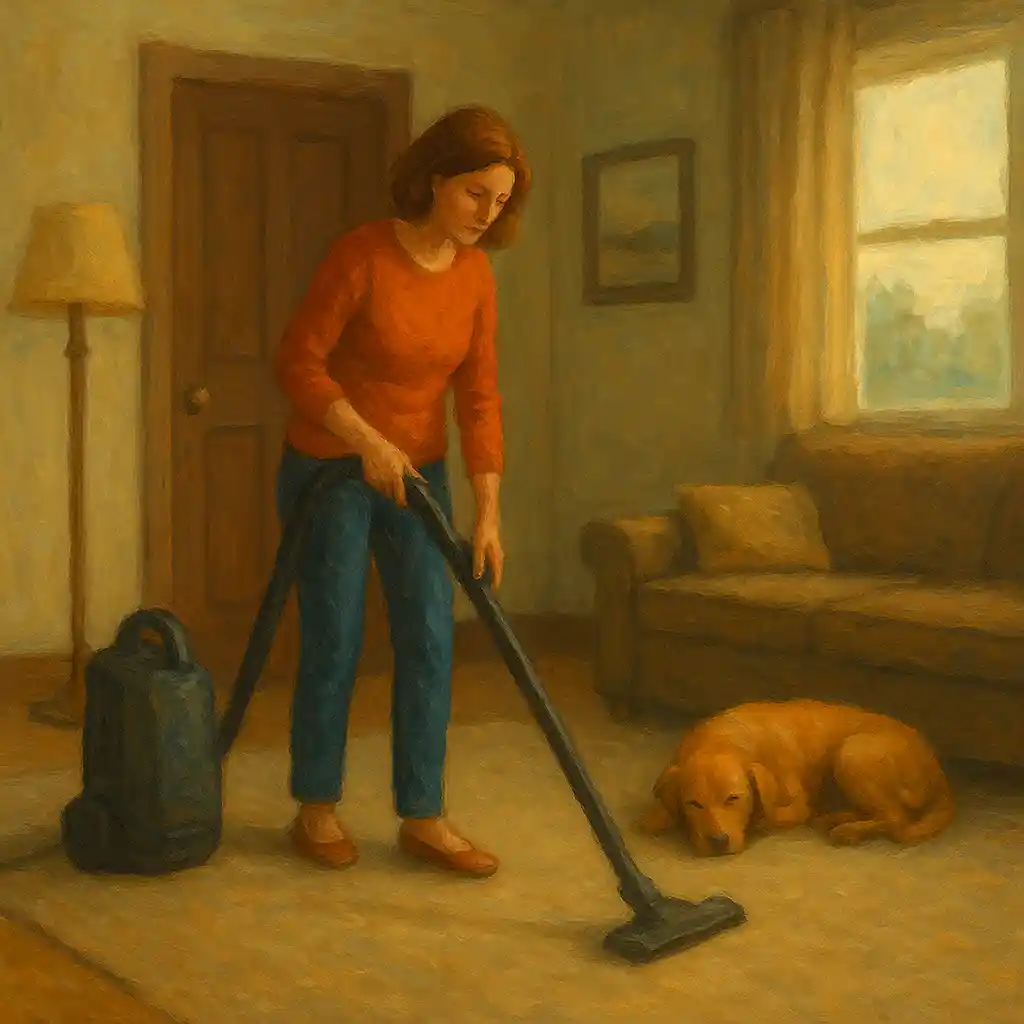
Quiet vacuuming with dogs can feel like a small miracle, especially if you are a senior who wants a clean home without upsetting a beloved pet. You probably know the feeling: you turn on the vacuum, and your dog suddenly starts pacing, barking, hiding, or trying to “fight” the machine. The noise, the movement, and the change in routine can be a lot for many dogs, and it can be stressful for you too.
The good news is that quiet vacuuming with dogs is possible. With a few simple changes—choosing the best time of day, closing doors, keeping your dog occupied, and using quiet mode—you can turn vacuuming into a calmer, safer, and more manageable chore.
Quiet vacuuming with dogs is not about forcing your dog to “get over it.” It is about lowering stress, creating a safe space, and building a calmer routine.
Why quiet vacuuming with dogs matters (especially for seniors)
Vacuuming is a normal part of home care, but it can become difficult when a dog is scared or overexcited. For seniors, this can add extra worry and extra risk. If your dog runs around your feet, barks nonstop, or tries to chase the vacuum, it can be harder to move safely and focus on cleaning.
Quiet vacuuming with dogs matters because it helps with:
- Less stress for your dog (less fear, less anxiety, fewer panic reactions).
- Less stress for you (you can clean without feeling rushed or overwhelmed).
- Better safety (fewer chances of tripping if your dog is underfoot).
- A calmer home routine (your dog learns what to expect).
If you have a senior dog, this can be even more important. Older dogs can be more sensitive to loud sounds and sudden changes. A calmer approach can make a big difference.
Understanding how vacuum noise affects dogs
Many dogs react strongly to vacuum cleaners. The vacuum is loud, it moves toward them, and it can feel unpredictable. Even if the vacuum is not a real danger, your dog may experience it as a threat.
Common signs of stress during vacuuming
During vacuuming, dogs may show stress or anxiety in different ways. Some dogs look scared, while others look “angry,” but both can be stress responses. Watch for signs like:
- Pacing or restlessness
- Panting when it is not hot
- Hiding behind furniture or in another room
- Barking or whining
- Trying to attack or chase the vacuum cleaner
- Refusing treats or not responding like usual
If you notice these behaviors, quiet vacuuming with dogs is a helpful next step. The goal is not perfect silence. The goal is a cleaning routine your dog can handle.
Quiet vacuuming with dogs: Choose the best time of day
One of the simplest ways to start quiet vacuuming with dogs is to vacuum when your dog is already calm. Timing can reduce stress without buying anything new or changing your whole routine.
Early morning or late evening can work well
Many dogs naturally rest more in the early morning or later in the evening. These times can be good for quiet vacuuming with dogs because your pet may be less active and less reactive. If your dog is already sleepy, the vacuum may feel less exciting or less threatening.
Follow your dog’s routine (nap time and after walks)
Every dog is different, so the “best” time depends on your dog’s habits. Good times to try include:
- During nap time (when your dog is already settled).
- After a walk (many dogs are calmer after exercise).
- After playtime (a short game can reduce extra energy).
If your dog is usually energetic at a certain time of day, try not to vacuum then. Quiet vacuuming with dogs is easier when your dog is not already on high alert.
Quiet vacuuming with dogs: Close doors to reduce noise and create comfort
Closing doors is a simple but powerful tool. It helps reduce the sound your dog hears and gives your dog a clear boundary. For many dogs, this creates a feeling of safety.
Close doors to rooms you are not cleaning
Instead of vacuuming the whole home with your dog following you, try cleaning one area at a time. Close doors to limit where your dog can go. This supports quiet vacuuming with dogs because:
- The vacuum noise is more contained.
- Your dog can stay in a calmer area.
- You can move safely without your dog under your feet.
Create a safe retreat space for your dog
It helps if your dog has a place to go where they feel secure. This could be a bedroom, a quiet corner, or another familiar space. Before you start vacuuming, set up that space so it feels comfortable.
A safe retreat space can include:
- Your dog’s bed or blanket
- A favorite toy
- A chew item or treat (if appropriate for your dog)
- Lower light and less activity
Quiet vacuuming with dogs works best when your dog has a choice to step away from the noise.
Close windows if outside noise adds to stress
Sometimes it is not only the vacuum. Outside sounds can add extra stress, especially if your dog is already nervous. Closing windows can reduce extra noise and help your dog settle while you vacuum.
Quiet vacuuming with dogs: Keep your dog occupied during cleaning
Many dogs react to vacuuming because they do not know what to do with themselves. The vacuum becomes the “main event.” One of the best quiet vacuuming with dogs strategies is to give your dog a job: chew, sniff, or solve a puzzle.
Use interactive toys and puzzle games
Interactive toys and puzzles can hold your dog’s attention while you clean. They provide mental stimulation and can help your dog focus on something positive instead of the vacuum noise.
Examples include:
- Puzzle toys where your dog moves parts to find treats
- Simple food puzzles
- Toys that encourage licking or chewing
Try treat-dispensing toys for longer focus
Treat-dispensing toys can be especially helpful for quiet vacuuming with dogs because they keep your dog busy for longer. Your dog works for the treat step-by-step, which can reduce stress and boredom.
If your dog is food-motivated, this can change the whole experience. Instead of “vacuum time = scary time,” your dog may start to think “vacuum time = snack time in my safe room.”
Keep the distraction in a separate room when possible
If your dog stays near you during vacuuming, even with a toy, they may still react to the noise and movement. If it is safe and comfortable for your dog, give them their toy or treat in another room with the door closed. This supports quiet vacuuming with dogs by lowering the sound and lowering the excitement.
Quiet vacuuming with dogs: Use quiet mode (and why it helps)
If your vacuum cleaner has a quiet mode, use it. Quiet mode can reduce the noise level and make vacuuming feel less intense for your dog. It can also feel less stressful for you, especially if loud noise bothers you too.
Benefits of quiet mode for seniors with dogs
Quiet vacuuming with dogs becomes easier when the sound is lower. A quieter vacuum can:
- Startle your dog less
- Reduce barking and pacing
- Make it easier for your dog to stay in their safe space
- Create a calmer cleaning routine overall
How to select a vacuum cleaner with quiet mode
If you are looking for a vacuum that supports quiet vacuuming with dogs, keep your choice simple and practical. Here are helpful points from the draft to consider:
- Look for a model with a quiet mode setting designed to reduce noise while still cleaning well.
- Check the decibel level and choose a lower level when possible.
- Read reviews from pet owners to learn how dogs react to the noise.
- Consider size and weight so it is easier to move, especially if you want something manageable as a senior.
Even with quiet mode, your dog may still need time to adjust. Quiet vacuuming with dogs is a process, not a one-day change.
Introducing your dog to the vacuum cleaner in a calm way
Some dogs are not just “annoyed” by vacuuming—they are truly afraid of the vacuum. In that case, quiet vacuuming with dogs works best when you also help your dog feel safer around the machine over time.
Gradual exposure (desensitization) to the vacuum sound
Gradual exposure means going slowly and letting your dog learn that the vacuum is not a threat. You can start with the vacuum turned off.
- Place the vacuum in the room without using it. Let your dog see it and sniff it.
- Reward calm behavior with praise or a small treat.
- Turn it on briefly for a short moment, then turn it off.
- Repeat in short sessions so your dog does not get overwhelmed.
This approach supports quiet vacuuming with dogs because it reduces fear over time, especially when you keep the sessions short and calm.
Positive reinforcement: reward calm behavior
Positive reinforcement means you reward the behavior you want to see again. During vacuuming practice or real cleaning, look for small calm moments:
- Your dog stays on their bed
- Your dog looks at the vacuum but does not bark
- Your dog chews a toy instead of pacing
When you notice these moments, give gentle praise or a reward. This can help your dog connect vacuuming with good outcomes. Quiet vacuuming with dogs becomes much easier when your dog learns what to do instead of panicking.
Extra help for quiet vacuuming with dogs who are nervous
Some dogs need more support, especially if they are naturally sensitive or have had a bad experience with loud noises. If your dog is very nervous, these extra ideas can help.
Use pheromone diffusers to promote relaxation
Pheromone diffusers can help some dogs feel calmer. These products release synthetic pheromones that mimic the calming scents produced by mother dogs to soothe their puppies. Plugging a diffuser into the room where your dog spends most of their time may help reduce anxiety and stress.
This can support quiet vacuuming with dogs by helping your dog relax before and during cleaning sessions.
Keep your routine predictable
Dogs often feel safer when they know what will happen next. If possible, vacuum on a regular schedule and use the same steps each time. For example:
- Offer a toy or puzzle
- Bring your dog to their safe room
- Close the door
- Turn on quiet mode
- Vacuum one area, then stop
Quiet vacuuming with dogs often improves when vacuuming feels like a normal, predictable event.
Practical strategies for stress-free vacuuming (small changes that work)
Quiet vacuuming with dogs does not have to mean long, exhausting cleaning days. In fact, shorter and simpler cleaning sessions often work better for both you and your dog.
Break vacuuming into shorter sessions
Instead of vacuuming the entire home at once, try doing one room or one section at a time. This reduces the time your dog needs to cope with the noise. It also reduces your physical strain.
Short sessions can help because:
- Your dog has less time to build anxiety.
- You can stop before anyone gets overwhelmed.
- You can choose the calmest time of day for each session.
Add playtime before and after vacuuming
A little playtime can help your dog release energy and feel happier. Before vacuuming, a short play session can help your dog settle. After vacuuming, a reward (playtime or a treat) can help your dog remember that vacuuming ends with something good.
This is a simple way to support quiet vacuuming with dogs while also strengthening your bond.
Safety precautions for seniors and dogs during vacuuming
A calm vacuum routine is not only about comfort. It is also about safety. When you feel safe and your dog feels safe, everything is easier.
Avoid tripping hazards while vacuuming
Dogs can move quickly and unexpectedly, especially when they are nervous. To reduce the risk of falls:
- Keep your dog in a separate room when possible.
- Close doors so your dog does not dart into your path.
- Pick up clutter before you start, so you have a clear walking space.
- Move slowly and take breaks if you feel tired.
Quiet vacuuming with dogs is safer when your dog is not circling around your feet.
Use pet-friendly cleaning products
If you use cleaning products during your routine, consider pet-friendly options. Pet-friendly cleaning products are formulated without harsh chemicals that can be harmful if inhaled or ingested. They can support a healthier home for both you and your dog.
Quiet vacuuming with dogs is about the full environment—sound, stress, and the overall safety of your space.
Real-life results: how seniors and dogs can adjust to quiet vacuuming with dogs
Many seniors find that once they start using quiet vacuuming with dogs techniques, their home feels calmer. The biggest changes often come from small steps: vacuuming at a better time of day, closing doors, offering a distraction, and using quiet mode.
When these habits become consistent, many dogs respond positively. Dogs may start barking less, hiding less, and recovering faster after cleaning. Some dogs even learn to relax in their safe space as soon as they see the vacuum come out, because they know what happens next.
Small routine changes can lead to big comfort changes—for you and for your dog.
A simple quiet vacuuming with dogs checklist (use it each time)
If you want an easy plan you can repeat, try this checklist:
- Time of day: Vacuum when your dog is relaxed (nap time or after a walk).
- Doors closed: Close doors to limit noise and movement.
- Dog occupied: Offer a puzzle, toy, or treat in a safe space.
- Quiet mode: Use quiet mode on your vacuum cleaner if available.
- Short session: Clean one area, then stop and reward calm behavior.
This routine supports quiet vacuuming with dogs without making the process complicated.
Conclusion: a calmer way to clean and live together
Quiet vacuuming with dogs is a practical way to reduce stress, support your dog’s comfort, and make cleaning feel easier and safer—especially for seniors. By choosing the right time of day, closing doors, keeping your dog occupied, and using quiet mode, you can create a calmer routine that works for everyone.
If you found these ideas helpful, take a look at our other senior-friendly home and pet care tips on the blog and choose one small change to try this week.