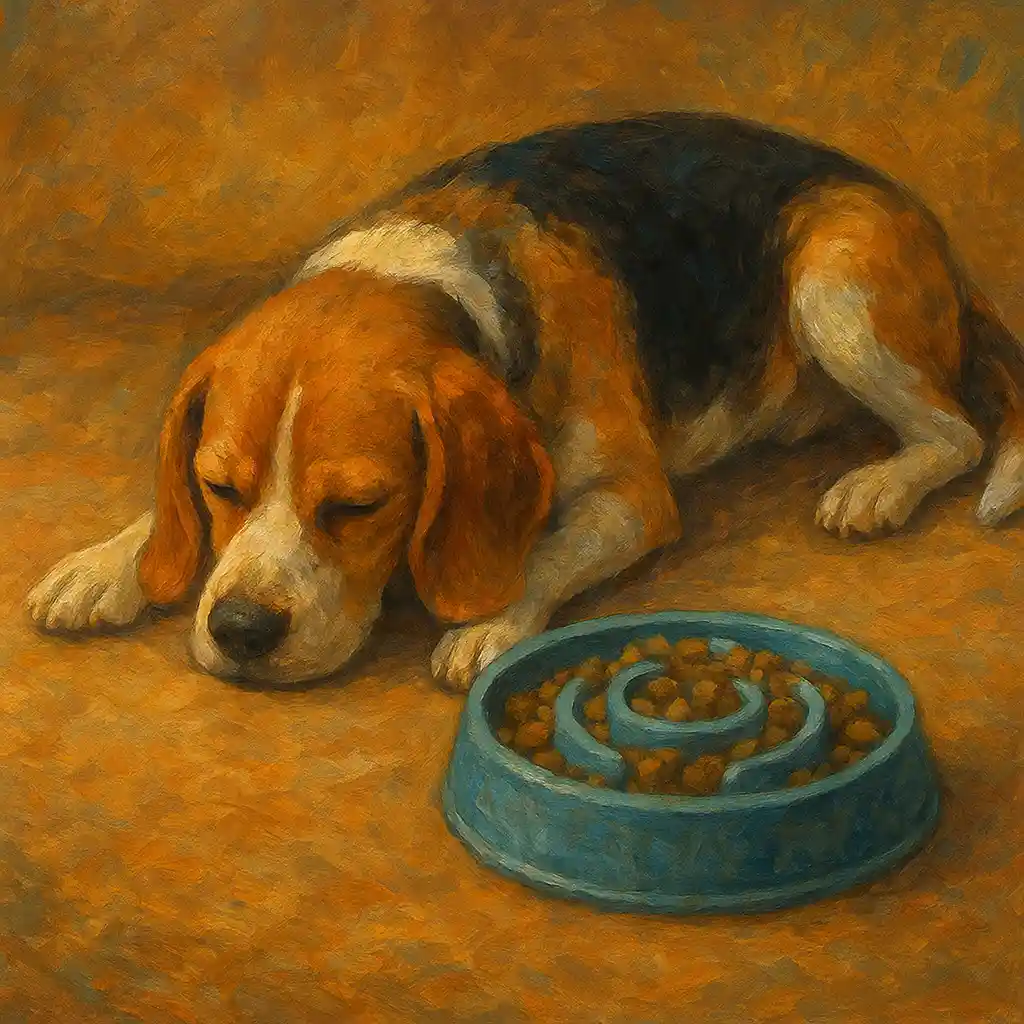
Beagle post-meal rest is one of the simplest habits you can build to protect your dog’s digestion. After your Beagle eats, it is best to choose calm time instead of play. This helps reduce common post-meal problems like bloating, gas, discomfort, and vomiting. A second helpful tool is a slow feeder, which makes your Beagle eat more slowly and more safely. Together, these two steps create a clear, easy routine that supports a happy belly and a healthier dog.
After meals, choose rest—not play. Give your Beagle at least 30 minutes of calm time to help digestion and lower the risk of post-meal discomfort.
Why Beagle post-meal rest matters
Beagles love food. Many Beagles also eat fast, get excited, and want to move right away. But right after eating, your dog’s body is working hard to digest. When a Beagle runs, jumps, or plays too soon, it can make digestion harder and increase the chance of stomach trouble.
You probably know the feeling when you eat too quickly and then regret it later. Dogs can feel something similar. Beagle post-meal rest gives the stomach time to settle and helps your dog feel comfortable after eating.
Common post-meal issues Beagle owners notice
Many owners see small problems after meals and do not connect them to activity. These issues can include:
- Bloating or a belly that looks bigger than normal
- Gas and stomach sounds
- Upset stomach or nausea
- Vomiting, especially after fast eating
- Restlessness or discomfort after eating
Not every Beagle will have these issues, and not every symptom is caused by activity. Still, Beagle post-meal rest is a safe, practical habit that can support better digestion for many dogs.
Why senior Beagles may need extra care
The same routine can be even more important for a senior Beagle. Older dogs may have a more sensitive stomach, lower energy, or other health concerns. A calm post-meal routine can make their day easier and more comfortable. If you imagine coming home and seeing your senior Beagle uncomfortable after eating, it is easy to understand why simple prevention matters.
Understanding Beagle digestion and what makes them prone to eating fast
Beagles are famous for their strong food drive. That is not a bad thing, but it can lead to fast eating. Fast eating may mean your Beagle swallows more air and takes in food too quickly for the stomach to handle comfortably.
Beagle post-meal rest helps because it reduces stress on the body right when digestion starts. It also helps you notice early signs of discomfort, because your dog is not distracted by high-energy play.
How post-meal activity can affect digestion
After eating, the stomach is full and busy. When your Beagle runs or plays hard, their body shifts into “action mode.” This can lead to discomfort, especially if your dog ate quickly. That is why it is smart to avoid vigorous play and choose calm time after meals.
A simple goal: calm digestion time after every meal
The goal is not to stop your Beagle from being active. It is only to delay high-energy activity for a short time. Most owners find that 30 minutes of Beagle post-meal rest is an easy and realistic target, and it can make a real difference.
Beagle post-meal rest routine: the 30-minute rule
A clear routine makes things easier for you and your dog. If your Beagle knows what happens after meals, they will adjust faster. The most important part is consistency.
What “rest” means (and what it does not mean)
Rest after meals does not have to mean strict crate time, unless that works best in your home. It simply means calm behavior, such as:
- lying down on a bed or blanket
- quiet chewing (if your dog is calm and safe)
- relaxing near you while you read, work, or watch TV
- gentle petting and calm bonding time
Rest does not mean rough play, chasing, jumping, wrestling, or intense running around the house.
How long should Beagle post-meal rest last?
The draft guidance is clear: aim for at least 30 minutes of calm time after eating. Some owners prefer longer, especially after a large meal, but the key idea is to avoid immediate vigorous activity.
What to do if your Beagle demands play right after eating
Many Beagles will try. They may bring you a toy, bark, bounce, or run in circles. This is normal behavior for an excited dog. Your job is to set a boundary and guide them into calm time.
Helpful options include:
- Lead them to their resting spot right after the bowl is finished
- Use a consistent phrase like “rest time”
- Offer gentle petting and calm attention
- Reduce excitement in the room (lower voice, slower movement)
No play after meals: how to set a clear boundary
A “no play after meals” rule is not about being strict. It is about safety and comfort. When you connect this rule with Beagle post-meal rest, you create a predictable pattern your dog can learn.
Why vigorous play right after eating is risky
High-energy activity can increase the chance of discomfort and digestive problems. The draft also mentions serious risks like stomach twists (gastric torsion). While not every dog will face severe problems, it is still wise to reduce risk by avoiding intense activity right after meals.
Practical ways to enforce the no-play rule
- Remove high-energy toys for the rest period (balls, tug toys)
- Use a leash indoors for a few minutes if your Beagle gets too excited
- Separate dogs if you have more than one and they trigger each other to play
- Keep greetings calm if someone comes home near mealtime
Replace play with calm activities
If your Beagle struggles to settle, give them a calm option that still feels rewarding. Calm choices can include:
- a slow, relaxed sniff around the yard (if your dog stays calm)
- quiet cuddle time
- gentle brushing
- soft music while they rest
The key is to keep the body calm while the stomach works.
Slow feeder for Beagles: why it helps and when to use it
A slow feeder is one of the easiest tools to support digestion. It helps because it makes fast eaters slow down. Many Beagles “inhale” their food, and that can lead to discomfort. A slow feeder adds simple obstacles that force your dog to take smaller bites.
When you combine a slow feeder with Beagle post-meal rest, you support digestion in two ways: slower eating and calmer recovery time.
Benefits of a slow feeder for Beagles
- Slower eating pace, which can reduce gulping
- Better digestion support by avoiding very fast meals
- Less chance of overeating in a short time
- Mental stimulation during meals (mealtime becomes a small challenge)
Types of slow feeder options mentioned in the draft
The draft includes a few common slow-feeding tools. These include:
- Puzzle slow feeder bowls with patterns and obstacles
- Raised slow feeder bowls (elevated feeding style plus slow design)
- Lick mats for wet food or spreadable treats (encourages slow licking)
Each option can work. The best choice depends on your Beagle’s eating style and what food you feed.
How to transition your Beagle to a slow feeder
Some Beagles love a slow feeder right away. Others may feel confused at first. A gradual transition is often easier.
- Start simple: Use an easy slow feeder design first, not the hardest puzzle.
- Mix bowls at first: Put part of the meal in the regular bowl and part in the slow feeder.
- Increase slow feeder use: Over a few meals, move more food into the slow feeder.
- Stay patient: Your Beagle is learning a new way to eat.
If your Beagle gets frustrated, step back and make it easier. The goal is slower eating, not stress.
Beagle post-meal rest: signs your dog may be uncomfortable
Even with good routines, it is smart to watch your Beagle after meals. Calm rest time makes it easier to notice changes in behavior and body language.
Behavioral cues that can signal discomfort
- pacing or restlessness
- excessive lip licking
- yawning that seems stress-related
- avoiding eye contact
- not wanting to lie down
Physical symptoms of digestive problems
- bloating
- gas
- vomiting
- diarrhea or constipation
Some of these signs can happen for many reasons, not only because of eating speed or activity. Still, they are useful signals to take seriously.
When to seek veterinary assistance
If your Beagle has persistent vomiting, diarrhea, unusual lethargy, or ongoing discomfort, contact your veterinarian. It is always safer to ask for guidance early, especially if symptoms do not improve.
If you see persistent vomiting, diarrhea, or lethargy, contact your vet. Early help can protect your Beagle’s health.
Creating a calm post-meal space that supports Beagle post-meal rest
Your Beagle will rest more easily if you make rest time comfortable and predictable. The goal is to create a place where your dog naturally settles after meals.
Designate a quiet resting area
Choose one spot that becomes the “after-meal place.” It can be a dog bed, a crate with the door open, or a blanket in a quiet corner. Try to keep it away from loud noise, busy doors, and exciting toys.
Use gentle petting or soothing music
Some Beagles relax quickly with gentle petting. Others do better with less touch and more quiet. Soft music can also help create a calm mood in the home. The best choice is what helps your dog settle without getting excited.
Build a schedule your Beagle can learn
Dogs learn through repetition. If every meal ends with Beagle post-meal rest, your dog will start to expect it. Over time, many Beagles will walk to their resting spot on their own after eating.
Training tips to make Beagle post-meal rest easier
Training does not need to be complicated. You are simply teaching a calm habit after meals.
Use positive reinforcement to reward calm behavior
When your Beagle lies down quietly after eating, reward the calm moment. Rewards can be gentle praise, calm petting, or a quiet “good rest.” The reward should not create excitement. The goal is to make rest feel safe and normal.
Redirect energy into mental activities (not physical play)
If your Beagle seems full of energy, choose low-movement mental activities. A slow feeder already adds mental work during eating. After the meal, you can also offer calm enrichment that does not lead to running and jumping.
Consistency is the key for long-term success
Beagles are smart and they learn patterns fast. If you sometimes allow wild play right after meals and sometimes do not, your dog will get confused. A consistent rule makes Beagle post-meal rest much easier to keep.
Mealtime strategies that support digestion (before Beagle post-meal rest)
Post-meal rest is important, but it works best when the meal itself is well managed. A few small mealtime choices can reduce problems before they start.
Consider smaller portions across the day
The draft suggests dividing meals into smaller portions throughout the day. For some Beagles, smaller meals can help prevent overeating and support easier digestion. If you want to try this, keep total daily food the same and simply split it into more meals.
Monitor portion sizes and treats
Beagles can gain weight easily if portions and treats are not controlled. Measuring food can help. Choosing healthier treat options can also support a good routine. Weight and digestion are connected, so steady habits matter.
Choose a diet that supports digestive health
Food quality and fit matter. If your Beagle often has stomach issues, talk with your veterinarian before making major diet changes. A good diet, a slow feeder, and Beagle post-meal rest can work together as a simple system.
Real-life results: what owners often notice after starting Beagle post-meal rest
Many Beagle owners who add a calm post-meal routine notice practical improvements. The draft highlights that owners see positive impact when they combine rest time with slow feeding strategies.
Common positive changes
- less gulping and less “inhaling” food when using a slow feeder
- fewer signs of discomfort after meals
- more predictable behavior after eating
- better overall mealtime structure, especially in multi-dog homes
Even if your Beagle does not have big problems today, these habits can still be a smart way to support long-term well-being—especially as your dog gets older.
Safety precautions and smart considerations
Most of these tips are low risk and easy to try. Still, it is important to stay thoughtful and watch your dog’s response.
Be careful with sudden changes
If you change your Beagle’s feeding method, schedule, or diet, do it gradually. Sudden changes can cause stress or stomach upset, even if your goal is better digestion.
Talk to your veterinarian when needed
The draft recommends consulting a veterinarian before making dietary or behavioral changes, especially if your Beagle has health issues. This is a good step if your dog has ongoing digestive problems, weight concerns, or other medical needs.
Monitor weight and overall well-being
Watch your Beagle’s weight, energy, appetite, and stool quality. These daily signs can tell you a lot. A healthy routine includes good food, smart portions, slower eating when needed, and reliable Beagle post-meal rest.
Simple daily plan: slow feeder + Beagle post-meal rest
If you want an easy routine to start today, try this simple plan:
- Serve the meal in a slow feeder (or start transitioning if it is new).
- Remove high-energy toys as your Beagle finishes eating.
- Guide your Beagle to a resting spot right away.
- Keep 30 minutes calm: no running, no wrestling, no intense play.
- After rest time, return to normal activity like a walk or play session.
This routine is easy to repeat, easy to remember, and easy for your Beagle to learn.
Conclusion: protect your Beagle with post-meal calm time
Beagle post-meal rest is a small habit with big value. By avoiding play right after eating and using a slow feeder to reduce fast gulping, you support digestion and lower the risk of common post-meal issues. Start with a simple 30-minute calm period after meals, keep it consistent, and watch how your Beagle responds. If you want more help building a healthy daily routine, explore our other Beagle care guides in the blog and choose one new habit to add this week.