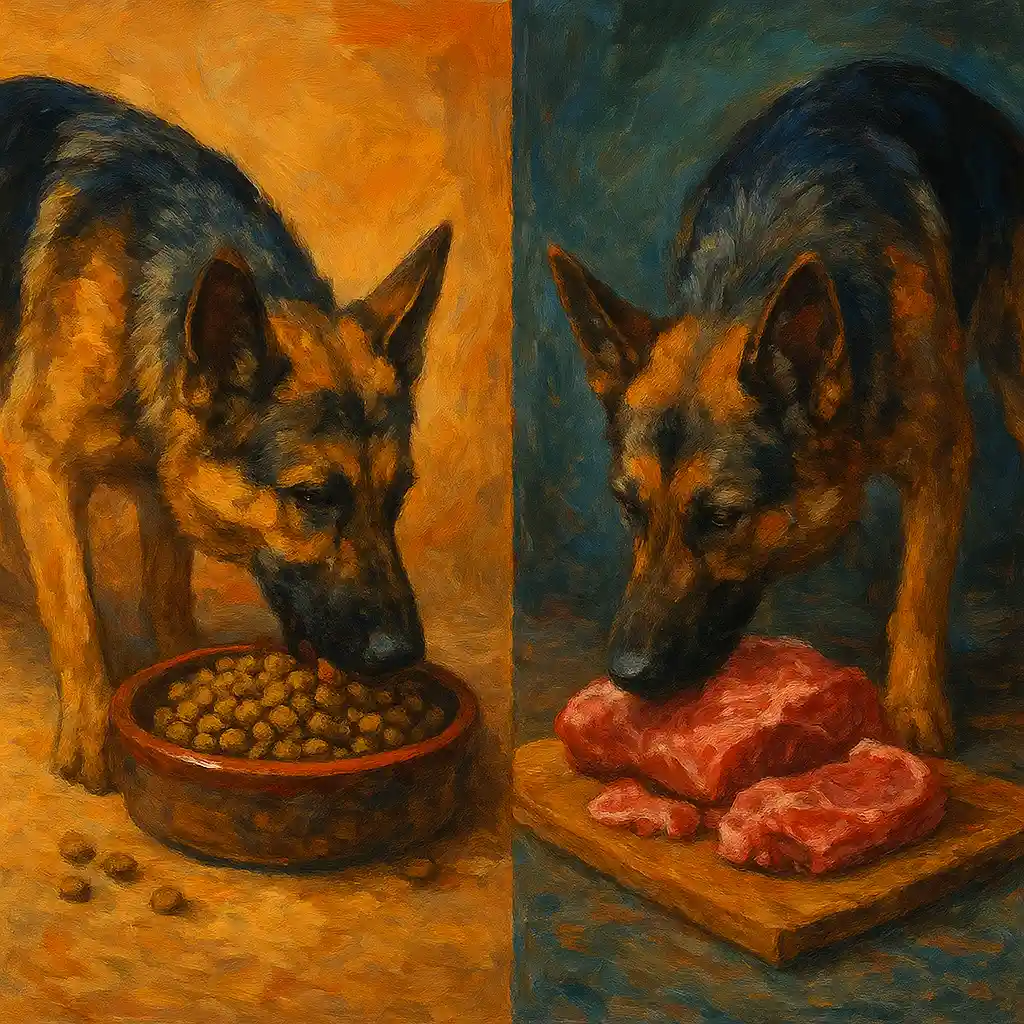
Active German Shepherds require a balanced Diet for Active German Shepherds: Kibble vs. Raw to meet their high energy needs. Their diet should support their active lifestyle, ensuring they have the energy to perform and thrive each day.
A nutritious and balanced Diet for Active German Shepherds: Kibble vs. Raw will not only help in maintaining their energy levels but also in their overall health.
When considering a Diet for Active German Shepherds: Kibble vs. Raw, it’s essential to analyze the pros and cons of each option thoroughly.
Two diet styles are most common for German Shepherd owners today: kibble and raw. Both can work well. Both can also go wrong if quality, balance, and handling are ignored. This guide explains the real pros and cons of the Diet for Active German Shepherds: Kibble vs. Raw, compares typical costs, and gives clear steps for switching diets safely. It also lists what to monitor with your veterinarian, so your dog stays in the best condition over time.
Understanding the Diet for Active German Shepherds: Kibble vs. Raw can help owners make informed choices that benefit their canine companions.
1. What an active German Shepherd needs from food
Choosing the right Diet for Active German Shepherds: Kibble vs. Raw is crucial for their long-term well-being.
Diet for Active German Shepherds: Kibble vs. Raw: Choosing the Right Option
Understanding the differences in the Diet for Active German Shepherds: Kibble vs. Raw can significantly impact their health and performance.
Active German Shepherds need more than “enough calories.” They need the right nutrients in the right amounts, delivered in a form their body can use well.
Core nutrition goals
High-quality protein Protein supports muscles, recovery after exercise, immune function, and healthy skin. Active dogs often do best with a diet that has clearly named animal proteins such as chicken, turkey, beef, lamb, or fish.
Healthy fats for energy Fat is a key energy source for athletic dogs. It also supports hormones, brain function, and coat quality. Omega-3 fats from fish oil or oily fish can help with skin and inflammation support.
Digestible carbohydrates and fiber Carbs can support training energy and help some dogs maintain weight. Fiber supports the gut and stool quality. Some German Shepherds have sensitive digestion, so ingredient quality matters more than the carb type alone.
Vitamins and minerals in balance Calcium and phosphorus balance is especially important for bones, joints, and muscle function. Trace minerals such as zinc, copper, and selenium also matter. A diet can look rich and still be unbalanced.
Water and hydration support Hydration affects performance, digestion, and temperature control. Dry diets need extra attention to water intake.
Activity level changes the plan
An active German Shepherd usually needs:
- More total calories than a low-activity dog
- Enough protein to maintain lean muscle
- Enough fat to fuel activity without causing stomach upset
- Careful weight control to protect hips, elbows, and the spine
A diet that is too light can lead to poor recovery and low stamina. A diet that is too heavy can add fat quickly, placing stress on joints and reducing performance.
2. Kibble and raw diets in simple terms
One should carefully consider the Diet for Active German Shepherds: Kibble vs. Raw when making dietary choices for their canine companions.
Kibble
Kibble is dry, cooked food. It is usually made through extrusion, then dried and coated with fats for taste. Good kibble can be complete and balanced, meaning it meets nutrient standards when fed as directed.
Raw
Raw diets may be:
- Commercial raw (frozen, freeze-dried, or chilled), often formulated to be complete and balanced
- Homemade raw, prepared by the owner using meat, organs, bones, and extras
Raw feeding is often chosen for ingredient control and high moisture content. It requires strict hygiene and careful planning to avoid nutrient gaps.
3. Kibble diet for active German Shepherds: main advantages
Kibble remains popular for good reasons, especially for busy households and owners who value consistency.
Advantage 1: Convenience and time savings
Kibble is easy to store, measure, and serve. This matters for people with limited time, limited freezer space, or limited strength for lifting and prepping. It can be a very practical option for seniors or anyone who prefers a simple feeding routine.
Advantage 2: Predictable nutrition when quality is high
A reputable, well-formulated kibble provides consistent nutrient levels day to day. This can be helpful for:
- Dogs with sensitive digestion
- Owners who want steady stool quality and easy feeding
- Training schedules that need stable energy
Advantage 3: Cost control and easy budgeting
Kibble is usually cheaper per day than raw feeding, especially for large breeds. It also reduces hidden costs such as freezer space, frequent store runs, and wasted spoiled ingredients.
Advantage 4: Easy use with enrichment and training
Kibble can be used in puzzle feeders, snuffle mats, and training sessions. This helps mental work and can reduce boredom and stress.
4. Kibble diet for active German Shepherds: main drawbacks
Kibble can be excellent, but not all kibble is equal.
Drawback 1: Lower moisture content
Dry food contains little water. Dogs eating kibble must drink enough water every day. Low hydration can affect stool quality and may worsen constipation in some dogs. It also matters for dogs that exercise hard, especially in warm weather.
Helpful habit: add water to kibble or offer extra water after activity. Some owners use warm water to increase aroma and improve acceptance.
Drawback 2: Processing can change nutrient quality
Cooking and processing can reduce some natural enzymes and may affect certain vitamins. Quality brands adjust for this during formulation, but the final result still depends on manufacturing standards and ingredient quality.
Drawback 3: Some formulas include fillers or unnecessary additives
Many dogs do fine on simple formulas, but low-quality kibble may rely on heavy fillers, unclear meat meals, or strong flavor coatings. For sensitive German Shepherds, this can increase gas, itchy skin, or loose stool.
5. Raw diet for active German Shepherds: main advantages
Raw feeding is often chosen to mimic a more natural style of eating and to increase food moisture.
Advantage 1: High palatability and strong motivation
Many dogs love raw food. Better appetite can be useful for:
- Picky eaters
- Dogs that lose weight easily during heavy activity
- Dogs recovering from intense training blocks
Advantage 2: Higher moisture intake through food
Raw diets usually contain more water than kibble. This can support hydration and stool quality.
Advantage 3: Ingredient control and simpler ingredient lists
Commercial raw and well-built homemade raw can reduce exposure to long ingredient lists. For some dogs with sensitivities, this helps owners identify triggers more easily.
Advantage 4: Possible improvements in coat and stool for some dogs
Some owners report:
- Smaller stools
- Less smell
- Better coat shine Results vary. The key is balance, not the feeding style alone.
6. Raw diet for active German Shepherds: main drawbacks and risks
Raw feeding requires extra responsibility. The risks are real, but they can be managed with good planning.
Drawback 1: Higher food safety risk if handling is poor
Raw meat can carry bacteria and parasites. Dogs may tolerate more than humans, but exposure still matters. Risk increases for:
- Homes with young children, seniors, or immunocompromised people
- Multi-pet homes with shared bowls and surfaces
- Dogs that carry raw residue on fur or in saliva after meals
Safe handling basics:
- Wash hands before and after feeding
- Clean bowls and surfaces right away
- Store raw food at safe temperatures
- Use dedicated utensils and cutting boards
- Avoid leaving raw food out at room temperature
Drawback 2: Nutrient imbalance is common in homemade raw
Homemade raw can become unbalanced very easily, especially for calcium, phosphorus, iodine, zinc, vitamin D, and vitamin E. Long-term imbalances can harm bones, joints, skin, and overall health.
A complete and balanced commercial raw product lowers this risk, especially if it follows recognized nutritional standards.
Drawback 3: Cost and logistics
Raw often costs more per day, and it requires freezer space, meal planning, and regular shopping. This can be challenging for owners with limited time or storage.
Drawback 4: Not ideal for every medical situation
Some dogs need specific therapeutic diets for conditions like kidney disease, severe pancreatitis history, or specific urinary problems. In these cases, a veterinarian-guided plan matters more than diet style.
7. Cost comparison: kibble vs. raw for an active German Shepherd
Costs vary by country, brand, and your dog’s size and metabolism. German Shepherds also differ in how many calories they burn each day. Still, a clear comparison helps planning.
Typical monthly cost ranges
Below is a practical estimate for a healthy adult German Shepherd, often 30–40 kg, with moderate to high activity.
| Diet type | Typical monthly cost | Notes |
|---|---|---|
| Quality kibble | 60 to 140 | Depends on brand, protein level, and feeding amount |
| Premium kibble performance formulas | 100 to 200 | Higher calories, higher protein and fat |
| Commercial complete raw | 180 to 400 | Often the easiest raw option, higher cost |
| Homemade raw | 120 to 300 | Can be cheaper than commercial raw, but risk of imbalance increases without expert formulation |
Cost-effectiveness is not only food price
A diet can be “cheap” and still cost more later if it leads to:
- Frequent digestive upset
- Skin infections and itching
- Weight gain and joint stress
- Poor recovery after activity
At the same time, a diet can be expensive and still be a poor choice if it is unbalanced or handled unsafely. The best value is steady health over time, with a feeding plan you can follow consistently.
8. How to choose between kibble and raw in a realistic way
The right choice depends on both the dog and the owner. A strong feeding plan is one that is safe, consistent, and balanced.
Kibble may fit best when
- You want simple feeding and storage
- Your schedule is busy
- You need predictable nutrition
- Your dog does well on cooked food
- You prefer lower daily cost
Raw may fit best when
- You can follow strict hygiene steps
- You have freezer space and time for planning
- You choose complete and balanced products or work with a professional formulation
- Your dog thrives on higher-moisture meals
- You are ready to monitor health closely
Many owners also use a third option that works well in real life: a mixed approach. Examples include kibble as a base with carefully chosen toppers, or kibble in the morning and commercial complete raw in the evening. Mixed feeding still needs planning to avoid stomach upset and to avoid unbalanced extras.
9. Transition plan: switching an active German Shepherd to raw
A slow transition protects digestion. A sudden change can lead to vomiting, diarrhea, gas, and refusal to eat.
Step-by-step transition schedule
A common gentle approach takes 10 to 14 days.
- Days 1–3: 75 percent old food, 25 percent new food
- Days 4–6: 50 percent old food, 50 percent new food
- Days 7–9: 25 percent old food, 75 percent new food
- Days 10–14: 100 percent new food
For very sensitive dogs, extend each step.
What to monitor during the switch
- Stool consistency and frequency
- Gas and bloating
- Appetite and motivation
- Energy and recovery after exercise
- Skin and ear condition
Common challenges and simple fixes
Loose stool Slow down the transition. Use a simpler protein. Avoid adding extra treats and chews during the transition.
Refusal to eat Warm the food slightly in a sealed bag placed in warm water to increase aroma. Keep meals calm and timed. Avoid frequent food swapping that trains picky habits.
Too much richness Some raw formulas are high in fat. Active dogs need fuel, but sudden fat jumps can upset digestion. Choose a moderate-fat formula first, then adjust.
10. Transition plan: switching an active German Shepherd to kibble
Switching from raw to kibble can also cause digestive upset if done too fast.
A balanced Diet for Active German Shepherds: Kibble vs. Raw can help prevent common health issues.
Step-by-step transition schedule
Use the same 10 to 14 day schedule, with careful observation.
Helpful practice: add warm water to kibble during the first weeks. This increases moisture and can improve acceptance.
Common challenges and simple fixes
Hard stool or constipation Increase water intake. Add moisture to meals. Review fiber level and ingredient tolerance with your veterinarian.
Itching or ear irritation Consider a limited-ingredient formula or a formula with a different main protein. Track signs for several weeks before changing again.
Low energy Check calorie density and total feeding amount. Active German Shepherds often need performance formulas or higher portions.
11. Vet monitoring points for active German Shepherds on any diet
Veterinary monitoring keeps your plan safe and helps catch small problems before they become big ones.
Routine check-ups
At minimum:
- Annual exams for healthy adults
- More frequent visits for seniors, very active working dogs, or dogs with medical history
Weight and body condition scoring
A German Shepherd should look athletic, not heavy. Regular checks protect joints. A simple routine includes:
- Monthly weigh-ins at home or at the clinic
- Photos from the side and top every month
- Hands-on rib checks, since coats can hide weight gain
Bloodwork and key health markers
Your veterinarian may suggest periodic blood tests to track:
- Liver and kidney values
- Protein levels
- Inflammation signs
- Mineral balance concerns
- Pancreas markers if there is a history of digestive issues
This matters even more with homemade raw, where hidden imbalances can develop slowly.
Dental and oral health
Kibble does not automatically clean teeth, and raw meaty bones are not risk-free. Dental health still needs:
- Regular home dental care when possible
- Veterinary dental checks
- Safe chew choices suited to your dog’s chewing style
12. Common health concerns in active German Shepherds and diet support
German Shepherds are strong, but the breed can face predictable challenges. Diet cannot replace medical care, but it can support the body.
Joint health and mobility
Active German Shepherds often need joint support, especially as they age.
Helpful nutrition habits:
- Keep the dog lean to reduce joint load
- Ensure enough omega-3 fats
- Consider veterinarian-approved joint supplements such as glucosamine and chondroitin when appropriate
- Use balanced calcium and phosphorus, especially in growing dogs and homemade diets
Skin and coat issues
Itchiness, dry skin, and ear problems can be linked to allergies, infections, or diet sensitivities.
Helpful steps:
- Choose a clear, high-quality protein source
- Avoid constant rapid food changes
- Track flare-ups and discuss patterns with your veterinarian
- Add omega-3 support if recommended
Digestive sensitivity
Many German Shepherds have sensitive stomachs. Signs include soft stool, gas, and frequent stomach noises.
Helpful steps:
- Avoid sudden food changes
- Choose digestible proteins
- Keep treats simple during transitions
- Consider veterinarian-guided probiotics if needed
Energy, stamina, and performance
Active dogs need steady fuel. Low stamina can be caused by underfeeding, poor digestibility, or low-quality ingredients.
Helpful steps:
- Confirm calorie intake matches activity
- Choose performance-focused formulas when needed
- Split meals around activity, avoiding large meals right before intense exercise
13. Practical ways to enhance any diet safely
No matter which diet style you choose, the small daily habits often make the biggest difference.
Add hydration support
- Provide fresh water in multiple locations
- Add water to meals when helpful
- Offer a drink after training and long walks
- Use wet toppers carefully, keeping total calories in mind
Rotate proteins with care
Variety can help prevent boredom and may reduce sensitivity buildup in some dogs. Rotation should be slow and planned. A good method is rotating within the same brand line or using limited ingredients during transitions.
Use fruits and vegetables as controlled extras
Some dogs enjoy small portions of dog-safe produce. It should remain a small part of daily calories.
Common safe options in small amounts:
- Carrots
- Blueberries
- Apple slices without seeds
- Green beans
Avoid toxic foods such as grapes and raisins. Keep extras consistent during sensitive periods.
Support joints with veterinarian-approved supplements
Joint supplements can help many active and senior German Shepherds, especially when combined with a lean body condition and good exercise habits.
Keep treats and chews “on plan”
Treat overload is a common reason dogs gain weight and develop stomach issues. Use part of the daily food as training rewards when possible.
14. A simple decision framework that stays realistic
The best diet for an active German Shepherd is not only about ideals. It is about what you can do well every day.
A strong plan includes:
- Balanced nutrition from a reliable source
- A feeding method you can follow long term
- Safe handling, especially for raw diets
- Regular monitoring of weight, stool, skin, and energy
- Routine veterinary check-ups and bloodwork when appropriate
This framework works for kibble, raw, or a carefully planned mix.
Conclusion: building the best long-term plan
Diet for Active German Shepherds: Kibble vs. Raw is not a battle with one winner for every dog. Kibble offers convenience, consistent nutrients, and easier budgeting. Raw offers high moisture, ingredient control, and strong palatability, but it demands careful hygiene and a balanced formulation.
The best choice is the one that keeps your German Shepherd lean, energetic, and stable in digestion, while also fitting your time, budget, storage space, and comfort level. Consistency, safety, and monitoring matter more than trends.
A well-fed active German Shepherd shows it in daily life through steady stamina, good recovery after exercise, healthy stool, a strong coat, and a bright, focused attitude. With a clear plan, gradual transitions, and regular veterinary support, both kibble and raw can help your dog thrive for years.
Ultimately, the choice between Diet for Active German Shepherds: Kibble vs. Raw should be based on individual needs and preferences.
Diet for Active German Shepherds: Kibble vs. Raw is a decision that requires careful thought and consideration.