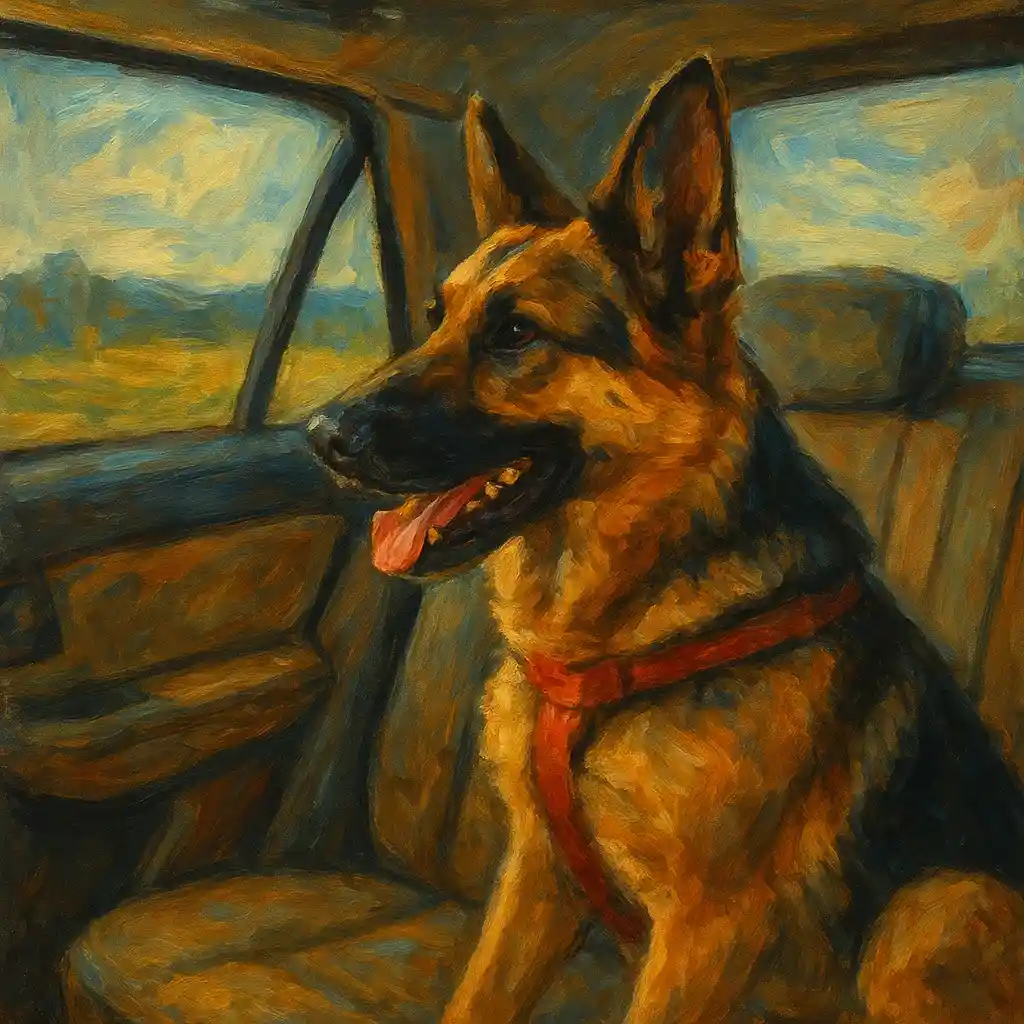
Car travel can be a wonderful part of life with a German Shepherd Dog. It can also be stressful if safety, comfort, and training are not planned in a clear way. German Shepherds are smart, sensitive, and active dogs. They often notice every sound, every movement, and every change in routine. That is why Car Travel for German Shepherds works best when it is built on three simple goals.
To maximize the joy and minimize the stress of car travel for German Shepherds, it’s essential to plan ahead.
- Safety for the dog, the driver, and everyone in the car
- Calm behavior so driving stays focused and predictable
- Comfort to prevent fear, motion sickness, and overheating
1) The German Shepherd mindset in a moving car
German Shepherds often bring strong traits into the car.
- High awareness: many GSDs watch the road, people, and other dogs closely.
- Protective instincts: some dogs feel they must guard the car and the owner.
- Fast learning: they learn both good habits and bad habits quickly.
- Strong body: they are large and powerful, so safe restraint matters more.
A calm travel dog is not only about good manners. It is also about reducing risk. A loose dog in a car can become a dangerous projectile in a sudden stop. A distracted driver can make one small mistake that becomes a serious accident. For Car Travel for German Shepherds, restraint and training are not optional extras. They are the foundation.
2) Crate vs harness: choosing the safest setup
For safe Car Travel for German Shepherds, consider the dog’s comfort level.
- A crash-tested travel crate
- A crash-tested car harness with seatbelt attachment
Both can work well. The best choice depends on your dog’s size, comfort, and your vehicle layout.
Option A: The travel crate
Car Travel for German Shepherds requires proper training to ensure the dog feels safe and secure in the vehicle.
Best for: dogs that settle better in small, den-like spaces, dogs that get over-excited, many puppies, many anxious dogs, and many dogs that guard windows.
+
Key benefits
- Strong physical protection and clear boundaries
- Less movement during turns and stops
- Reduces distractions for the driver
- Often helps dogs relax faster
- Helps with safety during accidents or sudden braking
Possible drawbacks
- Takes space in the car
- Quality crates can be expensive
- Some dogs need time to accept confinement
- Wrong size can cause discomfort
How to size a crate
- Dog can stand, turn around, and lie down naturally
- Not so large that the dog slides around
- Solid floor with a non-slip mat is helpful
Where to place the crate
- Most stable area is the cargo space of an SUV or hatchback
- Secure the crate so it cannot slide
- Keep airflow strong, especially in warm weather
Option B: The car harness
Best for: dogs that hate crates, cars with limited space, short trips, and dogs that already walk well in a harness.
Key benefits
- Easier to store than a crate
- Faster to put on and remove
- Dog can sit or lie down on the seat
- Often cheaper than a high-end crate
Possible drawbacks
- Not all harnesses are crash-tested
- Some dogs still try to climb forward
- Seat material can be slippery without a seat cover
- Harness fit must be correct or safety drops
Harness safety rules
- Use a harness designed for vehicle restraint, not a walking-only harness
- Connect to the seatbelt system with the correct attachment
- Use the back seat, not the front seat
- Keep the leash off during driving to avoid tangles
A clear decision guide
For many homes, a simple rule works well.
- Choose a crate if your GSD is anxious, reactive at windows, or cannot settle.
- Choose a harness if your GSD is calm, already harness-trained, and you need a flexible setup.
For maximum safety, many experienced owners prefer a crate when possible. For many daily routines, a crash-tested harness is still a strong, safe choice.
3) First ride planning: a calm start that builds confidence
The first experiences in the car shape future behavior. A strong plan reduces fear and prevents long-term problems. For Car Travel for German Shepherds, the best approach is slow, positive, and predictable.
Step 1: Make the car feel neutral and safe
- Let the dog explore the parked car with doors open
- Reward calm behavior with small treats
- Allow sniffing and quiet sitting
- Keep sessions short and relaxed
Step 2: Practice the restraint before driving
- If using a crate, practice entering the crate at home first
- If using a harness, practice wearing it indoors, then outdoors
- Reward calm stillness and relaxed body posture
- Avoid starting the engine during early sessions if the dog is worried
Step 3: Start with very short drives
A good first driving plan looks like this.
- Day 1 to 3: 1–3 minutes of driving, then back home
- Day 4 to 7: 5–10 minutes to a quiet place
- Week 2: 15–30 minutes with one calm stop
Short drives create success. Success creates confidence.
Step 4: Choose the best time of day
A calm time helps.
- After a short walk and potty break
- Not during high traffic
- Not right after a large meal
- Not when the dog is already overexcited
Step 5: End trips in a simple, positive way
- Calm exit from the car
- Short sniff walk or gentle play
- Water break
- No loud rushing, no big emotional “hype”
This routine teaches the dog that the car is just another normal part of life.
4) Safety rules that protect everyone in the vehicle
Safety is the main topic in Car Travel for German Shepherds. These rules are practical and non-negotiable.
Never allow a loose German Shepherd in the car
A loose dog can:
- Jump into the driver area
- Block pedals
- Distract the driver
- Become injured in sudden stops
- Injure people in the car
The back seat is the safest place for harness travel
Front seats have airbags. Airbags can seriously injure dogs.
Keep windows controlled
A small crack can help airflow. A fully open window can be risky.
- Dog can jump out
- Debris can hit eyes
- Wind can dry eyes and increase irritation
Use seat covers and non-slip surfaces
German Shepherds often slide on leather or smooth seats. Sliding increases stress and nausea. A non-slip cover helps stability and comfort.
Keep the car cool and well ventilated
German Shepherds overheat more easily than many owners expect, especially in warm weather or in traffic.
- Run AC before loading the dog
- Use sunshades for side windows
- Keep air moving toward the dog’s area
- Never leave a dog alone in a parked car
Drive smoothly
Sudden turns, hard braking, and fast acceleration increase anxiety and motion sickness. Smooth driving makes a big difference.
5) Motion sickness in German Shepherds: signs, causes, and solutions
Motion sickness is common in dogs, especially young dogs. It can also appear in adults after a bad experience. For Car Travel for German Shepherds, motion sickness should be handled early so the dog does not connect the car with feeling sick.
Common signs of motion sickness
- Drooling
- Lip licking
- Yawning and swallowing often
- Whining or restlessness
- Vomiting
- Shaking or refusing to enter the car
Why it happens
Motion sickness can come from:
- Inner ear sensitivity
- Stress and anxiety
- Reading body movement differently than the eyes see
- Strong smells and heat in the car
- Feeding too close to travel time
Simple solutions that often help
- Keep trips short while training
- Improve airflow and keep the car cool
- Avoid strong air fresheners
- Use a stable crate or secure harness to reduce sliding
- Avoid heavy feeding before travel
Feeding plan for travel days
A practical routine:
- Light meal 3–5 hours before driving
- Small water access before the ride
- No large treats right before starting the engine
Helpful calming tools
Some dogs settle better with:
- A familiar blanket that smells like home
- A chew that is safe and does not crumble easily
- Soft, steady music at low volume
When veterinary help is needed
If vomiting is frequent or severe, a veterinarian can help with:
- Anti-nausea medication for travel
- Anxiety support for car-related fear
- Health checks to rule out ear problems or pain
Medication can be a responsible short-term tool while training continues. Many dogs improve a lot with the right plan.
6) Training for calm behavior during Car Travel for German Shepherds
Training does not need to be complicated. The goal is simple: the dog learns that calm behavior in the car brings comfort and rewards.
A calm-car training routine
Practice 3–5 times per week in short sessions.
- Dog enters the car calmly
- Dog goes into crate or wears harness
- Dog receives a small reward for calm stillness
- Engine starts, reward calm again
- Drive 1–3 minutes, then stop
- Reward calm exit
Repeat until the dog shows relaxed body language.
Desensitization for fearful dogs
For strong fear, reduce the steps.
- Sit in the parked car without driving
- Start the engine for a few seconds, then stop
- Drive a few meters, then stop
- Build slowly, never forcing the dog
Fear improves when the dog feels control and safety. Forcing often creates setbacks.
Positive reinforcement details that work
- Reward the behavior you want, not excitement
- Use small treats to avoid stomach upset
- Praise in a calm voice
- Keep your own movements slow and predictable
When a professional trainer is a good idea
A trainer can help if:
- The dog panics, urinates, or tries to escape
- The dog shows aggression in the car
- The dog cannot settle even after consistent practice
- Travel is frequent and needs quick improvement
A skilled trainer can build a plan that fits your dog’s temperament.
7) A practical travel kit for German Shepherd car trips
A travel kit reduces stress because common problems already have solutions. For Car Travel for German Shepherds, these items bring safety, comfort, and organization.
Essentials
- Water and a bowl
- Food for long trips
- Leash plus backup leash
- Waste bags
- Paper towels or cleaning wipes
- Blanket or mat for comfort
- Seat cover or non-slip mat
- Basic grooming wipes for muddy paws
Health and safety items
- Dog first aid kit
- Any prescribed medications
- Tick remover and sanitizer
- Copy of vaccination records for travel
- ID tags and microchip info updated
- A recent photo of your dog on your phone
Comfort items
- A favorite chew
- A familiar toy
- A towel for drying after rain
- Cooling mat in summer, extra blanket in winter
Keep the kit in one box or bag. Refill after each trip.
8) Breaks, rest stops, and hydration on longer drives
On long trips, breaks protect joints, digestion, and stress levels. They also reduce overexcitement at the destination.
A good break schedule
- Stop every 2–3 hours for most adult dogs
- Offer water at each stop
- Provide a short leash walk for sniffing and potty
Safety at rest stops
- Keep the leash on before opening doors
- Avoid dog parks during travel, because unknown dogs can add stress
- Choose quiet grass areas when possible
- Never allow roaming near roads or parking lots
Senior German Shepherd support
Older dogs often need:
- More frequent breaks
- Softer bedding in the crate or seat area
- Help jumping in and out of the car
- Extra warmth in winter and extra cooling in summer
A simple ramp can protect hips and elbows for seniors.
9) Common mistakes that make car travel harder
Many problems come from a few avoidable habits. Fixing them can transform Car Travel for German Shepherds quickly.
Mistake 1: Allowing the dog to be loose “just this once”
One loose ride can create a new habit. It can also create a serious safety risk.
Mistake 2: Starting with long rides
Long rides can overwhelm a dog and increase nausea. Short practice trips build success.
Mistake 3: Feeding a full meal right before travel
A full stomach increases nausea risk. A light meal earlier works better.
Mistake 4: Ignoring early discomfort signs
Drooling, licking lips, and restlessness are early warnings. Early action prevents vomiting and fear learning.
Mistake 5: Overheating the dog without noticing
German Shepherds can overheat quietly at first. Heavy panting, glassy eyes, and weakness can appear later. Cooling and airflow are essential.
Mistake 6: Using a low-quality restraint
A cheap harness clip or weak crate setup can fail. Use equipment designed for vehicle travel and check it often.
10) Real-life travel examples that show what works
Clear examples help turn advice into action. These stories are typical of what many owners see.
Example 1: The overexcited window watcher
A young GSD barked at every dog and person through the window. The owner switched from loose back seat riding to a secured crate in the cargo area. Short daily drives were added, ending with calm sniff walks. Within two weeks, barking dropped sharply. After one month, the dog entered the crate happily and settled faster.
What worked
- Crate reduced visual triggers
- Short drives created success
- Calm rewards reinforced quiet behavior
Example 2: The motion-sick teenager
A 10-month-old GSD vomited on most car trips. The owner stopped feeding close to travel time, added a non-slip mat, improved AC airflow, and practiced 3-minute rides several times per week. A veterinarian also suggested travel anti-nausea medication for longer drives during training.
What worked
- Lighter stomach before travel
- Less sliding in turns
- Cooler car temperature
- Gradual exposure
- Medication support when needed
Example 3: The senior who struggled to jump
A 9-year-old GSD began to hesitate at the car door. The owner added a ramp and thicker bedding, then increased rest stops on longer drives. The dog became more willing to travel again and showed less stiffness after trips.
What worked
- Joint-friendly entry and exit
- Comfort padding
- More frequent breaks
11) Quick checklist for every drive
This short list keeps habits strong. It supports safe Car Travel for German Shepherds without overthinking.
Before leaving
- Dog has pottied
- Harness or crate is secured correctly
- Car is cooled or warmed to a safe temperature
- Water is packed
- ID tags are on the dog
During the drive
- Dog stays restrained
- Windows are controlled
- Driving stays smooth
- Stops are planned for longer trips
After arrival
- Calm exit on leash
- Water break
- Short sniff walk
- Quick check for stress signs or nausea
Conclusion: Calm, safe travel becomes a normal life skill
Car Travel for German Shepherds improves the most when safety and training work together. A secure crate or crash-tested harness protects your dog and keeps the driver focused. A gradual first-ride plan builds confidence and reduces fear. Good airflow and temperature control prevent overheating and discomfort. Motion sickness can often be reduced with smart feeding times, smoother driving, stable footing, and veterinary support when needed. A simple travel kit and regular rest stops make longer drives easier for both young dogs and seniors.
With consistent practice, the car becomes a predictable, calm place. Your German Shepherd learns a clear routine: get in, settle, ride safely, and arrive in balance. Over time, that routine turns into a travel skill that supports every trip you share together.
Preparation is key for successful Car Travel for German Shepherds.
Regular breaks during long drives enhance the experience of Car Travel for German Shepherds.
Evaluate your German Shepherd’s needs for optimal Car Travel for German Shepherds.
Plan ahead for smooth and enjoyable Car Travel for German Shepherds.