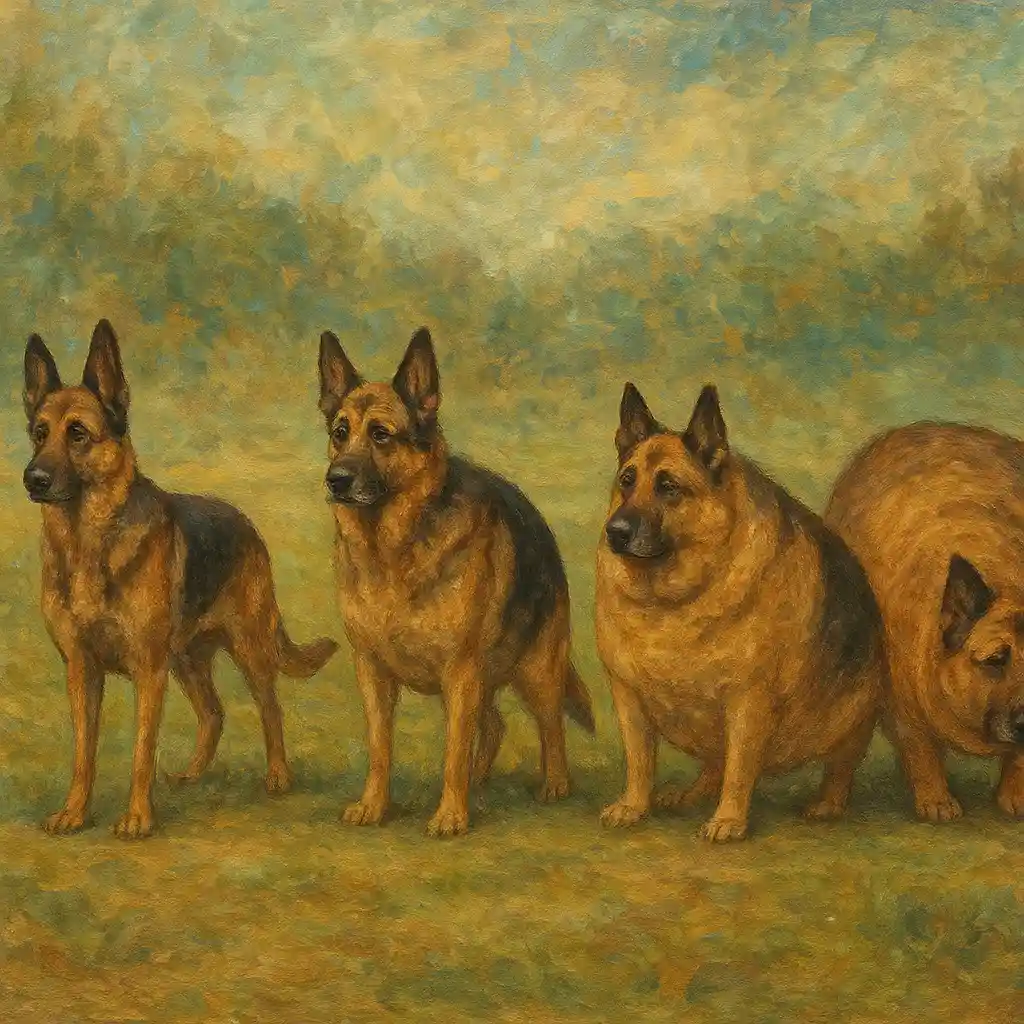
Senior German Shepherds are loyal, smart, and deeply connected to their families. As they get older, many of them gain weight more easily. Their metabolism slows down, they move less, and joint pain can make exercise harder. A few extra kilos may not look like a big problem at first—but for a senior dog, extra weight can affect comfort, mobility, breathing, and long-term health.
This blog post gives you a clear, practical system for Weight Management for Senior German Shepherds. It is built around one simple idea: you do not need extreme diets or complicated math. You need a weekly routine you can repeat, track, and improve.
You will learn how to:
- Check your dog’s Body Condition Score (BCS)
- Set a safe calorie goal and adjust food slowly
- Create a treat budget (without stopping treats completely)
- Choose low-impact exercise that fits an older German Shepherd
- Track progress without stress
- Handle plateaus and common problems
- Support hydration, mental stimulation, and motivation
Why weight management matters more in senior German Shepherds
German Shepherds are a large, athletic breed. Many develop joint or back issues as they age, such as arthritis or hip and elbow dysplasia. Extra weight adds extra pressure to joints and can make pain worse. It can also reduce stamina and make daily movement less enjoyable.
Healthy weight can support:
- Easier walking and climbing stairs
- Less joint pressure and stiffness
- Better energy and mood
- Lower strain on the heart and lungs
- Better quality of life in daily routines
Weight Management for Senior German Shepherds is not about making your dog “look slim.” It is about helping them move with less effort and feel better every day.
The core idea: use a weekly check plan (not daily stress)
Daily changes are often too small to notice. That is why many owners feel stuck. A weekly plan is easier: you check, adjust, and repeat. Over time, small changes become real progress.
Your weekly check plan has three main parts:
- Body Condition Score (BCS): How your dog’s body looks and feels
- Calories: Food amount adjusted to match needs
- Treat Budget: Treats counted as part of daily intake
Add exercise, hydration, and mental enrichment, and you have a complete system.
Step 1: Learn the Body Condition Score (BCS)
What is BCS?
BCS means Body Condition Score. It is a simple way to check if your dog is underweight, overweight, or close to ideal. Many vets use a 1–9 scale, where:
- 1–3 = too thin
- 4–5 = ideal range for most dogs
- 6–9 = overweight to obese
For most senior German Shepherds, a BCS of 4–5 is a good goal (unless your vet recommends something different).
How to check BCS at home (simple and clear)
Do this when your dog is standing, calm, and dry (wet fur can hide body shape).
1) Feel the ribs
- Ideal: you can feel ribs easily with light pressure
- Overweight: ribs are hard to feel because of fat cover
- Too thin: ribs feel sharp and very visible
2) Look from above (top view)
- Ideal: you can see a waist behind the ribs
- Overweight: the waist looks straight or rounded
3) Look from the side
- Ideal: belly is slightly tucked up
- Overweight: belly hangs low, tuck is missing
Weekly action
- Choose one day each week (for example Sunday morning)
- Do the BCS check in the same place each time
- Write down a number: “BCS 6/9” or “BCS 5/9”
This one habit alone can improve Weight Management for Senior German Shepherds, because it gives you a clear direction: maintain, reduce, or increase food.
Step 2: Set a safe calorie goal (without extreme cuts)
Why calories matter (even with “healthy” food)
Many owners think: “My dog eats good quality food, so weight should be fine.” But weight gain usually comes from quantity, not only quality. Even premium kibble has calories that add up fast in large breeds.
Also, senior dogs often need fewer calories than adults because they move less and burn less energy.
A safe way to adjust calories
For most senior dogs trying to lose weight, a common safe approach is:
- Reduce total daily calories by about 10%
- Stay consistent for 2–3 weeks
- Review progress, then adjust again if needed
Avoid big drops unless your veterinarian tells you to do it. Fast weight loss can risk muscle loss, fatigue, or nutritional gaps.
Practical portion control (the method that works)
Instead of guessing, use these tools:
- A kitchen scale (best for accuracy)
- A real measuring cup (better than “eyeballing”)
- A written feeding plan on the fridge
Tip: If you feed kibble, weighing it in grams is often more accurate than using cups.
Weekly action
Each week, write down:
- Daily food amount (morning + evening)
- Any extras (treats, chews, table food)
- Changes you made (example: “reduced kibble by 10%”)
This turns “hoping” into a real plan—one reason this system works well for Weight Management for Senior German Shepherds.
Step 3: Build a treat budget (so treats don’t ruin progress)
Treats are not “bad.” The problem is hidden calories. A few biscuits a day can equal a big part of a senior dog’s needs—especially in a large breed that already eats a full diet.
The simple rule: treats should be 10% (or less)
A practical guideline: Treats should be no more than 10% of daily calories.
That means food is still the main nutrition source, and treats stay a bonus.
How to budget treats without daily math
Use a weekly treat container:
- Choose your treat budget for the week
- Put the full weekly amount into one container
- When it’s empty, you stop (until next week)
This helps family members follow the plan too.
Better treat options for senior German Shepherds
Try low-calorie, dog-safe options that still feel rewarding:
- Carrot sticks (many dogs love the crunch)
- Green beans (fresh or steamed, no salt)
- Cucumber slices
- Small apple pieces (no seeds, no core)
- A few pieces of kibble saved from the daily meal
- Low-calorie training treats cut into tiny pieces
Important: Always introduce new foods slowly, and avoid toxic foods like grapes, raisins, onions, and chocolate.
Weekly action
Write down:
- Treat type
- Total treat amount for the week
- Any “extra” events (guests, holidays)
Treat awareness is one of the biggest breakthroughs in Weight Management for Senior German Shepherds.
The Weekly Check Plan (simple, repeatable, effective)
Here is a plan you can follow every week. It is not perfect “science.” It is a realistic routine for real households.
Weekly Weight Management Plan (7-day structure)
Day 1: BCS + weigh-in day (10 minutes)
- Check Body Condition Score (1–9)
- Weigh your dog (if possible)
- Record the results
Day 2: Meal accuracy day (5 minutes)
- Measure food properly
- Confirm you are feeding the planned amount
- Prepare tomorrow’s food if helpful
Day 3: Treat budget check (2 minutes)
- Look at the treat container
- If it is going fast, reduce treat size or use kibble
Day 4: Movement focus day (15–30 minutes total)
- Add a gentle extra walk or short play session
- Keep it easy on joints (more below)
Day 5: Enrichment day (10–20 minutes)
- Use a puzzle feeder, scent game, or training session
- Mental work can reduce “snacking behavior”
Day 6: Review day (5 minutes)
- Check your notes: food, treats, exercise
- Look for patterns (example: “more treats on weekends”)
Day 7: Reset and plan (10 minutes)
- Prepare treat budget for next week
- Decide if food stays the same or adjusts slightly
This is the structure behind sustainable Weight Management for Senior German Shepherds: steady habits, not short-term pressure.
Exercise for senior German Shepherds (low-impact and joint-friendly)
Exercise is important, but the goal is not to “push” a senior dog like a young adult. For older German Shepherds, exercise should support:
- Mobility
- Muscle maintenance
- Mental health
- Gentle calorie burn
Good low-impact exercises
1) Calm, regular walks Two or three shorter walks can be better than one long one.
2) Slow sniff walks Let your dog sniff more. Sniffing is mental enrichment and can reduce stress. It also keeps the walk gentle.
3) Swimming (if available and safe) Swimming is great for joints, but only if your dog is comfortable and supervised.
4) Controlled play Short tug games or gentle fetch on soft ground can work, but avoid sharp turns and jumping.
5) Simple mobility exercises (vet-approved) Some dogs benefit from easy sit-to-stand routines or balance work, but ask your vet or canine physiotherapist first.
Safety tips for senior exercise
- Warm up slowly (start easy, then continue)
- Avoid slippery floors (use rugs indoors)
- Avoid hard jumping and sudden sprints
- Stop if your dog limps, pants heavily, or seems uncomfortable
- Choose cooler hours in warm weather
Exercise supports Weight Management for Senior German Shepherds, but comfort always comes first.
Tracking progress: what to measure (and what not to panic about)
Best ways to track progress
1) Body Condition Score BCS often shows change before the scale does.
2) Weight (weekly or every two weeks) Use the same scale when possible. Weigh at the same time of day.
3) Photos Take a top view and side view photo once per month.
4) Real-life signs
- Easier to feel ribs
- Better stamina on walks
- Less heavy breathing
- Better mood and play interest
Healthy pace of weight loss
A common safe target is about 1–2% of body weight per week, but dogs vary. Your veterinarian can help set the right pace, especially if your dog has other health issues.
Don’t panic over small changes
Weight can change because of water, bowel movements, and normal daily variation. That is why weekly trends matter more than daily numbers.
Common challenges (and how to solve them)
Challenge 1: “My dog acts hungry all the time”
Solutions:
- Use a slow feeder bowl
- Split meals into 3 smaller meals (if your schedule allows)
- Add vet-approved low-calorie volume foods (some dogs do well with green beans mixed into meals)
- Increase mental enrichment (sniff games can reduce food focus)
Challenge 2: “Family members keep giving treats”
Solutions:
- Use the weekly treat container method
- Put a clear note on the treat jar: “Daily limit: ___”
- Offer approved alternatives (carrots, kibble pieces)
- Make one person the “treat manager” for the week
Challenge 3: “We hit a plateau”
Plateaus happen. Before you cut food again, check these points:
- Are treats really counted?
- Are chews, dental sticks, and table scraps included?
- Has exercise decreased due to weather or routine change?
- Are portions accurate (measured, not guessed)?
If everything is correct and weight still does not change after a few weeks, you can consider a small adjustment (often another 5–10%), ideally with vet guidance.
Challenge 4: “My dog cannot exercise much”
For some seniors, movement is limited. In that case:
- Focus strongly on calorie control and treat budgeting
- Increase mental enrichment (puzzle feeders, scent games)
- Ask your vet about pain management options
- Consider referral to a canine physiotherapist
This is still Weight Management for Senior German Shepherds—just with a different balance between food and movement.
Hydration: a simple support tool that many people forget
Water supports digestion, organ health, and overall energy. Some senior dogs drink less, and some drink more (which can also be a sign of health issues).
Simple hydration habits
- Keep fresh water available at all times
- Use multiple water bowls in the home
- Clean bowls daily (slime can reduce drinking)
- For some dogs, a pet fountain increases interest
Signs of dehydration to watch for
- Dry gums
- Low energy
- Sunken eyes
- Skin that does not quickly return when gently lifted
- Darker urine or less frequent urination
If you suspect dehydration, contact your veterinarian.
Hydration is not a “diet trick,” but it supports the whole body and helps your plan work better.
Mental stimulation and enrichment (a smart tool for weight control)
Mental activity matters because boredom can increase food-seeking behavior. Many senior German Shepherds are still highly intelligent and enjoy having a “job.”
Good enrichment can:
- Reduce begging and restless behavior
- Add healthy routine and structure
- Support cognitive health in older age
Easy enrichment ideas
- Puzzle feeders (start easy, then increase difficulty)
- Snuffle mats for kibble
- Scent games: hide treats or kibble in a room and let your dog search
- Short training sessions: “sit,” “touch,” “down,” “wait”
- New walking routes for new smells
Enrichment is a powerful, gentle support for Weight Management for Senior German Shepherds, especially when exercise is limited.
When to involve your veterinarian (important for senior dogs)
Senior German Shepherds may have health conditions that affect weight:
- Thyroid problems
- Arthritis pain that reduces movement
- Digestive issues
- Diabetes or other hormonal conditions
Also, sudden weight loss can be a warning sign, not a success.
Contact your veterinarian if:
- Weight changes quickly without clear reason
- Your dog seems weak, sick, or refuses food
- Drinking or urination changes a lot
- Pain or limping increases
- You want a safe target weight and calorie plan for your dog’s situation
Note: This blog provides general education, not medical diagnosis.
Create a support system (so you don’t do it alone)
Weight management is easier when everyone follows the same rules.
Simple support ideas:
- Share the plan with family members
- Keep the feeding chart visible
- Use one treat container for the whole household
- Join a breed group or senior dog community online for motivation
- Celebrate progress with non-food rewards (a new toy, a new walking route, extra cuddle time)
Support helps you stay consistent—and consistency is what creates results.
Celebrating progress (without stopping too early)
Many dogs improve slowly. That is normal. The goal is long-term comfort, not quick change.
Celebrate milestones like:
- Dropping one BCS level (example: from 6 to 5)
- Better energy on walks
- Easier movement getting up or lying down
- A stable, healthy weight for several weeks
Once your dog reaches a healthier condition, you shift into maintenance:
- Keep weekly checks
- Adjust food if activity changes
- Keep treat budgeting
- Stay active in a senior-friendly way
This is how Weight Management for Senior German Shepherds becomes a lifestyle, not a short program.
Summary: the simple system that makes a big difference
Here is the whole plan in one short list:
- Check BCS weekly (aim often around 4–5 out of 9)
- Weigh weekly or every two weeks (same time, same scale)
- Adjust calories slowly (often about 10% at a time)
- Keep treats under control (aim ~10% of intake)
- Choose low-impact exercise (steady walks, swimming, gentle play)
- Add mental enrichment (puzzles, sniff games, training)
- Watch hydration and comfort
- Ask your vet for guidance when needed
If you follow this plan with patience, you will see change. More importantly, your senior German Shepherd will likely feel better in daily life—more comfortable, more mobile, and more ready to enjoy time with you.