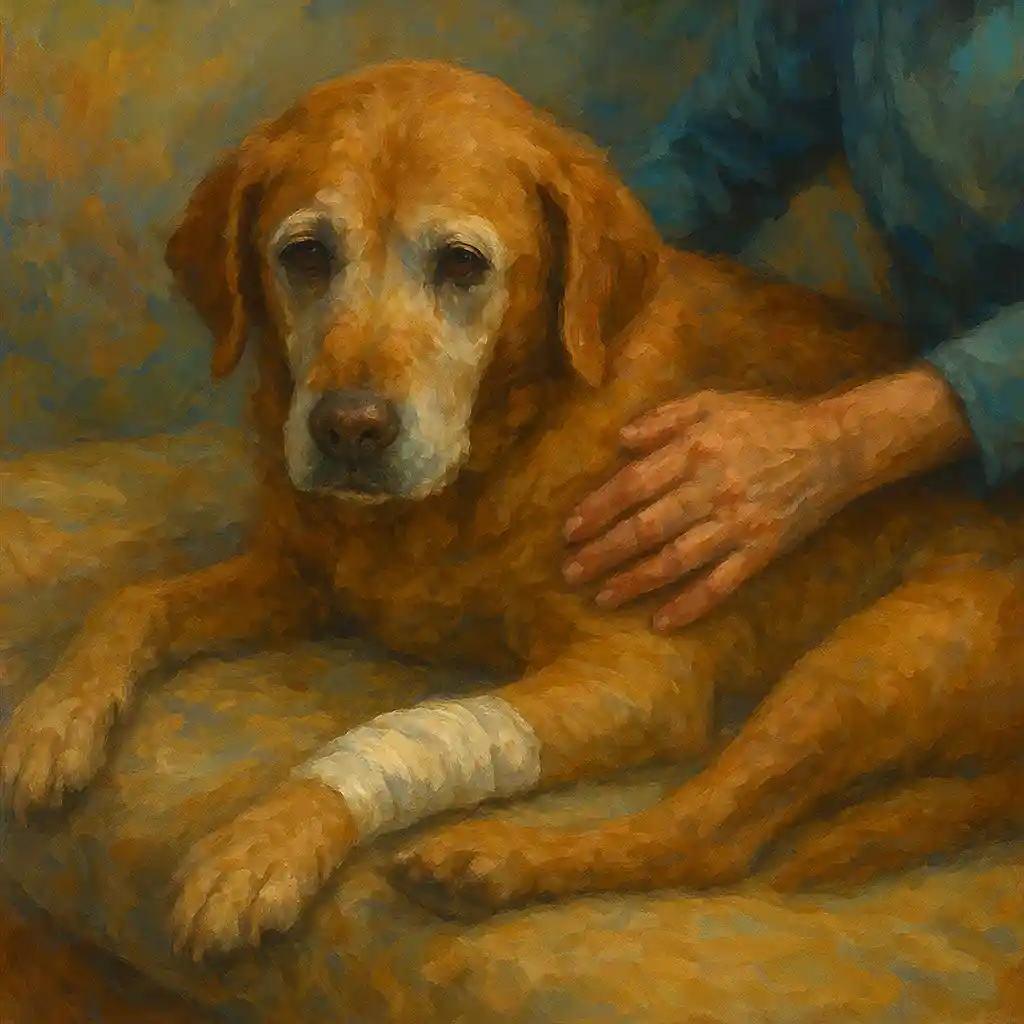
Living with a Senior Dog with Elbow Dysplasia can feel like a big change. Your dog may still have the same loving personality, but daily life can look different. You might notice slower movement, stiffness after rest, or less interest in longer walks. Elbow dysplasia can reduce comfort and independence, especially in older dogs whose joints already carry years of wear.
The good news is that many dogs improve with the right support. Better comfort often comes from a mix of smart rest, safe movement, pain control, home changes, and steady physiotherapy. This guide gives clear, practical steps you can use at home, while working alongside your veterinarian.
The goal is simple: help your Senior Dog with Elbow Dysplasia move with less pain, keep muscle strength, and enjoy everyday life.
1) What elbow dysplasia means (in simple terms)
Elbow dysplasia is not one single injury. It is a group of problems that affect how the elbow joint forms and moves. Over time, the joint can become uneven, irritated, and painful. This often leads to arthritis.
Common parts of elbow dysplasia include:
- Abnormal joint development (the bones do not fit smoothly)
- Cartilage wear and tear
- Inflammation inside the joint
- Arthritis (long-term joint changes)
For a Senior Dog with Elbow Dysplasia, the condition may have started earlier in life but becomes more visible with age. Older dogs can have less muscle support and more joint stiffness, which makes signs easier to spot.
2) Dogs commonly affected
Elbow dysplasia is seen more often in medium to large breeds. It can also appear in smaller breeds and mixed-breed dogs.
Breeds commonly linked to elbow dysplasia include:
- Labrador Retriever
- Golden Retriever
- German Shepherd
- Rottweiler
- Bernese Mountain Dog
- Newfoundland
- Boxer
Even if your dog is not on this list, elbow pain still matters. A Senior Dog with Elbow Dysplasia needs the same careful plan no matter the breed.
3) Early signs to watch for in a Senior Dog with Elbow Dysplasia
Elbow dysplasia often starts quietly. Many owners notice “old age slowing down,” but the body may be signaling pain. Early action usually protects the joint and reduces suffering.
Common signs include:
Movement and posture changes
- Limping in a front leg (sometimes worse after rest)
- Short, careful steps in front legs
- Turning the paws outward while walking
- Stiffness when standing up
- Weight shifting to the back legs
- A “head bob” while walking (head lifts when the sore leg bears weight)
Behavior and daily routine changes
- Less interest in walks or play
- Avoiding stairs, car jumps, or slippery floors
- Slower pace on walks
- Lying down more often
- Irritability when the elbow is touched
Body signs around the elbow
- Swelling around the elbow joint
- Warmth in the elbow area
- Reduced range of motion (the elbow does not bend/extend easily)
A Senior Dog with Elbow Dysplasia may show symptoms on one side, then later show problems on both elbows.
4) Why early intervention matters
Early support helps in three key ways:
- Pain control improves mood, sleep, appetite, and willingness to move.
- Better movement habits protect the joint from extra strain.
- Muscle maintenance supports the joint like a natural brace.
A senior dog can still gain strength and comfort. Age does not remove the benefit of gentle training and physiotherapy.
5) Veterinary diagnosis: what to expect
A correct diagnosis is important because front-leg limping can come from the shoulder, wrist, neck, paw, or even nerve problems. Your veterinarian may use several tools:
Physical exam
- Gait observation
- Joint flexion/extension tests
- Checking pain response
- Feeling for swelling and muscle loss
Imaging
- X-rays are common and helpful for arthritis and bone changes.
- Some dogs need CT scans for a more detailed joint view.
- In some cases, vets may recommend referral to an orthopedic specialist.
A clear diagnosis helps build the best plan for your Senior Dog with Elbow Dysplasia, including safe exercise limits and the right pain support.
6) The home set-up: make daily life easier
Small home changes reduce stress on painful elbows. They also lower the risk of slips and falls, which can cause sudden flare-ups.
Flooring and traction
- Add non-slip rugs or runners on smooth floors.
- Use yoga mats or rubber-backed mats in key areas.
- Keep nails trimmed to improve grip.
Resting areas
- Provide an orthopedic bed with supportive foam.
- Place beds in quiet, warm areas away from drafts.
- Add a second bed near where the family spends time, so your dog does not feel isolated.
Ramps and steps
- Use a ramp for the car, porch, or couch access (if allowed).
- Choose ramps with a non-slip surface.
- Block high furniture if your dog tries to jump without support.
Feeding and water stations
- Raise food and water bowls to chest height.
- Keep bowls on a non-slip mat to stop sliding.
These changes help a Senior Dog with Elbow Dysplasia use less effort for daily tasks, saving energy for healing and safe movement.
7) A simple rest protocol that protects the elbow
Rest is one of the most powerful tools, but rest must be done the right way. Too much strict rest can weaken muscles. Too little rest can inflame the joint.
A good rest protocol usually means reducing high-impact activity while still allowing gentle, controlled movement.
What to limit
- Running, chasing, fast turning
- Jumping on/off furniture
- Rough play with other dogs
- Long hikes
- Repeated stairs
What to keep (in a controlled way)
- Short, slow leash walks
- Calm sniffing breaks (not pulling)
- Gentle mobility exercises approved by your vet or physiotherapist
A basic structure (example)
- Week 1–2: Very short leash walks, several times per day, plus rest.
- Week 3–4: Slight increase in walk time if pain is stable, plus physiotherapy work.
- After week 4: Continue with a balanced routine (rest days + steady movement).
The correct pace depends on pain level, body weight, and other health problems. For a Senior Dog with Elbow Dysplasia, slow progress is often safer progress.
8) Pain management options (veterinary-led)
Pain control is not “extra.” It is a core part of recovery. Pain causes tension, poor sleep, and less movement. Less movement leads to muscle loss, and muscle loss makes joints less stable.
Common pain management tools include:
Prescription medications (from your veterinarian)
- Anti-inflammatory medications (often used for arthritis)
- Pain relievers for chronic joint pain
- Joint injections in some cases
Never give human pain medication unless your vet specifically instructs it. Many human drugs are toxic to dogs.
Joint supplements (supportive, not instant)
Some dogs benefit from:
- Glucosamine/chondroitin
- Omega-3 fatty acids (fish oil)
- Green-lipped mussel
- Other vet-approved joint products
Supplements usually take weeks to show results. They support comfort but may not be enough alone for a Senior Dog with Elbow Dysplasia.
Heat and cold therapy (simple home tools)
These can reduce discomfort during flare-ups.
Cold packs (first 24–48 hours after a flare-up, or after a harder day):
- Helps reduce inflammation
- Use 10 minutes, wrapped in a cloth
- Keep sessions calm and short
Warmth (for stiffness, especially before gentle movement):
- Helps relax muscles and improve flexibility
- Use a warm compress 10–15 minutes
- Never use high heat, and never leave unattended
If swelling is present, cold is usually the safer first choice.
Alternative therapies
Some dogs respond well to:
- Acupuncture (with trained professionals)
- Massage therapy (gentle, joint-safe)
- Laser therapy (offered by some clinics)
These options can support comfort and mobility for a Senior Dog with Elbow Dysplasia, especially when used alongside a full plan.
9) Weight and muscle: the hidden keys to elbow comfort
For joint problems, body weight changes everything. Even small weight loss can reduce pressure on painful joints.
Helpful steps:
- Ask your vet for a healthy target weight.
- Use measured meals rather than “free feeding.”
- Choose joint-friendly diets if recommended.
- Use part of the meal as training rewards during physio sessions.
Muscle also matters. Strong muscles support the elbow and reduce joint stress. The main aim is not intense exercise. The aim is steady, safe strength.
10) Physiotherapy for a Senior Dog with Elbow Dysplasia (safe and realistic)
Physiotherapy is one of the best ways to protect mobility. The key is to keep it low-impact, controlled, and pain-aware.
Important safety rules
- Stop if your dog shows pain signals (pulling away, stiffening, panting from stress, licking the elbow, refusing).
- Keep sessions short (often 3–8 minutes at first).
- Work on non-slip flooring.
- Reward calm cooperation.
- Avoid forcing the joint into a position.
If possible, get a plan from a canine physiotherapist. If not, your vet can guide you on safe basics.
11) Gentle range-of-motion work (basic level)
These exercises aim to keep flexibility and reduce stiffness. They should feel smooth and easy.
A) Passive elbow flexion and extension (very gentle)
- Have your dog lie comfortably on their side.
- Support the leg above and below the elbow.
- Slowly bend and straighten the elbow within a comfortable range.
- Do 5–10 slow repetitions.
Keep it small and calm. Never push into pain. For a Senior Dog with Elbow Dysplasia, tiny movements done regularly are often more helpful than large movements done rarely.
B) Gentle weight shifts (standing)
- With your dog standing, place a hand near the shoulders.
- Slowly guide a small shift of weight side to side.
- Keep feet in place; no stepping needed.
- Do 5–10 slow shifts.
This helps body awareness and balance while staying low-impact.
12) Strengthening exercises that protect the elbow
Strength work should focus on the whole body, not only the elbow. Strong core and shoulder support can reduce elbow load.
A) Sit-to-stand (controlled)
- Ask your dog to sit (if sitting is comfortable).
- Ask for a stand.
- Keep the movement slow, not explosive.
- Do 3–8 repetitions.
If sitting is painful, skip it and use alternative exercises recommended by a professional.
B) Slow leash walking (quality over distance)
- Use short walks on flat ground.
- Keep a steady pace.
- Avoid pulling, sudden turns, and uneven rocky paths at first.
This is one of the most important tools for a Senior Dog with Elbow Dysplasia because it builds gentle strength without impact.
C) Cavaletti poles (advanced beginner, optional)
Only if your dog is stable and your vet approves:
- Place low poles or rolled towels on the floor.
- Let your dog step over them slowly on leash.
- Start with 2–4 passes.
This improves coordination and controlled limb movement.
13) Balance and coordination (injury prevention)
Many senior dogs slip or stumble more easily, especially on smooth floors. Balance work helps prevent falls.
Simple options:
- Standing on a stable cushion (very short time, supervised)
- Slow turns in a large circle on leash (not tight)
- Controlled stepping onto a low platform
Always prioritize safety. A fall can cause a serious setback for a Senior Dog with Elbow Dysplasia.
14) Building a weekly routine that is easy to follow
A routine keeps progress steady and helps you notice changes early.
Example weekly plan (adjust with your vet)
Daily
- 2–4 short, calm leash walks
- 1–2 micro physio sessions (3–8 minutes)
- Rest on supportive bedding
- No jumping, no chasing
2–4 times per week
- Gentle strengthening (sit-to-stand or alternatives)
- Balance work (very short)
As needed
- Heat before movement for stiffness
- Cold after activity for flare-ups
Consistency matters more than intensity. For a Senior Dog with Elbow Dysplasia, a “little and often” approach usually works best.
15) Monitoring progress at home (simple and useful)
Tracking helps you know what works.
Things to note:
- Limping level morning vs evening
- Ease of standing up
- Willingness to go for walks
- Appetite and sleep quality
- Mood and interest in family time
- Any swelling or heat around the elbow
A simple notebook or phone note is enough. If symptoms worsen for several days, contact your veterinarian.
16) Common mistakes to avoid
These mistakes are easy to make, especially when you want your dog to feel normal again.
- Doing too much too soon after a good day
- Stopping all movement for long periods (can weaken muscles)
- Allowing off-leash running during recovery
- Using slippery floors without traction
- Skipping pain control and hoping exercise alone will fix it
- Forcing stretches or pushing range of motion
Protecting the joint today helps your Senior Dog with Elbow Dysplasia stay active tomorrow.
17) Real-life style outcomes: what improvement can look like
Not every dog becomes “like a puppy again,” but many dogs gain meaningful quality-of-life changes. Improvement often looks like:
- Standing up with less effort
- More stable walking on short trips
- Better mood and less irritability
- Less stiffness after naps
- More willingness to interact and explore
Progress is often gradual. Small wins are still wins for a Senior Dog with Elbow Dysplasia.
18) When to seek help quickly
Contact your veterinarian promptly if you notice:
- Sudden severe lameness
- Refusal to bear weight on a front leg
- Strong swelling, heat, or visible pain
- Crying out when moving
- Loss of appetite or major behavior change
These can signal a flare-up, injury, or another problem that needs medical support.
19) Long-term life with a Senior Dog with Elbow Dysplasia
Elbow dysplasia is usually a long-term condition, especially in seniors. Many dogs do best with ongoing management rather than short treatment bursts.
Long-term support usually includes:
- Regular vet check-ins
- A stable pain-management plan
- Weight control
- Daily low-impact movement
- Home traction and joint-friendly setup
- Periodic physiotherapy tune-ups
With the right plan, a Senior Dog with Elbow Dysplasia can still enjoy walks, family time, sniffing, gentle play, and calm adventures.
Conclusion: comfort, mobility, and dignity in the senior years
Supporting a Senior Dog with Elbow Dysplasia is about steady care, not perfection. A thoughtful mix of rest, controlled movement, pain support, home changes, and safe physiotherapy can reduce discomfort and protect independence. The best results come from consistency and careful observation, with your veterinarian guiding medical choices.
Your dog’s world is built from simple moments: getting up without fear, walking without sharp pain, resting comfortably, and staying close to the people they love. With the right daily plan, those moments become easier again.