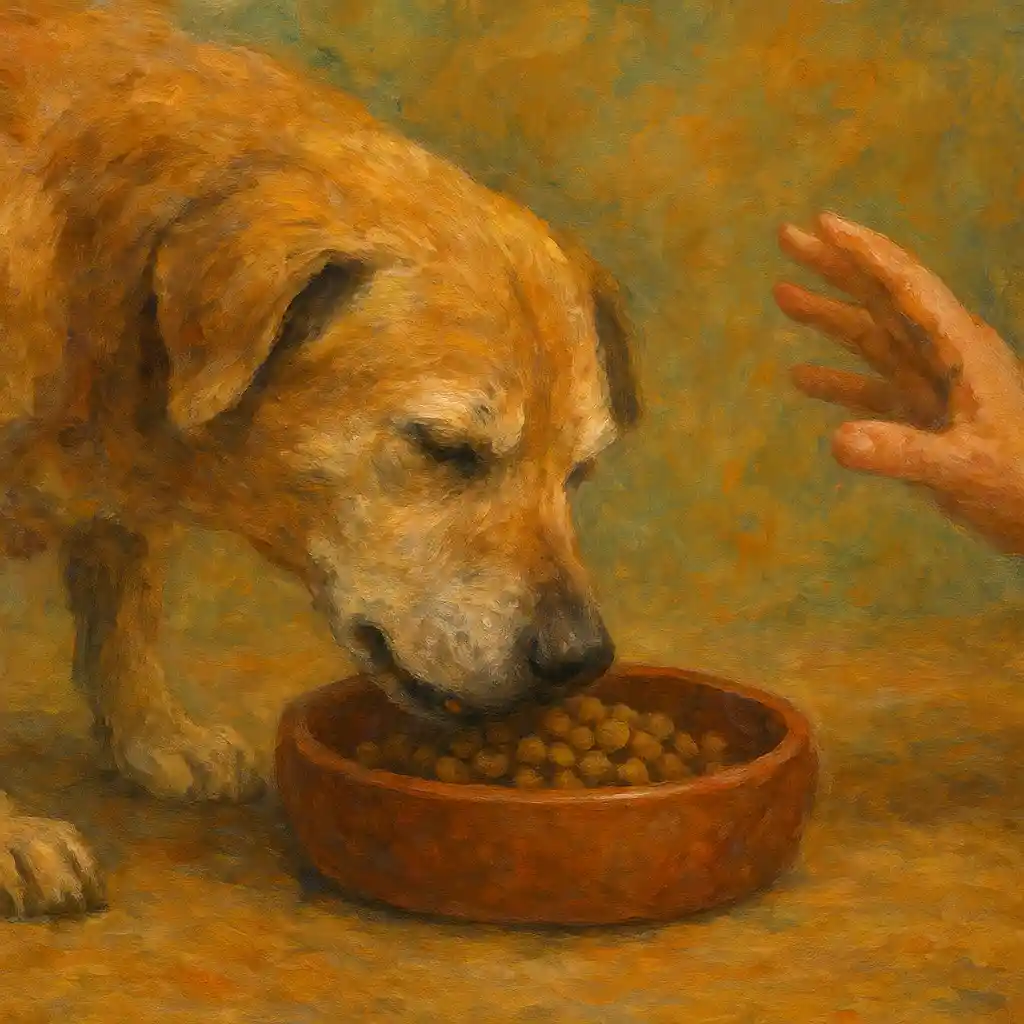
Food aggression can feel shocking when it shows up in an older dog, especially in a senior German Shepherd who has been loyal and steady for years. One day, you step near the bowl and hear a growl. Another day, your dog stiffens, guards, or snaps. This behavior is serious, but it is also workable in many homes when you use the right plan.
Senior dogs change with age. Their bodies can hurt. Their senses can fade. Their stress tolerance can drop. Some older dogs become more anxious, more protective, or more easily startled. Food is valuable, so guarding it can become a coping habit.
- Hand Feeding to rebuild trust and reduce fear around people near food
- Trade Games to teach peaceful exchange and lower guarding habits
- Space Respect to create a safe feeding environment that prevents conflict
You will also learn how to check for health issues that can trigger aggression, how to stay consistent without pushing your dog too fast, and how to keep everyone safe during training.
Understanding Food Aggression in Senior Dogs
Food aggression is also called resource guarding. It means a dog tries to control access to food by using body language or threats. The dog is not being stubborn or dominant. Most often, the dog is trying to feel safe.
Common signs of food aggression
A senior German Shepherd might show:
- Freezing over the bowl
- Stiff posture, head low, shoulders tight
- Eating faster when someone approaches
- Whale eye, meaning the whites of the eyes show
- Growling, snarling, snapping
- Blocking the bowl with the body
- Guarding food scraps, treats, chews, or even the kitchen area
Some signs are subtle. If you only notice the big signs, you might miss early warnings.
Why food aggression can increase with age
Aging can raise stress and lower patience. Many senior dogs guard food more because of:
- Pain, especially dental pain or joint pain
- Hearing loss or vision loss, leading to startle reactions
- Cognitive decline, similar to confusion in older humans
- Past experiences, including times they felt rushed or threatened during meals
- Routine changes, including new pets, visitors, or a different feeding spot
Food aggression is a behavior, but it is often connected to comfort and health. That is why a good plan includes training and also a health check.
Step One: Rule Out Health Problems First
If a senior dog suddenly becomes defensive around food, assume discomfort until proven otherwise. A dog in pain protects what matters. Eating can hurt, bending can hurt, being touched can hurt. Even a gentle approach can feel threatening when pain is present.
Health issues that often contribute to food aggression
Common problems in senior German Shepherds include:
- Dental disease: broken teeth, gum infection, tooth root pain
- Arthritis: pain when standing, turning, or lowering the head to eat
- Neck or back pain: discomfort during feeding posture
- Digestive issues: nausea, reflux, or sensitive stomach
- Endocrine problems: such as diabetes, which can increase hunger and tension
- Cognitive decline: confusion, irritability, sleep changes
- Vision or hearing decline: surprise reactions when someone comes close
What to do with your veterinarian
A proper check-up makes training easier and safer. Ask your veterinarian for:
- A dental exam and treatment plan if needed
- Pain assessment and arthritis support
- Review of appetite changes, weight loss, or increased hunger
- Advice on feeding position, bowl height, and diet texture
- A clear plan for any medication or supplements
Training works best when your dog feels physically safe.
Safety Rules That Protect Everyone
Food aggression can lead to bites. Safety is not optional. These rules help you train without pushing your dog into panic.
Core safety rules
- Do not punish growling. Growling is a warning. Punishing it can remove the warning and increase risk.
- Do not grab the bowl, reach into the bowl, or try to “prove” control. That often makes guarding stronger.
- Keep children away from the feeding area. Senior dogs may have lower tolerance and slower reaction time.
- Separate pets during meals. Competition increases guarding.
- Use barriers if needed, such as baby gates, closed doors, or exercise pens.
- If snapping or biting has happened, involve a qualified trainer who has experience with resource guarding.
A calm plan prevents accidents and builds trust faster.
The Three-Part Strategy to Reduce Food Aggression in Senior Dogs
To Reduce Food Aggression in Senior Dogs, aim for two goals at the same time:
- Lower the dog’s stress around food
- Teach clear, rewarding routines that replace guarding
The best results usually come from combining these three strategies.
Strategy One: Hand Feeding to Build Trust and Gentle Manners
Hand feeding is simple, but powerful. You become the source of good things, and your dog learns that your hands bring food, not danger.
Hand feeding is not about forcing closeness. It is about controlled, calm delivery of food in a way that reduces fear.
Benefits of hand feeding for senior dogs
- Builds trust and positive association with your presence
- Slows down eating for dogs who rush and guard
- Lets you monitor appetite changes, chewing comfort, and swallowing
- Adds gentle mental stimulation
- Helps you notice pain signs, such as dropping kibble or chewing only on one side
Step-by-step hand feeding plan
1. Choose the right setting
- Quiet room
- No other pets
- No foot traffic
- Stable surface where your dog can stand comfortably
2. Start with low pressure
- Sit sideways rather than facing the dog directly
- Keep movements slow
- Use a calm voice or stay silent if your dog prefers quiet
3. Feed small portions from an open palm
- Offer a few pieces of kibble or a small spoon of wet food
- Keep your fingers flat
- Let your dog come to the food rather than pushing your hand forward
4. Pause often
- Give one small portion
- Pause for a breath
- Repeat
This rhythm prevents arousal from building.
5. End before your dog gets tense
Short sessions are better than long ones. Stop while things are calm, even if you did not feed the full meal by hand at first.
6. Gradually shift back to a bowl if desired
Hand feeding does not have to be permanent. Many owners use it for a few weeks, then combine it with bowl feeding once guarding decreases.
Tips that make hand feeding work better
- For dogs with dental pain, use softened food with veterinary approval
- For dogs with arthritis, raise the food level so they do not strain
- Feed at consistent times to reduce anxiety
- Keep sessions predictable so your dog knows what to expect
Hand feeding is a trust tool. Use it to create calm and cooperation.
Strategy Two: Trade Games That Teach Peaceful Exchange
Trade games teach a simple lesson. Giving something up leads to something better. This reduces the fear that a person approaching means loss.
Trade games work for bowls, chews, and high-value finds like stolen food wrappers. They also improve safety, because your dog learns to release items without conflict.
Core rules for trade games
- Always trade up at first
- Never trick your dog with a worse deal
- Return the original item often, especially early on
- Keep sessions short and positive
Trade game examples for senior German Shepherds
Trade Game 1: Treat for Treat
- Give a medium-value treat
- Present a higher-value treat near the nose
- When your dog releases the first treat, deliver the better one
- Repeat with calm pacing
This teaches release without stress.
Trade Game 2: Chew for Bonus
- Give a chew in a safe spot
- Walk by at a distance and toss a high-value treat
- Keep walking and do not reach for the chew
- Repeat over several sessions, slowly reducing distance
This changes the meaning of your approach. Approach becomes bonus, not threat.
Trade Game 3: Bowl Add-On
This is a gentle method that helps many dogs.
- Place the bowl down with part of the meal
- From a safe distance, toss extra tasty pieces toward the bowl
- Leave again
The dog learns that humans near the bowl make food better.
Trade Game 4: Toy Trade
- Offer a toy
- Present a treat
- When the toy drops, reward
- Give the toy back again
This builds a general habit of exchanging, which supports food training too.
How to add trade games into daily routine
- Use one short trade session per day, then stop
- Practice when your dog is calm, not already stressed
- Keep high-value treats ready, such as small bits of chicken, cheese, or a veterinarian-approved soft treat
- Aim for progress, not perfection
Trade games are one of the safest paths to Reduce Food Aggression in Senior Dogs because they avoid confrontation and replace it with cooperation.
Strategy Three: Space Respect and a Calm Feeding Zone
Many owners try to fix food aggression only through training, but the environment matters just as much. Senior dogs often need more quiet and personal space than they did in their younger years.
Space respect means your dog can eat without being crowded, stared at, or interrupted.
Why space respect reduces guarding
- Fewer triggers means fewer aggressive rehearsals
- Predictable safety lowers stress hormones
- Dogs learn they do not need to defend food
If your dog never feels threatened during meals, guarding often reduces naturally over time.
How to set up a designated feeding area
Choose a place that is:
- Quiet
- Easy to access for a stiff dog
- Away from children, visitors, and other pets
- Away from tight corners where the dog feels trapped
Helpful setups include:
- A separate room with a door
- A baby gate zone
- An exercise pen
- A calm corner with clear escape routes
Feeding environment tips for senior German Shepherds
- Use non-slip mats so your dog does not slide while eating
- Consider a raised bowl if arthritis is present, guided by your veterinarian
- Keep lighting soft if vision is declining
- Avoid loud noises during meals, including vacuuming and TV at high volume
- Keep the routine stable, including time, place, and people involved
Space respect is not spoiling. It is smart prevention.
Putting It All Together: A Simple Weekly Training Plan
Consistency beats intensity. A steady plan helps your dog learn without pressure.
Week 1: Safety and calm foundation
- Feed in a separate space, no interruptions
- Start bowl add-on from a distance, toss bonuses and leave
- Begin light hand feeding for a small part of one meal
Week 2: Hand feeding and gentle trades
- Hand feed 25 to 50 percent of a meal if your dog stays relaxed
- Practice treat-for-treat trading once daily
- Continue protected feeding space every meal
Week 3: Building approach comfort
- Reduce distance for bowl add-ons gradually
- Add chew-for-bonus walks, no grabbing
- Keep sessions short and end calmly
Week 4 and beyond: Maintain and generalize
- Continue trade games a few times per week
- Keep feeding space respect as a permanent habit if it helps
- Move slowly if there is any growling or stiffening
Progress is rarely linear. Some days will be easier than others, especially for senior dogs.
Handling Setbacks Without Making Aggression Worse
Setbacks happen for clear reasons. Often it is one of these:
- Pain flare-up
- New stress at home
- Visitors and noise
- Schedule changes
- Feeding too close to another pet
- Moving too fast in training
What to do after a setback
- Increase distance again
- Return to easier steps for several days
- Improve management, such as gates and separate rooms
- Check health if behavior changed suddenly
Avoid pushing through tension. Tension is information, not defiance.
Using Mealtimes as Gentle Training Time
You can build calm skills during meals without turning feeding into a hard training session.
Useful, low-stress skills include:
- Sitting calmly before food is placed down
- Waiting for one second, then two seconds, then three
- Looking away from the bowl briefly, then earning a bonus
- Walking with you away from food, then returning calmly
Keep it simple. Senior dogs do best with short, clear routines.
Real-Life Style Success Examples
These examples show what progress often looks like. Names are changed.
Example 1: Max, age 11, new growling at the bowl
Max started growling when his owner walked by. A veterinary exam found painful teeth. After dental care and softer meals, the owner used bowl add-ons and space respect. Within three weeks, Max stopped freezing when someone passed the doorway. In two months, the growling ended during normal household movement, as long as his meal space stayed quiet.
Example 2: Luna, age 9, guarding chews and stolen scraps
Luna guarded chews under the table. The family stopped giving chews in busy rooms and used a gated calm zone. They practiced chew-for-bonus walks and toy trades daily. Luna learned to lift her head and relax when footsteps approached. After one month, the family could walk past without tension, and Luna began bringing items out voluntarily for trades.
Example 3: Rex, age 12, snapping when touched near food
Rex startled easily due to hearing loss and arthritis. The owner switched to a consistent feeding area, avoided touching during meals, and used hand feeding for part of dinner. Trade games were introduced slowly with high-value soft treats. Rex became calmer because meals became predictable. The snapping stopped once the owner stopped reaching toward the bowl and focused on bonus tossing and gentle hand feeding.
Success often comes from protecting the dog’s comfort first, then teaching new habits.
When Professional Help Is the Best Choice
Some cases need expert support. Professional help is strongly recommended if:
- There has been a bite, even a small one
- The dog guards multiple items, not only food
- The dog guards space, like the kitchen doorway
- The dog shows intense body language, such as lunging
- Children live in the home
- You feel unsafe at any point
Look for a trainer who uses modern, reward-based methods and has direct experience with resource guarding in older dogs. In some regions, a veterinary behaviorist is the best option, especially when anxiety or pain is involved.
Common Concerns and Clear Guidance
Concern: Hand feeding will create bad habits
When done correctly, hand feeding creates calm focus and trust. It does not create dependence in most dogs. You can always transition back to bowl feeding later while keeping trade games and space respect.
Concern: Taking the bowl away proves leadership
Confrontational techniques can increase guarding, especially in senior dogs. Older dogs often have less tolerance due to discomfort or confusion. Calm structure and safe routines work better long term.
Concern: Growling is bad and must stop immediately
Growling is communication. It is safer to treat it as a warning sign and adjust your approach. The goal is to reduce the fear that causes growling, not punish the signal.
Concern: My dog was never like this before
Sudden behavior change in an older dog is often linked to health or stress. A veterinary check is one of the fastest ways to unlock progress.
Key Takeaways for Lasting Results
To Reduce Food Aggression in Senior Dogs, focus on safety, trust, and consistency.
- Start with health. Pain and discomfort often drive guarding in older dogs.
- Use hand feeding to rebuild calm connection and improve gentle manners.
- Use trade games to teach peaceful exchange and reduce fear of losing food.
- Use space respect to prevent conflict and lower stress at every meal.
- Go slow. Senior dogs learn well, but they need time and predictable routines.
- Protect everyone. Management tools like gates and separate rooms are smart, not a failure.
- Get professional help if safety is uncertain or aggression is intense.
A senior German Shepherd can stay loving and stable while also needing extra support. With a calm plan and respectful handling, feeding can become peaceful again, and your bond can grow stronger in the process.
Simple Action Checklist
Use this checklist to start today with clarity and structure.
- Schedule or confirm a senior health check and dental review
- Feed in a quiet, separate space with no interruptions
- Start bowl add-ons by tossing bonus treats and leaving
- Hand feed a small portion of one meal if your dog stays relaxed
- Practice one short trade game daily with high-value treats
- Keep children and other pets away during meals
- Track progress weekly, not hour by hour
- Step back and slow down if you see freezing, stiff posture, or growling
This balanced approach is practical, kind, and effective for many homes that want to Reduce Food Aggression in Senior Dogs while keeping everyone safe.