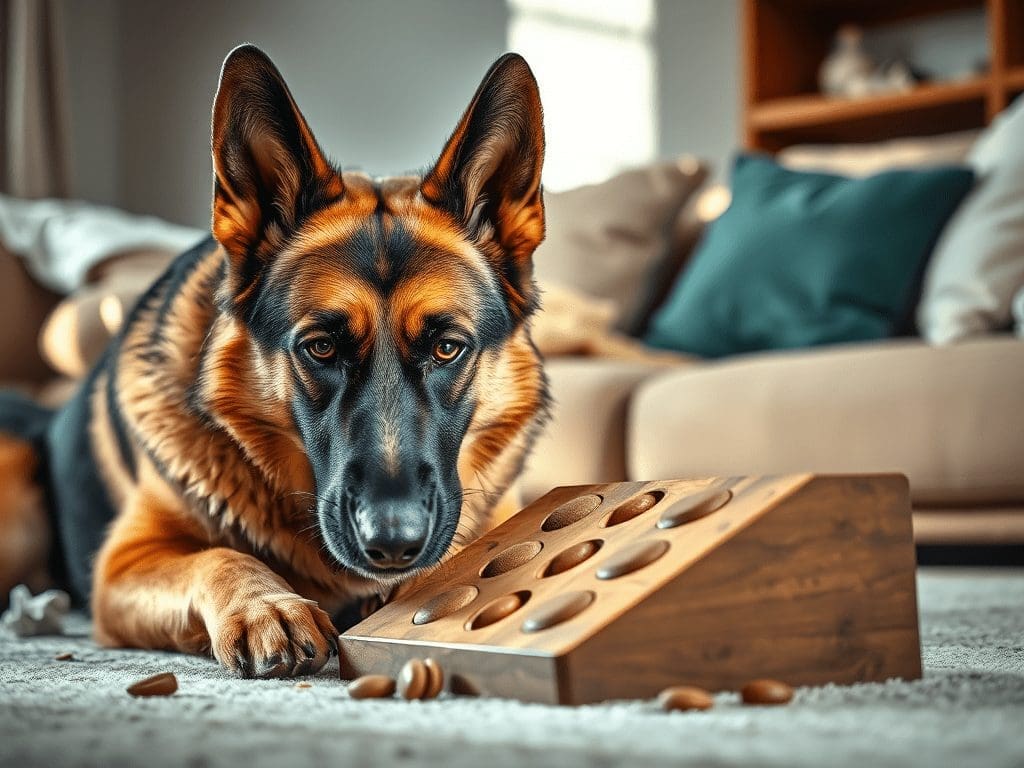
A working-line German Shepherd is built for action. This dog type is smart, strong, fast, and always ready to do something meaningful. When daily life feels too quiet or too easy, that big working brain has nowhere to go. Many owners notice the same pattern: the dog becomes restless, whines, paces, digs, barks, steals objects, or chews furniture. This is not “bad behavior” in the simple sense. Often, it is boredom, frustration, or stress caused by a lack of mental work.
Mental stimulation is not a luxury for a working-line German Shepherd. It is a basic need, similar to exercise, food, and sleep. The good news is that mental work does not need expensive equipment or long training sessions every day. A small set of well-chosen puzzle activities can change the dog’s day. The dog becomes calmer, more focused, and more satisfied. Many owners also see better obedience and an improved bond, because the dog learns to solve tasks with the owner’s support.
This guide shares Puzzle Ideas for German Shepherds that are practical, safe, and easy to rotate. It includes 12 puzzle games, suggested durations, and a simple weekly rotation plan to keep your dog interested.
Discover a wide range of fun and stimulating Puzzle Ideas for German Shepherds that will keep them engaged and happy.
Why working-line German Shepherds need puzzle games
German Shepherds were developed to work closely with people. Working lines often have even more drive, stamina, and focus than show lines. This brings many benefits, but it also creates strong needs.
Mental stimulation helps with:
- Boredom and destructive behavior: Chewing, digging, shredding, and breaking objects often drop when the dog has daily tasks.
- Stress and anxiety: Many dogs relax after scent work or food puzzles because these activities use natural instincts.
- Better impulse control: Puzzles teach the dog to slow down, think, and try different strategies.
- Confidence: Solving small challenges builds a “winner mindset,” especially helpful for sensitive dogs.
- A stronger relationship: Cooperative play and gentle guidance teach the dog that the owner is part of the solution, not just a rule-maker.
Mental exercise also supports older German Shepherds. Seniors may move less, but they still need brain work. Many puzzle games can be adjusted for joints, energy level, and comfort.
Safety rules before starting any puzzle
Puzzle play should be safe, calm, and supervised, especially in the beginning.
- Supervise: Many German Shepherds use their teeth powerfully. Supervision prevents swallowing plastic, fabric, or small parts.
- Choose durable materials: Strong rubber and thick plastics are safer than thin pieces.
- Avoid choking hazards: No small removable parts for dogs that chew hard.
- Match difficulty to skill: Too hard creates frustration; too easy creates boredom.
- Stop before the dog gets tired: End while the dog is still successful and interested.
- Check toys often: Replace cracked plastic, torn fabric, or loose pieces.
- Use the right treats: Small, soft treats work well. For food puzzles, use part of the dog’s meal to avoid weight gain.
How long each puzzle game should last
German Shepherds often enjoy longer sessions than many breeds, but focus can drop when a task becomes repetitive. Short sessions also fit busy days.
Simple time guidelines
- Beginner puzzles: 5–10 minutes
- Medium puzzles: 10–15 minutes
- Advanced puzzles or scent work: 15–25 minutes
- High excitement games (tug, chase-based puzzles): 5–12 minutes, then calm-down time
Food puzzles can last longer if they are safe and not frustrating. If the dog starts slamming, biting in anger, or giving up, the puzzle is too hard or too long.
A helpful pattern is two short sessions daily rather than one long session. For example, 10 minutes in the morning and 10–15 minutes in the evening.
The weekly rotation rule (important for best results)
Dogs learn patterns quickly. If the same toy appears every day, the challenge disappears. Rotation keeps puzzle play fresh.
A simple method:
- Keep 6–10 puzzle options available.
- Offer 2 puzzle sessions per day.
- Rotate so the same puzzle appears only 1–2 times per week.
- Mix puzzle types: food, scent, problem-solving, movement-based.
This rotation supports motivation and reduces boredom. It also helps the owner notice what the dog enjoys most.
12 Puzzle Ideas for German Shepherds (clear, practical, and effective)
Below are 12 Puzzle Ideas for German Shepherds with setup tips, skill level, and recommended duration. These work well for working-line dogs, and most can be adjusted for younger or older dogs.
1) Kong Classic (stuffed and layered)
Type: Food puzzle Skill: Easy → Medium (depends on stuffing) Duration: 10–25 minutes
How to do it
- Start with dry kibble inside the Kong.
- Add a few high-value treats.
- For longer play, block the top with a spoon of wet food (dog-safe), plain yogurt, or pumpkin.
- Freeze it for a harder challenge.
Added value tips
- Use part of the dog’s daily meal.
- Freezing increases difficulty and time.
- Great for crate time or calm-down after exercise.
2) Snuffle mat for foraging
Type: Scent-based food puzzle Skill: Easy → Medium Duration: 8–15 minutes
How to do it
- Sprinkle kibble deep inside the fabric strips.
- Place the mat on a non-slip surface.
- Let the dog search calmly using the nose.
Added value tips
- Supports natural foraging behavior.
- Helps fast eaters slow down.
- Good indoor option in bad weather.
3) Treat towel roll (simple DIY)
Type: DIY food puzzle Skill: Easy Duration: 5–12 minutes
How to do it
Here are 12 effective Puzzle Ideas for German Shepherds to challenge their minds and enhance their problem-solving skills.
- Lay a towel flat.
- Sprinkle kibble along the length.
- Roll the towel into a tight log.
- For more challenge, tie a loose knot in the middle.
Added value tips
- Easy to adjust for seniors by keeping the roll loose.
- Supervise dogs that shred fabric.
- Wash the towel often.
4) Muffin tin + balls (classic DIY)
Type: Problem-solving food puzzle Skill: Easy → Medium Duration: 8–15 minutes
How to do it
- Put treats in some muffin holes.
- Cover each hole with a tennis ball or dog-safe ball.
- Let the dog remove balls to find food.
Added value tips
- Builds paw-and-nose coordination.
- Start with only a few balls if the dog is new to puzzles.
5) “Shell game” with cups
Type: Memory and focus puzzle Skill: Medium Duration: 5–10 minutes
How to do it
- Use 2–3 cups (dog-safe, not fragile).
- Show the dog a treat and hide it under one cup.
- Move the cups slowly.
- Reward for correct choice.
Added value tips
- Keep it calm and controlled.
- This game builds patience and focus, not speed.
- Great for rainy-day brain work.
6) Box search (easy scent + problem-solving)
Type: Scent-based exploration Skill: Easy → Medium Duration: 10–20 minutes
How to do it
- Collect 4–8 cardboard boxes.
- Place a treat in one box, leave others empty.
- Encourage sniffing and searching.
- Increase difficulty by closing lids lightly or adding more boxes.
Added value tips
- Cheap and easy to reset.
- Helps dogs practice calm searching.
- Remove staples, tape, and labels if the dog chews cardboard.
7) DIY scent trail (treat track)
Type: Scent work Skill: Medium Duration: 10–20 minutes
How to do it
- Drag a treat lightly along the ground to leave scent.
- Place small treats every 1–2 steps at first.
- End with a bigger reward at the finish.
- Slowly reduce the number of “trail treats” over time.
Added value tips
- Very tiring mentally in a good way.
- Works in a yard, quiet park, or even indoors with short trails.
- Helps reactive dogs by giving the nose a job (in calm locations).
8) Hide-and-seek treats around one room
Type: Scent-based search Skill: Easy → Medium Duration: 8–15 minutes
How to do it
- Start with easy hiding spots in plain view.
- Increase difficulty by hiding behind chair legs, under safe edges, or on low shelves.
- Use a release cue so the dog starts searching on signal.
Added value tips
- Builds independence and confidence.
- Easy to do daily with no special tools.
- Keep it safe: no chocolate, no unsafe areas, no sharp edges.
9) Outward Hound Hide-A-Squirrel (or similar “stuffed toy” puzzle)
Type: Interactive toy, extraction puzzle Skill: Medium Duration: 10–15 minutes
How to do it
- Put the small toys inside the larger toy.
- Encourage the dog to remove them.
- Some dogs love carrying the small toys back and repeating.
Added value tips
- Choose durable versions for strong chewers.
- Replace toys when torn.
- For extra challenge, hide one small toy elsewhere after the dog removes it.
10) Trixie Flip Board (or similar board puzzle)
Type: Problem-solving puzzle toy Skill: Medium → Advanced Duration: 10–18 minutes
How to do it
- Place treats in compartments.
- Show the dog one move (flip, slide, lift).
- Allow the dog to explore.
- Help lightly if the dog gets stuck too long.
Added value tips
- Great for teaching persistence without frustration.
- Best used under supervision to prevent chewing the board.
11) Nina Ottosson-style beginner puzzle (level-based)
Type: Structured puzzle progression Skill: Easy → Medium Duration: 8–15 minutes
How to do it
- Start with the easiest setting (open compartments, fewer covers).
- Increase difficulty only after repeated success.
- Keep sessions short and positive.
Added value tips
- Level systems are useful for clear progress.
- Taking notes helps: time to solve, frustration signs, best treat types.
12) Backyard mini agility puzzle (slow and thoughtful)
Type: Movement + problem-solving Skill: Medium Duration: 10–20 minutes
How to do it
- Set up simple obstacles: cones to go around, a broomstick on low supports to step over, a cardboard tunnel, a hoop to pass through.
- Guide the dog slowly with a treat or toy.
- Focus on control and understanding, not speed.
Added value tips
- Keeps joints safer than fast jumping.
- Builds teamwork and body awareness.
- For seniors, use stepping, weaving, and targeting instead of jumps.
A simple weekly rotation plan (example)
This plan keeps puzzle time fresh without being complicated. It uses two short sessions per day. Adjust based on your schedule and your dog’s energy.
Monday
- AM: Snuffle mat
- PM: Kong (frozen)
Tuesday
- AM: Muffin tin puzzle
- PM: Box search
Wednesday
- AM: Shell game
- PM: Hide-and-seek treats (one room)
Thursday
- AM: Flip Board puzzle
- PM: DIY scent trail
Friday
- AM: Towel roll
- PM: Hide-A-Squirrel toy
Saturday
- AM: Beginner level puzzle board
- PM: Backyard mini agility puzzle
Sunday
- AM: Light sniff walk or easy treat search
- PM: Repeat the dog’s favorite puzzle from the week
This approach uses variety: food puzzles, scent puzzles, thinking puzzles, and movement puzzles. It also includes an easy day to prevent burnout.
How to increase difficulty the right way
Progress should feel like success, not like a struggle. A working-line German Shepherd enjoys challenge, but frustration can create rough behavior like biting the toy, barking at it, or quitting.
Signs the puzzle is too easy
- The dog finishes in under 30–60 seconds repeatedly.
- The dog loses interest quickly afterward.
- The dog starts looking for something else to do.
Signs the puzzle is too hard
- The dog slams the puzzle, bites hard, or shakes it in anger.
- The dog whines, paws wildly, or looks away often.
- The dog walks away and does not return.
Smart ways to level up
- Freeze food puzzles.
- Add more compartments or covers.
- Use smaller treats that fall deeper.
- Increase search area slowly (one room → two rooms → whole house).
- Reduce “help” from the owner over time.
Building puzzle time into a daily routine
Working-line dogs do best with structure. Puzzle play fits naturally into daily life when it becomes part of normal events.
Easy routine anchors
- Morning: short puzzle before the owner starts work
- After walks: calm puzzle to bring arousal down
- During meals: replace the bowl with a feeder puzzle
- Evening: 10–15 minutes of scent or board puzzles for relaxation
Short, consistent sessions often work better than one long session on weekends only.
Tracking progress without stress
Simple notes help owners improve puzzle choice and difficulty.
Track:
- Which puzzle was used
- How long it took
- Dog’s mood (calm, excited, frustrated)
- Any chewing or unsafe behavior
- Best reward type (kibble vs soft treats)
After 2–3 weeks, patterns become clear. The owner learns which Puzzle Ideas for German Shepherds create calm focus and which ones create too much excitement.
Extra tips for success (small changes that matter)
Use calm rewards
For many working-line German Shepherds, high-value food is exciting. That can be good, but some dogs become too intense. Mixing kibble with a few high-value treats often keeps the dog stable.
Add a start and finish ritual
A simple “ready” cue and “all done” cue helps the dog understand puzzle time. It also reduces demand barking because the dog learns that puzzle time has a clear end.
Keep puzzle time non-competitive
Puzzles are not a test. They are enrichment. Light support is fine, especially in the learning stage.
Combine mental work with gentle obedience
A short sit, down, or place cue before the puzzle can build impulse control. Keep it easy and positive.
Common mistakes to avoid
- Offering the hardest puzzle first: This can teach the dog to quit or destroy the toy.
- Using puzzles as the only activity: German Shepherds still need walks, training, and social time.
- Repeating the same puzzle daily: Rotation protects motivation.
- Leaving many puzzles unsupervised: Some dogs chew pieces and swallow them.
- Adding too much extra food: Use part of meals to keep calories balanced.
Final thoughts: calm, satisfied, and mentally fit
A working-line German Shepherd thrives when life includes meaningful tasks like these Puzzle Ideas for German Shepherds. They help mitigate common behavioral issues.
The strongest results come from three habits:
- Using a variety of Puzzle Ideas for German Shepherds
- Keeping sessions at the right length for your dog
- Rotating puzzles weekly to keep the brain engaged
With these habits, a German Shepherd’s day becomes richer. The dog spends less time searching for trouble and more time practicing focus, patience, and problem-solving. Over time, many owners notice a calmer home, better behavior, and a stronger connection with their dog built through shared, rewarding work.
These Puzzle Ideas for German Shepherds are designed to promote mental health and enrich their daily lives.