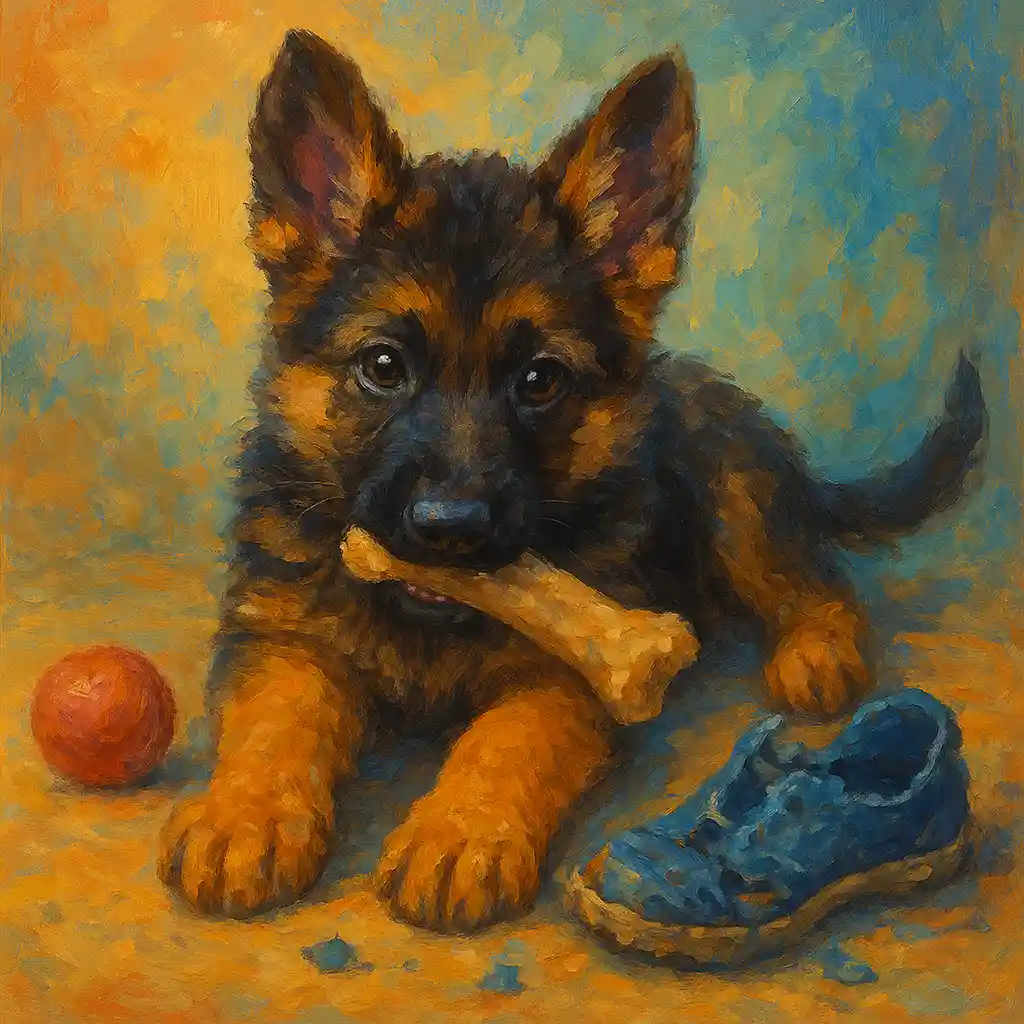
German Shepherd puppies are smart, active, and full of energy. They also teethe—hard. During this phase, many owners feel like their puppy turns into a little “chewing machine” that targets shoes, table legs, rugs, and anything within reach. The good news is that this is normal puppy development, not “bad character.” The even better news is that you can get through it without losing your furniture, your patience, or your pup’s trust.
This guide is a complete plan for Preventing Destruction During GSD Teething. You will learn what teething looks like, why it causes chewing, how to choose safe chews, how to set up a simple rotation system, how to use taste deterrents (including easy DIY options), and how to train your puppy to make better choices—step by step.
Preventing Destruction During GSD Teething is essential for ensuring your puppy has a safe and enjoyable experience while they navigate through this challenging phase.
1) What Teething Is (and Why German Shepherds Chew So Much)
Implementing strategies for Preventing Destruction During GSD Teething will make the transition smoother for both you and your puppy.
Teething is the time when a puppy loses their baby teeth and grows adult teeth. For many German Shepherd puppies, it starts around 3–4 months and often becomes intense between 4–6 months. Most puppies finish teething around 6–7 months, though chewing habits can continue if a puppy is bored, stressed, or under-exercised.
Chewing happens for several reasons:
- Pain relief: Chewing helps sore gums feel better.
- Exploration: Puppies learn with their mouths, like babies do with hands.
- Stress release: New situations, new rules, and new people can cause stress.
- Boredom: German Shepherds need mental and physical work. Without it, chewing becomes a “job.”
- Habit: If a puppy gets to chew couch legs for weeks, it becomes normal to them.
So, the goal is not to “stop chewing.” The goal is to teach what to chew and where to chew, while protecting your home and keeping your puppy safe.
2) Common Signs Your GSD Puppy Is Teething
Knowing the signs helps you act early, before the chewing gets worse.
Typical teething signs include:
- Chewing more than usual, especially on hard objects
- Drooling more than normal
- Red or slightly swollen gums
- Small spots of blood on toys (common and usually not serious)
- Mild irritability or restlessness
- Picking up random objects and carrying them around
- More biting during play (mouthy behavior)
By understanding the teething process, you can effectively contribute to Preventing Destruction During GSD Teething.
If your puppy seems very unwell, stops eating, has strong swelling, or has heavy bleeding, contact your veterinarian. Most teething discomfort is normal, but severe symptoms need professional advice.
3) The Real Risks of “Letting Them Chew Anything”
Many people think, “They will grow out of it.” Sometimes they do, but the damage can be serious. Preventing Destruction During GSD Teething is also about preventing danger.
Main risks include:
1. Choking hazards Small objects, toy pieces, socks, and even chewed wood can get stuck.
2. Intestinal blockage If a puppy swallows fabric, plastic, rope strands, or large chunks, it can cause a blockage. This may require surgery.
3. Poisoning Some household items are toxic: cleaning products, treated wood, batteries, some plants, certain glues and paints.
4. Electrical injury Chewing cords can cause burns, shock, or worse.
5. Long-term habits If chewing furniture becomes a daily habit, it may continue after teething ends.
The safest plan is simple: remove temptation, provide legal chewing outlets, and train calm, consistent rules.
Preventing Destruction During GSD Teething means actively engaging with your puppy’s needs during this critical time.
4) The Core Strategy: “Management + Training”
When focusing on Preventing Destruction During GSD Teething, ensuring your environment is safe is key to avoiding accidents.
The most successful owners use two tools together:
- Management: Set up the environment so your puppy cannot practice bad chewing.
- Training: Teach your puppy what to chew, and reward good choices.
Management gives fast results. Training builds long-term behavior.
You need both.
5) Safe Chews for German Shepherd Puppies (Durable and Practical)
A German Shepherd puppy is not a gentle chewer. Choose chews that match their strength and mouth size. Always supervise new chews until you know how your puppy uses them.
Preventing Destruction During GSD Teething is not just about managing chewing; it’s about ensuring their comfort and safety.
Remember, Preventing Destruction During GSD Teething requires patience and understanding from you as an owner.
Below are reliable options that work well for many GSD puppies.
1) Rubber chew toys (Kong-style)
Why they help:
- Strong rubber is safer than brittle plastic
- Great for gum pressure and stress relief
- You can stuff them with food to keep your puppy busy
Extra tip: Fill with wet food or yogurt (dog-safe) and freeze it for longer chewing time.
2) Nylon bones (puppy-safe versions)
Why they help:
- Very durable for strong chewers
- Helps focus chewing on one safe item
- Comes in many shapes and textures
Incorporate techniques for Preventing Destruction During GSD Teething into your daily routine for long-lasting success.
Safety note: Choose the right size. If pieces break off, replace the chew.
By prioritizing Preventing Destruction During GSD Teething, you’re setting your puppy up for a better future.
3) Frozen carrots or frozen sweet potato sticks
Why they help:
- Cold reduces gum soreness
- Crunchy texture feels good during teething
- Cheap, simple, and usually well-tolerated
Safety note: Give sizes that are hard to swallow whole. Supervise.
4) Bully sticks (single-ingredient chews)
Why they help:
- High value, so puppies choose them instead of furniture
- Softer than many bones, good for teething
- Can reduce stress and support calm time
Safety note: Use a bully stick holder to reduce choking risk at the end.
5) Interactive puzzle toys and treat dispensers
Why they help:
- Works the brain, not only the mouth
- Reduces boredom chewing
- Builds calm focus and independence
This is not “extra.” For German Shepherds, mental work is often the missing piece.
6) Chew Toy Rules That Protect Your Puppy
Even “safe” chews can become unsafe if used incorrectly. Follow these simple rules:
- Correct size: Bigger is usually safer than smaller.
- Supervise at first: Watch how your puppy chews.
- Inspect daily: Look for cracks, sharp edges, loose parts.
- Replace when worn: A damaged toy is not a “good toy.” It is a risk.
- One puppy, one chew: Avoid fights and guarding if you have multiple dogs.
- Avoid cooked bones: They can splinter and cause serious injury.
- Be careful with hard antlers or very hard bones: Some puppies crack teeth. Ask your vet if unsure.
7) A Simple Chew Toy Rotation Plan (Stops Boredom Chewing)
Many owners buy toys but leave them all on the floor. The puppy gets bored fast, and then your home becomes “the toy store.”
A rotation plan keeps toys exciting.
How to set up a rotation (easy and realistic)
Step 1: Choose 8–12 total chew items Mix types:
- 2 rubber stuffable toys
- 2 nylon chews
- 2 food chews (bully sticks or dental chews)
- 2 softer comfort toys (only if your puppy does not destroy and swallow fabric)
- 2 puzzle toys
Step 2: Put out only 3–4 at a time Keep the rest in a box or cabinet.
Step 3: Rotate every 2–3 days Swap out 1–2 items, not all at once. This keeps familiarity but adds novelty.
Step 4: Use “special chews” for risky times Keep one high-value chew only for:
- when you cook
- when guests arrive
- when you need a phone call
- when your puppy gets “wild” in the evening
This teaches your puppy that calm time pays.
Rotation is one of the strongest tools for Preventing Destruction During GSD Teething, because boredom is a major cause of chewing.
8) Training: How to Redirect Chewing Without Yelling
Your puppy is not trying to “win.” They are trying to feel better and stay busy. Your job is to show them the right outlet.
The redirection method (calm and consistent)
- Catch early (if possible) If you see your puppy moving toward the chair leg, act fast.
- Interrupt gently Use a calm sound like “ah-ah” or “oops.” Avoid shouting.
- Offer a legal chew immediately Place the chew right in front of the puppy, or guide them to it.
- Praise and reward The moment they chew the correct item, praise with a warm voice. You can also give a small treat.
- Repeat many times This is normal puppy learning. Repetition builds the habit.
A key detail: make the “right choice” easy
If shoes are on the floor, your puppy will chew shoes. Put shoes away. That is not “giving up.” That is smart management.
9) Teaching “Leave It” and “Drop It” (Best Safety Skills)
These two skills do not only protect your furniture. They can protect your puppy’s life.
“Drop it” (basic method)
- Offer a toy.
- Let your puppy take it.
- Offer a treat near their nose.
- When they release the toy to eat the treat, say “drop it”.
- Give the toy back after (this reduces fear and guarding).
Practice daily with low-value items first.
“Leave it” (basic method)
Focus on Preventing Destruction During GSD Teething to create a harmonious household.
- Hold a treat in a closed fist.
- Let your puppy sniff.
- Wait until they stop trying.
- The moment they pull away, say “leave it” and give a different treat from the other hand.
Slowly move to real-life objects, always setting your puppy up to succeed.
10) Bitter Spray and Taste Deterrents (Including DIY Alternatives)
Taste deterrents can help protect certain items, especially when you cannot move them (like table legs or baseboards). They are not magic, but they can support training.
When bitter spray works best
- Your puppy is chewing the same object again and again
- You already provide good chews, but they still test limits
- You use it consistently and also redirect to legal chews
Important: what not to do
- Do not spray your puppy’s mouth.
- Do not use deterrents as punishment.
- Do not rely on spray alone without chew training.
Simple DIY bitter spray alternatives (safe, common options)
Always test a small hidden area first to protect surfaces.
Option 1: Diluted apple cider vinegar spray
- Mix 1 part apple cider vinegar + 1 part water
- Add to a spray bottle
- Lightly spray the item (not soaked)
Option 2: Lemon juice spray (mild but helpful)
- Mix 1 part lemon juice + 2 parts water
- Spray lightly
Option 3: White vinegar + water (strong smell, works for some dogs)
- Mix 1 part white vinegar + 2 parts water
- Use carefully around delicate surfaces
Some puppies ignore bitter tastes, but many do not. If your puppy licks it once and stops, it is doing its job.
11) Helping Your Puppy Feel Better: Teething Comfort That Reduces Chewing
Chewing increases when discomfort increases. So comfort is part of Preventing Destruction During GSD Teething.
Practical comfort tools
- Frozen chew items: frozen carrots, frozen Kong fillings
- Cold wet washcloth: twist it, freeze it, supervise while chewing
- Short calm breaks: teething puppies get tired and cranky
- Gentle gum checks: only if your puppy allows it comfortably
Do not overstimulate
Many puppies chew more when they are overtired. A busy day without rest often ends with evening chaos. Build rest into the routine.
12) Daily Routine That Reduces Destructive Chewing
A good routine is simple, predictable, and balanced.
Example daily structure (adapt as needed)
- Morning potty + short walk (sniffing is great brain work)
- Breakfast in a puzzle toy (mental work + slow eating)
- Short training session (5–10 minutes)
- Nap / quiet time (crate or safe pen)
- Midday chew time (stuffed Kong or bully stick with supervision)
- Afternoon play + training (short and positive)
- Evening calm activity (lick mat, chew, gentle grooming)
- Final potty + sleep
This type of day reduces stress, boredom, and random chewing.
13) Set Up the Home for Success (Chew-Proofing Basics)
Management prevents “practice.” The less your puppy practices destructive chewing, the faster it ends.
High-impact home changes
- Pick up shoes, kids’ toys, laundry, and remote controls
- Use cord covers or block access to cables
- Use baby gates to limit free roaming
- Provide a puppy pen or safe room when you cannot supervise
- Block access to table legs or corners if they are a big target
- Keep trash cans closed or behind doors
A simple rule
If you cannot watch your puppy, your puppy should be in a safe area with legal chews.
This is not strict. This is safety and good training.
14) Supervision: The Difference Between “Puppy Freedom” and “Puppy Failure”
Many puppies chew badly because they get too much freedom too early.
Supervision means:
- You are close enough to interrupt chewing quickly
- Your puppy is not quietly destroying something in another room
- You notice tiredness before it becomes biting and wild behavior
A leash indoors can help. Some owners use a light house line (a leash without the handle) so they can gently guide the puppy away from trouble.
15) Real-Life Wins: What Successful Owners Do Differently
Owners who survive teething with minimal damage usually do the same few things:
They make chewing easy and legal
They always keep a safe chew nearby—especially during high-energy times.
They rotate toys and use “special chews”
They save the best chews for the hardest moments, like evenings.
They manage the environment
They do not expect a teething puppy to ignore shoes on the floor.
They train calmly
They correct gently, redirect quickly, and reward good chewing choices.
They accept that teething is a phase
They focus on habits, not perfection.
These habits create fast improvement and a calmer home.
16) Safety Checklist: Avoiding Choking and Swallowing Problems
Use this checklist weekly:
- Toys are the right size for your puppy’s mouth
- No toy has cracks, sharp edges, or loose parts
- Bully sticks are used with a holder (especially near the end)
- Rope toys are watched closely (remove if your puppy swallows strings)
- You supervise new chews until you trust them
- You know the emergency vet number and location
If your puppy vomits repeatedly, stops eating, becomes weak, or strains to poop, contact a veterinarian quickly. It may not be serious, but it is not something to “wait out” if you suspect swallowing.
17) What to Avoid During the Teething Phase
Some common mistakes make chewing worse:
- Yelling or scary punishment: increases stress, can increase chewing
- Chasing your puppy to get objects back: turns it into a fun game
- Giving old shoes as “chew toys”: teaches that shoes are allowed
- Too much freedom too soon: leads to hidden destruction
- Not enough rest: overtired puppies bite and chew more
- Only physical exercise without mental work: GSDs need both
Small changes here often create big results.
18) The Bottom Line: A Calm, Clear Plan for Preventing Destruction During GSD Teething
Teething does not have to destroy your home. With the right chews, smart rotation, simple training, and safe boundaries, your puppy learns what is allowed—and your stress drops fast.
Here is the core plan in one clean list:
- Provide strong, safe chews (rubber toys, nylon chews, frozen foods, bully sticks, puzzles).
- Rotate chews so your puppy stays interested.
- Redirect chewing calmly and reward correct choices.
- Use management (gates, pens, picking up temptations) to prevent practice.
- Add comfort (cold chews, rest, calm time) to reduce gum pain.
- Use bitter spray or DIY alternatives on high-risk items when needed.
- Inspect toys and supervise to prevent choking and swallowing.
- Stay consistent for a few weeks—habits form quickly at this age.
Teething ends, but the habits you build now can last for years. When you focus on Preventing Destruction During GSD Teething, you are also building a confident, well-behaved German Shepherd who knows how to settle, chew appropriately, and live peacefully in your home.
With steady routines and a calm approach, you will get your puppy through this stage—and you will keep your furniture along the way.