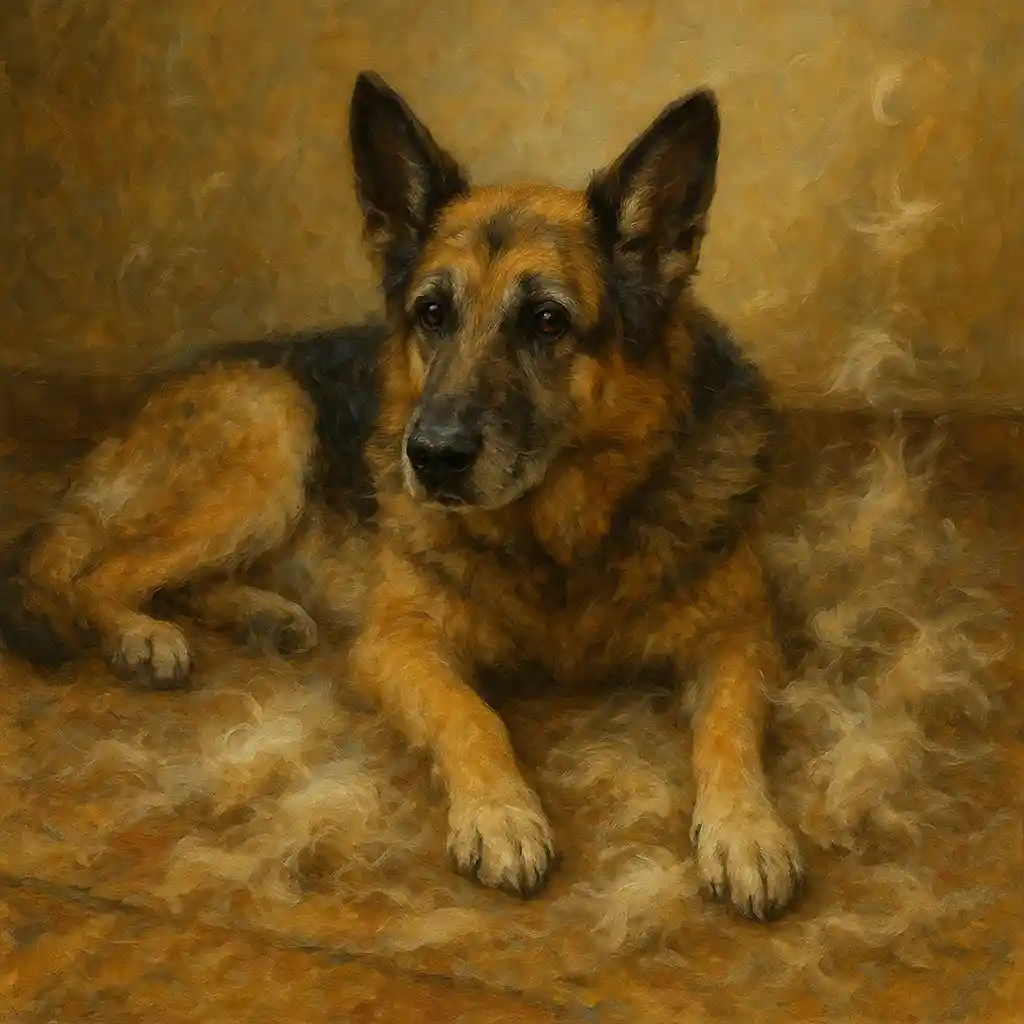
Shedding is normal for German Shepherds, but it can feel more intense in the senior years. The coat may look dull, the undercoat may clump, and loose hair can appear everywhere. Shedding in Senior German Shepherds is not only a “fur on the couch” problem. It can also affect comfort, skin health, and everyday quality of life.
A strong grooming plan helps in several ways. It removes loose hair before it mats. It spreads natural oils for shine. It supports healthy skin by improving blood flow. It also gives you a regular chance to notice changes early, such as dry skin, lumps, or sore spots.
This guide gives a clear routine that fits real life. It focuses on a seasonal brushing schedule, smart tool rotation, gentle senior-friendly handling, and simple ways to avoid common mistakes.
Why shedding changes in older German Shepherds
German Shepherds have a double coat:
- Guard hairs (topcoat): longer, stronger hairs that protect from sun, rain, and dirt
- Undercoat: soft, dense hair that helps with warmth and cooling
Most shedding comes from the undercoat. As dogs age, the coat and skin can change. Some senior German Shepherds shed more unevenly, or the coat does not “release” as smoothly. Others develop dry skin that leads to flakes and extra hair loss. Some seniors groom themselves less because of stiffness, arthritis, or low energy. When natural self-grooming drops, loose hair stays trapped and can form mats.
Common reasons Shedding in Senior German Shepherds can look worse:
- Slower skin renewal and drier coat
- Less movement and less self-grooming
- Mild hormone changes with aging
- More time indoors with heating or air conditioning (dry air)
- Sensitivity to harsh tools or long grooming sessions, leading to less frequent brushing
A good plan does not fight the double coat. It supports it.
What “normal” shedding looks like vs. “concerning” shedding
German Shepherds often “blow coat” in spring and fall. This means the undercoat releases in large amounts. That is normal.
Shedding deserves extra attention when it comes with:
- bald spots
- strong itching
- red skin, scabs, or oozing
- heavy dandruff
- strong odor
- sudden coat change, very dull or very greasy
- repeated hot spots (moist sore patches)
In those cases, grooming still helps, but it should not replace veterinary care. Coat issues in seniors can connect to allergies, parasites, thyroid problems, infections, or pain that stops normal grooming.
The core strategy: seasonal schedule + tool rotation
A senior German Shepherd does best with two connected habits:
- Seasonal brushing schedule (more brushing during heavy shed seasons, lighter brushing during stable seasons)
- Tool rotation (different tools for different layers and goals, used on different days)
This approach prevents over-brushing in one session and under-brushing for weeks. It also protects sensitive senior skin.
The seasonal brushing schedule (simple and realistic)
Below is a clear plan that fits most senior German Shepherds. The exact timing can shift by climate and indoor lifestyle.
Spring and Fall: Heavy shedding routine (coat-blowing seasons)
These seasons usually need the most work. The goal is to remove undercoat steadily without irritating the skin.
Frequency
- Brushing: 4–6 days per week
- Session length: 10–20 minutes
- Optional “mini sessions”: 5 minutes daily can work very well for seniors
Focus
- Undercoat removal
- Preventing mats behind ears, around the neck ruff, armpits, thighs, and tail area
- Checking skin condition while brushing
Summer and Winter: Light maintenance routine (stable coat seasons)
These seasons often need less undercoat removal. The goal is comfort, cleanliness, and gentle skin stimulation.
Frequency
- Brushing: 2–3 days per week
- Session length: 8–15 minutes
Focus
- Light undercoat control
- Oil distribution for shine
- Gentle detangling and spot checks
A weekly schedule you can follow (ready-to-use)
This plan uses tool rotation and keeps sessions short. It suits many older dogs.
Heavy shedding weeks (spring/fall)
- Day 1: Undercoat rake (short, gentle passes) + quick comb check
- Day 2: Slicker brush (surface tangles) + grooming glove finish
- Day 3: Rest day or 5-minute glove session
- Day 4: Deshedding tool (light pressure, limited strokes)
- Day 5: Slicker brush + comb for problem areas
- Day 6: Undercoat rake (focus on neck, hips, rear)
- Day 7: Rest day, skin check, optional light glove brushing
Light maintenance weeks (summer/winter)
- Day 1: Slicker brush or pin brush (gentle all-over)
- Day 2: Rest
- Day 3: Undercoat rake (light) or comb for small tangles
- Day 4: Rest
- Day 5: Grooming glove session (easy, calming)
- Weekend: Rest or quick spot-brush where needed
This structure supports consistent care, which is the biggest key for Shedding in Senior German Shepherds.
Grooming tools explained (and how to rotate them)
Tool rotation is helpful because each tool does a different job. Rotating prevents skin stress and improves results.
1) Slicker brush
Best for: light tangles, surface loose hair, smoothing the coat Use when: the topcoat looks messy, or after undercoat work Senior tip: choose a slicker with softer pins or a “soft slicker” design
2) Undercoat rake
Best for: pulling out loose undercoat in thick areas Use when: shedding increases; coat feels dense Senior tip: use short strokes and avoid scraping the skin
3) Deshedding tool (blade-style undercoat remover)
Best for: heavy undercoat release Use when: the coat is blowing and the rake is not enough Senior tip: use carefully. Too much pressure can irritate skin, especially in seniors.
4) Wide-tooth comb
Best for: checking your work, finding hidden tangles, finishing Use when: behind ears, tail, feathering, and friction areas Senior tip: comb is gentle when used slowly and correctly
5) Grooming glove or rubber curry-style glove (gentle version)
Best for: light loose hair, massage, calm daily maintenance Use when: your dog is tired, stiff, or sensitive that day Senior tip: excellent for bonding and very low stress grooming
6) Dematting tool (use with caution)
Best for: small mats that cannot be opened with a comb Use when: only when needed, not as a main brush Senior tip: mats can pull the skin. If mats are large or close to skin, professional grooming is safer.
Step-by-step brushing technique (effective and senior-friendly)
A strong technique matters more than brushing harder. Senior coats and senior skin need a gentle method.
Step 1: Prepare the space
- Choose a calm place with good light.
- Use a non-slip mat to protect joints.
- Keep sessions short and predictable.
Step 2: Start with the easy areas
Begin where your dog likes touch, often the shoulders and back. This builds comfort.
Step 3: Brush in layers
Use a simple “line brushing” idea:
- Part the coat gently with your hand.
- Brush a small section from skin outward.
- Move to the next small section.
This finds undercoat without rough pulling. It also helps prevent hidden mats.
Step 4: Use low pressure and slow rhythm
Senior dogs can have thinner skin and less patience. Gentle strokes remove hair without discomfort.
Step 5: Focus on friction zones
These areas mat more easily:
- behind the ears
- collar area and neck ruff
- armpits
- belly edges
- behind the thighs
- base of the tail
Step 6: Finish with a comb check
A comb quickly shows if tangles remain. If the comb catches, return to gentle brushing in that spot.
Step 7: End on a positive, calm note
Stop before your dog becomes tired. Consistency beats long sessions.
Bathing and shedding: the smart order
Bathing can support grooming, but it should be done in a coat-friendly way.
A senior-friendly approach:
- Brush out loose hair and tangles before the bath.
- Use a gentle dog shampoo. Consider an oatmeal or moisturizing formula for dry skin.
- Rinse very well. Leftover shampoo can cause itching.
- Dry fully. Damp undercoat can create hot spots.
During heavy shed seasons, a bath followed by careful drying and brushing can release trapped undercoat. In seniors, spacing baths is often helpful. Over-bathing can dry the skin and worsen Shedding in Senior German Shepherds.
Senior safety: how to avoid discomfort and skin irritation
Older dogs can have arthritis, sensitive skin, and lower tolerance for standing.
Use these safety rules:
- Keep sessions short, especially for dogs with joint pain.
- Let your dog sit or lie down if needed.
- Avoid hard pressure with deshedding tools.
- Never rush through mats; pulling hurts and can tear skin.
- Check for lumps, growths, and sore areas before brushing over them.
- Avoid grooming on very hot days; seniors can overheat.
- Use breaks. Two 8-minute sessions can be better than one 16-minute session.
These basics help grooming stay safe and kind.
Coat-related issues to watch for in senior German Shepherds
Regular brushing makes it easier to spot changes early. Key warning signs include:
Dry, flaky skin
- Looks like dandruff
- Often worse in winter or dry indoor air
- Can improve with gentle brushing, better hydration, and vet-approved skin support
Excessive matting or tangling
- Often linked to less self-grooming or thicker undercoat
- Can lead to pain, skin pulling, and trapped moisture
Hot spots (moist sore patches)
- Can start under mats or damp undercoat
- Need fast attention; often require veterinary treatment
Strong odor or greasy coat
- Can signal infection or skin imbalance
- Also common if undercoat is trapped and air cannot reach the skin
Sudden heavy shedding or patchy hair loss
- Needs veterinary advice, especially in senior dogs
Grooming supports coat health, but it should not hide medical problems. Senior dogs benefit from early checks.
Stress-free brushing sessions (especially important for seniors)
Many older German Shepherds become less patient with grooming. Calm routines help more than force.
Make grooming predictable
Use the same place and general time. Predictable routines reduce stress.
Keep the body comfortable
Use a soft surface. Avoid long standing. Support the hips if needed.
Use simple positive reinforcement
Small treats, calm praise, and gentle touch help a lot. Quiet rewards work well for senior dogs.
Stop before frustration starts
Ending early protects trust. You can always do another short session later.
Choose the right tool for the day
On tired days, use a grooming glove. On better energy days, do undercoat work.
This flexible mindset improves results over time.
Common mistakes that worsen shedding and coat problems
Avoiding mistakes often improves the coat quickly.
Mistake 1: Over-brushing in one session
Hard, long brushing can irritate senior skin and create soreness. It can also make your dog avoid grooming next time.
Mistake 2: Skipping grooming during shedding season
When coat-blowing starts, skipping brushing leads to trapped undercoat, mats, itchiness, and more hair in the home.
Mistake 3: Using the wrong tool the wrong way
A harsh deshedding tool used too often can scrape the skin. An undercoat rake used with pressure can cause discomfort.
Mistake 4: Ignoring small mats
Small mats grow. Once they tighten near the skin, removal can become painful and may require a groomer.
Mistake 5: Bathing too often
Too many baths can dry the skin and increase itching. For seniors, gentle brushing and targeted baths usually work best.
Real-life example: a simple coat turnaround in a senior GSD
A typical senior German Shepherd coat story looks like this:
- The coat starts shedding more in spring.
- Loose undercoat builds up around the hips, neck ruff, and tail.
- Small tangles form behind the ears.
- The dog becomes itchy and seems uncomfortable.
- The owner brushes only once every week or two because it feels overwhelming.
A better plan uses short, frequent sessions:
Week 1: Reset week
- 10 minutes per day, 5 days in the week
- Undercoat rake on two days, slicker on two days, glove on one day
- Comb check behind ears and tail each session
Week 2: Improvement week
- Less hair comes out each day
- Coat begins to look smoother
- Skin looks calmer because the undercoat is not trapped
Week 3 and onward: Maintenance
- 4–6 short sessions per week during shedding season
- 2–3 sessions per week during stable seasons
The result is usually less loose hair, fewer mats, less itching from trapped fur, and a softer coat feel. This is the main goal of managing Shedding in Senior German Shepherds: steady care, not extreme grooming days.
Added-value checklist: your senior GSD brushing kit
A practical kit for most senior German Shepherds:
- Soft slicker brush
- Undercoat rake (rounded pins)
- Wide-tooth metal comb
- Grooming glove
- Dog-safe detangling spray (optional)
- Styptic powder (for emergencies only, such as a broken nail)
- Non-slip mat
- High-value small treats
With this kit, tool rotation becomes easy, and you avoid relying on one harsh tool.
Simple “FAQ-style” guidance (no confusion, no overwhelm)
Brushing frequency guidance
- Heavy shedding seasons: 4–6 times per week, short sessions
- Stable seasons: 2–3 times per week
Best time to brush
- After a walk can work well because the dog is relaxed.
- Evening sessions often feel calmer for many households.
Coat health support beyond brushing
- Regular hydration
- Quality diet with balanced nutrients
- Vet-approved supplements when needed
- Parasite prevention
- Comfortable bedding to reduce friction mats
Professional grooming support
- Helpful for compacted undercoat, large mats, or dogs that cannot tolerate long brushing.
- Useful as a seasonal “reset,” then maintained at home with shorter sessions.
A clear final plan to follow
To manage Shedding in Senior German Shepherds in a practical way, focus on four habits:
- Brush more often in spring and fall (4–6 days per week, 10–20 minutes).
- Brush less often but consistently in summer and winter (2–3 days per week).
- Rotate tools so one tool does not irritate the skin and each layer of the coat gets proper care.
- Stay gentle and senior-friendly with short sessions, joint comfort, and careful attention to mats and skin changes.
A senior German Shepherd can keep a beautiful coat. The goal is not perfection. The goal is comfort, health, and a routine that is easy to continue. Consistent brushing, smart tools, and seasonal timing create the biggest improvement, and they turn grooming into steady care instead of an exhausting chore.