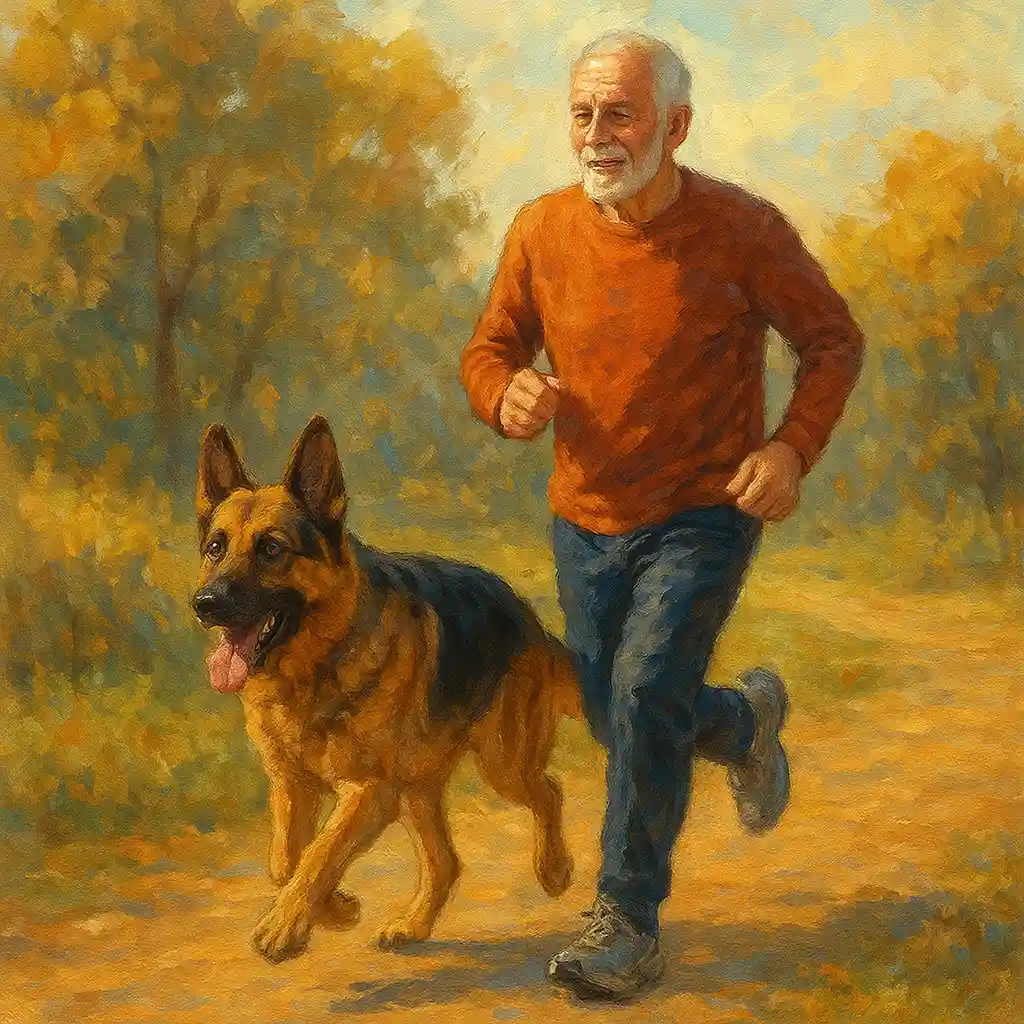
Jogging with Your German Shepherd can be one of the most rewarding ways to stay active, enjoy the outdoors, and build a stronger bond with a loyal companion. A German Shepherd (GSD) is smart, athletic, and often eager to move. At the same time, this breed can be sensitive to joint stress, heat, and overwork—especially if your dog is very young, older, or not used to steady running.
When you’re out jogging with your German Shepherd, it’s essential to be mindful of the environment, ensuring your dog stays hydrated and comfortable during the run. Jogging with Your German Shepherd helps improve both your fitness levels while forging a deeper bond with your pet.
Why Jogging with Your German Shepherd is Good for Both of You
A steady jogging routine brings benefits for the body and the mind—for humans and dogs.
Physical benefits for seniors
- Better heart health with gentle cardio activity
- Stronger muscles and joints when training is gradual
- Better balance and coordination, especially when you move regularly
- Weight control and improved daily energy
- Healthier sleep after consistent movement
Physical benefits for German Shepherds
- Healthy weight and stronger muscles
- Better endurance and improved fitness
- Less boredom, which can reduce unwanted behaviors at home
- Good joint support, when the pace and distance are right
Mental and emotional benefits (for both)
- Stress relief through fresh air and movement
- A stronger bond, because you work as a team
- More confidence for your dog, especially when training is included
- A happier routine, since your dog looks forward to time with you
Jogging with Your German Shepherd can become more than exercise. It can become a daily rhythm that adds structure, calm, and joy.
Age Matters: When to Start Jogging (and When to Slow Down)
German Shepherds grow fast, but their bones and joints need time to fully develop. Starting too early can create long-term problems.
Ideal age to start jogging
Most German Shepherds can start structured jogging around:
- 12–18 months for very light running (only with vet approval)
- 18–24 months for regular jogging, because growth plates are more mature
Many vets prefer waiting until around 2 years for consistent jogging, especially if you want longer runs.
Signs your GSD may be too old for jogging
Some dogs love to run even when their body is not comfortable. Watch for these signs during or after exercise:
- Limping or favoring a leg
- Stiffness when getting up (especially the next day)
- Slower pace than normal, lagging behind, or stopping often
- Heavy panting that does not calm down after a short rest
- Refusing to go forward or turning back early
- Sore paws, cracked pads, or visible irritation
- Changes in mood: less interest, irritability, or unusual tiredness
If you notice these signs, reduce intensity and talk with your vet. A routine should support your dog’s health, not challenge it in a painful way.
Good alternatives for senior German Shepherds
For those just starting, remember that jogging with your German Shepherd should be a gradual process. Start with shorter distances and build up over time, allowing your dog to adapt to the routine of jogging with you.
If your dog is older or has arthritis, joint issues, or reduced stamina, you can still stay active together:
- Brisk walking (often the best replacement for jogging)
- Short “interval” walks: walk faster for 30–60 seconds, then slow down
- Swimming, if available and safe, for low-impact exercise
- Sniff walks, where your dog uses the nose and sets the pace
- Gentle hill walking on soft ground (short and controlled)
- Indoor games like hide-and-seek with treats or toys
As you and your German Shepherd become accustomed to jogging together, consider varying your routes to keep things interesting for both of you. This can enhance your experience while jogging with your German Shepherd.
Even without running, you can keep the same bonding time and health benefits.
Vet Check and Health Basics (Do This Before You Start)
Before beginning Jogging with Your German Shepherd, schedule a vet visit. This is especially important if:
- Your dog is under 2 years old
- Your dog is over 7–8 years old
- Your dog is overweight
- Your dog has a history of limping or stiffness
- You plan to jog several times per week
Ask your vet about:
- Joint health and signs of hip or elbow dysplasia
- Weight and ideal body condition
- Heart and lung health
- Safe weekly distance for your dog’s age and condition
- Any supplements or diet changes that may help
This one step can prevent many problems later.
Gear That Makes Jogging Safer and Easier
The right gear reduces pulling, improves control, and protects both of you.
Best walking/jogging setup for a German Shepherd
- A front-clip harness (often helps reduce pulling and protects the neck)
- A hands-free leash (optional, helpful for balance and comfort)
- A strong standard leash as a backup for busy areas
- ID tags and a microchip, in case something unexpected happens
Avoid jogging with a leash attached to a collar if your dog pulls. Neck strain is not worth it.
Senior-friendly gear for you
- Supportive running or walking shoes with good grip
- Comfortable socks that prevent blisters
- Light layers for changing weather
- A small waist pack for keys, phone, treats, and waste bags
- A visible or reflective vest if light is low
Safety and visibility tools
- Reflective leash or harness strips
- Clip-on LED light for your dog’s harness
- Reflective bands for your ankles or wrists
Paw protection options
German Shepherd paws are tough, but they can still get injured. Helpful options include:
- Dog booties (best for hot pavement, ice, rough trails)
- Paw wax/balm (adds a protective layer and prevents cracking)
- Regular nail trims (long nails change the way your dog lands and can cause pain)
Booties take practice. Introduce them slowly indoors first.
Warm-Up and Cool-Down: Small Steps That Prevent Big Injuries
Many injuries happen at the beginning or end of exercise, not during the middle. A warm-up and cool-down make Jogging with Your German Shepherd safer and more comfortable.
Simple warm-up (5–10 minutes)
- Start with easy walking
- Add gentle turns and slow changes in direction
- Let your dog sniff a little (keeps the mind calm and reduces sudden excitement)
For you, add:
- Shoulder rolls
- Easy ankle circles
- Slow leg swings (hold onto something stable)
Simple cool-down (5–10 minutes)
- Slow from jogging to steady walking
- Offer water after your dog calms down (not huge amounts while panting hard)
- At home, check paws and body (see the monitoring section below)
Building a Safe Jogging Routine (Step-by-Step)
The biggest mistake people make is doing too much too soon. A German Shepherd may look strong and ready, but tendons, paws, and joints need time to adapt.
Start slow: the safest plan
If you are new to jogging or your dog is new to jogging, begin with run/walk intervals.
Example for Week 1:
- 5 minutes walking warm-up
- 20 minutes total:
- Jog 30 seconds
- Walk 90 seconds
- Repeat
- 5 minutes cool-down walk
Keep the pace comfortable. You should be able to talk in short sentences.
Add distance slowly
A simple rule is to increase total jogging time or distance by no more than 10% per week. Many people do even better with slower progress.
Rest days are part of training
Rest prevents overuse injuries and keeps your dog happy. A good pattern is:
- Jog 2–3 days per week at first
- Walk or do light play on other days
- Take at least one full rest day weekly
German Shepherds often enjoy activity every day, but that does not mean they should run every day.
Reading Your Dog’s Body Language During the Jog
Your German Shepherd may not “complain” clearly, so body language becomes your best guide.
Signs your dog is doing well
- Relaxed ears and a steady pace
- Light panting, not extreme
- Willingness to keep moving without pulling or stopping
- Normal recovery within a few minutes after stopping
Signs you should slow down or stop
- Sudden lagging behind
- Repeated stopping, sitting, or lying down
- Limping or uneven steps
- Excess drooling or a very long tongue
- Wide, stressed eyes or frantic behavior
- Heavy panting that does not improve after a short walk break
When in doubt, stop, walk, and shorten the next session.
Paw Care: Protecting the Most Important “Running Shoes”
Paw care is often ignored until there is a problem. It is one of the most important parts of Jogging with Your German Shepherd.
Everyday paw protection tips
- Avoid hot pavement. If it is too hot for your hand, it is too hot for paws.
- Choose softer surfaces when possible (dirt paths, grass trails).
- Keep paw fur trimmed if it collects ice, mud, or debris.
- Use paw balm on dry pads.
- Check paws after every jog.
Signs of paw injury
- Limping or “tiptoe” walking
- Licking or chewing paws
- Redness, swelling, or bleeding
- Cracked pads
- A bad smell (could be infection)
- Small stones or thorns stuck between toes
Basic first aid (simple and safe)
- Rinse gently with clean water
- Remove visible debris carefully (do not dig deep)
- Pat dry
- Use a clean bandage if needed to stop light bleeding
- Rest for a few days and contact your vet if pain continues, bleeding is strong, or the area looks infected
Do not use harsh chemicals on paws without vet guidance.
Hydration and Nutrition for Active Seniors and Active Dogs
Hydration and food choices support safe movement, recovery, and energy.
Hydration during jogging
For you:
- Drink water before you leave
- Bring water if the session is longer than 20–30 minutes or weather is warm
For your German Shepherd:
- Offer small amounts during breaks
- Offer more after cooling down
- Bring a collapsible bowl or dog water bottle
Heat safety (very important)
German Shepherds can overheat, especially in warm or humid weather. Safer choices include:
- Jog early morning or later evening
- Choose shaded routes
- Reduce intensity when temperatures rise
- Stop immediately if your dog shows overheating signs
Nutrition for an active German Shepherd
Incorporating some basic commands into your routine can make jogging with your German Shepherd safer and more enjoyable. Commands like ‘heel’ and ‘slow’ can help manage your pace while you jog.
A German Shepherd who jogs regularly needs:
- High-quality protein for muscle support
- Balanced fats and carbs for steady energy
- A healthy weight (extra weight stresses joints)
Avoid feeding a large meal right before a run. A full stomach plus exercise can increase discomfort and risk.
Simple post-jog recovery snacks
For you (easy and senior-friendly):
- Banana and yogurt
- A small turkey sandwich
- Oatmeal with fruit
- A handful of nuts and a piece of fruit
For your dog (safe options in small amounts):
- A few pieces of their regular kibble
- Vet-approved training treats
- A small spoon of plain pumpkin (if your dog tolerates it)
Keep treats small. The main “recovery” for your dog is water, rest, and regular balanced meals.
Safe Places and Safe Habits for Jogging
A safe route can make the difference between a relaxing routine and a stressful one.
Best areas for jogging with a GSD
- Quiet neighborhoods with sidewalks
- Parks with wide paths
- Trails with stable footing (not steep or rocky)
- Open areas with low traffic and good visibility
Basic safety habits
- Use reflective gear when light is low
- Keep your dog on leash unless in a legal off-leash area
- Avoid crowded sidewalks where sudden stops happen often
- Carry a phone and ID
- Share your route with someone if you jog alone
Weather awareness
- In heat: reduce distance, choose shade, slow down
- In cold: protect paws from ice salt; consider booties
- In rain: watch for slippery surfaces and muddy paws
- In snow: check for ice balls between toes
Common Mistakes to Avoid (So You Stay Consistent and Injury-Free)
Small mistakes can turn a good plan into a painful one.
Mistake 1: Starting too fast
Excited dogs pull. New joggers push too hard. Start with short sessions and build slowly.
Mistake 2: Skipping warm-ups and cool-downs
This increases stiffness and injury risk for both you and your German Shepherd.
Mistake 3: Ignoring small warning signs
A small limp can become a serious injury if you keep running.
Mistake 4: Jogging in unsafe heat
Overheating is one of the biggest dangers for active dogs. Plan around the weather.
Mistake 5: Poor leash manners
A dog that pulls or changes direction suddenly increases fall risk. Training is part of safety.
Training and Commands That Improve Every Jog
Jogging with Your German Shepherd becomes much easier when your dog understands a few key cues. Training also keeps your dog mentally engaged.
Useful commands for jogging
- “Heel” or “Close”: stay near your side
- “Easy”: slow down
- “Stop”: pause at crossings
- “Leave it”: ignore food, trash, squirrels, or distractions
- “Wait”: hold position while you adjust something
Simple training tips
- Practice commands on walks first
- Reward calm behavior with small treats or praise
- Keep training short and positive
- If your dog is very excited, do a 5-minute calm walk before starting to jog
A well-trained jogging partner is not just pleasant. It is safer for your joints, your balance, and your confidence.
Monitoring Progress and Adjusting Your Plan
Always keep an eye on your German Shepherd’s behavior during jogging sessions. If your dog shows signs of fatigue, it’s important to pause and allow for rest. This attention to detail ensures that jogging with your German Shepherd remains a healthy and fun activity.
Consistency matters more than intensity. Keeping simple notes helps you prevent overtraining.
What to track
- Total time (including walking and jogging)
- How your dog looked and acted (happy, tired, stiff next day)
- Paw condition after the run
- Weather and surface type
- Your own comfort level
You can use a notebook or a simple phone note.
When to adjust
Adjust your routine if:
- Your dog is sore the next day
- You feel joint pain that lasts more than mild normal muscle tiredness
- Your dog’s paws become sensitive
- Weather becomes hotter, colder, or more slippery
- Your dog’s excitement causes pulling or unsafe movement
Reducing distance for one week is a smart choice, not a failure.
Real-Life Style Examples: What a Safe Routine Can Look Like for Seniors
Every senior has a different fitness level, and every German Shepherd has a different body. These examples show balanced approaches.
Example 1: New jogger + adult GSD (age 3–5)
- Monday: 25 minutes total (walk/jog intervals)
- Wednesday: 25 minutes total (same or slightly easier)
- Friday: 30 minutes total (add one extra interval)
- Other days: gentle walks and light play
Example 2: Active senior + fit adult GSD (age 2–6)
- Tuesday: 35 minutes total (steady jog with short walk breaks)
- Thursday: 35–40 minutes total
- Saturday: 45 minutes total on soft trail
- Other days: brisk walks, training sessions, rest day
Example 3: Senior dog who no longer jogs (age 8+)
- Daily: 20–40 minutes walking (split into two shorter walks if needed)
- 2–3 times per week: gentle hill walk or sniff walk
- Light indoor games for mental work
These routines support long-term health and reduce injury risk.
A Simple “First Month” Plan (Safe and Clear)
This plan is for healthy adult dogs who have vet approval and for seniors who want a gradual start.
Week 1
- 2 sessions: walk 5 min, jog 30 sec / walk 90 sec (repeat 10 times), walk 5 min
- 1 extra day: longer easy walk (no jogging)
Week 2
- 2–3 sessions: jog 45 sec / walk 75 sec (repeat 10 times)
- 1 extra day: easy walk or gentle play
Week 3
- 3 sessions: jog 60 sec / walk 60 sec (repeat 10 times)
- Add paw balm or booties if surfaces are rough
Week 4
- 3 sessions: jog 90 sec / walk 60 sec (repeat 8–10 times)
- Keep at least 1–2 rest days from jogging
At the end of the month, many pairs feel more confident. Some continue intervals. Others move into a steady slow jog with short breaks.
Final Thoughts: Make It Enjoyable and Sustainable
Jogging with Your German Shepherd works best when it is safe, calm, and consistent. The most successful routines are not extreme. They are steady and kind to the body—both yours and your dog’s.
Focus on:
- Starting at the right age and fitness level
- Vet approval and smart gear
- Warm-ups, cool-downs, and rest days
- Paw care, hydration, and weather safety
- Clear training and attention to your dog’s signals
With these habits, jogging becomes more than exercise. It becomes quality time, a healthier lifestyle, and a strong partnership—one step at a time.