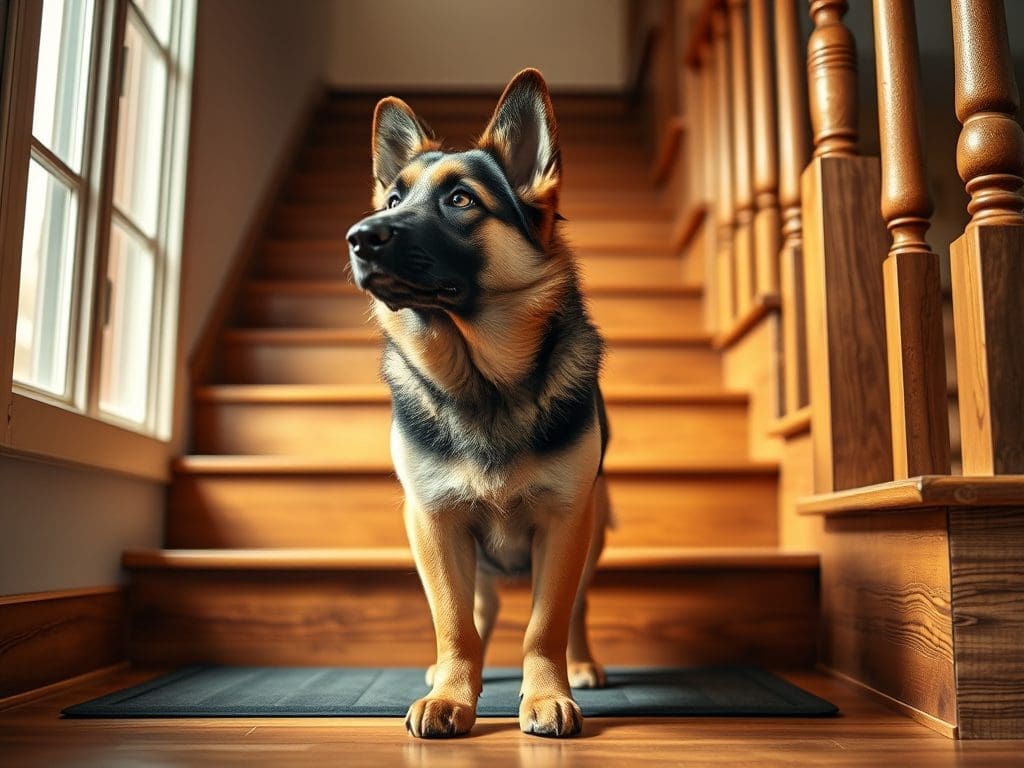
German Shepherd Dogs are strong, athletic, and loyal. They also have a higher risk of joint problems than many other breeds. Stairs can become a daily challenge for their hips, knees, elbows, and back—especially during puppy growth stages and later in senior years.
This guide is a complete plan for Protecting Your GSD’s Joints around stairs. It focuses on simple changes that bring real comfort and long-term joint support. You will find training tips, home safety ideas, carrying techniques, exercise alternatives, travel advice, and diet support—written in clear language and easy steps.
Why stairs matter for German Shepherd joint health
Stairs are not “bad” in every case. Many healthy adult German Shepherds use stairs with no visible problems. The risk comes from repetition, speed, slipping, and poor body control, plus underlying joint issues that may not be obvious at first.
Stairs can increase joint stress because they involve:
- Impact and compression when going down
- Heavy pushing power when going up
- Twisting risk if the dog slips or turns too fast
- Uneven weight shifts if one leg is already sore
Over time, this can add extra strain to joints that are already vulnerable due to genetics, growth, weight, muscle weakness, arthritis, or old injuries.
Common joint challenges in German Shepherds
German Shepherds can face several joint and mobility issues. Not every dog will have them, but the breed is more likely than average.
Common problems include:
- Hip dysplasia (hip joint does not fit well, causing wear and pain over time)
- Elbow dysplasia (abnormal elbow development and early arthritis)
- Osteoarthritis (joint inflammation and cartilage wear, often in older dogs)
- Cruciate ligament problems (knee injuries, sometimes after a slip)
- Back strain (often linked with weak core muscles or poor traction)
Stairs do not “cause” these issues alone, but they can speed up discomfort and make symptoms more noticeable.
Signs your GSD needs stair support
Dogs often hide pain. Small changes can be important. Watch for patterns, not just one moment.
Common signs include:
- Slower pace on stairs, especially going down
- Hesitation before stepping onto the first step
- Taking stairs one step at a time, not smoothly
- Using the wall for balance
- Slipping, scrambling, or toenails clicking more than usual
- Stiffness after sleeping, especially in the morning
- Less interest in jumping, playing, or long walks
- Soreness when touched around hips, knees, or lower back
If these signs appear, reducing stair strain is a smart step in Protecting Your GSD’s Joints, even before a formal diagnosis.
Puppies: why early stair control is so important
Puppies look fearless. Their joints and growth plates are still developing. Fast stair use during growth can increase stress on hips and elbows.
Key goals for puppies:
- Reduce repetitive stair use during rapid growth
- Teach careful movement and body control
- Build confidence without forcing impact work
Ramp training for puppies (simple and effective)
Training a puppy to use a ramp is one of the best long-term habits you can build. It supports joint protection now and creates a routine your dog can use later in life.
Step-by-step ramp training:
- Choose a calm time (not during high excitement).
- Let the puppy explore the ramp without pressure. Sniffing and stepping on it counts as success.
- Use treats to guide one step at a time. Reward every small move forward.
- Keep the ramp stable so it does not shake. Wobbling creates fear.
- Practice short sessions (1–3 minutes), several times a day.
- Add a cue like “ramp” once the puppy understands the action.
- Gradually reduce treats and replace with praise and normal routine.
A good ramp habit prevents “stair rushing,” which is one of the worst patterns for joint stress.
Choosing the right ramp (home and car)
A safe ramp should be:
- Non-slip (rubber, grip tape, textured surface)
- Low angle (gentle slope is easier on joints)
- Wide enough for confident foot placement
- Stable (no bending or sliding)
- Easy to clean for safe traction
For cars, many owners do best with a folding ramp that has a high-grip walking surface and side rails.
Adults: healthy stairs with good habits
Adult German Shepherds often seem “fine,” but joint protection works best before pain starts.
Simple habits that reduce risk:
- No running down stairs (down is higher impact than up)
- No sharp turns on steps or landings
- Controlled pace instead of excitement bursts
- Good traction so the dog does not slide
- Strong muscles to support joints
If your adult GSD is very energetic, focus on controlled movement. A dog that races stairs daily can slowly build wear in hips and knees, even if the dog looks strong.
Seniors: the slow descent strategy that protects joints
For senior German Shepherds, stairs can become the hardest part of the day. The best approach is often to protect the dog during descent and reduce the number of trips.
Why going down is harder
Descending stairs puts more body weight onto the front legs and shoulders. It also increases impact with each step. Arthritis in elbows and wrists can become more obvious during descent.
Slow descent technique (practical and realistic)
The goal is calm, controlled movement.
How to teach and support slow descent:
- Use a short leash for guidance, not pulling.
- Walk one step at a time with your dog.
- Keep your body beside, not in front of the dog.
- Reward calm behavior at the top and bottom.
- Avoid descent when the dog is highly excited.
If your dog rushes, it helps to pause on the landing and reset the pace. Over time, this becomes routine.
Supportive aids that help on stairs
Senior dogs often benefit from equipment designed for stability:
- Harness with a handle: helps you guide and support without pulling the neck
- Rear support sling: supports hind legs and hips during steps
- Ramp or stair lift solutions: best for dogs with arthritis or post-surgery recovery
- Toe grips or traction booties (if tolerated): improve stability on slippery steps
A harness is often the best first purchase because it supports many situations: stairs, car entry, slippery floors, and vet visits.
When carrying makes sense (and when it does not)
Carrying can protect joints in the right moment. It is also risky if done poorly. Large German Shepherds are heavy, and awkward lifting can injure both dog and handler.
Carrying can be useful when:
- The dog shows clear discomfort on stairs
- The dog is recovering from surgery
- The dog slips on stairs even with traction support
- The dog is weak, very senior, or losing balance
Carrying is not ideal when:
- The dog panics when lifted
- The handler cannot lift safely
- The staircase is narrow or steep
- The dog fights the movement, increasing fall risk
In those cases, ramps, slings, or blocking stair access may be safer options.
Safe carrying technique for a German Shepherd
If carrying is necessary, safety matters more than speed.
Basic rules:
- Keep the dog’s spine supported.
- Avoid dangling back legs.
- Lift with your legs, not your back.
- Move slowly and keep your center of gravity stable.
Two common carrying methods
1) “Chest and rear” support (best for many dogs)
- One arm supports the chest (under the front legs).
- The other arm supports the rear (under hips or thighs).
- Hold the dog close to your body.
2) Two-person carry (best for heavy or painful dogs)
- One person supports the front.
- One person supports the back.
- Move in sync and communicate each step.
If your dog is painful or may bite due to discomfort, professional guidance is important. Safety comes first.
Creating a safe stair environment at home
Home setup makes a major difference. Many joint injuries happen because of slipping, not because of stairs alone.
Non-slip improvements that work
- Carpet runners or stair treads with grip backing
- Rubber stair covers for wooden steps
- Grip tape designed for stairs (choose pet-safe materials)
- Keep nails trimmed for better traction
Traction support is a core part of Protecting Your GSD’s Joints, because slips often cause sudden twists in knees and hips.
Lighting and visibility
- Use bright, consistent lighting.
- Add a nightlight for evening stair use.
- Keep the stair edges visually clear.
Older dogs can have reduced vision, making stair edges harder to judge.
Keep stairs clear and predictable
- No toys, shoes, bags, or laundry on steps.
- No rushing around the dog on stairs.
- Use baby gates if you need to control access.
Add resting spots at top and bottom
A simple resting spot reduces strain and improves confidence.
Good options:
- A non-slip mat or dog bed near the top landing
- A water bowl on one level to reduce unnecessary trips
- A calm “wait” routine before using stairs
Exercise alternatives that build joint strength without stair stress
Stairs are not the only way to stay active. Joint-friendly exercise often improves mobility and reduces pain by building muscle and keeping weight controlled.
Low-impact physical exercise ideas
- Leash walks on flat ground (steady pace, not long fast runs)
- Swimming (excellent for many dogs with arthritis)
- Underwater treadmill therapy (often offered by rehab clinics)
- Gentle hill walking (small hills can be easier than stairs for some dogs)
- Controlled strength work like slow sit-to-stand, if approved by a veterinarian
For senior dogs, short, consistent sessions usually work better than rare long outings.
Mental exercise to reduce high-impact behavior
Mental work helps reduce “restless energy,” which often leads to stair rushing.
Good mental activities:
- Snuffle mats and scent games
- Food puzzles
- Basic obedience practice with slow, controlled movements
- Nosework games inside the home
A calmer dog uses stairs more carefully.
Diet support for joint health
Food choices can strongly influence joint comfort, especially through weight control and inflammation management.
The weight factor (very important)
Extra weight increases pressure on every step. Even a small weight change can matter for hips and knees.
Helpful habits:
- Measure meals
- Limit high-calorie treats
- Use part of the daily kibble as training rewards
- Track weight regularly
Lean body condition is one of the strongest daily tools for Protecting Your GSD’s Joints.
Nutrients often used for joint support
Many joint diets and supplements focus on:
- Omega-3 fatty acids (EPA/DHA) from fish oil for inflammation support
- Glucosamine and chondroitin for cartilage support
- MSM (often used for joint comfort)
- Green-lipped mussel (natural source of joint-support compounds)
- Vitamin E (often paired with fish oil)
Not every dog needs every supplement. Quality and dosing matter, and results are usually gradual, not instant.
Vet guidance for supplements
Before starting supplements, it helps to align with your veterinarian, especially if your dog:
- Takes other medications (like anti-inflammatories)
- Has pancreatitis history (fat content can matter)
- Has allergies or a sensitive stomach
- Has kidney or liver issues
A simple plan is better than a long list of products.
Practical daily routines that reduce joint strain
Small routines create big results over time.
Helpful daily habits
- Warm up with a short walk before active play
- Keep floors non-slip (mats on smooth surfaces)
- Avoid repeated jumping into cars or onto furniture
- Use ramps for cars and high beds
- Keep play controlled (less sharp turning on slippery surfaces)
Timing matters
Stiffness is often worse:
- After sleeping
- During cold weather
- After a very active day
On those days, reduce stair trips and focus on gentle movement.
Travel tips for stairs and joint safety
Travel often includes hotel stairs, outdoor steps, and unfamiliar surfaces. Planning helps prevent setbacks.
Travel gear that supports joint protection
- Folding ramp (car, porch steps, rentals)
- Harness with handle
- Non-slip mat for hotel floors
- Familiar blanket or bed for stable footing
- Paw wipes to remove water that can cause slipping
Movement rules during travel
- Keep the dog leashed near stairs for control.
- Avoid allowing the dog to jump out of the car after a long ride.
- Offer a short walk break before stairs, especially for seniors.
Choose accommodations that reduce stair needs
When possible, pick:
- Ground-floor rooms
- Elevators instead of stair-only properties
- Easy access to outdoor potty areas
Less stair use during travel protects joints and reduces fatigue.
Real-life style examples (simple, realistic success stories)
Example 1: Ramp training prevented future problems
A German Shepherd puppy learned ramp use for the car and porch steps during early months. The owner kept stair use limited during growth periods and used short training sessions with treats. As the dog grew, the ramp routine stayed normal, and the dog avoided high-impact jumping. The result was a confident adult dog with calm, controlled movement habits.
Example 2: Senior slow descent improved confidence
A senior GSD started hesitating on stairs, especially going down. The owner added stair treads for traction and switched to a harness with a handle. They practiced calm descents twice daily with pauses on the landing. Within a few weeks, the dog moved more steadily and slipped less. The dog also appeared less stiff after stair use.
Example 3: Carry support reduced flare-ups
An older German Shepherd with arthritis had good days and bad days. On bad days, the owner used a rear support sling for steps and carried the dog only when necessary. They also reduced stair trips by moving the dog’s resting area to the main floor. This decreased joint flare-ups and improved daily comfort.
These examples show something important: the best results usually come from consistent, simple changes—not one “perfect” product.
A clear stair plan for Protecting Your GSD’s Joints (quick checklist)
Use this as a practical summary.
For puppies
- Limit repeated stair trips
- Train ramp use early
- Prevent stair rushing
- Keep surfaces non-slip
For adult dogs
- Maintain healthy weight
- Improve traction on steps
- Avoid running down stairs
- Build muscle with low-impact exercise
For senior dogs
- Use slow descent routines
- Add a harness handle or support sling
- Reduce stair frequency when possible
- Consider ramps as the default option
For every age
- Keep stairs clear and well-lit
- Manage nails and paw traction
- Support joint health through diet and vet-approved supplements
- Choose safe movement over fast movement
Final thoughts: comfort now, mobility later
German Shepherds give their people everything: attention, protection, companionship, and steady loyalty. Supporting their mobility is one of the best ways to give something meaningful back.
Protecting Your GSD’s Joints on stairs is not about fear or limiting life. It is about smart prevention, safer movement, and comfort that lasts. A ramp, a harness, better traction, calmer routines, and good fitness can turn stairs from a daily stress point into a manageable part of normal life.
When these steps are put into place early, they often reduce pain later. When they are added during senior years, they often bring immediate relief and more confidence. Either way, the result is the same: a German Shepherd that can move more safely, rest more comfortably, and enjoy daily life with less strain.