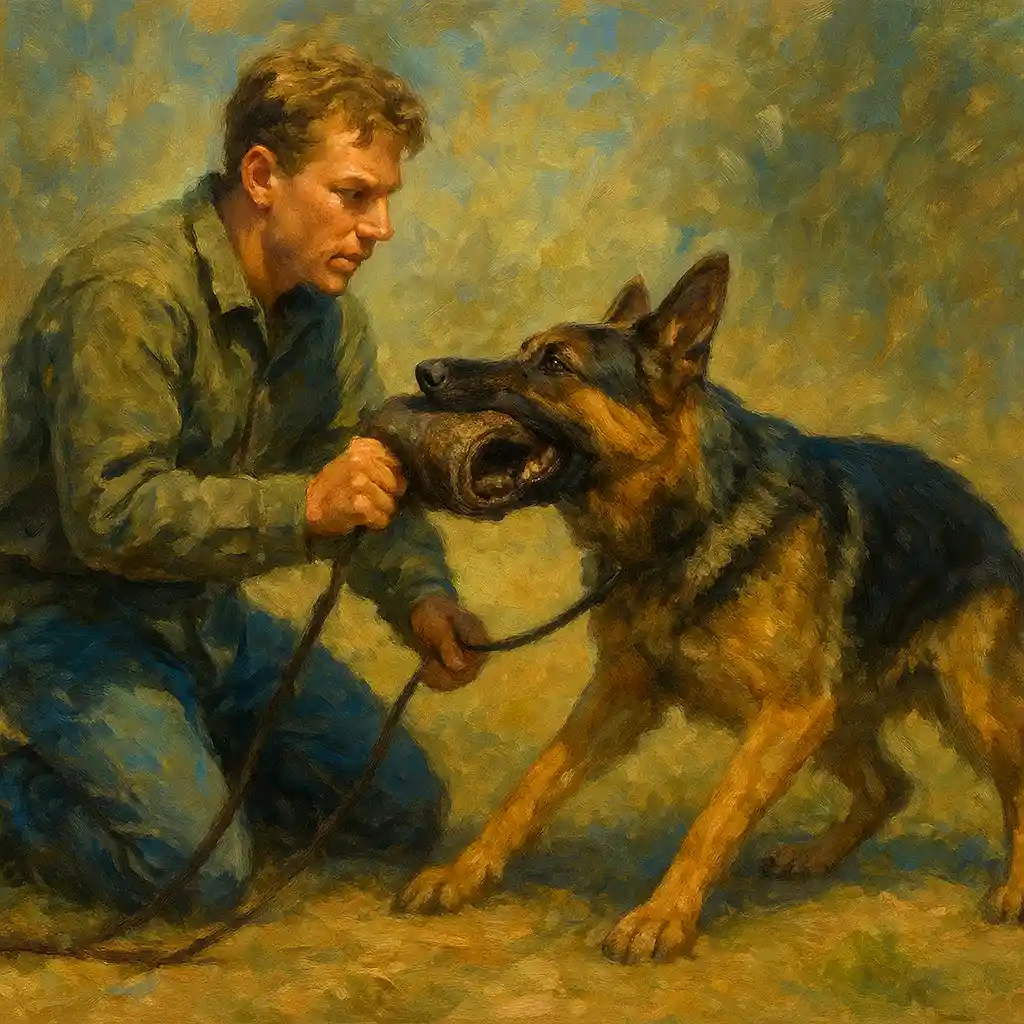
German Shepherd Dogs are smart, loyal, and full of energy. If you share your home with a German Shepherd puppy (or young dog), you may also share your home with sharp teeth. GSD mouthing is common, but that does not mean you must accept it. With the right steps, you can reduce nipping, protect your hands and clothing, and teach your dog gentle manners that last for life.
What “GSD Mouthing” Means (And Why It Happens)
GSD mouthing means your German Shepherd uses their mouth on people—hands, sleeves, ankles, shoes—often without breaking skin. It can look like “biting,” but it is usually not true aggression. For many German Shepherds, mouthing is a normal part of puppyhood and adolescence.
Common reasons German Shepherds mouth and nip
- Teething pain (puppies) Puppies bite to soothe sore gums. This is strongest from about 3 to 6 months, but can continue longer.
- Play and excitement German Shepherds often get overexcited. When their energy rises, their mouth may become part of play.
- Herding instincts German Shepherds come from working lines. Many will instinctively “control movement” by nipping at ankles or grabbing sleeves.
- Exploring the world Dogs do not have hands. Puppies explore with their mouth.
- Lack of rest A tired puppy can become mouthier, not calmer. Over-tired dogs often act “wild.”
- Not enough mental work German Shepherds need brain activity. When they feel bored, they may invent their own “game,” including mouthing.
- Accidental training If a dog mouths and you shout, wave your arms, or pull away fast, they may think it is fun and continue.
Playful Mouthing vs. Aggressive Biting: Know the Difference
Most GSD mouthing is playful, but it is still a problem if it hurts you or scares you. It helps to know warning signs.
Often playful (still needs training)
- Loose body and relaxed face
- Bouncy movement, playful energy
- Dog stops briefly if play ends
- Bites are quick, not deep
More serious (get help quickly)
- Stiff body, hard stare
- Low growl with tense face
- Guarding behavior (food, toys, spots)
- Snapping with intent to scare or hurt
- Repeated bites that do not stop when you end interaction
If you see the serious signs, contact a qualified professional (details later). Safety always comes first.
The Main Goal: Teach Bite Inhibition (Gentle Mouth)
You cannot simply tell a puppy “never use your mouth.” Instead, you teach bite inhibition, which means: “If your mouth touches skin, it must be gentle, and it must stop when asked.”
Bite inhibition is one of the most important life skills for a German Shepherd. Even a friendly adult dog may one day get scared, surprised, or hurt. A dog with good inhibition is much safer.
Step-by-Step Training Plan for GSD Mouthing (Simple and Consistent)
Below is a clear plan you can follow. The key is consistency: the same response every time, by every person in the home.
Step 1: Choose your “marker” word and your calm rule
Pick one short phrase you will use every time mouthing happens, such as:
- “Too bad.”
- “Gentle.”
- “No teeth.”
Say it calmly. Do not shout. Loud reactions often increase excitement and biting.
Your calm rule: If teeth touch skin → play stops.
That is the message your dog must learn.
Step 2: Use the “Ouch + Pause” method (soft, not dramatic)
Many people say “yelp like a puppy.” This can work, but for some German Shepherds, yelping makes them more excited. A better option for many homes is:
- The moment teeth touch skin, say “Ouch” in a normal voice.
- Freeze for 1–2 seconds (do not pull your hand away fast).
- Then move to a short timeout or remove attention.
This shows the dog the game ends when they bite.
Important: Do not keep talking. Do not lecture. Dogs learn from consequences, not speeches.
Step 3: Redirect to a toy (give the mouth a “job”)
German Shepherds need something appropriate to bite. Redirection is not “rewarding bad behavior” if you do it correctly. You are teaching the dog what to bite.
How to redirect:
- Keep a toy close (on a table, in pockets, in each room).
- When your dog gets mouthy, calmly place the toy in front of their mouth.
- The moment they bite the toy, praise softly: “Yes, good toy.”
Best toy types for GSD mouthing:
- Tug toys with handles (protects your hands)
- Rubber chew toys (strong, safe)
- Food-stuffed toys (busy and calming)
- Durable ropes (used with rules, not for free chewing)
Avoid: very small toys, toys that break, or toys that encourage wild jumping at your hands.
Step 4: Use short, clear timeouts (the “Play Stops” rule)
Timeouts are not punishment. They are a calm consequence: “When you bite, fun ends.”
When to use a timeout:
- Your dog keeps mouthing after redirection
- The bite pressure is too hard
- Your dog is overexcited and cannot listen
How to do a timeout (simple and safe):
- Say your marker: “Too bad.”
- Stand up and remove attention for 20–60 seconds.
- Turn your back, fold arms, look away.
- Or calmly step behind a baby gate.
- After the short break, return calmly and offer a toy or a simple cue (“sit”).
Timeout location ideas (senior-friendly):
- Behind a baby gate
- Puppy pen
- A safe room for a short “cool down”
- Crate (only if the crate is already a positive place)
Keep it short. One minute is enough. Long timeouts often confuse puppies.
Step 5: Reward calm behavior (positive reinforcement)
If you only react when your dog bites, you miss many chances to teach the right behavior.
Reward what you want:
- Calm sitting
- Lying down near you
- Chewing a toy
- Greeting without teeth
Easy rewards:
- Small soft treats
- Calm praise
- Gentle petting (if your dog enjoys it)
- A short game with a toy
Tip: Reward calm moments during the day. A German Shepherd learns quickly when calm behavior “pays.”
A Daily Routine That Reduces GSD Mouthing
Many biting problems improve when the dog’s day is better organized. German Shepherds do best with a predictable pattern: movement, brain work, rest.
Simple daily structure (example)
- Morning: short walk + sniffing time
- Mid-morning: chew toy or food puzzle
- Noon: short training session (5–10 minutes)
- Afternoon: calm play with toys, then rest
- Evening: walk + gentle training + quiet time
Young dogs also need a lot of sleep. Over-tired puppies can become mouthy and out of control.
Exercise: The Right Amount, the Right Kind
Exercise helps, but more exercise is not always the answer. Some people accidentally build an “athlete” dog who needs constant activity. For GSD mouthing, aim for balanced exercise plus calm training.
Senior-friendly exercise ideas
- Sniff walks (slower, very effective) Sniffing is mental work and reduces stress.
- Short fetch sessions (with rules) Keep it controlled. Stop before the dog gets too wild.
- Gentle tug (with clear start/stop) Tug can be great for teaching “take it” and “drop it.”
- Indoor leash walking practice Useful on bad weather days.
Avoid high-speed chaos right before quiet time. That often increases nipping.
Mental Stimulation: The Secret Tool for Calm Behavior
German Shepherds are thinking dogs. A bored GSD often uses their mouth as entertainment.
Great mental activities to reduce mouthing
- Food puzzle toys (start easy, then harder)
- Scatter feeding (throw kibble in the grass or on a snuffle mat)
- Basic obedience games: sit, down, touch, stay
- “Find it” (hide treats nearby and let your dog search)
- Simple scent games (hide a toy and let them sniff it out)
Even 10 minutes of brain work can calm a dog more than a long walk.
Socialization: Teaching Your GSD How to Behave Around People
Good socialization is not just meeting many people. It means learning to stay calm, safe, and confident.
Safe socialization that supports better mouth control
- Calm greetings (no jumping, no grabbing hands)
- Meeting friendly, stable dogs (not rough ones)
- Puppy classes with a qualified trainer
- Exposure to new sounds and places at a comfortable distance
A well-socialized GSD is less likely to use mouthing from stress or fear.
Training Classes: Why They Help (Especially for Seniors)
A structured class can make GSD mouthing easier to manage, because:
- You get real-time feedback
- Your dog practices around distractions
- You build skills like “leave it,” “drop it,” and “settle”
- You gain confidence handling your dog
Look for classes that use positive reinforcement and modern, humane methods. Avoid trainers who suggest harsh punishment for mouthing. Harsh methods may stop behavior for a moment, but they can increase fear and create bigger problems later.
Common Mistakes That Keep GSD Mouthing Going
Many good owners make these mistakes without knowing. Fixing them can speed up progress.
1. Waving hands, pushing the dog, or “play fighting”
This often turns mouthing into a fun game. Keep movements slow and calm.
2. Pulling away fast
Quick movement triggers chasing and nipping. Instead: freeze, then redirect.
3. Inconsistency
If one person allows mouthing and another person does not, the dog will keep trying. Make a family plan.
4. Using hands as toys
Never encourage a puppy to bite your hands, even gently. Teach toy play from day one.
5. Long emotional reactions
Yelling, long talks, or big drama often increases excitement. Short, calm consequences work best.
6. Too much exercise, not enough rest
An over-tired puppy can be a “land shark.” Build rest into the day.
Safety Tips for Seniors Living With a Mouthy GSD
Seniors deserve training plans that protect skin, balance, and confidence. These steps add safety without reducing kindness.
Practical safety upgrades
- Wear long sleeves and long pants during training weeks
- Use tug toys with handles to keep teeth away from hands
- Use baby gates to create safe space and easy timeouts
- Avoid floor play if it risks balance or falls
- Keep treats in a pouch so you do not reach into pockets fast
- Use a lightweight leash indoors for control (supervised only)
Home setup that helps
- Place toy baskets in key rooms
- Keep chew toys ready before greetings
- Create a quiet rest area (crate or bed)
- Remove slippery rugs if they increase fall risk
A safe environment makes calm training easier for both you and your dog.
What to Do in High-Risk Moments (Greetings, Zoomies, and Leash Time)
Some situations trigger GSD mouthing more than others. Plan for them.
When you come home
- Do not greet with hands first
- Toss a few treats on the floor (“find it”)
- Offer a chew or toy before petting
- Wait for calm sitting before attention
When your dog gets “zoomies”
Zoomies often mean “I need release and then rest.”
- Guide them to a safe space (open area, not near furniture)
- After 1–2 minutes, offer a chew toy and calm downtime
- If zoomies turn into biting, use a gate to separate briefly
During leash walks
Some GSDs bite the leash or hands when excited.
- Bring a tug toy to redirect (only if safe)
- Teach “touch” or “sit” as a reset
- Reward calm steps
- If needed, stop walking, stand still, and wait for calm
When to Seek Professional Help
You should get professional support if:
- Bites break skin
- You feel unsafe
- The dog guards food, toys, or spaces
- The dog shows stiff posture, hard staring, or serious growling
- The dog bites suddenly without clear play
Look for:
- Certified positive reinforcement trainers
- Veterinary behaviorists for serious cases
- Trainers with German Shepherd experience
Getting help early often prevents long-term problems.
Real-Life Progress: What Success Usually Looks Like
Most owners want mouthing to stop fast. Real improvement is often gradual, and that is normal.
Typical progress timeline (general)
- Week 1–2: Fewer hard bites, more redirection to toys
- Week 3–6: Puppy starts to pause when you say “ouch” or “too bad”
- Month 2–4: Much better bite control, calmer greetings
- Adolescence (6–18 months): A second challenging phase can happen, but training holds if you stay consistent
German Shepherds grow slowly. Many mature emotionally after 2–3 years. Early training is still worth it, because it shapes the adult dog you will live with for many years.
A Simple Success Story (What Works in Real Homes)
A senior owner adopted a 4-month-old German Shepherd puppy who nipped hands and sleeves every evening. The owner felt tired and worried, especially because thin skin bruised easily.
The plan was simple:
- Toy baskets in every room
- “Ouch” + freeze for two seconds
- Redirection to a tug toy
- One-minute timeouts behind a baby gate when needed
- Food puzzles after dinner to reduce evening “witching hour”
- Reward calm lying on a mat
After two weeks, the puppy still mouthed, but biting was softer and shorter. After six weeks, the puppy began to grab a toy by himself when excited. The owner also felt safer because the home setup made timeouts easy without physical struggle. Over time, the dog grew into a calmer, polite companion with strong bite inhibition and better self-control.
This is the real goal: not a perfect puppy, but a safe dog who learns gentle habits and respects boundaries.
Quick Reference: Your “GSD Mouthing” Action List
If you want a simple checklist, use this:
- Teach: teeth on skin = play stops
- Keep toys within reach in every room
- Use: “Ouch” (calm), freeze, then redirect
- If needed: short timeout (20–60 seconds)
- Reward calm behavior often
- Add mental work daily (puzzles, scent games, short training)
- Build rest into the schedule
- Use gates and safe spaces for senior-friendly control
- Avoid rough hand play and big reactions
- Get professional help if bites are serious or fear-based
Final Thoughts: Calm Training Builds a Strong Bond
GSD mouthing can feel frustrating, but it is also a training opportunity. Your German Shepherd is learning how to live with people. When you respond with calm structure—redirection, timeouts, and rewards—you teach your dog self-control without fear. Over time, you will see fewer nips, softer mouths, better manners, and a calmer home.
Consistency matters more than strength. Clear rules matter more than anger. And small daily training moments create the adult German Shepherd you can trust and enjoy for years.
With patient steps and a safe plan, GSD mouthing can improve dramatically—while your bond grows stronger every day.