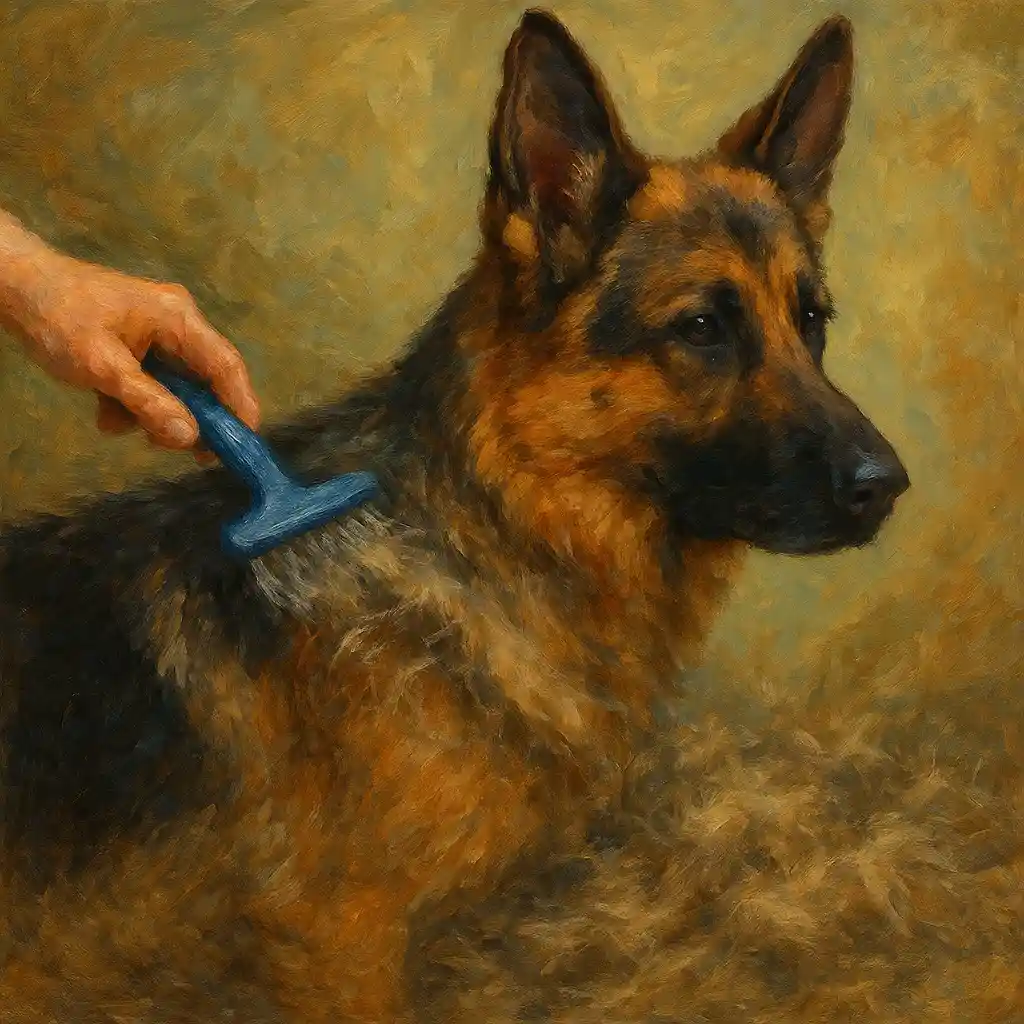
German Shepherd Dogs (GSDs) are famous for their intelligence, loyalty, and beautiful double coat. They are also famous for shedding. Hair on the floor, hair on the couch, hair on clothes—shedding can feel endless, especially during seasonal coat blows.
The good news is that you can Control Shedding in GSDs without over-bathing, over-brushing, or turning grooming into a daily struggle. Shedding is natural, but the amount of loose hair in your home can be reduced a lot with the right routine, tools, and care.
1) Why German Shepherds Shed So Much (and Why It’s Normal)
GSDs have a double coat:
- Topcoat (guard hairs): Longer, stronger hairs that protect from sun, dirt, and water
- Undercoat: Soft, thick hair that keeps them warm in winter and helps regulate temperature
Most shedding happens when the undercoat loosens and falls out. This is not a sign of bad health by itself. It is part of how the coat stays clean and balanced.
Seasonal shedding (“coat blowing”)
Many GSDs shed heavily twice a year:
- Spring: They drop the winter undercoat
- Fall: They adjust the coat for colder weather
Indoor dogs can shed all year because indoor heating and lighting reduce seasonal signals. Even then, there are usually “peak” shedding weeks.
When shedding is not normal
Shedding may be too much when you notice:
- Bald patches or thinning areas
- Red, irritated, or scabby skin
- Strong odor, greasy coat, or dandruff
- Constant scratching, biting, or licking
- Sudden heavy shedding outside the usual season
In these cases, grooming alone is not enough. Skin infection, allergies, parasites, thyroid issues, stress, or diet problems may be involved.
2) The Goal: Control Shedding in GSDs (Not Stop It Completely)
It helps to aim for the right goal. You cannot fully stop shedding in a healthy German Shepherd. But you can:
- Remove loose undercoat before it drops in your home
- Keep skin healthy so the coat sheds in a normal way
- Prevent mats and impacted coat (trapped undercoat)
- Reduce itching and irritation
- Keep furniture, floors, and clothing much cleaner
The best results come from a simple system: brush correctly + bathe at the right time + feed for coat health + watch the skin.
3) Best Tools to Remove Undercoat (What Actually Works)
To Control Shedding in GSDs, tools matter more than people expect. Using the wrong brush often wastes time and can irritate the skin.
Core grooming tools (recommended)
1) Undercoat rake (wide-tooth)
- Best for thick undercoat removal
- Great during heavy shedding weeks
- Works well on the body and hips
- Use gently; do not scrape the skin
2) Slicker brush
- Good for catching loose hair near the surface
- Helps smooth the coat after raking
- Useful for chest, behind ears, feathering areas
3) Metal comb (medium or wide)
- Great for checking your work
- Helps find small tangles before they become mats
- Useful for legs, tail, and “pants” area
4) Deshedding tool (use with care)
- Can reduce hair fast
- Some models cut hair if used too hard or too often
- Best as an occasional tool, not an everyday tool
5) Grooming glove (optional)
- Good for light daily hair pickup
- Not strong enough alone in shedding season
- Helpful for sensitive senior dogs who dislike brushes
Helpful extras
- Spray bottle with water or coat conditioning spray (light misting reduces static and breakage)
- High-quality pet shampoo and conditioner (for shedding season baths)
- Nail clippers or grinder (long nails can make dogs shift weight and dislike grooming)
- Treats for calm, positive grooming habits
- A strong vacuum designed for pet hair (for home management)
4) A Step-by-Step Brush-Out Routine That Gets Real Results
A thorough brush-out is the fastest and safest way to Control Shedding in GSDs. The key is doing it in layers and using a calm structure.
Step 1: Choose the right place
- Groom outdoors or in a washable area
- Use a towel or grooming mat for easier cleanup
- Avoid windy spots (hair spreads everywhere)
Step 2: Do a quick body check (30–60 seconds)
Look for:
- Ticks, fleas, scabs, bumps
- Red areas or hot spots
- Sensitivity (flinching, pulling away)
This protects your dog and prevents brushing over painful skin.
Step 3: Light mist (optional but useful)
A very light mist of water or conditioning spray helps:
- Reduce static
- Reduce hair breakage
- Make brushing smoother
Avoid soaking the coat. Damp is enough.
Step 4: Start with the undercoat rake
- Work in the direction of hair growth
- Use short strokes, not hard pressure
- Focus on heavy-shed areas: hips, back, sides, chest, and tail base
- Stop often to remove hair from the tool
Tip: If hair comes out in large soft clumps, you are in peak shedding. This is normal.
Step 5: Follow with a slicker brush
- Use gentle strokes to lift remaining loose hair
- Be careful on thin-skin areas: belly, armpits, behind ears
- If the slicker catches or pulls, slow down and switch to combing
Step 6: Finish with a comb check
Run a metal comb through key areas:
- Behind ears
- Collar area
- “Pants” (back legs)
- Tail and base of tail
If the comb glides through, you have removed loose undercoat and small tangles.
Step 7: Keep sessions short when needed
Some dogs handle 30–45 minutes well. Many do better with:
- 10–15 minutes daily for a week during heavy shedding This reduces stress and still removes a lot of hair.
5) How Often to Brush to Control Shedding in GSDs
The schedule changes with the season and your dog’s coat.
Normal months
- 2–3 brush-outs per week (10–20 minutes)
Peak shedding season (coat blow)
- Daily or every other day, especially during the worst 2–4 weeks
- Short sessions are fine as long as they are consistent
If the coat gets impacted
Impacted coat means loose undercoat is trapped and packed. Signs include:
- Coat feels thicker than usual
- Hair comes out in chunks only after long brushing
- Skin is not visible even when you part the fur
In this case:
- Brush more often
- Consider a professional groomer for a de-shed service
- Do not shave the coat (more on this below)
6) Bath Timing: How to Bathe Without Making Shedding Worse
Bathing can help loosen dead undercoat and reduce shedding—if done correctly. Over-bathing can dry the skin and increase flaking and irritation.
A simple bath frequency guide
For most GSDs:
- Every 6–8 weeks is a good average
- Some dogs do well with every 8–12 weeks, especially if skin is dry
- Extra baths are fine after mud, swimming, or strong odor, as long as you use gentle products
Best timing for a shedding-season bath
A bath works best:
- After a good brush-out (so water reaches the skin better)
- When the coat is actively shedding (bath helps release loose hair)
- When you have time to fully dry the undercoat (very important)
Choosing the right shampoo and conditioner
Look for:
- Gentle, dog-specific shampoo
- Moisturizing or soothing formulas (oatmeal or sensitive-skin types can help some dogs)
- A light conditioner can reduce dryness and help brushing
Avoid:
- Human shampoo (pH is wrong for dogs)
- Very strong “degreasing” shampoos unless prescribed
- Heavy fragrances if your dog has sensitive skin
Bath technique that supports coat health
- Brush before the bath
- Wet the coat fully (this takes time with a double coat)
- Shampoo gently down to the skin
- Rinse longer than you think you need
- Apply conditioner if used, then rinse well
- Towel dry thoroughly
- Dry the undercoat: air drying is often not enough during shedding season
- Use a dog dryer or cool/warm blow dryer (not hot)
- Keep the air moving to avoid overheating
- Brush again once fully dry
A clean, well-rinsed coat sheds in a healthier way. Leftover shampoo often causes itching, which leads to more scratching and hair loss.
7) Nutrition: The Hidden Key to a Strong Coat and Healthy Skin
Grooming removes loose hair, but nutrition helps the skin do its job. To Control Shedding in GSDs, coat care must include diet.
What good nutrition changes
- Stronger hair growth
- Better skin barrier (less dryness and itchiness)
- Less breakage and dullness
- More stable shedding patterns
Nutrients that support coat health
Omega-3 fatty acids (EPA/DHA)
- Supports skin moisture and reduces inflammation
- Often helpful for itchiness and dryness
Quality protein
- Hair is made of protein
- Low-protein diets can lead to weak coat and extra shedding
Zinc, Vitamin E, Biotin
- Support skin and coat strength
- Deficiency is uncommon on high-quality diets, but poor diets can cause issues
Supplements (useful, but not magic)
Common helpful options:
- Fish oil (omega-3 source)
- Skin-and-coat supplements designed for dogs
Safety notes:
- Use dog-safe products and correct dosing
- Too much can cause stomach upset or weight gain
- If your dog takes other medicines, check with a veterinarian before adding supplements
Water also matters. A well-hydrated dog often has healthier skin.
8) Special Grooming Tips for Senior German Shepherds
Senior GSDs often need a softer approach. Aging can change the coat and the body.
Common senior challenges:
- Arthritis or joint pain
- Sensitive skin
- Less patience for long grooming sessions
- Slower coat regrowth or changes in texture
Senior-friendly grooming adjustments
- Groom on a non-slip surface
- Use shorter sessions (5–15 minutes)
- Add breaks, especially for hips and back legs
- Use gentler tools first (slicker, glove) before raking
- Avoid forcing positions that stress joints
- Choose times when your dog is calm and comfortable
Extra comfort tips
- Brush after a short walk, when muscles are warmer
- Use a raised grooming surface only if your dog is stable and relaxed
- Support the belly or chest if your dog has trouble standing
For seniors, the best plan to Control Shedding in GSDs is consistency without pressure. Calm grooming protects trust and reduces stress-related shedding.
9) Shedding-Related Skin Issues: What to Watch and What Helps
When shedding is mixed with skin problems, the coat can look worse quickly. The goal is to keep skin calm and clean.
Common issues seen during shedding season
- Dry flakes (dandruff)
- Hot spots (moist, irritated patches)
- Allergies (seasonal or food-related)
- Secondary skin infections from scratching
- Parasites (fleas, mites, ticks)
Supportive care at home
- Brush regularly to improve airflow to the skin
- Keep the coat dry (moisture trapped in undercoat can irritate skin)
- Use gentle bathing products and rinse very well
- Clean bedding often during peak shedding
- Keep nails trimmed to reduce skin damage from scratching
When professional help is important
Seek veterinary care when you notice:
- Bald spots or patchy hair loss
- Open sores, bleeding, or oozing
- Strong odor plus red skin
- Intense itching that does not calm down
- Sudden shedding changes with low energy or weight changes
These signs may point to allergies, infection, endocrine problems, or other medical issues. Grooming helps comfort, but medical treatment may be needed.
10) Safety Rules During Brush-Outs (Avoid Irritation and Over-Grooming)
To Control Shedding in GSDs safely, it helps to follow a few clear rules. Many shedding problems get worse because owners brush too hard or too long.
Avoid skin irritation
- Do not “scrape” the skin with rakes or deshedding tools
- Use gentle pressure and let the tool do the work
- Avoid repeated strokes on the same spot
Prevent hair pulling
- If a tool catches, stop and switch to a comb
- Work small tangles carefully instead of forcing them out
- Use a detangling spray if needed
Watch your dog’s signals
Stop or take a break if you see:
- Lip licking, yawning, tense body
- Sudden head turning toward the brush
- Trying to sit or walk away repeatedly
A calm grooming routine builds long-term success.
Do not shave a German Shepherd coat
Shaving a double coat can:
- Damage coat structure
- Increase sunburn risk
- Reduce insulation against heat and cold
- Lead to uneven regrowth in some dogs
Trimming paws or hygiene areas can be fine. Full shaving is usually not the right solution for shedding.
11) Managing Shedding in a Multi-Dog Home (Without Feeling Overwhelmed)
With two or more dogs, loose hair multiplies fast. A simple system makes it manageable.
A realistic grooming schedule
- Pick specific grooming days (example: Mon/Wed/Fri)
- Add short daily brush-outs during peak shedding
- Keep tools ready in one place so setup is easy
Coordinate grooming to reduce cleanup
- Groom dogs back-to-back in the same area
- Vacuum once at the end
- Wash grooming towels weekly during heavy shedding
Sharing grooming tools safely
If dogs are healthy, sharing tools is usually fine, but hygiene matters.
- Remove hair from tools after each dog
- Wash brushes and combs regularly with warm soapy water
- Disinfect if one dog has a skin infection, fleas, or irritation
- If one dog has skin issues, keep separate tools until the issue is resolved
A steady routine is the best way to Control Shedding in GSDs when you have more than one shepherd (or shepherd mixes) in the house.
12) Home Cleanliness: Simple Habits That Keep Hair Under Control
Grooming reduces hair at the source, but home habits finish the job.
High-impact cleaning habits
- Vacuum high-traffic areas 2–4 times per week during peak shedding
- Use washable throws on couches and beds
- Brush dogs before indoor playtime when possible
- Use a lint roller near doors for quick clothing cleanup
- Run an air purifier if someone in the home is sensitive to dander
Best places to focus
- Entryways and hallways
- Dog sleeping spots
- Under furniture edges (hair collects there)
- Car seats and cargo areas
Small, frequent cleaning is easier than rare deep cleaning.
13) Proper Disposal (and Reuse) of Shed GSD Hair
Shed hair creates mess, but it can be handled cleanly and responsibly.
Safe disposal methods
- Put hair directly into a bag and seal it before tossing
- Avoid flushing hair (it clogs plumbing)
- Keep hair away from vents where it can spread again
Composting: use caution
Dog hair can sometimes be composted in small amounts, but:
- It breaks down slowly
- It may contain flea treatments or contaminants
- If compost is used for vegetables, it may not be the best choice
If composting, use only small amounts and avoid garden beds used for food.
Creative reuse ideas (simple and realistic)
- Place clean shed hair outside in a suet cage (small amounts) for birds nesting material
- Use hair as filler for outdoor craft projects (only if kept dry and contained)
Avoid leaving large loose piles outdoors. It can blow around and become litter.
14) A Simple “Best Practice” Weekly Plan (Easy to Follow)
This routine is designed to Control Shedding in GSDs with steady results, without overdoing it.
Normal season (low to moderate shedding)
- Brush: 2–3 times per week (10–20 minutes)
- Bath: every 6–10 weeks
- Diet: high-quality food, consistent feeding schedule
- Check skin: once per week during brushing
Peak shedding season (coat blow)
- Brush: daily or every other day (10–20 minutes)
- Deep brush-out: 1 time per week (30–45 minutes, with breaks)
- Bath: one bath during peak shedding can help (with full drying)
- Extra cleaning: vacuum more often, wash bedding weekly
Senior dog plan
- Brush: more frequent but shorter sessions
- Choose gentler tools first
- Add rest breaks
- Focus on comfort and skin health
15) What Success Looks Like (Realistic Results)
With a consistent routine, many owners notice:
- Less hair on floors and furniture
- Fewer “fur tumbleweeds” in corners
- A softer coat that smells cleaner
- Less itching and fewer dry flakes (when diet and bathing are right)
- Easier grooming sessions because the coat stays under control
Shedding may still happen, but it becomes manageable and predictable. That is the real win.
Conclusion: A Calm Routine Is the Fastest Way to Control Shedding in GSDs
German Shepherd shedding is part of life with this breed, but it does not have to take over your home. The most effective approach is not a single magic tool or a single bath. The best results come from a complete, gentle system:
- Understand seasonal shedding and normal coat changes
- Remove undercoat with the right tools and a step-by-step brush-out
- Bathe at smart intervals and dry the undercoat fully
- Feed for coat health (especially omega-3s and quality protein)
- Adjust grooming for senior comfort
- Watch for skin issues and get help when signs are not normal
- Keep home habits simple and consistent
- Dispose of shed hair cleanly and responsibly
Follow these steps with steady effort, and it becomes much easier to Control Shedding in GSDs while keeping your dog comfortable, healthy, and looking their best.