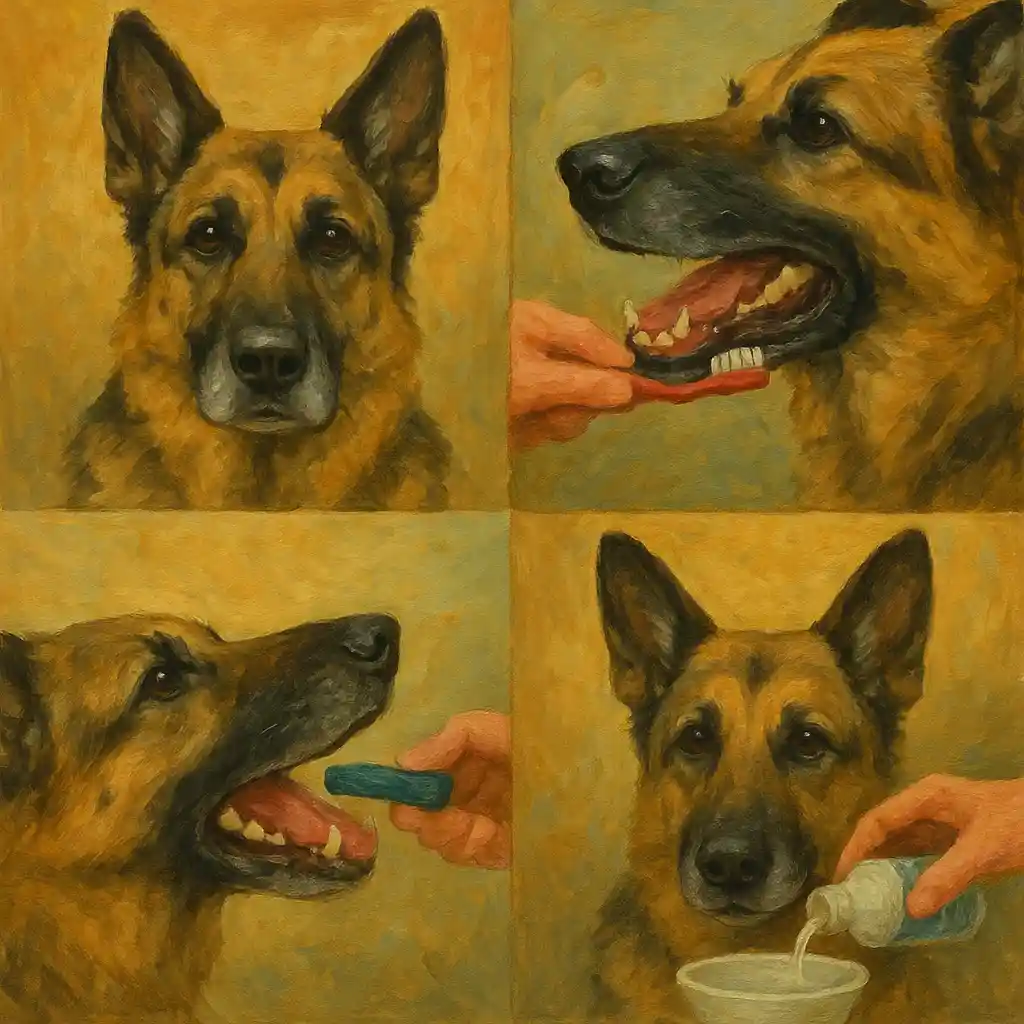
Senior German Shepherds are strong, loyal, and full of personality. As they get older, their bodies change—and their mouths change too. Teeth can wear down, gums can become sensitive, and plaque can build up faster than before. Good oral care is not only about fresh breath. It also supports comfort, appetite, and overall health.
This guide is a practical plan for German Shepherd Dental Health at home. It focuses on three main tools you can combine: toothbrushing, dental chews, and safe water additives. You will also learn how diet supports dental hygiene, how to spot problems early, and when professional care is needed.
Why German Shepherd Dental Health Matters More in the Senior Years
Dental problems are common in older dogs, including German Shepherds. Over time, plaque (a sticky film) turns into tartar (a hard layer). Tartar pushes under the gumline and can lead to inflammation, infection, and pain.
Poor dental health can affect more than the mouth. Bacteria from gum disease may travel into the bloodstream and can put stress on organs such as the heart, liver, and kidneys. Many senior dogs also hide pain well, so dental disease can grow quietly until it becomes serious.
Strong German Shepherd Dental Health habits help with:
- Easier chewing and better appetite
- Less mouth pain and less inflammation
- Cleaner teeth, healthier gums
- Fresher breath
- Lower risk of infections and costly dental procedures later
Common Dental Issues in Senior German Shepherds
Knowing the typical problems helps you act early and choose the right home care routine.
1) Plaque and tartar buildup
This is the most common issue. It often looks like yellow or brown buildup near the gumline.
2) Gingivitis (gum inflammation)
Gums may look red, swollen, or bleed easily. Gingivitis can turn into periodontal disease if not controlled.
3) Periodontal disease
This is more serious gum disease. It can cause gum recession, loose teeth, infections, and pain.
4) Broken or worn teeth
German Shepherds often like hard chewing. Over time, teeth can crack or wear down, especially in older dogs.
5) Tooth root infections
These may be hidden below the gumline. Signs can include swelling near the eye or jaw, or one-sided chewing.
Signs Your Senior German Shepherd May Have Dental Trouble
Checking your dog’s mouth often is one of the best habits for German Shepherd Dental Health. These signs suggest a problem:
- Bad breath that returns quickly after cleaning
- Yellow/brown tartar on teeth
- Red, swollen, or bleeding gums
- Drooling more than usual
- Chewing slowly or dropping food
- Preference for soft food only
- Pawing at the mouth or rubbing the face
- Irritability during touch near the head
- A visible lump, swelling, or discharge around the mouth
If these signs appear, professional dental advice is important. Home care helps a lot, but it cannot remove heavy tartar under the gums.
The Three-Part Home Plan for German Shepherd Dental Health
A strong routine is not about doing one perfect thing. It is about doing a few simple things consistently.
The most helpful combination for senior dogs:
- Brush training and gentle brushing
- Safe dental chews (chosen carefully)
- Water additive safety (optional support, not a replacement)
Each part supports the others. Brushing is the best tool for plaque control. Chews add mechanical cleaning and stimulation. Water additives can support fresher breath and bacterial control, depending on the product.
Part 1: Brush Training for Senior German Shepherds
Brushing is the gold standard for German Shepherd Dental Health. Even brushing a few times per week can lower plaque. Daily brushing is ideal, but consistency matters most.
Choosing the Right Toothbrush and Toothpaste
Toothbrush options
- Dog toothbrush with soft bristles: best all-around choice
- Finger brush: helpful for beginners, but can be less effective on back teeth
- Child-size soft toothbrush: can work for some large dogs if it fits well
For senior German Shepherds, soft bristles are important because gums may be sensitive.
Toothpaste rules
- Use dog toothpaste only
- Never use human toothpaste (it can contain ingredients that upset the stomach or are unsafe when swallowed)
- Choose a flavor your dog accepts (chicken, beef, peanut butter are common)
How to Introduce Brushing to a Senior Dog (Without Stress)
Older dogs can learn new habits, but they often need a slower pace. The goal is calm cooperation, not forcing.
Step 1: Mouth touch practice (2–4 days)
- Sit beside your dog in a quiet place
- Gently lift the lip for one second
- Give a reward
- Repeat, staying calm and brief
Step 2: Finger “brush” practice (3–7 days)
- Put a small amount of dog toothpaste on your finger
- Rub the outside of the teeth in a slow, gentle motion
- Focus on the back teeth where tartar builds fastest
- Keep sessions short (10–20 seconds at first)
Step 3: Toothbrush introduction (about 1 week)
- Let the dog sniff and lick the toothbrush
- Add toothpaste
- Brush 2–3 teeth only, then reward
- Slowly add more teeth over time
Step 4: Build a stable routine
Use the same time and place each day. Predictability helps senior dogs relax.
Step-by-Step: How to Brush a German Shepherd’s Teeth Properly
This method focuses on high value cleaning while staying gentle.
- Positioning: Stand or sit beside your dog, not in front
- Lift the lip: Focus on the outside surfaces of the teeth (this is where plaque builds most)
- Angle the brush: Aim at a 45-degree angle toward the gumline
- Use small circles: Gentle circular motions, especially on molars and premolars
- Keep it short: 30–60 seconds total is a strong start
- Finish with a reward: End calmly and positively
Best frequency
- Best: Daily
- Very good: 3–5 times per week
- Helpful: 1–2 times per week (better than nothing, but plaque returns quickly)
Best Practices for Senior Dogs
For senior German Shepherds, comfort is essential:
- Use a soft brush and light pressure
- Keep sessions short
- Avoid pushing into sore gums
- If bleeding is heavy or persistent, pause brushing and seek professional guidance
- Focus on consistency rather than long sessions
Part 2: Choosing the Right Dental Chews for Senior German Shepherds
Dental chews are popular because they are simple and dogs enjoy them. They help by scraping plaque off teeth and encouraging saliva flow. They do not replace brushing, but they can strengthen a home routine.
Benefits of Dental Chews for Senior Dogs
- Reduce plaque and tartar buildup
- Support gum health through gentle chewing
- Provide mental stimulation
- Can freshen breath
- Offer a predictable daily habit
Types of Dental Chews (Pros and Cons)
1) VOHC-accepted dental chews
The Veterinary Oral Health Council (VOHC) lists products with evidence for plaque or tartar reduction. When available, VOHC products are a strong choice.
Pros: evidence-based Cons: some dogs dislike certain textures
2) Enzyme-based dental chews
These use enzymes to help break down plaque.
Pros: helpful support between brushings Cons: still need correct size and supervision
3) Softer senior-friendly chews
These are designed for older teeth and gentler chewing.
Pros: safer for seniors, easier to chew Cons: may not scrape as strongly as firmer chews
4) Dental toys (chew toys with texture)
Some toys are designed to rub the teeth.
Pros: long-lasting, good for play Cons: can be too hard if chosen poorly
How to Select Safe and Effective Dental Chews for a Senior German Shepherd
Safety matters as much as effectiveness. Seniors may have worn teeth, weaker enamel, or hidden dental pain.
Use these guidelines:
Choose the right size
A German Shepherd needs a large-breed chew. Too small can become a choking risk.
Avoid “too hard” items
Very hard chews can break teeth, especially in older dogs. Many veterinary professionals advise caution with items that do not “give” under pressure.
Chews to be careful with include:
- Very hard bones
- Antlers
- Very hard nylon-type chews (especially for aggressive chewers)
Watch ingredients
Avoid chews with:
- Too much added sugar
- Unclear ingredient lists
- Strong artificial coloring (not always harmful, but not necessary)
Supervise chewing
Active supervision reduces choking risk. Replace chews that break into sharp chunks.
Match the chew to your dog’s chewing style
Some German Shepherds chew calmly. Others crush quickly. Choose texture and thickness based on how your dog actually chews.
Easy Ways to Add Dental Chews to the Routine
Consistency is easier when the habit fits daily life:
- Give one dental chew after the first meal of the day
- Use chews as a calm activity after walks
- Keep a fixed daily limit to protect weight and digestion
- Count dental chews as part of daily calories, especially for seniors
Part 3: Water Additive Safety for German Shepherd Dental Health
Dental water additives can support breath and oral bacteria control. They are not a substitute for brushing. Think of them as a “background helper” for the days when brushing is shorter or skipped.
Benefits of Water Additives
- Simple to use
- Can reduce bacteria that cause bad breath
- Helps support oral hygiene between brushing sessions
Potential Risks and Downsides
Not every additive is right for every dog. Risks can include:
- Stomach upset
- Refusal to drink (if taste changes)
- Sensitivity to certain ingredients
How to Choose a Safe Water Additive
Look for:
- Clear dosing instructions
- Products designed specifically for dogs
- Brands with strong safety testing or veterinary guidance
- Mild formulas for senior dogs
Avoid:
- Human mouthwash products
- Additives with unsafe sweeteners
- Anything that causes your dog to drink less water
Proper Usage and Dosage
- Follow label directions exactly
- Measure dose carefully
- Change water daily
- If any digestive upset occurs, stop the additive and return to plain water
Putting It Together: A Simple Weekly Routine That Works
A routine should feel realistic. This plan supports strong German Shepherd Dental Health without being complicated.
A balanced schedule for most senior German Shepherds
- Brushing: 4–7 days per week (daily if possible)
- Dental chew: 1 per day (or as the label recommends)
- Water additive: daily, if tolerated and approved for your dog
- Mouth check: once per week (30 seconds)
A “busy day” version
Even on busy days, one small action helps:
- A short brush of the outer teeth (15–30 seconds)
- Or a dental chew with supervision
Consistency over time brings results.
Monitoring Progress: What Improvement Looks Like
With steady care, changes often appear over weeks to months:
- Less bad breath
- Less visible plaque near the gumline
- Healthier gum color (less redness)
- Better comfort while eating
- More interest in chew toys and food
Some tartar cannot be removed at home. If heavy tartar is present, professional cleaning may be needed first. After that, home care helps keep teeth cleaner longer.
Diet and German Shepherd Dental Health in Senior Years
Diet affects dental health more than many owners expect. Food choice cannot replace brushing, but it can support the mouth and reduce plaque pressure.
Helpful diet choices
- High-quality senior dog food with balanced nutrients
- Dental-support dry diets (designed for oral hygiene)
- Crunchy vegetables in safe sizes (only if tolerated and approved for your dog)
- Dental treats that are clearly labeled and sized for large breeds
Foods and habits to avoid for better dental care
- Sticky, sugary treats (increase plaque growth)
- Frequent table scraps
- Very hard chewing items that risk tooth fractures
- Overfeeding treats (increases weight and can reduce overall senior health)
Hydration also matters. Fresh water supports saliva flow, which helps wash away food particles.
Overcoming Common Challenges in Senior Dental Care
Senior dogs may have habits and sensitivities. These strategies make the routine more successful.
Challenge 1: Resistance to brushing
Helpful strategies:
- Start with lip lifting and finger rubbing
- Use a highly palatable dog toothpaste
- Brush for a few seconds only and build slowly
- Keep your body language calm and steady
- Use rewards after brushing
Challenge 2: Sensitive gums
Helpful strategies:
- Use an extra-soft brush
- Reduce pressure
- Focus on outer tooth surfaces
- Keep sessions shorter
- Avoid brushing directly on inflamed areas until professional advice is given
Challenge 3: Strong tartar already present
Home care cannot break off hard tartar safely. Professional cleaning may be needed. After a cleaning, home care becomes much more effective.
Challenge 4: Chews cause stomach upset
Helpful strategies:
- Switch to a simpler ingredient chew
- Reduce frequency
- Choose a softer senior chew
- Keep treat portions modest
When Professional Dental Care Is Needed
Home care is powerful, but it has limits. Professional support is important if:
- Gums bleed heavily or stay inflamed
- A tooth looks loose, cracked, or dark
- Swelling appears near the mouth, jaw, or under the eye
- Appetite drops or chewing becomes one-sided
- Bad breath becomes strong and constant
- Your dog shows clear pain signs
Regular dental checkups help catch problems early. Many senior dogs benefit from planned cleanings based on veterinary guidance and overall health status.
Real-Life Results: What Often Happens When Owners Stay Consistent
Many owners notice a clear difference after building a routine:
- Brushing becomes faster and easier
- Breath improves
- Dogs chew more comfortably
- Gum redness reduces
- Dental visits become more predictable, with fewer surprises
The biggest “secret” is not a special product. It is steady habits. Even small brushing sessions, repeated often, protect German Shepherd Dental Health better than rare long sessions.
Safety Notes That Protect Senior German Shepherds
Dental care should never add risk. These points keep routines safer:
- Use only dog-safe toothpaste
- Supervise all chewing
- Avoid ultra-hard chews that can fracture teeth
- Keep water fresh, especially when using additives
- Watch for changes in drinking and eating
- Keep dental tools clean and replace toothbrushes regularly
- Adjust the routine if arthritis or stiffness makes certain positions uncomfortable
For senior German Shepherds, comfort is part of safety. A calm dog allows better cleaning.
A Simple Checklist for German Shepherd Dental Health
This checklist helps keep the routine clear:
Daily (ideal):
- Brush teeth (outer surfaces, gentle circles)
- Fresh water (with additive if used)
Most days:
- One safe dental chew with supervision
Weekly:
- Quick mouth check (gums, tartar, broken teeth, swelling)
- Note changes in breath, chewing, or appetite
Regularly (based on veterinary plan):
- Dental checkups
- Professional cleaning if needed
Final Thoughts: A Clean Mouth Supports a Better Senior Life
Senior German Shepherds give a lot every day: loyalty, protection, calm company, and deep connection. Supporting their comfort is part of giving back. A simple dental routine reduces pain risk, improves daily eating, and supports long-term health.
The best approach to German Shepherd Dental Health is not complicated. It is consistent:
- Gentle brushing, trained step by step
- Dental chews chosen for safety and effectiveness
- Water additives used carefully and correctly
- Diet choices that support oral hygiene
- Regular monitoring and professional support when needed
With these habits in place, many senior German Shepherds stay more comfortable, eat better, and enjoy their daily routines with more ease—well into their later years.