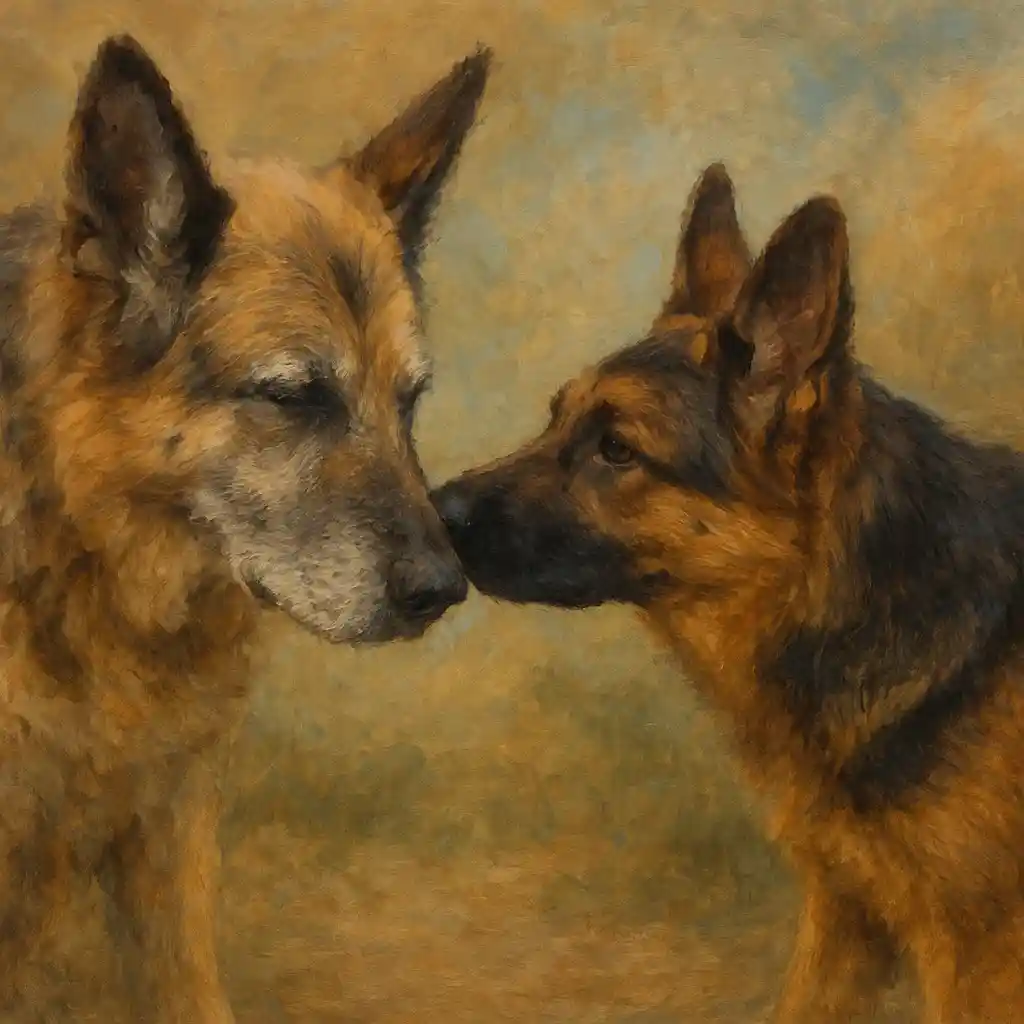
Senior German Shepherd Dogs can be loving, loyal, and deeply attached to their home and people. They also often have strong habits built over many years. When visitors arrive, those habits can show up as barking, rushing the door, jumping, whining, pacing, or even stiff, worried behavior. In a younger dog, this can look like “high energy.” In a senior dog, the same situation can become stress, discomfort, and confusion.
That is why Greeting Protocols for Senior GSDs are so valuable. A greeting protocol is a clear, repeatable routine that tells your dog exactly what to do when someone comes in. It reduces chaos, protects your guests, and helps your senior dog feel safe and in control.
Effective Greeting Protocols for Senior GSDs provide a framework for your dog’s behavior during arrivals.
- The “Place” command (go to a bed or mat and stay there)
- Leash control (calm management, not force)
- Rewarding calm behavior (so your dog chooses calm more often)
Implement consistent Greeting Protocols for Senior GSDs to help reduce anxiety in your pet.
It also includes preparation steps, safety tips, and solutions for common problems—written with senior GSD needs in mind.
Why greeting routines matter more for senior German Shepherds
Many senior GSDs still want to greet guests, but aging can change how they handle excitement. A visitor at the door brings movement, noise, new smells, eye contact, and sometimes sudden touching. For a senior dog, that can be a lot.
Understanding the importance of Greeting Protocols for Senior GSDs will help you create a calm environment for your dog.
Common age-related changes that affect greetings
Senior dogs may experience:
- Less patience for loud or fast greetings
- More sensitivity to touch (arthritis, hip or back pain)
- Lower hearing or vision, leading to surprise or startle
- Cognitive changes, making routines more important and confusion more likely
- Anxiety increase, especially if the dog feels less stable physically
Even when a senior GSD seems “happy excited,” the body may be under stress. A structured routine protects their joints, reduces slipping on floors, and prevents uncomfortable crowding.
Benefits of Greeting Protocols for Senior GSDs
A good protocol helps you achieve:
- A calmer entrance for guests
- Less barking and door rushing
- Fewer jumps, bumps, and accidental scratches
- Better safety for children and older visitors
- Less stress for your dog, which supports overall health
- A predictable routine that your senior dog can rely on
Practicing Greeting Protocols for Senior GSDs can transform your dog’s reactions to visitors.
The core idea: calm is the job
A greeting protocol is not about stopping your dog from feeling anything. It is about giving your dog a simple job:
Learn how to implement effective Greeting Protocols for Senior GSDs for a more peaceful home environment.
Following these Greeting Protocols for Senior GSDs is crucial for managing your dog’s stress during guest interactions.
- Go to a safe spot
- Stay there calmly
- Wait for permission to greet (or not greet)
This is especially fair for senior dogs. They do not need to “figure it out.” The routine makes it clear.
Using Greeting Protocols for Senior GSDs will ensure your dog’s comfort and safety when meeting new people.
Step 1: Create a “Place” station that supports your senior dog
The “Place” command works best when the place is comfortable and consistent. For senior dogs, comfort is not optional—it is part of training.
Choose the right location
Pick a spot that is:
- Far enough from the door that your dog is not face-to-face with guests
- Easy to reach without slipping (use rugs or runners if needed)
- Not in a tight corner where your dog can feel trapped
- A place where your dog can see you, but not block the walkway
Good options: a living room corner, a hallway area away from the door, or a spot behind a baby gate.
By mastering Greeting Protocols for Senior GSDs, you promote a well-behaved and calm dog.
Choose the right surface
Senior-friendly surfaces include:
- A thick dog bed with support
- A foam mat
- A stable rug that does not slide
Avoid thin towels or slippery blankets on hardwood floors. Add a non-slip pad underneath if needed.
Keep tools nearby
Store these near the entry:
- Treat pouch or small container of treats
- Leash (standard 4–6 feet)
- Optional: harness (often more comfortable than a collar for older dogs)
- Optional: baby gate or x-pen
Step 2: Teach the “Place” command (senior-friendly method)
For senior dogs, short sessions are best. Training should feel easy and safe, not intense.
What “Place” means
“Place” = go to the bed/mat, stay there, and relax until released.
A clear release word helps, such as “Free” or “Okay.”
Training steps
Practice when the house is quiet first.
- Lead your dog to the place Walk with your dog to the mat. Point to it. Keep the mood calm.
- Mark and reward The moment your dog steps onto the mat, reward. Calm praise, then a treat.
- Add the word “Place” Say “Place” as your dog steps onto the mat. Repeat many times.
- Build duration slowly After your dog steps on the mat, wait one second, then reward. Increase: 1 second → 3 seconds → 5 seconds → 10 seconds. Keep it easy. End before your dog gets frustrated.
- Add a down (optional) Many senior dogs relax best lying down. Reward heavily for a calm down on the place.
- Introduce the release word Say “Free,” then gently invite your dog off the mat. Reward again.
Session length
- 3–6 minutes, once or twice per day is enough
- Stop early if your dog seems tired
Treat choices for seniors
Use soft, easy-to-chew treats. If your dog has dietary limits, use part of a meal kibble, or vet-approved options.
Step 3: Add leash control (calm management, not a battle)
Leash control is not about pulling your dog away from guests. It is about preventing rehearsal of door chaos.
Why leashes help during greetings
A leash:
- Stops rushing and jumping before it starts
- Keeps everyone safe
- Helps your dog succeed without confusion
- Gives you time to reward calm behavior
For senior dogs, a harness can reduce neck pressure and improve comfort.
Simple leash handling rules
- Keep the leash short enough for control, but not tight
- Avoid constant tension; it can increase excitement
- Stand still and breathe; your calm body helps your dog calm down
- Use gentle guidance back to “Place” instead of jerking corrections
If your dog tends to lunge, place your body between your dog and the door while guiding back to the mat.
Step 4: Build the full greeting routine (your complete protocol)
Once “Place” is familiar in quiet practice, it is time to use it in real life. At first, set up practice with someone who can follow instructions.
The basic visitor routine (repeat every time)
Before the door opens:
- Put the leash on your dog (or have it ready).
- Ask for “Place.”
- Reward calm body language on the mat.
When the guest enters:
- The guest enters quietly and ignores the dog at first No reaching, no excited talk, no direct staring.
- You reward the dog for staying calm on Place Reward often in the first 30–60 seconds.
After the guest is inside and calm:
- Decide if your dog will greet Not every senior dog enjoys greetings. It is fine to keep your dog on Place.
- If greeting is allowed: controlled greeting
- Keep leash on
- Approach slowly
- Stop if the dog gets too excited
- If your dog jumps or surges forward: calmly return to Place
- End greeting early and positively Return to Place for a final reward.
This routine teaches a powerful lesson: calm behavior makes good things happen.
Rewarding calm behavior: what to reward, exactly
Many people reward “not jumping.” That is hard for a dog to understand. It works better to reward clear calm behaviors.
Reward these:
- Four paws on the floor
- Sitting
- Lying down
- Soft face and relaxed ears
- Looking at you instead of the guest
- Quiet mouth (no whining or barking)
- Staying on the mat
Timing matters
Reward at the moment your dog is calm, not after the dog gets excited.
Use calm rewards
Avoid loud praise that increases excitement. Use a calm voice and steady movements.
A helpful strategy: treat “rain”
During the first minute of guest entry, drop treats one by one onto the mat. This keeps the nose down and the body still. It is simple and very effective.
Preparing your senior GSD before guests arrive
A greeting protocol works best when your dog is not already full of tension.
A calm pre-visit plan (30–60 minutes before)
- Short walk or gentle movement (based on health needs)
- Water available
- Bathroom break
- Light enrichment: sniffing games, a lick mat, or a food toy
- Quiet rest time
Avoid rough play right before guests come. It can raise arousal and make settling harder.
Set the environment up for success
- Use rugs on slippery floors
- Keep the entry area clear
- Lower loud music or TV
- Prepare a gate if you need extra control
Senior dogs often settle better when the home is predictable and quiet.
Desensitization practice: teach the routine without real guests
Real guests can be too exciting at first. Practice in small steps.
Practice with door sounds
- Dog on leash, go to Place
- Tap the door lightly
- Reward calm
- Repeat and slowly increase realism: knock louder, ring a doorbell sound on your phone, open and close the door
Practice with a familiar helper
Ask a friend or neighbor to help you do short sessions:
- Helper approaches door, then leaves
- Helper enters quietly, ignores dog
- You reward the dog on Place
- Session ends quickly
Short and successful beats long and stressful.
Safety tips for guests and senior GSDs
Safety is not only about bites. For senior dogs, safety includes joint health, stress levels, and avoiding falls.
Guest rules (simple and clear)
Ask guests to:
- Enter calmly
- Ignore the dog at first
- Avoid hugging, leaning over, or sudden touching
- Let the dog choose contact
- Use slow hand movements if petting is allowed
Children should not run toward your dog at the door. Keep children behind an adult until the dog is calm.
Watch for senior stress signs
A senior GSD may look “fine,” but stress can be subtle. Watch for:
- Lip licking
- Yawning when not tired
- Turning head away
- Stiff body
- Whale eye (white of eye showing)
- Tail low or tucked
- Panting when the room is not warm
- Shaking off (like drying after water) without being wet
If you see these signs, reduce pressure. Keep the dog on Place, create more distance, or give a break in another room.
Common challenges (and practical solutions)
Greeting Protocols for Senior GSDs work best when you expect problems and plan for them.
Challenge 1: Dog leaves Place instantly
Solution: lower the difficulty
- Reward faster on the mat
- Reduce distractions
- Practice duration separately from greetings
- Use a leash to prevent wandering
- Add a gate behind the Place area if needed
Challenge 2: Dog barks on Place
Barking can be excitement, fear, or guarding.
Solution: reward quiet and create distance
Encouraging calm and predictable interactions through Greeting Protocols for Senior GSDs benefits both your dog and your guests.
- Move Place farther from the door
- Use treat “rain” for the first 30–60 seconds
- Ask guests to enter more quietly
- Use a white noise machine near the entry if needed
If barking is intense or includes growling, consult a qualified trainer who has experience with shepherds and seniors.
Challenge 3: Jumping during greeting
Solution: remove greeting access
- If jumping starts, greeting ends
- Calmly return to Place
- Reward calm again
- Keep greetings short and controlled
For senior dogs, jumping can also risk injury. Many seniors do best with no direct greeting at the door.
Challenge 4: Dog becomes territorial
Territorial behavior often comes from feeling responsible for the door.
Solution: give a job, limit responsibility
- Use Place behind a gate
- Keep leash on
- Do not allow the dog to “lead” the guest into the home
- Reward calm observation from a safe distance
Challenge 5: Dog seems anxious, not excited
Some senior GSDs worry about strangers.
Solution: reduce social pressure
- Do not force greetings
- Keep dog on Place with rewards
- Let the dog choose to approach later
- Allow the dog to rest in another room if that is more comfortable
A calm dog who does not greet is still a successful outcome.
Real-life style examples (how success often looks)
Example 1: The door rusher becomes a calm observer
A senior GSD who always rushed the door begins training with Place in quiet sessions. After a week, the dog can stay on the mat for 20 seconds. After two weeks, a helper enters while the dog stays on Place with treat “rain.” After a month, the dog automatically moves to Place when hearing the door sound. The dog still feels excited, but the routine gives structure, and the excitement stays controlled.
Example 2: The anxious senior learns a safe routine
A senior GSD who dislikes strangers uses Place farther from the door, behind a gate. Guests ignore the dog fully. The dog receives slow, steady rewards for calm body language. Over time, the dog stops barking and begins resting on the mat while guests sit down. The dog is not required to greet. The home becomes quieter and safer.
These results come from repetition, calm handling, and realistic goals.
Long-term success: keep the protocol strong
Training is not one event. It becomes a habit through consistency.
Make it part of daily life
Practice Place in everyday moments:
- Before meals
- Before going outside
- When the vacuum is on (at a distance)
- When you sit down to relax
This makes Place feel normal, not only connected to guests.
Keep rewards, but fade slowly
Over time, you can reward less often, but do not stop completely. For senior dogs, continued positive reinforcement keeps the routine reliable and pleasant.
A simple long-term plan:
- Early stage: reward every few seconds during guest entry
- Middle stage: reward every 10–20 seconds, then randomly
- Maintenance: reward at key moments (door opens, guest sits, calm greeting ends)
Adjust for health changes
If your senior dog develops new pain, hearing loss, or cognitive issues, update the protocol:
- Move Place closer if walking is hard
- Use a thicker bed for comfort
- Reduce greeting time
- Increase distance from the door
- Choose calmer guests and quieter entries
Your dog’s needs can change over time. The protocol should change too.
A simple checklist for guest days
This short checklist makes Greeting Protocols for Senior GSDs easier to follow.
Before guests arrive
- Dog has had a bathroom break
- Treats ready
- Leash/harness ready
- Place bed is in position
- Floor is not slippery near the door
When the doorbell rings
- Leash on (or held)
- “Place” cue given
- Rewards begin immediately
Guest entry
- Guest enters calmly
- Guest ignores dog at first
- Dog stays on Place and gets rewarded
Greeting decision
- Controlled greeting on leash, or no greeting
- If excitement rises: return to Place
After entry
- Dog rests on Place or relaxes in the room
- Reward calm behavior occasionally
Conclusion: calm greetings protect your dog and your guests
Senior German Shepherds deserve respect, comfort, and clarity. Visitors coming into the home can be one of the most challenging moments of the day, especially for an older dog with strong instincts and changing physical needs. A structured plan makes this moment easier for everyone.
Greeting Protocols for Senior GSDs work because they replace chaos with a routine your dog can trust:
- The “Place” command gives a clear location and job
- Leash control prevents rushing, jumping, and unsafe choices
- Rewarding calm behavior teaches your dog what success looks like
With consistent practice, calm handling, and senior-friendly setup, your dog can learn to welcome guests in a way that feels safe, polite, and peaceful. Over time, the doorbell stops being a trigger and becomes a cue for calm structure.
This is not only better manners. It is better quality of life—for your senior GSD, for your guests, and for you.