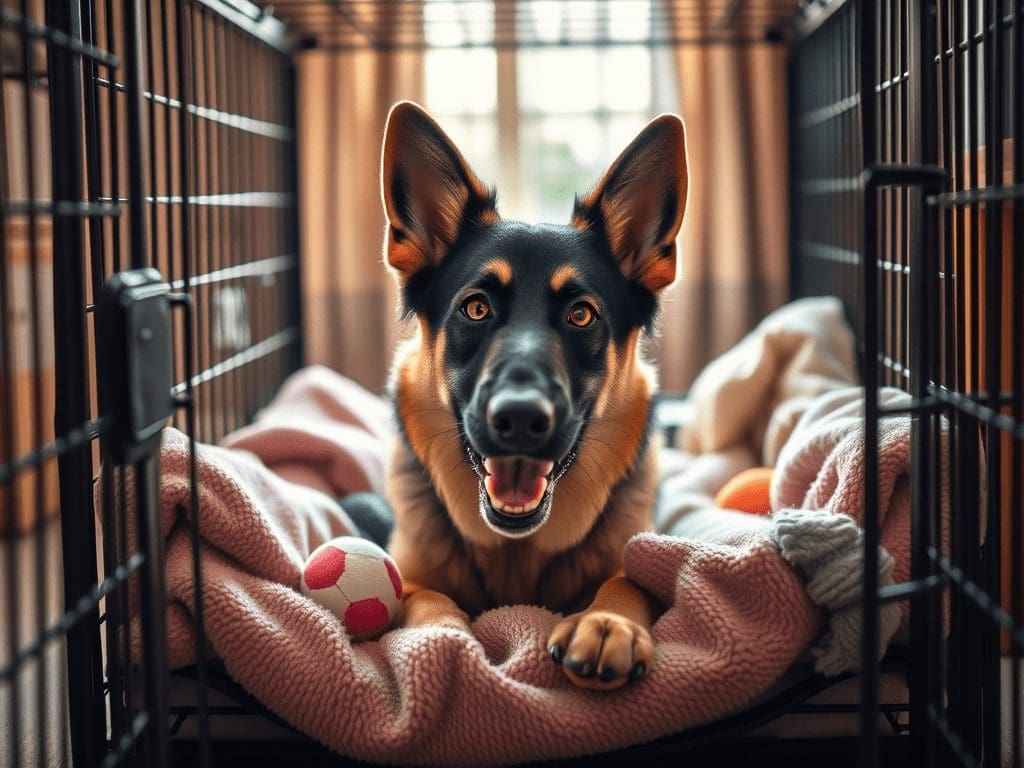
Bringing home an adult rescue German Shepherd is a special moment. Many German Shepherds are smart, loyal, and sensitive. But rescue dogs can also feel unsure at first. New sounds, new people, and new rules can be stressful. This is where crate training can help.
Implementing a well-structured Crate Training Plan for Rescue German Shepherds is essential for their adjustment.
Implementing a structured Crate Training Plan for Rescue German Shepherds is essential for a smooth transition into their new home.
This comprehensive guide serves as your go-to Crate Training Plan for Rescue German Shepherds, ensuring a smooth transition for your new pet.
This method is part of the comprehensive Crate Training Plan for Rescue German Shepherds aimed at enhancing their comfort and security.
Follow this Crate Training Plan for Rescue German Shepherds for a successful introduction to crate life.
A crate is not a punishment. When it is introduced in the right way, the crate becomes a safe, calm place—like a private bedroom for your dog. It helps your German Shepherd rest, feel protected, and learn a new daily routine. It can also support house training, prevent chewing, and make travel and vet visits easier.
This post gives you a complete Crate Training Plan for Rescue German Shepherds, designed for adult rescue dogs. It is gentle, clear, and realistic. You will learn what to prepare, what to do each day for 5 days, what mistakes to avoid, and how to solve common problems like whining or barking. You can follow it step by step, and you can slow down if your dog needs more time.
This Crate Training Plan for Rescue German Shepherds prepares them for a successful transition.
Why Crate Training Helps Adult Rescue German Shepherds
Adult rescue dogs often arrive with unknown history. Some were never trained. Some were punished in the past. Some had unstable homes. Even if your dog is friendly, they may still feel nervous when left alone.
A crate can help because it:
- Creates safety and structure: Dogs relax when life feels predictable.
- Reduces stress: A covered, quiet crate can feel like a den.
- Prevents destructive behavior: It stops chewing, scratching doors, and grabbing unsafe items.
- Supports house training: Most dogs do not want to soil their sleeping area.
- Improves alone-time skills: This is important for separation stress.
- Helps during travel and vet care: A dog who knows a crate is easier to transport and manage.
Crate training is not about locking a dog away. It is about teaching calm behavior and building trust.
This Crate Training Plan for Rescue German Shepherds emphasizes reward-based training techniques.
Using this Crate Training Plan for Rescue German Shepherds can lead to a happier, more well-adjusted dog.
First: What Crate Training Is (And What It Is Not)
With patience and consistency, this Crate Training Plan for Rescue German Shepherds will help your dog feel secure.
This Crate Training Plan for Rescue German Shepherds supports their emotional well-being.
Before you start your Crate Training Plan for Rescue German Shepherds, it is important to understand the right mindset.
Crate training is:
- A way to teach your dog to settle and rest
- A safe management tool when you cannot supervise
- A method that uses rewards, comfort, and patience
The Crate Training Plan for Rescue German Shepherds emphasizes positive reinforcement and trust building.
Crate training is not:
- A punishment
- A long-term “storage space” for a dog
- A replacement for exercise, training, or attention
A crate works best when your German Shepherd gets daily walks, mental stimulation, and calm social time.
Adhering to the Crate Training Plan for Rescue German Shepherds helps reduce anxiety.
Preparation: Set Yourself Up for Success
Good preparation makes crate training much easier. If you prepare well, your dog will learn faster and feel safer.
1) Choose the Right Crate Size (Very Important)
A German Shepherd needs a strong, comfortable crate. Your dog should be able to:
- Stand up without hitting the top
- Turn around easily
- Lie down fully stretched
Typical crate size for adult German Shepherds:
- Many adult GSDs fit best in a 42-inch crate
- Large males may need a 48-inch crate
If the crate is too big, some dogs may toilet in one corner. If it is too small, the dog may feel trapped. If you are between sizes, choose the one that allows natural movement, but do not go extreme.
Tip: A crate with a divider can help you adjust space if needed.
2) Pick a Crate Type That Matches Your Dog
Common options:
- Wire crate: Good airflow and visibility. Easy to clean. Often best for home use.
- Plastic airline crate: More den-like, often calming for anxious dogs.
- Heavy-duty crate: Best for dogs who panic, chew metal, or try to escape.
If your rescue dog shows strong panic behavior, talk to a professional trainer. Some dogs need a different plan to stay safe.
3) Place the Crate in the Right Location
A good location is:
- Quiet, but not isolated
- Away from direct heat, cold drafts, and loud doors
- Close enough that your dog can feel part of the home
Many people start with the crate in the living room during the day and in the bedroom at night (or move it later). For the first week, being near you often helps a rescue dog relax.
4) Make the Crate Comfortable (But Safe)
Recommended items:
- A soft blanket or mat (if your dog does not chew bedding)
- A chew-safe toy
- A stuffed food toy (like a Kong) for longer sessions
- A water bowl that clips to the side (optional)
Avoid:
- Choking hazards
- Very hard chews without supervision
- Anything your dog can destroy and swallow
If your dog chews fabric, use a flat crate mat designed for chewers or keep it simple at first.
5) Choose Rewards Your Dog Truly Likes
For crate training, use high-value rewards:
- Small pieces of chicken
- Cheese (tiny amounts)
- Soft training treats
- A favorite toy (for toy-motivated dogs)
Keep treats small. You want many rewards without upsetting your dog’s stomach.
Ground Rules for This Crate Training Plan
This Crate Training Plan for Rescue German Shepherds works best when you follow these rules:
- Never force your dog into the crate.
- Never use the crate for punishment.
- Start easy and go slowly.
- Reward calm behavior, not panic.
- End sessions on success. Short and positive is better than long and stressful.
Also, remember: this is a “5-day plan,” but your dog may need 7, 14, or 21 days. That is normal. The plan gives structure, not pressure.
Day 1: Introduce the Crate (No Closing the Door Yet)
With this Crate Training Plan for Rescue German Shepherds, you can create a loving and safe environment.
Goal:
Your dog learns: “The crate is safe. Good things happen there.”
Steps:
- Leave the crate door open.
- Toss a treat near the entrance. Let your dog take it and walk away. Repeat.
- Toss treats a little deeper inside. Let your dog choose to step in.
- Place a toy inside. Praise gently when your dog investigates.
- Let your dog explore freely. No pushing, no pulling.
What success looks like:
- Your dog can eat treats near the crate
- Your dog steps inside for a second or two
- Your dog shows curiosity, not fear
Extra tips for Day 1:
- Keep sessions short (2–5 minutes, several times per day).
- Use a calm voice. No excitement is needed.
- If your dog is worried, make it easier: toss treats closer to the door.
Implementing this Crate Training Plan for Rescue German Shepherds can transform their experience in the crate.
Day 2: Meals and Treats in the Crate
Goal:
Your dog builds strong positive feelings about the crate.
Steps:
- Feed meals near the crate, then just inside the crate, then deeper inside (as your dog is ready).
- Keep the door open during meals at first.
- Give special crate-only treats (something your dog does not get elsewhere).
- After the meal, let your dog leave freely.
Optional step (only if your dog is calm):
- Close the door gently for 3–10 seconds while your dog is eating, then open it before your dog finishes or worries.
What success looks like:
- Your dog walks into the crate quickly when food appears
- Your dog stays inside to eat without stress
- Your dog remains relaxed with the door moving
Important note:
If your dog stops eating, freezes, or backs away when the door moves, do not continue closing it. Go back to door-open meals and rebuild comfort.
Keep in mind that this Crate Training Plan for Rescue German Shepherds is flexible and can be adjusted based on your dog’s needs.
Day 3: Short Crate Sessions With the Door Closed
Goal:
Your dog learns: “I can stay calm with the door closed.”
Steps:
- Ask your dog to go into the crate using a lure (treat in hand).
- When your dog enters, give several treats inside the crate.
- Close the door gently.
- Wait 5–20 seconds while your dog is calm.
- Open the door before your dog starts whining or pawing.
- Repeat, slowly increasing time.
Be patient, and remember this Crate Training Plan for Rescue German Shepherds is a journey towards trust and comfort.
This practical Crate Training Plan for Rescue German Shepherds is essential for their well-being.
Add a simple cue (optional):
Use a consistent word like “Crate” or “Bed.” Say it once, then lure. Over time, your dog will learn the cue.
What success looks like:
- Your dog can relax for 30–60 seconds with the door closed
- Your dog takes treats calmly inside
- Your dog shows less interest in leaving immediately
Common mistake to avoid:
Do not open the door while your dog is actively barking or pushing the door. Wait for a short pause or calm moment, then open. This teaches that calm behavior opens doors, not noise.
Day 4: Daytime Crating While You Are Home
Goal:
Your dog learns: “The crate is normal, even when life is happening.”
Many rescue German Shepherds can handle the crate when you are visible. The next step is helping them settle while you move around the home.
Steps:
- Give your dog exercise first (walk, training, sniffing).
- Place a chew or stuffed food toy in the crate.
- Ask your dog to enter. Close the door.
- Sit nearby for a few minutes.
- Stand up, walk around calmly, return, reward quiet behavior.
- Increase distance slowly: move to another chair, then to the kitchen, then out of view for a few seconds.
Helpful daily routine idea:
- Short crate session after morning walk
- Short crate session after lunchtime potty break
- Short crate session after evening walk
Utilizing this Crate Training Plan for Rescue German Shepherds helps establish a routine.
What success looks like:
A well-structured Crate Training Plan for Rescue German Shepherds promotes a peaceful environment.
- Your dog chews or rests in the crate
- Your dog stays calm while you move around
- Your dog settles faster each time
If your dog struggles:
Reduce the difficulty. Stay closer. Shorten the time. Give a better chew. Progress is not a straight line.
Day 5: Alone Time and Overnight Crating
Goal:
Your dog can stay comfortable in the crate when you are not right next to them.
This is the step many people want fast—but it is also where rescue dogs often need the most support.
Steps for alone time:
- Give a walk and a potty break.
- Prepare a long-lasting food toy.
- Crate your dog calmly.
- Leave the room for 10–30 seconds and come back.
- Increase to 1 minute, then 3 minutes, then 5 minutes.
Keep your exits and returns calm. No dramatic goodbyes.
Steps for nighttime:
- Put the crate near your bed at first (this often reduces stress).
- Offer a final potty break right before sleep.
- Keep the room quiet and dark.
- If your dog whines, wait briefly. Many dogs settle in 1–3 minutes.
- If whining becomes intense panic, do not “push through.” Reduce difficulty and consider professional help.
What success looks like:
- Your dog settles in under 10 minutes
- Your dog sleeps longer stretches at night
- Your dog can stay crated while you step outside briefly
A Simple Daily Schedule (Example)
A German Shepherd is a working breed. Many crate problems come from boredom and lack of movement. A clear schedule helps.
Morning
- Potty break
- Walk + sniff time (20–40 minutes)
- Breakfast (in crate)
- Short rest (crate session 10–30 minutes)
Midday
- Potty break
- Short training session (5–10 minutes) + play
- Rest time (crate session 20–60 minutes if ready)
Evening
- Walk or play (30–60 minutes total activity)
- Dinner (in crate)
- Calm time with family
- Final potty break
- Sleep (crate)
This is only an example. Adjust to your dog’s energy level and your lifestyle.
Implementing the Crate Training Plan for Rescue German Shepherds ensures your dog’s comfort.
Common Mistakes to Avoid (And Better Choices)
Crate training goes wrong when good people make normal mistakes. Here are the big ones to avoid.
Mistake 1: Using the crate as punishment
Why it fails: Your dog learns the crate predicts scary moments. Better choice: Use the crate only for rest, food, and calm time.
Mistake 2: Going too fast
Why it fails: Your dog feels trapped and panics. Better choice: Increase difficulty in small steps: seconds → minutes → longer.
Mistake 3: Crating a dog without exercise first
Why it fails: An active dog cannot relax. Better choice: Walk, sniff, and train before crate sessions.
Mistake 4: Letting barking “work”
Why it fails: Your dog learns noise opens the door. Better choice: Reward quiet moments and calm body language.
Mistake 5: Leaving a dog crated too long
Why it fails: It causes stress and can lead to accidents. Better choice: Use the crate in reasonable blocks, with breaks.
Troubleshooting: Real Problems and Practical Fixes
Every rescue dog is different. If you face problems, you are not failing. You just need the right adjustment.
1) “My dog refuses to enter the crate.”
Possible causes:
- Fear from past experience
- The crate smells strange
- The space feels too exposed or too closed
Fixes:
- Feed meals near the crate for several days
- Toss treats inside and let your dog choose
- Try covering part of the crate with a blanket
- Try a different crate type (plastic can feel safer for some dogs)
- Keep sessions very short and end early
2) “My dog whines or barks when the door closes.”
Possible causes:
- The step is too hard right now
- Your dog has separation stress
- You are waiting too long before opening
Following the Crate Training Plan for Rescue German Shepherds is key to successful crate training.
Fixes:
- Close the door for 1–3 seconds, then open before whining starts
- Reward calm behavior inside the crate
- Use a stuffed food toy to help your dog settle
- Practice many short sessions, not a few long ones
3) “My dog has accidents in the crate.”
Possible causes:
- Crate is too large
- Your dog was left too long
- Medical issue
- Stress-related digestion
Fixes:
- Confirm crate size is correct
- Increase potty breaks
- Clean with enzyme cleaner
- Talk to a vet if accidents continue or if you see diarrhea, pain, or frequent urination
Never punish crate accidents. Your dog may already feel nervous, and punishment can create more stress.
4) “My dog panics and tries to escape.”
This is serious. Some dogs can injure teeth or nails.
Fixes:
- Stop long crate sessions immediately
- Return to door-open training
- Consider a safer crate style (heavy-duty)
- Work with a qualified trainer or behaviorist
- Ask your vet about anxiety support if needed
5) “My dog is fine when I’m home, but not when I leave.”
This often points to separation-related stress.
Fixes:
- Practice “fake exits” many times per day (keys, shoes, door)
- Leave for very short times and return before panic
- Keep departures calm and boring
- Use a camera to observe behavior
- Get professional help if it does not improve
As you progress, your dog will appreciate the structure of the Crate Training Plan for Rescue German Shepherds.
How to Know You Are Making Good Progress
Progress in crate training is not only “quiet.” Look for these signs:
- Your dog enters the crate faster
- Your dog chooses to rest near the crate
- Your dog can chew calmly inside
- Your dog recovers quickly after small stress
- Your dog sleeps better and seems more settled in the home
Many rescue German Shepherds start to show big improvement after 2–3 weeks of calm routine.
When to Get Professional Support
A good Crate Training Plan for Rescue German Shepherds should feel safe for both you and your dog. If you see any of the signs below, professional help is a smart next step:
- Panic behavior (biting bars, bleeding gums, broken nails)
- Extreme drooling, vomiting, or self-injury attempts in the crate
- Long-lasting howling or frantic barking that does not improve
- Strong separation anxiety symptoms outside the crate too
Look for a trainer who uses force-free or positive reinforcement methods, and who has experience with adult rescue dogs.
Final Thoughts: Make the Crate a Calm Part of Life
Crate training an adult rescue German Shepherd is not about control. It is about comfort, safety, and trust. When you stay patient and consistent, the crate becomes a helpful tool—not just for you, but for your dog’s emotional health.
This 5-day approach works because it builds the habit step by step:
- Day 1: safe introduction
- Day 2: food and strong positive feelings
- Day 3: short calm door-closed sessions
- Day 4: daytime routine practice
- Day 5: alone time and night routine
If your dog needs more time, slow down and repeat earlier days. Success is not speed. Success is your dog feeling safe.
Use this Crate Training Plan for Rescue German Shepherds as your foundation, keep sessions positive, and focus on calm progress. With time, many rescue German Shepherds learn to love their crate—because it finally gives them a place where they can fully relax.
This Crate Training Plan for Rescue German Shepherds aims to create a positive environment for your dog.
With dedication, your Crate Training Plan for Rescue German Shepherds will yield lasting results.