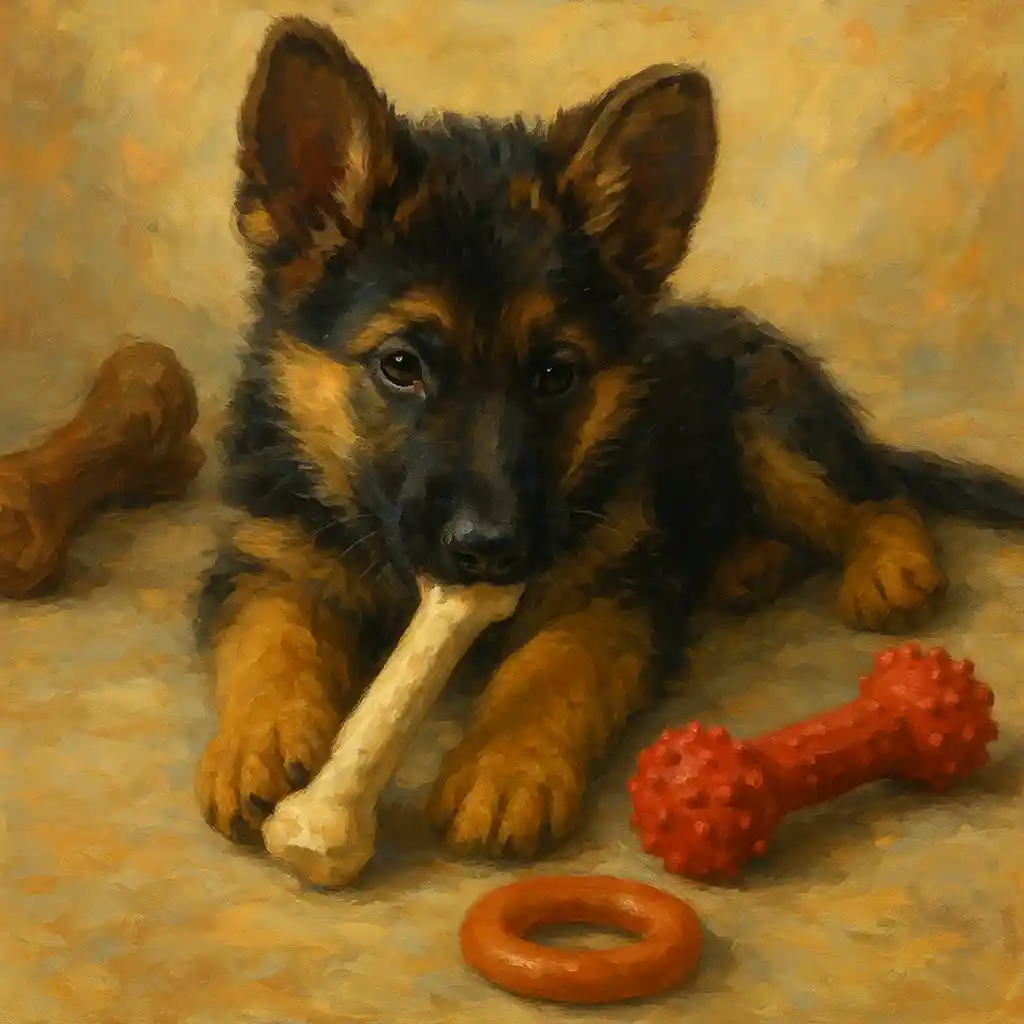
Teething is a normal part of growing up for every German Shepherd Dog (GSD) puppy, but it can feel intense in daily life. German Shepherds are smart, strong, and active. During teething, they often use their mouths to explore, release stress, and soothe sore gums. That is why many owners suddenly see chewing everywhere: table legs, shoes, rugs, hands, and even walls.
This blog is a complete guide to Chew Options for Teething German Shepherds. You will learn what is happening in your puppy’s mouth, how to choose safe chew items, how to stop destructive chewing with simple training, and how to set up an easy toy rotation plan that keeps your puppy busy without turning your home into a chew zone.
When choosing chew options for teething German Shepherds, it’s essential to consider their needs during this phase. Providing a variety of chew options for teething German Shepherds can help manage their discomfort while keeping them engaged and preventing destructive behaviors.
1) Understanding Teething in German Shepherd Puppies (Simple and Useful)
Most GSD puppies start teething around 3–4 months and finish around 6–7 months. Adult teeth replace baby teeth. This can cause:
- Gum soreness and itching
- More chewing than usual
- More drooling
- Mild irritability
- A desire to chew harder objects
- Occasional small spots of blood on toys
Teething is not “bad behavior.” It is a physical need. Still, your puppy must learn what is allowed to chew and what is not.
Common chewing triggers (besides gum pain)
Even when teething is the main reason, chewing can increase when your puppy is also:
- Over-tired (puppies get mouthy when sleepy)
- Under-exercised (too much energy)
- Under-stimulated (bored)
- Over-excited (too much play, not enough calm time)
- Anxious (new place, new routine)
That is why the best results come from a complete plan: safe chews + rotation + training + home safety.
2) Why Safe Chew Options Matter (Especially for GSDs)
German Shepherds grow into powerful dogs. Even as puppies, they can destroy weak toys fast. Unsafe chewing can lead to:
- Broken baby teeth or damaged adult teeth
- Choking (small pieces swallowed)
- Blockages in the stomach or intestines
- Cuts in the mouth from sharp edges
- Reinforced “bad” habits (chewing furniture becomes a routine)
The goal is not to stop chewing. The goal is to guide chewing to safe, approved items.
A good chew option should be:
- Large enough not to swallow
- Durable enough for your puppy’s chewing level
- Designed for puppies or “moderate chewers” (unless your vet says otherwise)
- Non-toxic and from a trusted brand
- Interesting (texture, shape, or the ability to hold food)
3) The Best Chew Options for Teething German Shepherds (5 Core Choices)
Below are five proven categories. Many owners use 2–3 types and rotate them to keep the puppy engaged.
Option 1: Rubber Chew Toys (Soft-but-Strong)
Why they work: Rubber has a gentle “give,” so it can soothe gums without being too hard. Many rubber toys can also be stuffed with food, which turns chewing into calm focus.
Best uses:
- When your puppy is mouthy and needs redirection
- For crate time or calm time
- For food enrichment (stuffed and frozen)
What to look for:
- Thick rubber
- A size that fits your puppy now and in a few months
- No weak edges your puppy can tear off
Popular, trusted examples:
- KONG Puppy line (often softer than adult versions)
- West Paw (durable rubber-style toys, many are dishwasher safe)
Added value tip: Stuff a rubber toy with wet food or plain yogurt (dog-safe) and freeze it. Cold + chewing = gum relief + longer entertainment.
Option 2: Nylon Chew Bones (Strong, Long-Lasting)
Why they work: Nylon chews last longer than many other toys and help satisfy strong chewing needs. They can be great for GSD puppies that destroy softer toys quickly.
Best uses:
- For puppies that want firm chewing
- When you need a longer-lasting option
- As part of a rotation plan
What to look for:
- Puppy-specific or “gentle” versions when your puppy is young
- A size bigger than your puppy’s mouth
- A shape that is easy to hold with paws
Safety note (important): Very hard chews can crack teeth, especially if your puppy bites with full force. A common safety guideline is: If you cannot press it with your fingernail, it may be too hard for long chewing sessions. Many nylon chews are okay, but watch your puppy and choose the right hardness level.
Option 3: Frozen Vegetables (Frozen Carrots Are a Classic)
Many owners find success using chew options for teething German Shepherds that are safe and durable, ensuring their pup can chew without causing harm to their developing teeth.
Why they work: Cold helps reduce gum soreness. Carrots are also low-calorie and crunchy when thawed slightly.
Best uses:
- Quick gum relief
- A safe, simple chew when supervised
- Puppies who enjoy edible chews
How to serve safely:
- Use large carrots (not tiny pieces)
- Freeze them whole or in large sticks
- Always supervise
- Remove small leftover pieces
Extra options (dog-safe, in many cases):
- Frozen cucumber spears
- Frozen green beans (better as a treat than a long chew)
Precaution: Too much carrot can cause digestive upset in some puppies. Start small and watch stool quality.
Option 4: Rope Toys (Good for Supervised Chewing and Tug)
Why they work: Rope texture can feel good on sore gums. Rope is also useful for interactive play, which strengthens your bond and helps your puppy learn rules.
Best uses:
- Supervised chewing
- Tug games with rules
- Redirecting biting during play
Rope toy safety rules (very important):
- Supervise every time
- Check for fraying often
- Remove the toy if strings are coming off
- Do not allow your puppy to swallow threads (can cause serious intestinal problems)
Added value tip: Make rope toys “special.” Keep them put away and bring them out during structured play. That keeps interest high.
Option 5: Natural Chews (Use Carefully: Collagen, Tendons, and More)
Many owners search for “natural” chews. Some can be helpful, but this category needs careful choices.
Safer natural options (often better than very hard antlers):
- Collagen sticks (usually softer than bully sticks)
- Beef tendons (can be long-lasting but should be supervised)
- Fish skin chews (smelly but often softer)
Avoid or use with extreme caution:
- Antlers: often very hard, can crack teeth
- Weight-bearing bones: very hard, higher tooth risk
- Cooked bones: splinter risk (avoid)
Best rule for natural chews: Supervise, choose the right size, and remove small ends before they become a swallowing hazard.
4) Quick Safety Checklist for Any Chew Item
Use this checklist to reduce risk:
- Size: bigger than your puppy’s mouth
- Supervision: especially with edible chews and rope toys
- Condition: remove toys that crack, splinter, or shred
- Time limits: don’t allow nonstop chewing for hours (it can irritate gums)
- Teeth check: if you see chips, bleeding gums beyond mild teething, or pain, contact your vet
- Stomach check: vomiting, diarrhea, or refusing food after a chew item can be a red flag
5) The Toy Rotation Plan That Stops Boredom Chewing
A simple rotation system (easy to follow)
Keep 8–12 chew and enrichment items, but only leave 3–4 out at a time.
Example rotation (weekly):
Day 1–2
- Rubber chew toy (stuffable)
- Rope toy (supervised)
- Nylon chew bone (short sessions)
Day 3–4
- Rubber chew toy (different shape)
- Frozen carrot (supervised)
- Crinkle/plush toy (only if your puppy does not shred and swallow)
Day 5–6
- Nylon chew bone (different style)
- Rubber treat-dispensing toy
- Training tug toy (supervised)
Day 7
- “Best” special chew (collagen stick or tendon, supervised)
- Frozen stuffed rubber toy
How to make rotation work even better
- Hide toys in a box or closet so they feel “new” later
- Bring out one “special” item only during crate time
- Mix textures: rubber + nylon + food chew + rope
This is a key part of Chew Options for Teething German Shepherds, because the best chew toy is not always the strongest one—it is the one your puppy chooses often.
6) Training: How to Redirect Chewing (Without Stress)
Chewing is natural. Training is about building a habit: “I chew my toys.”
Step-by-step redirection (simple and effective)
- Catch the behavior early (when possible).
- Stay calm and neutral. Loud reactions can feel like attention and create a game.
- Offer a legal chew (toy or chew item).
- Praise when your puppy takes it.
- Make the legal chew more rewarding (stuff it, freeze it, or play with it).
Teach “Trade” (a must-have skill)
“Trade” helps you safely take away dangerous items without a fight.
- Offer a treat
- Say “trade”
- When your puppy drops the item, reward
- Give a safe chew back
This builds trust and reduces guarding behavior.
Use management, not only training
Training takes time. Management prevents failure while your puppy is learning:
- Use baby gates to block high-risk rooms
- Remove shoes and children’s toys from the floor
- Cover cables or use cord protectors
- Crate or playpen during busy moments
7) Bitter Spray and Natural Alternatives (Use Them the Right Way)
Deterrent sprays can help protect furniture, but they are not the full solution. They work best when paired with good chew options and supervision.
What bitter sprays are for
- Chair legs
- Table legs
- Baseboards
- Safe surfaces your puppy targets repeatedly
What bitter sprays are NOT for
- Your puppy’s mouth
- Skin irritation areas
- Replacing training and chew toys
Natural alternatives (simple home options)
Option A: Vinegar + water spray
- Mix 1 part white vinegar with 1–2 parts water
- Spray lightly on the surface (test a small hidden area first)
Option B: Lemon juice + water spray
- Mix 1 part lemon juice with 2 parts water
- Spray lightly (test first; citrus can mark some surfaces)
Important precautions:
- Test on a hidden spot (wood finishes can react)
- Reapply as needed (especially after cleaning)
- Do not spray near eyes, food bowls, or open wounds
- Always provide a “yes” option (approved chew) right away
Deterrents work best when your puppy learns: “That tastes bad, but my toy tastes/feels great.”
8) A Daily Routine That Reduces Chewing Problems
Teething problems get worse when puppies are bored or overstimulated. A simple routine helps a lot.
Sample daily structure (adjust for your schedule)
- Morning: potty + short walk/sniff time + breakfast in a puzzle toy
- Mid-morning: nap (crate or quiet area)
- Lunch: short training session (sit, down, touch) + chew toy time
- Afternoon: play + supervised chewing + nap
- Evening: calm walk + dinner + frozen stuffed rubber toy
- Night: quiet time + final potty
This routine reduces random “chaos chewing” because your puppy gets:
- movement
- mental work
- rest
- planned chewing outlets
9) When Chewing Is Not Only Teething (Signs to Watch)
Most chewing is normal in teething, but sometimes you should look deeper.
Contact your vet if you notice:
- Bad breath that is strong or sudden
- Swollen face or bleeding that seems heavy
- Broken tooth or visible crack
- Your puppy cries when chewing
- Refusal to eat hard food
- Repeated vomiting or diarrhea after chews
Also note: adult dogs do not “teethe” like puppies. If an older German Shepherd suddenly starts chewing a lot, it may be stress, boredom, or dental pain. A vet dental check is a smart step.
10) Common Mistakes (And Better Alternatives)
Mistake 1: Giving very hard chews too early
Better: rubber, puppy-safe nylon, frozen stuffed toys, softer natural chews
Mistake 2: Leaving all toys out all the time
Better: rotation plan (3–4 toys out, the rest stored)
Mistake 3: Punishing chewing after the fact
If you find a chewed shoe later, your puppy will not connect your reaction to the earlier chewing. Better: management + supervision + redirection
Mistake 4: Letting hands become chew toys
Better: stop play for 5–10 seconds, offer a toy, praise calm chewing
Mistake 5: No rest time
Overtired puppies bite and chew more. Better: planned naps in a quiet space
11) Quick Shopping List: A Starter Kit for Teething Success
If you want a simple setup, this starter kit covers most needs:
- 2 durable rubber chew toys (stuffable)
- 2 nylon chew bones (puppy level + stronger level as they grow)
- 1 rope toy (supervised)
- 1 treat-dispensing toy or puzzle feeder
- A few frozen carrots (supervised, large pieces)
- Optional: collagen sticks (supervised)
- Bitter spray (commercial or natural alternative)
- Baby gates or playpen for management
This kit supports the full plan: Chew Options for Teething German Shepherds plus training and home safety.
Conclusion: A Calm Home and a Happy Teething GSD Puppy
Teething can feel like a long season, especially with a German Shepherd puppy who has big energy and sharp teeth. But with the right approach, it becomes manageable.
Focus on three pillars:
- Provide safe, satisfying chew options (rubber, nylon, frozen foods, supervised rope, carefully chosen natural chews)
- Use a rotation plan to keep toys interesting and reduce boredom chewing
- Train and manage: redirect chewing, reward good choices, and puppy-proof your space
If you stay consistent for a few weeks, you will usually see real progress: fewer destroyed items, calmer chewing, and better habits that last into adulthood.
With this guide, you now have a complete, practical system built around Chew Options for Teething German Shepherds—so your puppy can chew safely, learn faster, and grow into the strong, confident dog you are raising.
In conclusion, understanding chew options for teething German Shepherds is crucial for their well-being. This guide provides a comprehensive overview of how to best support your puppy through this teething period.