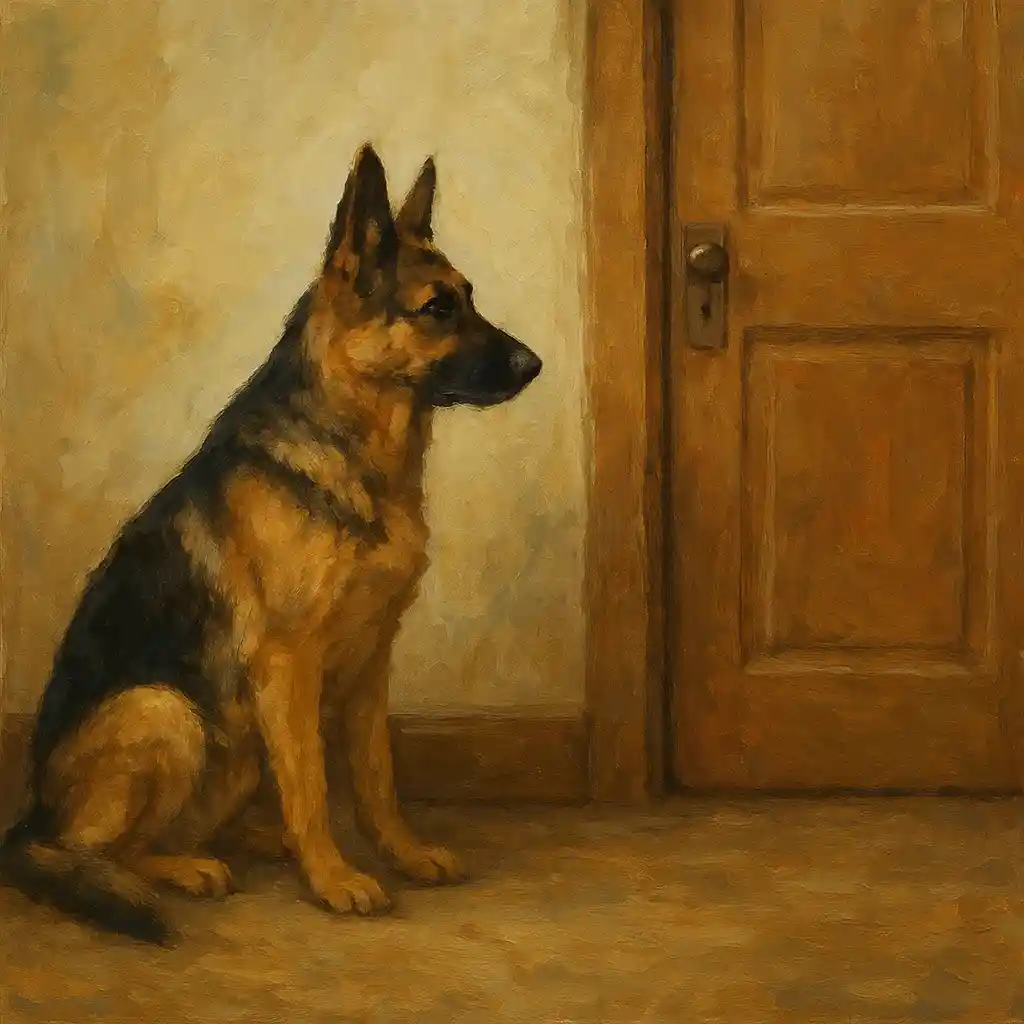
A German Shepherd is smart, loyal, and naturally alert. That is part of why people love this breed. But those same qualities can create one common problem: a big reaction at the front door. When someone knocks or the doorbell rings, your dog may bark, jump, spin, rush the door, or push past you. This can feel stressful at home and can also create safety risks for guests, children, and the dog.
The good news: you do not need long training sessions to improve this. A short, clear routine done every day can make a strong difference. This article gives a simple plan to Calm Your German Shepherd effectively using three practical tools:
- Place Training (go to a mat/bed and stay there)
- Impulse Control Games (practice self-control in a fun way)
- Door Knock Practice (desensitize and teach a new response)
Why German Shepherds Get Overexcited at the Door
To Calm Your German Shepherd, it helps to understand why the door creates such a big reaction. Most German Shepherds react for a mix of these reasons:
With dedication, you can successfully Calm Your German Shepherd and improve your dog’s behavior at the door.
1) Guarding instinct and alert behavior
German Shepherds were bred to protect and work. The door is the “border” of the home. Many dogs feel it is their job to announce visitors.
2) High arousal from sound + movement
Knocks, doorbells, footsteps, voices in the hallway—these are strong triggers. They raise your dog’s energy quickly.
3) A learned habit that gets rewarded
If your dog barks and the door opens, the dog learns: barking makes something happen. Even if you do not mean to reward it, the pattern becomes strong.
4) Social excitement
Some dogs are not guarding—they are simply happy and too excited. They want to greet right away.
5) Stress and lack of clear structure
Without a clear job, your dog chooses a job: rush the door, bark, and control the space.
Door training is not about stopping your dog from being a German Shepherd. It is about giving your dog a better job and a calmer routine.
The “10-Minute Fix” Mindset (What It Really Means)
The phrase “10-minute fix” does not mean the behavior changes forever in one day. It means you can make progress with short sessions that fit real life. Many owners fail because they train only once a week for a long time. Dogs learn better with small daily practice.
A strong plan looks like this:
- 10 minutes per day
- calm rewards
- simple steps
- repeat often
- increase difficulty slowly
If you stay consistent, your dog’s door behavior can change faster than you expect.
Before You Start: Set Up for Success
To Calm Your German Shepherd, prepare these basic items:
Training tools
- Small, soft treats (pea-sized)
- A mat, dog bed, or blanket (this becomes “Place”)
- A leash (helpful for safety)
- Optional: baby gate or exercise pen
- Optional: doorbell sound on your phone (for practice)
Choose your “Place”
Pick a spot:
- easy to reach
- not directly blocking the door
- far enough from the door to reduce excitement (often 6–12 feet away)
Safety note
If your dog shows real aggression (snarling, snapping, biting, hard staring, guarding the door strongly), work with a qualified trainer or behavior professional. Training is still possible, but safety planning matters.
Implementing these strategies will help you Calm Your German Shepherd and create a more peaceful environment at home.
Many owners struggle with understanding how to Calm Your German Shepherd. This guide is designed to provide you with straightforward methods to achieve this.
The Core Plan to Calm Your German Shepherd
Overview of the daily 10 minutes
You can do this routine in one block or split it into two short parts.
- Place Training (4 minutes)
- Impulse Control Game (3 minutes)
- Door Knock Practice (3 minutes)
That is all. The power is in daily repetition.
1) Place Training: The Fastest Way to Create Calm at the Door
Place Training teaches your dog to go to a specific spot and stay there until released. This gives your dog a clear job when the door triggers excitement.
Why “Place” works so well
- It replaces rushing the door with a calm behavior.
- It creates distance from the trigger.
- It builds self-control without a fight.
- It makes greetings safer and more polite.
Step-by-step Place Training (simple version)
Step 1: Introduce the mat/bed
- Stand close to the mat.
- When your dog steps onto it, mark with “Yes” (or click) and give a treat.
- Toss another treat off the mat so your dog steps away.
- Repeat: step on mat → “Yes” → treat.
Do 10–15 quick repeats.
Step 2: Add the cue word “Place”
- Say “Place.”
- Point to the mat.
- When your dog steps onto it, mark and reward.
Keep it light and positive.
Step 3: Add a short stay
Once your dog goes to the mat easily:
- reward for 1 second on the mat
- then 2 seconds
- then 3 seconds
Feed treats calmly, one at a time, while your dog stays on the mat. If the dog steps off, guide back and reward again. The message stays simple: calm staying earns rewards.
Step 4: Add a release cue
Choose one release word, like:
- “Free”
- “Okay”
- “Break”
Reward on the mat, pause, then say “Free” and gently encourage your dog off the mat. This matters because your dog learns the difference between stay and done.
Common Place Training tips
- Keep your voice calm. Excited praise can increase energy.
- Treat low and slow (close to the mat), so your dog settles.
- Do not push your dog onto the mat. Let the dog choose it.
- Do not jump too fast to hard distractions.
Goal for Place Training
Your short-term goal is: Dog goes to Place when asked, stays there calmly for 10–30 seconds.
Your long-term goal is: Dog goes to Place when the doorbell rings, stays there while you open the door, and waits for release.
This is one of the best foundations to Calm Your German Shepherd in daily life.
2) Impulse Control Games: Teach Self-Control Without Stress
Impulse control is your dog’s ability to pause, wait, and make a better choice. German Shepherds can learn this very well, but they need practice.
Impulse control games do not just help at the door. They also help with:
- jumping
- pulling on leash
- grabbing toys too fast
- rushing stairs
- overreacting to movement
Below are three easy games. Pick one per day to keep training fun.
Game A: “Wait” for the treat (hand game)
How to play
- Hold a treat in a closed fist.
- Present your fist at your dog’s nose level.
- Your dog will sniff, lick, or paw.
- Stay still and quiet.
- The moment your dog backs away or stops pushing, say “Yes” and give a treat (from the other hand).
Make it harder (slowly)
- open your fist a little
- place the treat on your open palm
- place the treat on the floor (cover it with your hand if needed)
What your dog learns
- calm behavior makes good things happen
- pushing does not work
- waiting is rewarding
This calm skill transfers directly to door manners.
Game B: “Sit to Say Please”
This is a simple life rule: your dog sits before good things happen.
How to use it
Ask for a sit before:
- meals
- leash clipping
- toys
- going outside
- greetings
Reward with the real-life thing, plus a treat sometimes. This builds a habit of calm control.
Game C: “1-2-3 Treat” (focus and rhythm)
This game helps dogs relax because it is predictable.
How to do it
- Count “One, two, three” in a calm voice.
- On “three,” give a treat.
- Repeat for 30–60 seconds.
Then try it near the door area (without knocking at first). It creates calm focus and a steady pattern.
Impulse control training tips
- Keep sessions short. Stop while your dog is doing well.
- Calm rewards matter more than excited cheering.
- If your dog gets too hyped, take a break and return to Place.
Impulse games are a powerful way to Calm Your German Shepherd because they train the brain, not only the body.
3) Door Knock Practice: Change the Trigger, Change the Habit
Many dogs explode at the sound of knocks because the sound predicts excitement. Door Knock Practice changes that meaning. The goal is: Knock/doorbell = go to Place and calm down.
The golden rule
Start easy. If your dog is already barking and rushing, the trigger is too strong. Make it smaller so your dog can succeed.
Step-by-step Door Knock Practice (safe and structured)
Step 1: Practice without opening the door
- Put your dog on leash if needed (for safety).
- Ask for “Place.”
- Reward calm staying.
- Make a very soft knock (you can knock on a table first if the real door is too hard).
- If your dog stays calm, reward on Place.
- If your dog breaks Place, guide back and reduce the knock volume next time.
Do 6–10 repeats.
Step 2: Increase the realism
When Step 1 is easy:
- knock a little louder
- knock twice
- add small movement toward the door
- touch the door handle (without opening)
Always return to reward calm behavior on Place.
Step 3: Add the door opening (later)
Only when your dog can stay calm through knocks and handle sounds:
- Knock.
- Dog goes to Place.
- Reward.
- Open the door just a few inches.
- Close it.
- Reward again.
Open a little more over time.
Step 4: Add a helper (best option)
A friend or family member helps a lot because it becomes more real.
Plan:
- helper knocks
- you cue “Place”
- you reward calm
- helper waits until dog is calm
- then you open the door
If the dog barks or rushes, the helper pauses and stays quiet. The “visitor” only appears when the dog is calmer.
This is how you teach: calm behavior brings access.
Safety precautions during door training
To protect everyone while you work to Calm Your German Shepherd, use simple safety rules:
- Use a leash during practice if your dog might rush out.
- Use a baby gate if you want extra distance.
- Do not let guests excite the dog with fast hands or high voices.
- If your dog jumps, the guest should turn sideways and stay calm.
- For strong jumpers, keep greetings controlled until training improves.
The Full 10-Minute Daily Routine (Copy and Use)
Below is a clear plan you can follow without thinking too much.
Minutes 0–4: Place Training
- 10–15 reps of “Place”
- build a short stay (10–30 seconds)
- calm treats on the mat
Minutes 4–7: Impulse Control Game (choose one)
- “Wait” hand game, or
- “Sit to Say Please,” or
- “1-2-3 Treat”
Minutes 7–10: Door Knock Practice
- 6–10 soft knocks
- reward calm on Place
- stop before your dog gets tired or frustrated
Do this daily for two weeks. Then continue most days to maintain the habit.
How to Use This Training in Real Life (When Guests Arrive)
Practice is great, but real life is the real test. Here is a simple “door script” to follow:
- Before opening the door, cue: “Place.”
- Reward your dog on the mat.
- Open the door only when your dog is on Place.
- If your dog breaks Place, close the door (calmly), cue Place again, reward.
- Let the guest enter only when your dog is calmer.
- Release the dog to greet only if the dog can stay polite.
At first, keep greetings short. Calm greetings teach calm habits.
Common Mistakes That Slow Progress
To Calm Your German Shepherd, avoid these common issues:
Mistake 1: Moving too fast
If you increase knock volume or door opening too quickly, your dog will fail and rehearse the old behavior (barking, rushing). Go slower than you think you need.
Mistake 2: Talking too much
Many owners repeat commands in a stressed voice: “Sit, sit, sit, stop, stop.” This often adds energy. Use fewer words, more structure.
Mistake 3: Rewarding the wrong moment
If you give attention when your dog is barking or jumping, it can work like a reward. Instead, reward calm moments: paws on the mat, quiet mouth, soft body.
Mistake 4: Practicing only when visitors come
Training works best when nothing big is happening. Practice when you control the situation.
Mistake 5: No release cue
If you never release your dog from Place, the mat can feel like punishment. A clear “Free” makes it fair and clear.
Troubleshooting: What to Do If Your Dog Still Explodes
Progress is not always smooth. Below are fast fixes that keep you moving forward.
If your dog barks the second they hear a knock
- Make the knock quieter (tap a table).
- Increase distance from the door.
- Reward faster for calm.
- Do fewer repetitions per session.
If your dog runs to the door and ignores “Place”
- Practice Place far from the door again.
- Use a leash and guide calmly to the mat (no yanking).
- Reward heavily when the dog chooses the mat.
If your dog stays on Place but whines or shakes
- Reduce difficulty (softer knock, less movement).
- Reward slower and calmer.
- Practice relaxation: reward for lying down on the mat.
If your dog breaks Place when you touch the handle
- Separate steps: knock only, then handle only, then both together.
- Reward each small success.
If your dog gets too excited by treats
Some dogs get more aroused with high-value treats. Try:
- smaller treats
- lower-value food (kibble)
- calm praise + food
- scatter feeding away from the door after a success (sniffing reduces stress)
Extra Added Value: Teach a “Quiet” Cue (Optional)
A “Quiet” cue can help, but it works best after you have started to change the door routine. Do not rely on “Quiet” alone.
Simple method
- Wait for a short pause in barking (even half a second).
- Say “Quiet.”
- Mark “Yes.”
- Reward.
You are teaching that silence earns rewards. Combine this with Place for better results.
Real-Life Results: What Success Often Looks Like
When you practice to Calm Your German Shepherd, improvement usually comes in stages:
Week 1: More structure, slightly less chaos
- Dog learns the mat game
- Dog starts to pause for treats
- Door practice is still hard, but possible at low level
Week 2: Clear pattern begins
- Dog starts to run to Place faster
- Barking becomes shorter
- Door handle and small door opening become possible
Weeks 3–6: Real-life changes
- Dog can stay on Place through knocks
- Visitors enter with less noise and jumping
- You feel more in control
Some dogs move faster, some slower. What matters is daily repetition and small steps.
How to Maintain Calm Door Behavior Long Term
Once your dog is better, do not stop completely. Keep the habit alive:
Simple maintenance plan
- Practice Place 3–5 times per week (1–2 minutes)
- Do 1 short door knock session per week
- Use “Sit to Say Please” daily in real life
Keep greetings calm
Ask guests to:
- ignore the dog for the first 30 seconds
- avoid fast petting over the head
- reward calm behavior with gentle attention
Your dog learns that calm brings access, and wild behavior brings delays.
A Note for Older Adults and Anyone Who Wants Easier Handling
This training plan is especially helpful if you want safer, calmer routines at home. Place Training reduces pulling, jumping, and crowding at the door. A mat also gives you a predictable place to guide your dog while you manage keys, packages, or mobility needs.
If your dog is large and strong, use a leash indoors during early stages. This is not a failure. It is smart management while training grows.
When to Get Professional Help
Training at home works well for many dogs, but professional support is the best choice if you see:
- biting or snapping
- serious guarding behavior
- strong fear responses (panic, trying to escape)
- you feel unsafe handling your dog
A qualified trainer can adjust timing, distance, and rewards to fit your dog’s exact needs.
Conclusion: Calm Your German Shepherd With a Simple Daily Plan
To Calm Your German Shepherd at the door, you do not need complicated methods or long sessions. You need a clear routine that replaces chaos with structure:
- Place Training gives your dog a job and a safe spot.
- Impulse Control Games build self-control in a fun way.
- Door Knock Practice changes the meaning of the trigger and teaches a new habit.
Ten minutes a day is enough to start real change. Keep it calm, keep it consistent, and grow the difficulty slowly. Over time, your German Shepherd can still be alert and confident—without turning every knock into a storm.
The key takeaway is to always remember to Calm Your German Shepherd for a happier canine companion.